Table of Contents
The Narrative Engine of Loss and Transformation
Stories in anime rarely treat death as a mere plot point. It functions as the engine that propels entire series forward, redefining character arcs and reshaping the fictional universe itself. When a pivotal character dies, the ripple effects touch every other soul in the narrative, often forcing survivors to confront uncomfortable truths about their own beliefs, loyalties, and limits. The way creators handle these moments—whether through brutal realism, symbolic abstraction, or even dark humor—determines how deeply the story resonates with viewers. In many cases, death is not an ending but a powerful new beginning that unlocks the story’s deepest thematic potential.
Death on screen can trigger a visceral reaction that few other plot devices match. It transforms the tone of a series instantly, shifting genres from lighthearted adventure to psychological drama or from slice-of-life to tragedy. For audiences, these scenes become reference points for the entire work, remembered long after the final credits roll. The emotional weight is not just about losing a beloved character; it’s about seeing the fictional world react, adapt, and forever change. This mechanism—death as transformation—is one of anime’s most sophisticated narrative tools.
Key Ways Death Shapes Anime Stories
Beyond simple shock value, death in anime performs distinct narrative functions that elevate the entire work. Understanding these roles helps viewers appreciate why certain series achieve legendary status while others feel forgettable. Across genres and decades of storytelling, several patterns emerge.
- Death often marks the irreversible moment when a protagonist’s naive worldview shatters, forcing a harder, more mature perspective.
- It introduces moral complexity by blurring the lines between heroism and villainy, as characters must decide what price they are willing to pay for their goals.
- Death reveals the fragility of social bonds and institutions within the story’s universe, exposing corruption, incompetence, or deep-seated societal flaws.
- It can serve as a catalyst for collective action, uniting scattered allies under a shared grief that transforms into resolve.
- In some narratives, death operates as a spiritual transition rather than an absolute end, opening doorways to other realms or deeper metaphysical exploration.
Each of these functions depends on careful execution. When handled with skill, death becomes the narrative’s quiet anchor, giving meaning to every battle, every whispered conversation, and every tear shed. When mishandled, it risks alienating the audience or reducing a profound event to cheap sensationalism. The finest works in the medium treat mortality with both gravity and imagination, weaving it into the fabric of the story so tightly that removing it would unravel everything.
The Emotional Architecture of a Death Scene
Creators build death scenes with architectural precision, layering music, pacing, dialogue, and visual symbolism to achieve a specific emotional target. A death that occurs in the heat of battle might emphasize shock and adrenaline, while a slow, anticipated passing in a hospital bed leans into melancholy resignation. The timing of the death within the episode or season also matters enormously: an early demise can set the stakes, while a late one often serves as the climax of a character’s entire journey. By studying these structural choices, viewers gain insight into why some deaths linger in memory as masterpieces of storytelling.
Defining Death Beyond Biology
In anime, the concept of death frequently expands beyond physical cessation. A character might die socially, losing their place and identity in their community. Another might experience psychological death, their personality so thoroughly crushed that the original self ceases to exist. Even digital or spiritual deaths populate the medium—scenarios where an AI’s data is erased or a soul is consumed by an otherworldly force. This breadth of interpretation allows writers to explore loss in layers, making the theme relevant to viewers who have experienced many kinds of endings in their own lives.
The result is a storytelling language where death communicates not just absence, but transformation, erasure, and sometimes, transcendence.
The Moral Friction of Taking a Life
Anime consistently places characters in moral crucibles where they must decide who lives and who dies. Whether it’s a shinobi ordered to assassinate a target, a soldier forced to fire on an enemy combatant, or a vigilante choosing to execute a criminal, the narrative examines the ethical gravity of these moments. The protagonist’s internal debate often becomes the real battleground, with the act of killing leaving permanent scars regardless of justification. Series like Monster or Parasyte probe these tensions relentlessly, asking whether any cause can cleanse the stain of taking another’s life. The absence of easy answers mirrors real-world philosophical struggles, making the fiction feel unnervingly relevant.
How Grief Reshapes the Hero’s Path
A major death in a protagonist’s backstory often serves as the origin point for their quest, but the ongoing impact of grief runs much deeper. You see characters who are unable to trust because of past losses, who develop self-destructive habits, or who cling to impossible promises made to the departed. The narrative tracks their slow, uneven healing process, allowing setbacks and relapses that mirror genuine human psychology. This commitment to emotional realism elevates anime beyond simplistic revenge stories. When a hero finally confronts the source of their pain—whether through forgiveness, acceptance, or a final act of memorializing—the payoff feels earned because the journey was so visibly difficult.
Case Studies in Mortality: Genres, Series, and Innovations
Different anime series deploy death as a central storytelling device in radically different ways, and examining a few landmark examples reveals the range of possibilities within the medium. Each title discussed below approaches mortality with a distinct philosophy, visual style, and narrative purpose, demonstrating that there is no single correct way to handle such a heavy theme—only ways that resonate deeply or fall flat.
A Weaponized Death: Power and Consequence in Death Note
The supernatural notebook in Death Note turns mortality into a calculated instrument, stripping away the messy, emotional reality of dying and reducing it to a name on a page. Light Yagami’s methodical killings create a chilling aesthetic where death becomes distant, clean, and almost bureaucratic. This emotional detachment is exactly what makes the story so disturbing: the audience watches a human being rationalize mass murder as righteous justice. Ryuk the shinigami observes with amusement, embodying death as a neutral, even bored cosmic force, indifferent to human moral categories. The series forces viewers to confront the seductive danger of power without accountability, a theme that stays relevant regardless of the supernatural framing.
Key deaths in Death Note are not mourned so much as analyzed. The psychological chess match between Light and L turns each fatality into a move on the board, a clue to be dissected. When L himself dies, the narrative seismically shifts, demonstrating that no character, however brilliant, is safe. This willingness to break the story’s own structure by eliminating a lead investigator halfway through remains one of the boldest strokes in anime storytelling. It forces the remaining cast and the audience to recalibrate, highlighting the destabilizing power of death when it defies expectations created by traditional plot armor.
The Slow Creep of Doom: Another and Inherited Death
Horror anime like Another construct death not as a singular event but as an inescapable atmospheric pressure. The curse that stalks a particular class operates with the inevitability of a macabre machine, selecting victims seemingly at random and rejecting any notion of fairness. This randomness is key to the horror: no amount of virtue, intelligence, or strength offers protection. The deaths themselves are staged with grotesque creativity, turning everyday objects into fatal traps and amplifying the sense that the world itself has become hostile.
What makes Another so effective is the slow psychological erosion it depicts among the students. Before anyone dies, the fear of death tears apart friendships, breaks trust, and transforms normal social dynamics into paranoid survivalism. The series argues that anticipated death can be as destructive as death itself. In this, it touches a real nerve: communities under existential threat often fracture from within, a dynamic that translates well beyond the confines of a horror story. The fatalism of Another leaves little room for triumphant heroism, instead offering a grim meditation on how people behave when the rules of cause and effect stop making sense.
Shonen Battlefields and the Meaning of Sacrifice
Mainstream shonen series—from Dragon Ball Z to Jujutsu Kaisen—regularly place beloved characters in mortal danger and sometimes kill them off permanently. While the genre is often criticized for its use of resurrection or fake-out deaths, the most impactful shonen moments occur when death is final and irreversible. The passing of a mentor figure like Jiraiya in Naruto or the sacrifice of a comrade like Masaki Kurosaki in Bleach sends shockwaves through the entire narrative ecosystem. These deaths are rarely meaningless; they imprint lessons onto the younger generation and often serve as a rite of passage that propels the hero into a new stage of maturity.
Shonen death scenes frequently lean heavily on emotional catharsis, with swelling music, meaningful flashbacks, and final words that encapsulate a character’s philosophy. This theatricality is not a weakness but a deliberate choice to mythologize the fallen, turning them into legends within their own story. The effect is to make their absence felt as a constant presence, a standard against which the survivors measure themselves. Audiences respond to this because it mirrors how real heroes are remembered: not just for how they lived, but for how they left the world, and what they left behind.
The Language of Symbols: Visualizing the Invisible
Anime does not rely solely on dialogue or plot to convey the meaning of a death. The visual medium allows for a dense symbolic vocabulary that communicates emotional and thematic truths instantaneously. Flowers, seasons, weather, mirrors, and even color palettes all contribute to the unspoken commentary on a character’s demise.
Imagery That Carries the Weight of Passing
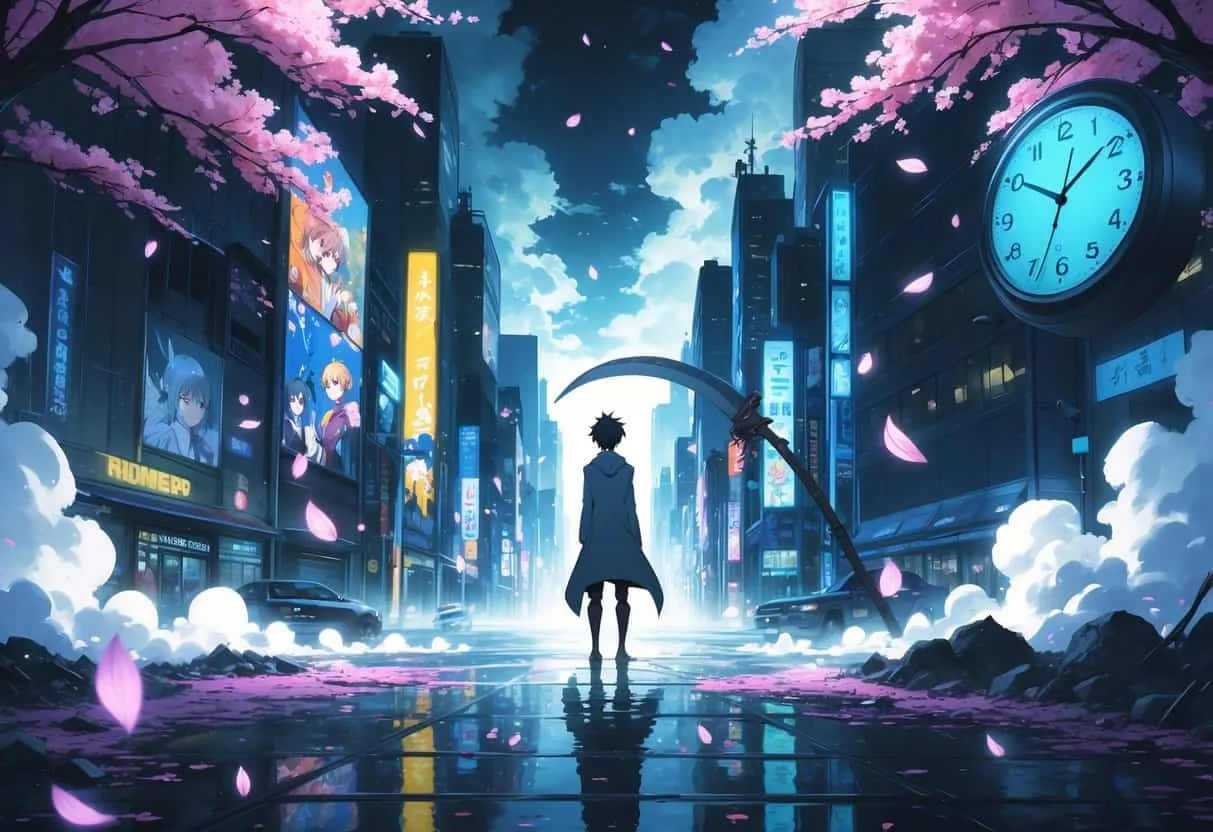
Cherry blossoms, with their brief, brilliant bloom and sudden scattering, remain one of the most recognized symbols for mortality in Japanese animation. Their appearance during or after a death scene signals a sense of poignant inevitability, a beauty that exists because of its impermanence. But the symbolic toolkit goes much further: caged birds suggesting trapped souls; wilted flowers indicating the slow decay of life before death; rain washing away evidence and tears alike. Animators use these visual cues to bypass intellectual analysis and speak directly to the viewer’s emotional center, creating a layered reading experience where the image tells half the story.
Other symbols take on a narrative life of their own across multiple series. Wings appear frequently to represent liberation from earthly suffering, whether through angelic ascension or the simple metaphor of flight. Reflective surfaces—water, glass, polished metal—often double the image of a dying character, hinting at a split between the physical self and the departing spirit. The careful repetition of these elements builds a shared visual language that anime fans come to recognize intuitively, enriching their understanding of each new work they encounter.
Curses, Ghosts, and the Unfinished Business of the Dead
Supernatural anime frequently features death not as a clean break but as a lingering contamination. Curses passed down through bloodlines or attached to specific locations keep the dead alive in a twisted form, forcing the living to confront unresolved trauma. Series like Jujutsu Kaisen and Mushishi explore how the departed can become dangerous when their passing was violent, unjust, or simply too sudden. These stories suggest that a community’s failure to properly honor its dead creates a wound that festers and eventually threatens the living. The symbolism is potent: unresolved grief, unacknowledged atrocity, and hidden secrets will manifest eventually, often with destructive consequences.
Ghost stories within anime also offer a gentler vision, where spirits remain to offer comfort, deliver a final message, or watch over loved ones. The presence of a supernatural remnant transforms death from a wall into a permeable membrane. It allows for closure that reality rarely grants, giving audiences the catharsis of a tearful farewell scene even after the physical death has occurred. This narrative generosity acknowledges the human need for one more moment, one more word, and uses the fantastic to satisfy a deeply emotional longing.
Death as Social Commentary
Beyond personal drama, anime often uses death to critique the structures that produce it. Military anime like 86 or Attack on Titan put mass death on display not just for shock, but to interrogate the political systems that treat human lives as disposable. Civilians crushed by giant monsters, soldiers sent into impossible battles, children conscripted into war—each death becomes an indictment. The scale of loss forces viewers to ask questions about complicity, nationalism, and the value of individual life when weighed against abstract ideals.
| Thematic Focus | Representative Anime Examples |
|---|---|
| Systemic injustice causing death | Attack on Titan, 86, Psycho-Pass |
| Grief driving social change | Fullmetal Alchemist: Brotherhood, Your Lie in April, Anohana |
| Death as cultural ritual | Mushishi, Natsume’s Book of Friends, Showa Genroku Rakugo Shinju |
| Technological transcendence of death | Ghost in the Shell, Serial Experiments Lain, Sword Art Online |
This interplay between private grief and public meaning allows anime to function as a form of social philosophy. By watching characters die within specific cultural and political contexts, viewers are encouraged to examine their own world’s relationship with mortality, duty, and justice. The stories do not preach; instead, they present scenarios that resonate with uncomfortable truths, trusting the audience to draw connections.
Craft and Audience: How Production Shapes the Experience
The impact of a death scene is not just in the writing. It lives or dies (so to speak) in the hands of directors, animators, voice actors, and composers. A poorly timed cut, a jarring musical choice, or stiff animation can deflate a moment that the script built meticulously. Conversely, a production team operating at full creative synergy can elevate even a simple death into a staggering work of art.
The Role of Visual Mastery
Studios renowned for their animation quality—such as Kyoto Animation, ufotable, and MAPPA—bring a level of detail to death scenes that quiet rooms and catch breath. The way light fades from a character’s eyes, the slight tremor of a hand, the deliberate pacing of the final frames: these micro-decisions accumulate into a profound sensory experience. Color grading often shifts subtly as a character dies, draining saturation to signal the departure of life, or flooding the scene with ethereal hues to suggest spiritual transition. When you watch a death sequence by these studios, you feel the weight of every pencil stroke and every digital effect, and the emotional result is correspondingly heavier.
Genre Tonalities: Laughter, Tears, and the In-Between
Genre conventions fundamentally alter how audiences receive a death. Comedy anime like Gintama can kill off characters yet undercut the tragedy with absurdity, using death as a punchline that somehow still carries emotional weight when the series shifts into serious arcs. Romantic dramas like Clannad: After Story and Your Lie in April build entire emotional architectures around anticipated death, wringing every possible tear from the audience through prolonged, intimate goodbyes. Mecha and war series often employ death to underline the horrific cost of conflict, while slice-of-life anime tend to handle it with quiet, reflective dignity. Recognizing these genre-specific codes helps viewers understand why a death in one show feels devastating while a similar death in another feels merely functional.
Adaptation Choices and Cultural Nuance
When a manga or novel is adapted into anime, the depiction of death often undergoes revision to meet broadcast standards or to fit the target demographic. A scene that was gory and explicit in print might be toned down for a television audience, relying on suggestion and shadow rather than direct depiction. Alternatively, some anime originals choose to heighten the brutality to make a thematic point about the story’s stakes. These adaptations are also shaped by cultural attitudes toward death in Japan, where Buddhist and Shinto influences create a different framework for understanding the afterlife and the obligations owed to the dead. The result is a product that feels distinctly Japanese in its sensibility, even when the story’s outward trappings are universal.
Viewers from other cultures may find certain death-related concepts—such as the idea of a spirit lingering due to worldly attachments, or the ritual importance of a proper send-off—layered with unfamiliar meanings. Good anime translations and direction bridge these gaps by focusing on the human emotion at the core, but awareness of the cultural context adds a richer dimension to the viewing experience. It transforms the act of watching into a cross-cultural conversation about what it means to lose someone and how we, as people, try to make sense of that loss.
The diversity of approaches, from the grimly realistic to the allegorically abstract, proves that anime’s engagement with death is one of its most artistically fertile territories. Each series that tackles the theme, whether successfully or not, contributes to an ongoing dialogue among creators and fans about the limits of storytelling and the enduring human need to face mortality through fiction. That dialogue shows no signs of ending—and perhaps, in a medium that understands transformation so well, that ongoing conversation is exactly the point.