Table of Contents
The Unique Appeal of Single-Setting Anime
Single-setting anime center their entire story within one primary location—a high school, a café, a small town, or even a single room. Far from being a limitation, this creative choice intensifies the narrative by stripping away external distractions. Instead of shifting scenery, the focus lands squarely on characters, their relationships, and the subtle rhythms of their daily lives. Every glance, pause, or shift in tone carries weight. The setting becomes a crucible where emotions simmer and character arcs unfold with remarkable precision.
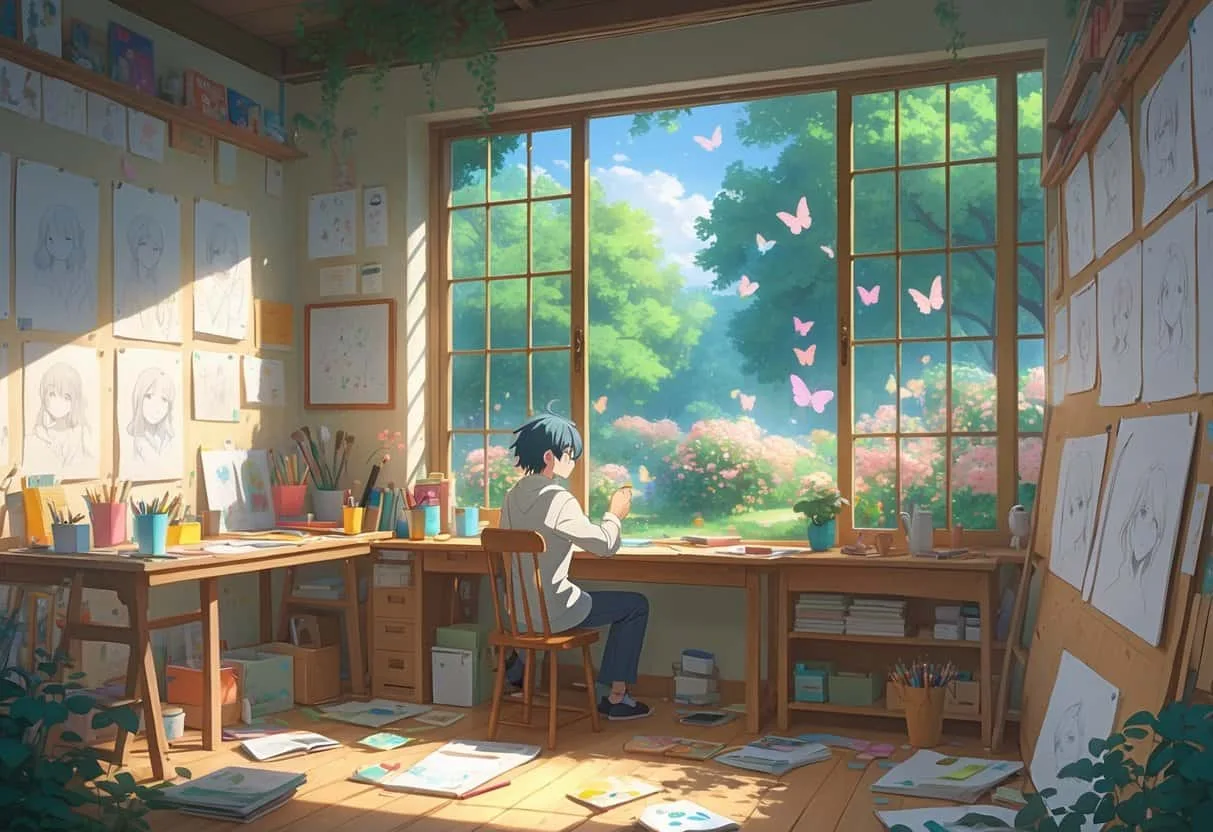
This approach challenges the notion that broader worlds always mean richer stories. A tightly controlled environment can actually foster deeper immersion. The viewer learns the space intimately, noticing how light falls at different times of day or how a particular corner of a room mirrors a character's emotional state. Such deliberate focus transforms the ordinary into something profound, inviting audiences to invest in moments that a more sprawling tale might overlook. In a crowded anime landscape filled with epic sagas spanning continents and dimensions, the quiet confidence of a story that stays put offers a refreshing counterpoint.
The Rise of Single-Setting Storytelling in Anime
The roots of single-setting anime trace back to the slice-of-life boom of the late 1990s and early 2000s, when studios began to experiment with narratives that prioritized character over spectacle. Series such as Azumanga Daioh and Lucky Star demonstrated that a fixed high-school setting could sustain humor, heart, and sharp social observation across multiple episodes. These shows deliberately avoided grand adventures, instead mining comedy and drama from classrooms, hallways, and club rooms. Their success proved that audiences craved stories that felt close to their own lived spaces.
As anime production evolved, technological advances allowed creators to wring extraordinary detail out of a single setting. Digital painting and 3D modeling gave depth to repeated backgrounds, making a café or a library feel alive with texture and history. The steady rise of streaming platforms further accelerated the genre's popularity because intimate, character-driven series thrive on binge-watching. Viewers no longer needed a new location every episode to stay engaged; the people and the atmosphere were more than enough. Today, single-setting anime are not a niche experiment but a respected narrative form that spans comedy, romance, psychological drama, and even science fiction.
Modern hits like Laid-Back Camp and Kaguya-sama: Love Is War have further cemented the format's viability, proving that a single school or campground can anchor an entire franchise.
Creative Advantages of a Confined Canvas
Deepened Character Development
When an anime remains rooted to one place, the writers and animators must explore personalities through sustained interaction rather than through new environments. This puts a premium on dialogue, body language, and the tiny, often wordless exchanges that reveal inner worlds. With no exotic locales to steal focus, the camera stays on faces and gestures. You notice the way a character's eyes linger on a window, the slight tremor in their voice during a confession, or the gradual softening of a tsundere's demeanor. Such granular observation builds a bond between the viewer and the cast that a whirlwind of settings could never achieve.
Character design itself adapts to this restraint. Instead of elaborate combat outfits or fantastical armor, the characters wear everyday clothes that reinforce their roles. Animators pour effort into expressive models because the character is the primary vehicle of the story. The result is often more nuanced acting and a deeper sense of empathy. In a single-setting piece, you're not just watching events; you're witnessing the slow, steady transformation of people inside a familiar world.
This approach also allows for subtle visual cues—a character's posture shifting over time, the gradual neatening of a messy desk, or the way a previously avoidant character starts lingering in shared spaces.
Immersive Atmosphere and Living Backgrounds
A static setting gives the art team the chance to craft an environment that breathes. Detailed textures, subtle color shifts with the time of day, and ambient sound design all work together to make the location feel tangible. Viewers pick up on small details—a perpetually dusty corner, a flickering light, or the way rain streaks down a window—that reinforce mood without a word of dialogue. This meticulous attention turns the backdrop into a character in its own right. In shows like The Anthem of the Heart, the high school setting becomes a silent witness to every emotional beat, its hallways and rooftops encoding memories that resonate long after the credits roll.
Modern production techniques amplify this immersion. The integration of CGI and 3D animation for environmental elements, such as rotating camera angles around a classroom or slow pans across a sunlit café, adds cinematic depth. Lighting engines can simulate realistic shadows that change as the story progresses through a day. These tools keep the visual experience fresh even when the physical setting never changes, proving that a place can feel dynamic and alive as long as the artistry is there. Sound design also plays a pivotal role—the distant echo of a school bell, the hum of a vending machine, or the chatter of students filtering through an open window all layer in to make the space feel inhabited and real.
Inventive Narrative Strategies
Without the crutch of location hopping, single-setting anime push storytelling in clever directions. Dialogue becomes the engine of plot, and plot twists often hinge on revelations, misunderstandings, or confrontations that happen in real time. Flashbacks and non-linear sequences are woven into the confined space to reveal backstory without leaving the room. Some series use unreliable narration or restrict themselves to a single character's point of view, forcing you to question what you see and hear. The limited geography also invites creative use of off-screen space—characters may reference unseen areas of the setting, building a mental map that makes the world feel larger than what is actually shown.
The baked-in constraint also encourages creative episode structures. A story might unfold entirely during one lunch period, or an entire arc might explore the consequences of a single conversation at a train station. This kind of tight focus heightens tension and rewards attentive viewing. You learn to read between the lines and to appreciate the craft of slow-burn storytelling that eschews explosions for emotional impact. Some series even use the setting itself as a narrative device—a locked room mystery that plays out over a school festival, or a romance that blossoms entirely within the confines of a late-night convenience store.
The constraints become part of the storytelling vocabulary.
Production Efficiency and Resource Optimization
The financial and logistical benefits of a single setting are considerable. Traditional anime production demands hundreds of new background paintings per episode, each requiring approval, inking, and coloring. By reusing and iterating on a core set of backgrounds, studios dramatically cut painting costs and scheduling pressure. According to a breakdown by Siliconera, background art can account for a significant slice of an anime's budget; reducing that overhead allows funds to be redirected toward higher-quality character animation, voice talent, and music. For a typical 12-episode series, the savings can be substantial enough to fund an extra key animator or a more elaborate soundtrack.
This efficiency does not mean cutting corners—it means working smarter. Teams can refine the same background again and again, adding details and correcting inconsistencies that would be impossible in a show with fifty unique locations. Many studios now use AI-assisted tools for in-between frames and color grading, as highlighted by Anime News Network, to speed up repetitive tasks while maintaining visual consistency. The result is a polished final product that looks far more expensive than its actual production cost. Resources freed from background creation can also be invested in sophisticated sound design, elevating the auditory atmosphere of the fixed location.
A single room can be given distinct acoustics—the echo of a gymnasium versus the muffled quiet of a library—that add layers of realism without any additional visual work.
Moreover, a limited setting simplifies the pre-production phase. Directors can lock down storyboards early and iterate on scene blocking without geographic complexity. This streamlined pipeline is especially beneficial for smaller studios or independent projects that aim to compete with larger franchises. By embracing a focused locale, creators can deliver a cinematic experience on a modest budget, proving that ingenuity often outshines sheer scale. The reduced logistical burden also allows for tighter release schedules, as fewer assets need to be completed before animation can begin.
In an industry known for its punishing deadlines, any efficiency gain can make the difference between a project that launches on time and one that stumbles.
Cultural Resonance and Fan Engagement
Single-setting anime often serve as cultural windows. A carefully rendered Japanese high school or a neighborhood café brings with it a wealth of real-world detail: seasonal festivals, uniform customs, and the rhythms of daily life that might otherwise go unseen by international audiences. Because the setting is finite, viewers absorb these nuances organically. The show becomes a gentle teacher of cultural norms, from the way a character bows to the sound of a temple bell in the distance. This educational layer never feels forced because it is woven into the fabric of the story.
A series set entirely in a Japanese convenience store, for instance, naturally showcases the etiquette of transactions, the layout of goods, and the role of such stores in community life.
On the global stage, these anime cultivate surprisingly deep fan engagement. The recognizable, self-contained worlds inspire cosplay communities to recreate specific outfits tied to the setting—school uniforms, café aprons, or even the exact accessories a character wears at their desk. Merchandise often revolves around iconic objects from the location: a mug from the show's coffee shop, a figurine posed in front of a miniature version of the club room. Because the space is so memorable, owning a piece of it becomes a way for fans to carry the emotional resonance of the series into their daily lives. The fixed setting also makes it easier for fan artists to create consistent backgrounds for their own works, fostering a vibrant ecosystem of derivative content.
The communal nature of single-setting stories also fuels discussion. Forums and social media dissect the meaning behind a character's choice of seat in a classroom or the symbolism of a recurring cicada sound. This shared attention to detail turns passive viewership into active participation. The fixed location becomes a common language that unites fans across continents, demonstrating how a simple backdrop can build a lasting, worldwide community. Fan theories about hidden details within the setting—a poster that changes between episodes, a clock that tells a different time—become shared puzzles that extend the life of the series well beyond its original run.
Challenges and Considerations
Avoiding Visual Stagnation
One of the primary risks of single-setting anime is visual fatigue. Without careful design, repeated backgrounds can grow stale, and viewers may lose engagement. Successful series combat this by varying camera angles, playing with lighting and weather, and introducing seasonal changes that refresh the space. A classroom that looks different in cherry blossom season versus the depth of winter maintains visual interest even when the four walls remain the same. Some shows also use special episodes—festivals, cultural events, or even a nighttime exploration—to reveal the setting in a new light, breaking the routine without abandoning the core location.
Narrative Pacing and Stakes
Another challenge lies in maintaining narrative momentum when the physical world does not expand. Writers must ensure that character growth and interpersonal conflict provide sufficient propulsion. If the emotional stakes plateau, the limited setting can feel like a cage rather than a canvas. The best single-setting anime understand that the real drama comes from within—the slow burn of a friendship tested, a secret revealed, or a quiet rivalry escalating. They also know when to end, often concluding before the setting itself becomes a crutch.
Tight writing and careful pacing are essential to keep the story from circling into repetition.
The Role of VR and AI in Elevating Single-Setting Anime
Emerging technologies are poised to reshape how audiences experience fixed-location stories. Virtual reality, already tested by studios like Bandai Namco Filmworks as detailed in a 2023 announcement, can place a viewer directly inside the anime's world. You could sit at the counter of the titular café, look around at every detail, and watch scenes unfold as if you were a silent customer. This level of immersion turns the static setting into an interactive environment without ever leaving the original location. Early experiments in VR anime have shown that fixed settings are particularly well-suited to this treatment, as the limited geography reduces the complexity of the virtual environment while maximizing the depth of engagement.
Artificial intelligence, meanwhile, assists in making that static world feel ever-changing. AI-driven lighting models can alter the mood of a single room dynamically in response to the story's emotional beats. Motion capture and machine learning refine character movement within the space, so a crowded school corridor feels chaotic and believable. These tools drastically reduce manual labor, allowing artists to focus on nuance and performance. As AI-generated background variations become more sophisticated, a single setting can be subtly transformed for flashbacks, dreams, or alternate timelines without requiring entirely new art assets.
The technology does not replace creativity; it amplifies it within the chosen constraints. Studios that invest in these tools now will likely lead the next wave of single-setting innovation.
Comparative Analysis: Single-Setting vs. Multi-Setting Anime
To fully appreciate the single-setting approach, it helps to consider it alongside its opposite—the sprawling, multi-location epic. Series like One Piece or Attack on Titan derive much of their appeal from world-building that spans continents, cultures, and even eras. The constant introduction of new environments keeps the visual palette fresh and allows for dramatic shifts in tone and stakes. However, this breadth comes at a cost: production complexity is exponentially higher, character development can feel scattered, and the audience's emotional connection to any single place is diluted.
Single-setting anime trade that breadth for depth. The trade-off is not always equal—some stories genuinely need a larger canvas to breathe. But for narratives centered on intimacy, observation, and slow-burn emotional arcs, the confined setting is not a compromise but an optimized choice. The most successful anime of either type understand their own strengths. A multi-setting epic that tries to linger too long in one place risks losing momentum, while a single-setting story that artificially expands its geography may break the spell of focus.
The key is matching the narrative ambition to the production reality.
The Road Ahead for Single-Setting Anime
The trajectory of single-setting anime points toward a fusion of legal savvy and technological fluency. As fans come to expect deeper sensory engagement, the fixed location may evolve into a hybrid space where traditional 2D animation meets VR extensions—letting you explore the setting on your own after an episode ends. Studios will likely continue to refine AI pipelines, making small-scale productions economically viable while maintaining feature-film quality. The result will be a flood of innovative series that prove a singular, well-drawn world can outshine a galaxy of generic backdrops.
At the same time, creators will need to navigate an increasingly complex web of copyright, data privacy, and content moderation rules. The very tools that enable richer worlds also raise questions about ownership and authenticity. Yet history shows that constraint breeds brilliance. The popularity of single-setting anime today is not a passing trend but a testament to the power of focus. By deliberately narrowing the lens, animators and writers invite you to look closer—and in that close look, you find an entire universe.
The future of the form will be defined not by how much ground it covers, but by how deeply it digs into the ground it has chosen.