Table of Contents
The Digital World as a Reflection of Human Consciousness
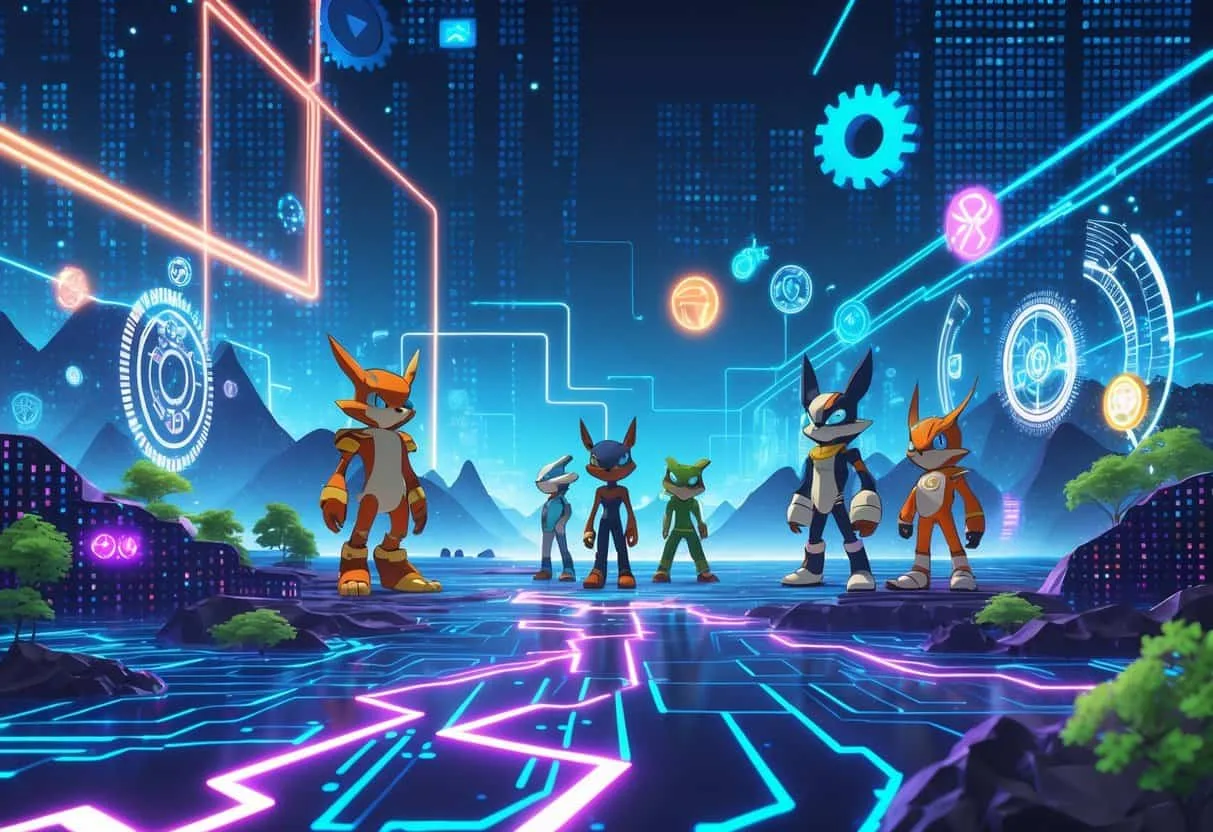
The Digital World in Digimon has always been more than a colorful backdrop for monster battles. It’s a layered realm that reacts to human emotions, beliefs, and even collective fear. What happens there is rarely random — every glitch, evolution, or dark ring carries a symbolic weight tied to real-world experiences. Think of it as a living dreamscape built from data, where your inner world takes shape.
At its core, the Digital World mirrors the way our own minds process information. Just as thoughts can spiral, landscapes warp. When children feel isolated or angry, the digital environment responds with corrupted zones or hostile creatures. This isn’t mere fantasy; it’s a metaphor for how mental states color our perception of reality. The series often shows that fixing a problem inside yourself calms the digital chaos, reinforcing that internal balance can heal external turmoil.
Digimon creator designed the Digital World to function like a subconscious realm. For example, in Digimon Adventure, the Dark Masters’ control over specific regions (like MetalSeadramon’s ocean or Puppetmon’s forest) corresponds to primal fears — the abyss, the untamed wild. Overcoming these zones meant confronting terror itself. Later seasons deepened this by linking data corruption to emotional suppression, showing that what you refuse to face in the real world will eventually manifest in another.
How Data Becomes Emotion
On the surface, the Digital World is “made of data,” but the show repeatedly blurs the line between information and feeling. Digimon are born from data, yet they form friendships, experience sadness, and protect their Tamers with fierce loyalty. This duality hints at something profound: that data, when infused with human connection, becomes something almost spiritual. It’s no coincidence that the strongest Digivolutions happen when a Tamer’s emotions peak — courage, love, hope — because the Digital World feeds on those raw, unfiltered signals.
This concept resonates in our own increasingly online lives. Every message you send, every post you share, carries a fragment of your emotional state. The Digital World just amplifies that truth, showing how quickly digital spaces can turn toxic when filled with anger or fear. It’s a warning wrapped in adventure: technology doesn’t create emotion, it reflects it.
Evolution as Personal Growth and Transformation
Digivolution is the series’ most visible symbol of change. When Agumon becomes Greymon, or when a partner reaches Mega level, it’s not just a power-up — it’s a narrative milestone that parallels the Tamers’ own development. Each transformation requires a catalyst, usually a moment of intense personal clarity or emotional breakthrough. In this way, evolution in Digimon is a mirror for human maturation, where growth only happens when you push past your limits.
Consider Tai Kamiya’s arc. His impatience early on triggers a reckless forced evolution — SkullGreymon — a monstrous, mindless form that teaches a hard lesson: growing too fast, without emotional balance, leads to destruction. This is a blunt metaphor for the dangers of skipping stages in life. Real growth isn’t just about getting stronger; it’s about understanding responsibility, empathy, and timing. Once Tai learns to trust his friends and himself, Agumon achieves the controlled WarGreymon evolution, a symbol of true maturity.
Other Tamers echo this pattern. Sora’s battle with self-worth kept Biyomon from reaching ultimate until she accepted that love doesn’t have to be proven. Mimi’s shift from childish selfishness to genuine care unlocked Lilimon. Each Digivolution is a breakthrough in the human heart first, digital code second. The monsters don’t just evolve — they embody the emotional milestones we all navigate.
The Ugly Side of Evolution: Dark Digivolutions
Not every transformation is heroic. Dark Digivolutions, like SkullGreymon or Megidramon, represent what happens when power is pursued without emotional grounding. These forms are chaotic, painful, and often uncontrollable — a direct metaphor for how ambition, rage, or desperation can twist personal growth into something destructive. In the real world, this might look like success gained through manipulation, or strength built on fear. The message is clear: if you evolve without ethics or connection, you become a monster.
In Digimon Tamers, Takato’s grief and rage at Leomon’s death triggers WarGrowlmon’s dark evolution into Megidramon, a terrifying entity that threatens to collapse the Digital World itself. It takes the calm, grounding presence of his friends to pull him back. That sequence is one of the finest portrayals of grief in children’s media — and a reminder that even when you break, the right support system can help you rebuild.
The Digivice as a Symbol of Connection and Support
A Digivice isn’t just a gadget. It’s a tangible representation of the bond between Tamer and Digimon. Unlike a remote control, it requires emotional input to function — courage, friendship, love — and it measures that connection in real time. The device literally won’t work unless the human partner is in the right headspace. That design choice elevates the Digivice from a toy to a symbol of interdependence: personal growth is never a solo mission.
Each series reinterprets the Digivice slightly, but the core idea remains. In Adventure, the original Digivices are tied to the Crests, which anchor the children to specific virtues. They can’t digivolve past Champion without living those values. In Tamers, the D-Power (or D-Ark) combines card gameplay with emotional bonding, requiring the Tamer to understand their partner’s feelings intimately. The device functions like a therapist’s mirror, forcing kids to reflect on who they are before they can move forward.
On a real-world level, the Digivice is a powerful reminder that tools meant to help us — whether smartphones, therapy apps, or even journals — are only as effective as our willingness to use them with honesty and connection. In the same way, a Digivice without a devoted Tamer is just plastic and light.
Children as Agents of Real-World Change
Digimon doesn’t choose adults to save both worlds. It chooses children. That’s deliberate. The series argues that young people, still open to growth and not yet hardened by cynicism, are the best equipped to bridge the gap between digital and real. Their struggles mirror the ones you likely faced growing up: identity crises, friendship conflicts, family pressure.
By fighting literal monsters, the Tamers fight their inner demons, and the Digital World becomes a training ground for emotional resilience.
Take Joe Kido, the worrier. His anxiety over academics and pressure from his family isn’t just a side note; it’s the core of his character. His Digimon partner, Gomamon, embodies the playful, relaxed side Joe suppresses. Through their bond, Joe learns that responsibility doesn’t mean crushing your spirit — a lesson many adults still struggle with. Similarly, Izzy’s obsessive need to understand everything with his mind is balanced by Tentomon’s simple, curiosity-driven wisdom, showing that knowledge needs heart to matter.
The kids aren’t perfect, and that’s the point. They make mistakes, hurt each other, and sometimes run away. But the Digital World gives them a safe space to fail and try again. The entire Digimon franchise reinforces that children are not just small adults — they’re agents of change precisely because they’re still growing. Their journey reminds you that it’s okay not to have all the answers as long as you’re willing to keep moving.
Battles as Inner and Outer Conflicts
Every fight in the Digital World works on two levels. There’s the visible clash — fireballs, claws, and dramatic monologues — and then there’s the invisible war inside the Tamer. When Matt faces his jealousy and inferiority complex toward Tai, it nearly destroys their friendship. The fight between WereGarurumon and WarGreymon is not just a battle; it’s a physical manifestation of Matt’s turmoil. The conflict only ends when he owns his feelings and realizes that strength isn’t a competition.
This dual-layer storytelling makes battles meaningful. A random encounter with a villainous Digimon often correlates with a character’s specific weakness or fear. For example, Ken Ichijouji’s entire arc as the Digimon Emperor is a grief-fueled attempt to control a world because he couldn’t control the loss of his brother. His battles are externalizations of guilt and self-hatred. When he finally confronts those buried emotions, he stops fighting others and starts healing.
It’s a potent metaphor for any kind of personal struggle. The arguments you have with loved ones, the resistance you feel toward a difficult task, the dark thoughts that surface at night — these are all inner battles. Digimon suggests that you can’t simply delete them. You have to face them, understand them, and evolve through them. Many critics note that this layered approach to conflict is what elevates the show above typical monster-of-the-week fare.
Technology and Nature: The Delicate Balance
The Digital World isn’t all circuits and neon grids. It’s full of forests, oceans, deserts, and mountains — nature recreated through data. This hybrid environment acts as a constant reminder that technology and the natural world aren’t opposites; they’re intertwined. When the Digital World begins to break down in Digimon Tamers, it starts to bleed into the real world, creating a frightening scenario where data and flesh collide. The imagery is apocalyptic, but the message is subtle: if you neglect the environment, you poison the digital ecosystem, too.
Several arcs tackle environmentalism directly. In Adventure 02, the Digimon Emperor’s control rings and dark towers literally exploit digital resources for personal gain, mirroring real-world corporate exploitation of natural resources. The kids’ fight to restore balance is a child-friendly allegory for conservation. Later, in Digimon Frontier, the destruction of the Digital World’s landscape pushes entire species to the brink, echoing biodiversity loss. These stories remind viewers that the line between “virtual” and “real” is thin — harm one, and you eventually harm the other.
On a personal level, the series also prompts you to examine your own screen time and digital habits. How often do you escape into a virtual world to avoid real problems? Digimon doesn’t condemn technology, but it insists on balance. The Digital World is a gift, but only when respected.
Crests, Virtues, and the Moral Compass
The Crests in Digimon Adventure — Courage, Friendship, Love, Knowledge, Sincerity, Reliability, Hope, and Light — act as moral guides for each Chosen Child. They’re not just shiny tags; they’re externalizations of inner values that must be actively practiced. You can’t fake a Crest; the Digivice knows if you’re sincere. This mechanic teaches that true character isn’t about what you claim to be, but how you consistently act under pressure.
Matt’s Crest of Friendship, for example, activates precisely when he stops competing with Tai and starts trusting him. Sora’s Crest of Love glows only after she accepts her mother’s affection, not when she tries to earn it. Each Crest activation is a quiet moral victory, a moment where a child embodies their best self. The world-building heavily implies that these virtues are what keep the Digital World stable — an elegant metaphor for how ethical behavior sustains any society.
Even in later series without literal Crests, the concept echoes. Tamers without strong moral foundations cause digital disasters; those with empathy and integrity restore harmony. The message is timeless: technology may advance, but without a moral compass, it will spiral into chaos.
Friendship and Community as Survival Tools
No Tamer succeeds alone. Time and again, Digimon emphasizes that the strongest weapon is a genuine bond. When the group fractures, Digivolution fails. When they unite, even apocalyptic threats like Apocalymon or the D-Reaper become beatable. This isn’t just a feel-good trope; it mirrors how human beings cope with real trauma.
Isolation worsens mental health, while community can literally save lives.
The series also shows different kinds of friendships. Tai and Matt’s relationship is a competitive brotherhood that must learn to value vulnerability. Sora and Mimi’s friendship bridges toughness and sensitivity. In Tamers, the trio of Takato, Henry, and Rika learn to balance emotion, logic, and independence. Even the Digimon themselves maintain friendships that drive plots — Guilmon’s innocent loyalty tempers Takato’s anxiety, just as Renamon’s guarded wisdom challenges Rika to feel.
Anime News Network’s analysis points out that these layered relationships are what make the show psychologically engaging for older audiences.
In a world where loneliness is an epidemic, Digimon’s lesson is simple but radical: your network is your net worth, emotionally speaking. The Digital World becomes manageable not because someone is strong enough alone, but because they’re brave enough to lean on others.
Mental Health, Resilience, and the Shadow Self
One of Digimon’s most sophisticated themes is its quiet exploration of mental health. Characters grapple with depression (Ken), anxiety (Joe), grief (Takato), and identity crisis (Kari’s light-and-dark balance). The Digital World doesn’t stigmatize these struggles; it literalizes them so they can be fought and processed. Ken’s journey from the Digimon Emperor to a gentle, supportive friend is essentially a recovery arc from trauma-induced narcissism and self-loathing.
The concept of the “shadow self” appears repeatedly. Dark Ocean episodes with Kari explore the pull of despair, and the mysterious black sphere inside her hints at the hidden darkness we all carry. Instead of defeating that darkness, Kari learns to coexist with it, a surprisingly mature resolution. This reframes mental health as not about eradicating negative feelings, but integrating them into a whole, functioning self.
For a show aimed at children, the nuance is remarkable. It suggests that breakdowns are not permanent, and that the most broken person can still find light — as long as they’re willing to reach out. The Digital World wiki entries note that such psychological depth is a deliberate choice by the writers, who wanted to give kids a language for their pain. That makes Digimon more than entertainment; it becomes a quiet curriculum in emotional intelligence.
Conclusion: What the Digital World Teaches Our Own
Digimon’s Digital World is a masterclass in allegory. It takes abstract concepts — growth, connection, morality, mental health — and wraps them in accessible adventures. By the time you finish a season, you’ve internalized lessons about resilience without ever feeling lectured. The monsters you cheer for are really parts of yourself you’re learning to accept and evolve.
The parallels to our own lives are everywhere. We all have Digivices in the form of friendships, mentors, or personal tools that help us transform. We all face SkullGreymon moments where hasty choices lead to regret. And we all need a team — a community — to face the massive, sometimes terrifying data streams of modern existence. In a hyper-digital age, Digimon’s core message is more relevant than ever: the most powerful technology is a heart that knows itself.
"The Digital World is a world born from human dreams and ideas. It’s proof that what we feel inside can build or destroy entire realities." — Gennai’s reflection in Digimon Adventure