Table of Contents
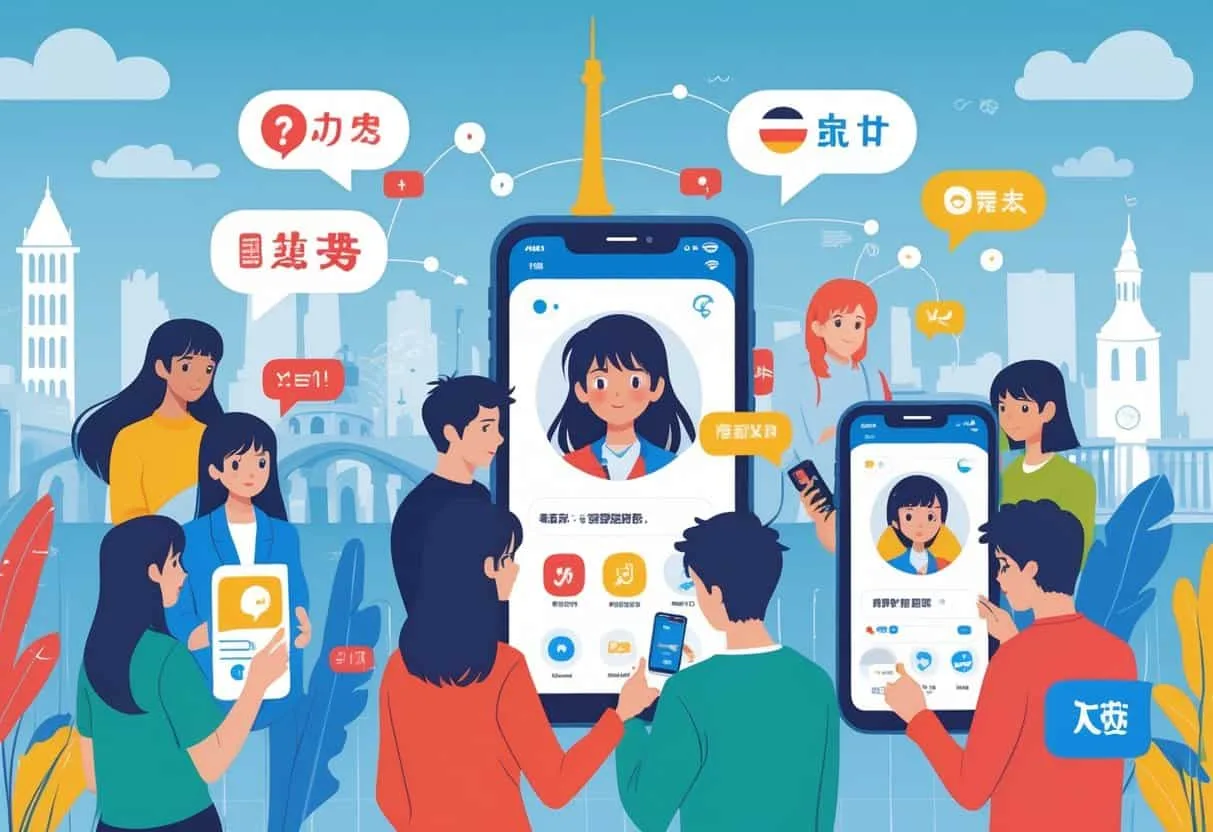
Anime has quietly transformed from a niche passion into a continent-wide cultural force in Europe. Once confined to late-night television slots and specialty shops, Japanese animation now commands a massive audience across streaming platforms, social media, and convention halls. But its influence extends far beyond entertainment: anime is reshaping how millions of Europeans learn new languages, particularly Japanese. As language learning apps scramble to capture this motivated demographic, they’re embedding anime-inspired visuals, storylines, and community features that blur the line between study and leisure. The result?
A surge in learner engagement, deeper cultural immersion, and a redefinition of what a language app can be.
Today’s most innovative language tools don’t just drill vocabulary—they hook learners with the same emotional pull that makes binge-watching a series irresistible. By analyzing user data and trends across the continent, we can see exactly how anime is driving a new era of language education in Europe, from self-study apps to formal classroom supplements.
Key Takeaways
- Anime’s storytelling and cultural depth make language acquisition more memorable and enjoyable.
- Language apps leverage anime subtitles, character-driven lessons, and social sharing to boost daily practice.
- The booming popularity of anime in Europe fuels investment in tech-enhanced, culturally rich learning tools.
- Challenges remain around dialect variation and balancing entertainment with pedagogical rigor.
Anime’s Emergence as a Language Learning Catalyst in Europe
The surge in anime’s popularity across Europe has coincided with a noticeable uptick in Japanese language enrollments, both in apps and traditional classrooms. According to the Japan Foundation, the number of Japanese learners in Europe rose by over 30% between 2015 and 2022, a jump largely attributed to the growing influence of anime and manga. Streaming platforms like Crunchyroll and Netflix have made thousands of hours of content available with local-language subtitles, giving learners an accessible entry point to authentic spoken Japanese.
What makes anime such an effective catalyst? It combines visual narrative, emotional resonance, and a supportive fan ecosystem that turns passive consumption into active learning. Far from a solitary pursuit, anime-inspired language study often becomes a social experience, bridging geographic and linguistic divides.
The Appeal of Japanese Anime to European Audiences
Japanese anime appeals to European viewers for reasons that go far deeper than exotic aesthetics. The medium covers an unparalleled range of genres—from slice-of-life dramas and historical epics to science fiction and psychological thrillers—that often tackle universal themes like identity, belonging, and perseverance. This emotional breadth creates an intrinsic motivation to understand the original dialogue, pushing learners to move beyond dubbed versions.
Anime also tends to present language in context: you hear characters express joy, anger, sorrow, and excitement in ways that align with real conversational Japanese. Even without formal study, repeated exposure to common phrases and sentence structures builds a subconscious familiarity. Many learners report that after watching hours of subtitled anime, they begin to pick up greetings, honorifics, and basic syntax naturally. This passive acquisition lowers the barrier to starting a structured course, as the language feels less alien and more inviting.
From major cities like Berlin, Paris, and Madrid to small towns where anime clubs flourish, European audiences are also drawn to the distinctive visual style. The intricate backgrounds, expressive character designs, and dynamic action sequences create a multisensory learning environment. When a language app mimics that style—using anime-style avatars, backgrounds, and soundtracks—it immediately taps into an emotional connection that generic flashcard apps lack.
Cultural Influence and Storytelling in Foreign Language Acquisition
Anime serves as a cultural bridge, exposing viewers to Japanese customs, social hierarchies, festival traditions, and even culinary habits. These cultural layers transform language learning from a sterile memorization task into a journey of discovery. When you understand why a character uses polite 'keigo' with a senior colleague or casual 'tameguchi' with a friend, the grammar rules become meaningful rather than abstract.
Research in second language acquisition consistently shows that emotional engagement enhances memory retention. Anime’s storytelling capitalises on this by creating high-stakes moments—cliffhangers, heartfelt confessions, comedic misunderstandings—where the language you hear is embedded in a memorable context. A learner might forget a random vocabulary list, but they’ll never forget the dramatic line a hero shouted before a climactic battle.
Language apps increasingly structure their lessons around narrative arcs borrowed from anime. Instead of isolated sentences, you might follow a character through a school day, a fantasy quest, or a café romance. This narrative framing does more than entertain: it provides a natural sequence for introducing grammar points and vocabulary, mirroring the way people actually acquire language.
Community of Practice and Social Media Integration
Anime fandom in Europe is highly social. Online platforms like Discord, Reddit, and TikTok host thriving communities where language learning and anime appreciation intersect. Dedicated servers for Japanese learners often feature channels for sharing favourite clips, correcting each other’s translations, and organising watch parties. This transforms individual study into a communal practice, offering peer support that sustains motivation over the long term.
Social media trends amplify this effect. On TikTok, hashtags like #AnimeLearning and #JapaneseWithAnime generate millions of views, with creators breaking down dialogue, explaining cultural references, and offering pronunciation tips. Language learning apps integrate these social features directly: some allow you to share progress with an anime-style avatar, compete in leaderboards based on your favourite series, or unlock exclusive content by joining an online clan. This sense of belonging can be a decisive factor in learner retention.
The community element also fosters what linguists call a "community of practice" where novices and advanced learners interact, share resources, and refine their understanding of Japanese through authentic materials. For apps, facilitating these interactions—whether through in-app forums or by curating user-generated content—has become a key differentiator. The result is a self-sustaining ecosystem where enthusiasm for anime fuels continuous language practice, and improved language skills, in turn, deepen the enjoyment of anime.
| Aspect | Benefit |
|---|---|
| Visual and narrative appeal | Keeps learners engaged and curious, reducing dropout rates |
| Authentic cultural insight | Builds contextual understanding and intrinsic motivation |
| Social media communities | Provides peer support, feedback, and informal practice opportunities |
| Emotive storytelling | Strengthens memory retention and personal connection to the language |
Features and Strategies in Anime-Inspired Language Learning Apps
As the demand for Japanese learning continues to climb, app developers are innovating rapidly. They’re blending proven pedagogical techniques with the aesthetics and excitement of anime to create highly addictive learning environments. Here are the core strategies fuelling this new generation of language tools.
Interactive Storytelling and Gamification
Apps like LingoDeer and Duolingo (whose Japanese course is one of its most popular) have introduced story-based modules that feel like stepping into an anime episode. You follow a protagonist through a series of adventures, making choices that affect the storyline while practicing new vocabulary and grammar. This interactive format mirrors the branching narratives of visual novels, a genre beloved by anime fans.
Gamification elements—experience points, badges, daily streaks, and character leveling—tap into the same reward loops that make gaming compelling. For instance, completing a lesson might unlock a new outfit for your anime avatar or a special animation clip from a popular series. These mechanics don’t just make learning fun; they create a sense of progression that can translate into hundreds of hours of sustained practice. According to internal data from several apps, learners who engage with anime-themed content have up to 40% higher retention rates at the three-month mark compared to those using traditional text-only courses.
Voice acting plays a pivotal role too. When a character expresses excitement or sadness, the intonation and rhythm of the Japanese language are modelled authentically. Users can replay lines, record their own voice, and receive instant feedback—a feature that dramatically improves pronunciation and listening comprehension over time.
Vocabulary Acquisition and Listening Comprehension
Traditional vocabulary lists pale in comparison to learning words in the context of a dramatic scene. Anime-inspired apps integrate spaced repetition systems (SRS) with clips from actual anime (or custom animations in a similar style), so learners encounter words embedded in narrative. A beginner might first see the word "tomodachi" (friend) when two characters reconcile after a fight; the emotional weight of the scene makes the term unforgettable.
Listening comprehension is likewise strengthened by the variety of speaking styles anime offers. From the rapid-fire slang of a teenager to the formal politeness of a samurai, learners are exposed to a broader range of registers than any textbook dialogue could provide. Many apps now include "listening mode" where you can watch a short anime clip with optional subtitles, then answer comprehension questions. Tools like Language Reactor integrate with streaming services to overlay dual subtitles and click-to-translate functionality, turning any anime binge into a structured learning session.
Emotional Expression and Personal Identity
Language is intimately tied to emotion, and anime excels at portraying the full spectrum. Apps that emphasize emotional expression—teaching you not just what to say but how to say it with appropriate feeling—resonate strongly with learners. Role-playing exercises might ask you to respond to a character’s confession or console a friend, using phrases that carry specific emotional nuances.
This focus on personal identity and expression helps learners project themselves into Japanese, making the language feel like an extension of their personality rather than a foreign code. As they master casual 'boku' or 'ore' pronouns for self-reference (each carrying different connotations of masculinity, humility, or assertiveness), they craft a linguistic identity that matches their self-image. This psychological investment is a powerful driver of fluency and long-term commitment.
Cultural and Economic Impacts on Language Education
Anime’s influence on language education isn’t limited to pedagogy—it’s reshaping entire economic and cultural landscapes. European publishers, schools, and governments are taking note, and the ripple effects are visible in job markets, tourism, and cross-cultural exchange.
Cultural Nuances and Everyday Life Scenarios
Through anime, learners encounter Japanese social codes that are difficult to teach in isolation: the proper way to address a superior, the indirectness of refusal, the significance of exchanging gifts. Apps seize on these moments to deliver mini-lessons on etiquette, such as when to use 'sumimasen' versus 'gomen nasai' for an apology. This kind of embedded cultural education reduces the risk of real-world blunders and prepares learners for interactions with native speakers, whether in a business meeting or a homestay.
Beyond formalities, anime provides a window into daily Japanese life: the layout of a traditional home, the morning commute, school club activities. This authentic portrayal helps learners connect language to lived experience, turning vocabulary from abstract symbols into relatable concepts.
Media Crossovers: Manga, K-Dramas, and Animation
The anime boom has a halo effect on related media. A learner who falls in love with a series often dives into the original manga, where they confront written Japanese in speech bubbles. Others discover K-dramas, Chinese donghua, or animated features from other Asian cultures, expanding the circle of interest. Savvy language apps capitalise on this crossover by incorporating manga-style reading panels, Korean drama dialogue, or collaborative content that lets users toggle between languages.
This convergence of media not only keeps engagement high but also builds a flexible linguistic foundation. Learners begin to recognise patterns and loanwords across languages, and the habit of analysing dialogue transfers from one medium to another. For app developers, the data is clear: offering a pathway from anime to manga to structured courses leads to longer subscription lifetimes and higher satisfaction rates.
Marketing Strategies and Audience Engagement
Marketing teams at language learning companies are harnessing anime’s cultural cachet with pinpoint precision. They sponsor anime conventions like Japan Expo in Paris or Manga Barcelona, offer limited-edition in-app characters tied to hit series, and run social media campaigns featuring well-known voice actors. These initiatives blur the line between education and fandom, converting casual anime viewers into paying language learners.
Thematic challenges—such as "Naruto Week" or "Sailor Moon Vocabulary Sprint"—create buzz and communal participation. Influencers who are both language learners and anime fans amplify the message, demonstrating authentic progress and reviewing apps in a way that feels genuine. This symbiotic relationship between pop culture and edtech marketing is a significant factor in the sustained growth of Japanese language courses across Europe.
Technological Innovation and Digital Transformation
The digital transformation sweeping through language education owes much to the demands of the anime generation. AI-driven personalisation can now gauge a learner’s proficiency from their interactions with anime content and adjust the difficulty level in real time. Speech recognition technology evaluates not only pronunciation but also the emotional tone of a user’s voice, giving feedback on whether you sound convincingly excited or appropriately subdued.
Perhaps the most ambitious developments lie in immersive technologies. Virtual reality (VR) language labs already allow you to step into a rendered anime environment and interact with AI-powered characters. Augmented reality (AR) apps overlay vocabulary and cultural notes onto real-world scenes, blending the physical and digital. As these technologies mature, they promise to make anime-fuelled language learning even more experiential, turning the continent into a giant, interactive classroom.
Challenges and Future Directions for Anime in Language Learning
For all its promise, building language education around anime isn’t without hurdles. Developers, educators, and learners alike must navigate issues of authenticity, pedagogical balance, and the need to serve a diverse global audience.
Dialect Variation and Authenticity
Anime characters often speak in stylised ways that differ markedly from standard Japanese. Kansai-ben, the dialect of the Osaka region, is frequently used to signal a comedic or earthy personality; Tohoku dialect might mark a rustic character. While colourful, these variations can confuse learners who haven’t been exposed to the standard 'hyojungo' taught in classrooms. Apps must therefore carefully curate content, offering explanations for dialectal quirks and ensuring that learners aren’t inadvertently mimicking overly theatrical or gendered speech patterns.
Authenticity is another concern. Some anime, particularly those set in fantastical worlds, employ archaic or invented language that has no practical use. The best learning tools distinguish between "real-world useful" and "genre-specific" Japanese, guiding users toward expressions they can actually deploy. This curation requires deep linguistic expertise and regular updates as the anime landscape evolves.
Learner Autonomy and Informal Language Practice
Anime is a magnificent source of informal, conversational Japanese—the kind you’ll hear on the streets of Shinjuku, not in a business manual. However, relying solely on passive consumption rarely leads to fluency. Successful learners complement their watching with active practice: shadowing characters’ lines, keeping a vocabulary journal extracted from subtitles, and speaking with native partners on exchange platforms like Tandem or HelloTalk.
Apps can foster this autonomy by embedding prompts that encourage users to move from viewing to doing. For example, after watching a scene, the app might challenge you to record a similar conversation with a custom AI partner, or to write a short continuation of the scene in Japanese. The future of anime-based learning lies in seamlessly integrating these active tasks within the entertainment experience, turning every fan into an active participant rather than a passive spectator.
Integration of Diverse Media and Global Success
Anime exists within a sprawling digital ecosystem that includes manga, light novels, fan art, video games, and music. Language apps that isolate anime from this larger universe miss opportunities for rich, multi-modal learning. A learner who reads the manga adaptation of an anime, listens to its soundtrack, and discusses it in a forum is engaging in a holistic language and cultural immersion that a single-device app can’t entirely replace.
For global success—especially in a linguistically diverse market like Europe—apps must also localise intelligently. This means offering interface translations in French, German, Spanish, Italian, and other languages, while still teaching Japanese. It includes subtitles tailored to different proficiency levels and cultural notes that connect Japanese concepts to local equivalents. Moreover, as the popularity of anime extends to other language-learning communities (such as Spanish learners using anime clips with Spanish subtitles for listening practice), there’s an opportunity to create cross-language paths that leverage anime’s universal appeal.
Looking ahead, expect to see deeper collaborations between anime studios and educational platforms. Offline events, co-branded courses, and even anime shorts produced specifically for language learning purposes are likely on the horizon. As the BBC noted in a recent feature on the global anime phenomenon, anime is no longer a subculture but a mainstream cultural force—and its impact on how we learn languages is only beginning to be understood.