Table of Contents
The "Heart of the Cards" has become one of the most recognized and debated concepts in the Yu-Gi-Oh! franchise. On the surface, it is a philosophy—a mantra about trust, destiny, and the spiritual connection between a duelist and their deck. Yet beneath that shimmering veneer of motivational dialogue lurks a brilliantly flexible narrative device that can just as easily be dismissed as plot armor. Is it a genuine symbol of emotional and mystical alignment, or simply a convenient escape hatch for heroes backed against a wall? The tension between these two interpretations fuels the series’ enduring appeal.
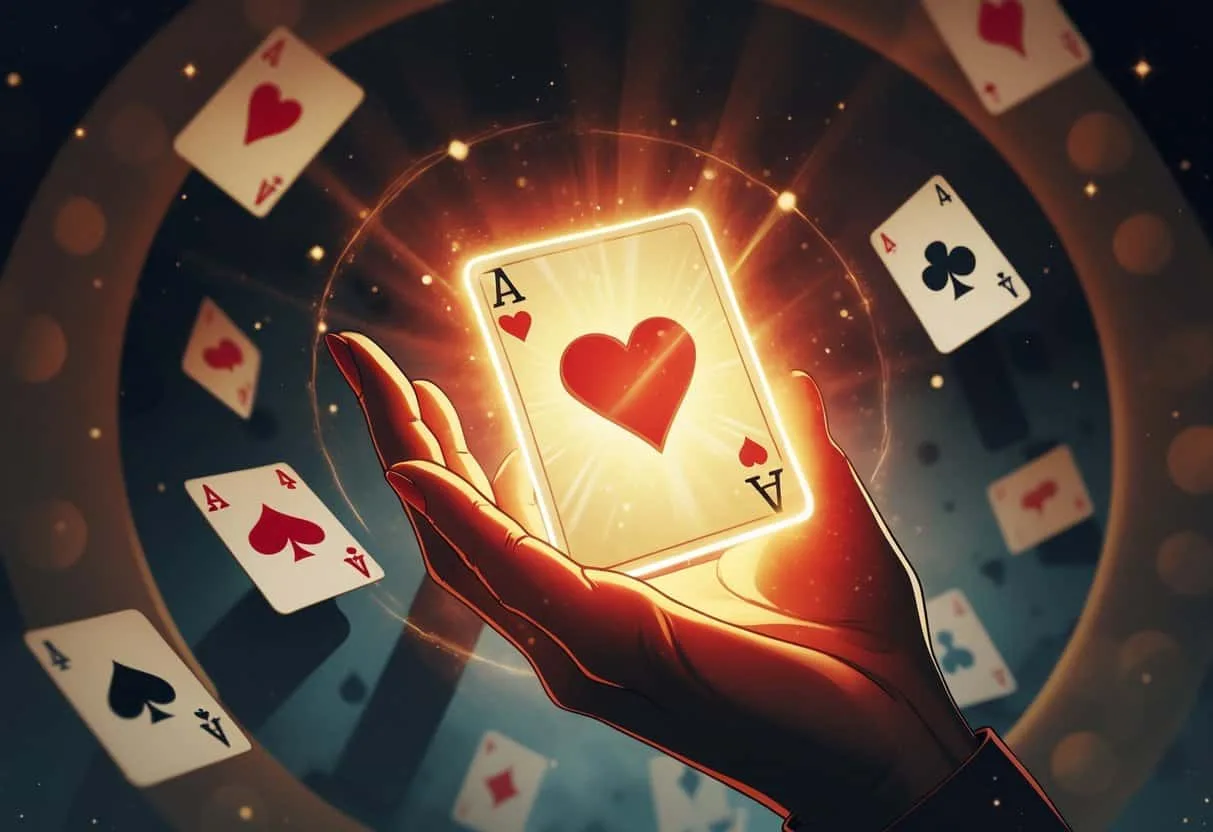
Faith in the cards is never presented as a mere superstition inside the world of Duel Monsters. The phrase itself echoes through critical match points, often right before a protagonist turns certain defeat into an improbable victory. This duality—part spiritual belief, part writer’s safety net—creates a rhythmic unpredictability. Audiences are left guessing whether a duel’s climax will hinge on genuine character growth or on a last-second, lucky top-deck. By analyzing the symbolic roots, the mechanics of storytelling, and the architecture of the card game itself, we can map out exactly why The Heart of the Cards remains such a powerful and polarizing force.
The Symbolism Behind the Heart of the Cards
The phrase alone is a gateway into a larger symbolic framework that the anime deliberately cultivates. It draws on tarot imagery, ancient mythological motifs, and the universal language of passion and protection. Dismissing it as empty pep talk overlooks how deliberately the series wields these layers.
Tarot Archetypes and the Major Arcana Connection
Duel Monsters boasts a card pool packed with references to tarot, and the anime’s thematic heart borrows heavily from the Major Arcana’s journey of transformation. Archetypes like The Emperor, The Empress, and The Hierophant represent authority, creativity, and spiritual tradition—forces that shape a duelist’s decision-making far beyond what a hand of random cardboard can convey. When a character calls on the Heart of the Cards, they are essentially invoking an archetypal guide, trusting that the deck will deliver not just a powerful monster, but a meaningful step in their personal narrative.
Consider the Chariot and Temperance. One stands for willpower and conquest, the other for balance and moderation. A duelist clinging to faith in their deck channels both: they must push aggressively but also find equilibrium under pressure. The Ace of Cups and Ace of Wands, with their themes of new emotional energy and creative spark, mirror the moment of a life-saving draw. For a deeper dive into how tarot’s structure maps to storytelling, explore the rich symbolism of the Major Arcana on dedicated resources like Tarot.com’s guide to major arcana meanings.
The deck does not merely contain cards; it contains archetypes that speak directly to the human experience. When Yugi shouts that he believes in his cards, he is expressing faith that the universe—through the deck—will manifest the right archetype at the right moment. This isn't random chance in the diegetic logic of the show; it’s a form of mystical selection.
Ancient Egyptian Mythology and Divine Favor
Yu-Gi-Oh! roots its entire mystical backstory in ancient Egypt, where fate, ka (spiritual essence), and divine intervention are central. Shadow Games were originally waged by pharaohs who literally wagered their souls, protected by gods whose favor could tip any contest. The modern reinterpretation embeds this same logic into the card game: the Heart of the Cards becomes a secularized prayer to ancient energies. It is not just belief in cardboard, but a ritualized appeal to forces far older and more powerful than any one duelist.
In this framework, a protagonist’s improbable draw feels less like cheating and more like a faint echo of divine protection. Millennia-old spirits—perhaps echoes of the Millennium Items—nudge probability. Mythology often includes stories of chosen heroes who survive impossible odds because a god shields them; here, the deck acts as a conduit. When Atem, the pharaoh spirit, trusts his deck, he is performing a scaled-down version of the same bond that once connected kings to their celestial guardians.
Emotional Energy and the Bond Between Duelist and Deck
The word “heart” isn’t chosen casually. Across the series, emotional intensity correlates directly with a duelist’s ability to summon the exact card they need. Passion, resolve, love for their friends, even a fierce will to protect—all are presented as tangible forces that the deck can sense. This premise suggests that a duelist’s state of mind imprints on the physical cards, subtly influencing the shuffle and draw.
Critics might call this magical thinking, but within the story it operates as a consistent rule. When a character wavers, their deck betrays them with useless draws; when they surrender to faith, the deck rewards them. It’s a feedback loop that transforms card games into character development engines. Protection themes run deep as well: faith becomes a psychological armor that prevents tilt and despair. The act of belief does not guarantee a specific card, but it guards against the self-destruction that panic brings.
Plot Armor in the Duel Monsters Universe
If symbolism is the beautiful face of the Heart of the Cards, plot armor is its pragmatic skeleton. For all the talk of destiny and emotional bonds, the writing team must protect the primary characters from early elimination to sustain a serialized narrative. This necessity shapes duel outcomes in ways that can undercut the illusion of organic competition.
What Is Plot Armor and How Does It Manifest?
Plot armor is the narrative force that shields a protagonist from permanent defeat, no matter how overwhelming the opponent’s advantage. In Yu-Gi-Oh!, it often surfaces through the “last card in hand” miracle. When the hero’s field is empty, their life points are nearly gone, and the villain has a board full of monsters, a single draw can trigger a chain of effects so perfectly tailored that victory materializes from nothing. The sheer frequency of these scenarios across multiple series makes it clear that some mechanism beyond luck is at work.
This phenomenon exists in countless stories, but card-game anime amplify it because the random draw is already part of the rule set. Writers exploit that inherent variance to script comebacks that feel—at least superficially—earned through the game’s own mechanics. The TV Tropes page on Plot Armor catalogues many such examples, and Duel Monsters stands among the most iconic.
What separates Yu-Gi-Oh!’s use of plot armor from lazy writing is how it layers thematic justification on top. The divine protection of the Millennium Puzzle and the protagonist’s emotional state are cited in-universe as the reason the card appeared. The hand-waving is so embedded in the mythos that even the audience sometimes buys it.
Famous Instances of Top-Decking Miracles
Many of the franchise’s most memorable moments hinge on a single card drawn at the exact moment of maximum tension. In the Battle City finals, Yugi faces Marik in a Shadow Game where defeat means death or eternal servitude. With his back against the wall, he draws the perfect combination to summon “Dark Magician” and turn the tide—a feat that would be statistically laughable if not for the show’s spiritual framing. Similarly, in the climactic duel against Dartz, Yugi and Kaiba are driven to the brink before a soul-powered draw brings forth “Legendary Knight Critias” at exactly the right turn.
These sequences become iconic not despite their implausibility but because of it. The Heart of the Cards functions as a signature that stamps the moment with meaning, transforming a mechanical top-deck into a narrative crescendo. The audience learns to anticipate the miracle; the pleasure lies in watching how the show massages the cards to achieve it.
The Cost of Plot Armor: Stakes and Narrative Tension
Perpetual plot armor carries a hidden cost. When the audience knows the protagonist will always survive the Shadow Game or the tournament elimination, the theoretical stakes lose their edge. Writers compensate by endangering side characters—Joey Wheeler’s brutal defeat in the Battle City semi-finals is a prime example—or by introducing risks beyond life points, such as soul forfeiture or the loss of a beloved card.
The Heart of the Cards thus becomes a double-edged sword for the narrative. It keeps the main cast alive and progressing, but it must be balanced with genuine consequences for non-leads. The series’ best arcs acknowledge this by temporarily stripping away the protagonist’s luck, forcing them to rely on skill and strategy. When the miracle return finally happens, the reset feels cathartic rather than inevitable.
Balancing Fate and Free Will: Duel Outcomes and Character Arcs
The tension between destiny and player skill sits at the core of every debate about the Heart of the Cards. Is a hero winning because they are fated to, or because they made the right decisions? The anime works hard to blur that line, preserving the illusion of merit without ever abandoning the safety of divine luck.
Destiny vs. Skill: The Illusion of Player Agency
In-universe, duelists constantly talk about the bond with their deck as if it were a learned skill. They construct meticulous strategies, study their opponents, and occasionally make smart plays that don’t rely on miracle draws. Juxtaposing these moments of genuine tactical genius with top-deck climaxes creates a compelling smokescreen: the miraculous draw is framed as the reward for all the smart moves that came before, as if the deck itself awards loyalty.
This marriage of fate and choice allows characters to feel like active agents even when they are being wheeled toward a predetermined outcome. A duelist who expresses unwavering faith is demonstrating a choice that the narrative rewards with fate-based assistance. The system protects the chosen hero precisely because they chose to believe.
How Protagonists and Side Characters Experience Plot Armor Differently
The asymmetry is stark. Yugi and his closest allies receive the full grace of the Heart of the Cards. Joey Wheeler, though fiercely loyal and growth-oriented, often falls just short of the miracle because his role is to be the relatable underdog who demonstrates that effort sometimes isn’t enough. His deck doesn’t lack love or passion; the narrative simply doesn’t extend the same cosmic safety net to him.
Villains and rivals, meanwhile, enjoy a different kind of plot protection. Kaiba’s technological pride and refusal to rely on the heart keep him narratively suspended between antagonist and antihero, but he still survives losses that would permanently sideline a lesser character. The selective distribution of fate-based luck reinforces the tiered structure of the cast, turning the Heart of the Cards into a litmus test for who is truly central to the story.
World-Building and Mechanics: How the Game Itself Reinforces the Theme
The mechanics of Duel Monsters are deliberately designed to accommodate mystical intervention. The randomness of the draw, the hidden information of face-down cards, and the open-ended combo possibilities provide a playground for narrative miracles. The game’s structure itself becomes a co-conspirator in selling the Heart of the Cards.
The Rules of Duel Monsters and the Element of Randomness
Decks are shuffled, hands are random, and no player can predict exactly what they will draw next. This inherent randomness is the engine of suspense. Unlike chess, where perfect information reigns, Duel Monsters thrives on hidden variables. The Heart of the Cards exploits this uncertainty, treating it not as chaos but as a field of potential that faith can shape.
In the early seasons, the rules were often fluid—sometimes deliberately, to heighten drama. Cards like “Mirror Force” and “Swords of Revealing Light” could appear at narratively perfect moments because the script treated the deck as an extension of the character’s soul, not a statistical model. As the real-world card game formalized its rules, the anime still retained the dramatic license to bend them, preserving the magic.
Deck Building as a Reflection of the Duelist’s Soul
Main characters don’t just assemble decks; they craft identities. Yugi’s deck centers on the “Dark Magician”—a card tied to his past life and deepest loyalties. Kaiba’s revolves around the raw power of “Blue-Eyes White Dragon,” a monster that symbolizes his obsession with dominance and his technological, anti-faith philosophy. Joey’s deck is a chaotic but heartfelt mix of luck-based cards and scrappy warriors that mirror his unpolished determination.
This fusion of mechanics and identity means that when a character executes a winning combo, it feels like a personal statement, not just a game action. The Heart of the Cards amplifies this by suggesting that the deck literally chooses its master and aligns its draws to reflect that choice.
Tournament Arcs and the Hero’s Journey
Structured tournaments provide the perfect stage for the Heart of the Cards to shine. Duelist Kingdom, Battle City, and later arcs each follow a deliberate challenge curve that mirrors the hero’s journey. Early duels test basic faith, mid-tournament conflicts introduce staggering obstacles that seemingly require luck to overcome, and the final showdown demands total surrender to the deck’s will.
Along the way, side duels flesh out the world—showing what happens when characters lack the protagonist’s blessing—and rivalries inject strategic depth. The tournament format ensures that even when plot armor feels strong, the stakes of elimination are temporarily real for everyone else. The audience watches the world operate, learning that the Heart of the Cards is not a universal law but a privilege of a few chosen souls.
Character Development Through Cards: Archetypes and Growth
The decks do not merely reflect static traits; they evolve with the characters, recording losses, triumphs, and internal shifts. The Heart of the Cards becomes a mirror of growth, not just a get-out-of-jail-free mantra.
Yugi Muto and Yami Yugi: The Duality of Trust
Yugi’s journey is a long lesson in self-belief. Initially timid and reliant on the shadow of the pharaoh, he gradually learns that the Heart of the Cards is not about calling on an external god but about trusting his own instincts and the bonds he has formed. When he finally stands alone, without Atem, he must reforge that faith on his own terms. His deck, still anchored by the “Dark Magician” and the “Silent” series of cards, becomes a testament to earned confidence rather than inherited mysticism.
Seto Kaiba: Defying the Heart Through Technology
Kaiba’s entire character arc is a rejection of destiny. He mocks the Heart of the Cards as sentimental nonsense and builds his power on cold logic, corporate might, and the sheer force of his “Blue-Eyes White Dragon.” Yet, even Kaiba cannot fully escape the pull of the narrative’s mystical undercurrent. His obsession with the pharaoh and his eventual journey into the afterlife to duel Atem one last time suggest that his defiance is its own form of faith—a belief in the supremacy of human will that the universe itself is curious enough to reward.
Kaiba’s technological advancements, such as the creation of virtual worlds and the Duel Disk system, represent an attempt to mechanize fate. He wants a world where the perfect draw comes from calculation, not emotion. The series treats this as both admirable and insufficient, a half-victory that keeps him perpetually second to the more spiritually open Yugi.
Joey Wheeler: The Underdog’s Reliance on Luck and Loyalty
Joey’s relationship with the Heart of the Cards is the most human. He starts with no mystical heritage, no ancient artifact, just a borrowed deck and a fierce desire to prove himself. His luck-based cards—like “Graceful Dice” and “Time Wizard”—physically embody his gamble on faith. Yet, on the cusp of his greatest victory against Marik, the draw fails him. He collapses, proving that faith alone cannot always override the narrative’s plan.
This bittersweet moment gives the Heart of the Cards its necessary texture: sometimes it answers, and sometimes it stays silent, leaving only the memory of effort.
External Perspectives: What Makes the Heart of the Cards Endure
Beyond the in-universe logic, the Heart of the Cards has cemented itself in pop culture because it speaks to a universal desire: to believe that our pursuits are guided by something more than random chance. The phrase has been parodied, analyzed, and adopted by real-world card game communities as a tongue-in-cheek mantra before revealing a top-deck. Its power lies in its ambiguity; it can be invoked with earnest hope or with ironic self-awareness, and both feel authentic.
Critical discussions often compare it to concepts like the "luck-manipulation" tropes seen in gambling films or the deus ex machina rescues of classic mythology. For a closer examination of this narrative tool, the comprehensive Yugipedia entry on the Heart of the Cards tracks its appearances across the anime and manga, revealing a remarkably consistent pattern. Meanwhile, broader writing analysis shows that audiences accept improbable escapes far more willingly when the protagonist has demonstrably suffered and risked everything beforehand.
The franchise survived multiple spin-offs in part because each new hero—Jaden, Yusei, Yuma—reinterprets the core concept. Sometimes it becomes a literal energy force, sometimes a philosophy of movement and connection. The details change, but the central question remains: Are you worthy of the miracle? And the show always answers: you are if you believe hard enough, and if your name is in the title.
Ultimately, the Heart of the Cards succeeds because it never forces a single answer. It is simultaneously a vivid piece of visual and verbal symbolism, a cleverly disguised writing crutch, and a genuine life lesson wrapped in a children’s card game anime. The analytical perspective reminds us that fiction need not choose between meaning and convenience. The best narrative devices—like the best cards in a duelist’s hand—do both at once.