Table of Contents
The 1990s are often called the golden age of anime, and it’s not hard to understand why. That single decade produced a staggering number of series and films that fundamentally reshaped the look, feel, and ambition of Japanese animation. It’s the era that gave us neon-drenched cyberpunk, bombastic shonen showdowns, and psychological dramas that still feel daring three decades later. The sheer volume of creative output—combined with a perfect storm of economic change, technological shifts, and a newly connected global fandom—makes the 90s a period that continues to echo through modern animation.
The 90s stand out because they mixed strong storytelling, wild art styles, and characters you just can’t forget. That combination left a permanent mark on fans around the world and set standards that studios still chase today. Even newcomers who discover 90s titles through streaming services are often surprised by how contemporary the pacing, emotion, and visual flair feel.
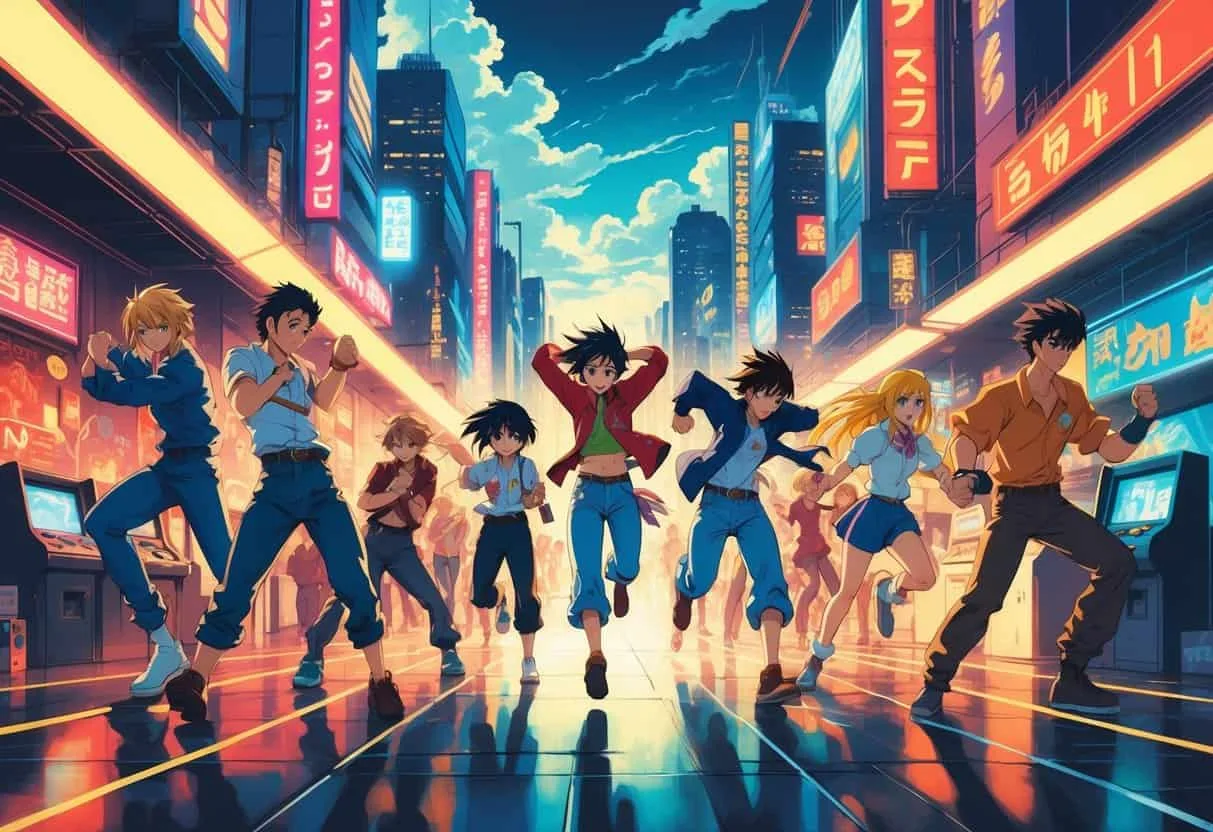
Back then, the anime industry pushed its creative limits with a confidence that felt untethered from the safer formulas of earlier decades. Studios rolled out shows that grabbed new viewers not just in Japan but everywhere, from Latin America to Europe. Anime began to be seen not as a niche curiosity but as a legitimate art form capable of handling everything from slapstick comedy to existential dread.
Fandom outside Japan exploded, turning anime into a genuinely global phenomenon. What’s remarkable is how many 90s series are still getting watched, discussed, and re-released in high definition. The fact that a series like Cowboy Bebop can air on adult-oriented programming blocks in multiple countries and still attract new fans decades later says a lot about the staying power of these shows.
If you’re curious about why the 90s still echo in modern anime, you’ve got to look at the stories, the style, the economic currents, and the cultural shifts that all collided during that decade. The groundwork laid back then is still holding up shows today.
Defining the Golden Age of 90s Anime
The 1990s marked a real turning point for Japanese animation. You can see its fingerprints all over pop culture, in the rise of powerhouse studios, and in how anime got made. This decade didn’t just produce great content—it redefined the medium’s possibilities and helped anime shed its reputation as disposable children’s entertainment.
The Cultural Impact of Japanese Animation
In the 90s, anime went from a niche interest to a full-blown global force. The "otaku" culture really took off, with fans getting super invested in anime, manga, video games, and all the related merchandise that accompanied them. Anime like Neon Genesis Evangelion and Pokémon didn’t just entertain—they changed fashion, music, advertising, and even the way corporations thought about cross-media branding. Pokémon, in particular, demonstrated that a Japanese multimedia franchise could dominate children’s entertainment worldwide, generating billions in revenue from games, cards, and toys.
Japanese animation started popping up in places you wouldn’t expect, influencing pop culture far beyond television. Music videos borrowed anime aesthetics; fashion designers referenced Akira and Ghost in the Shell; and Hollywood began eyeing anime properties for adaptation. This era made anime matter to both kids and adults, proving that animation wasn’t limited by age or origin.
By the end of the 90s, anime wasn’t just a Japanese thing anymore. It had been woven into global youth culture, setting the stage for the streaming-driven anime boom that would arrive two decades later.
Key Studios and Influencers
A handful of studios and creators really defined the 90s output. Studio Ghibli consolidated its reputation with films like Princess Mononoke, which shattered box office records in Japan and introduced Hayao Miyazaki’s name to a much wider international audience. Madhouse became synonymous with bold, film-quality television series such as Trigun and Perfect Blue, while Production I.G. pushed the envelope with complex sci-fi narratives like Ghost in the Shell.
Rumiko Takahashi remained a titan during this period, with manga and anime like Ranma ½ and Inuyasha mixing humor, romance, and supernatural action in a way that built fiercely loyal fanbases across multiple continents. Meanwhile, Gainax, already known for Gunbuster, unleashed Neon Genesis Evangelion, a series that deconstructed the mecha genre and forced the industry to reconsider what a TV anime could say about depression, identity, and human connection.
This was also the era that launched a generation of directors and animators who’d go on to shape anime’s future: Shinichiro Watanabe (Cowboy Bebop), Satoshi Kon (Perfect Blue), and Mamoru Oshii (Ghost in the Shell) among them. Their work set new standards for character depth, mature themes, and visual storytelling that transcended language barriers.
Evolution of Animation Techniques
The 90s were a period of big technical shifts. Studios began blending classic hand-drawn cel animation with early digital tools, creating a hybrid look that retained the warmth of traditional art while allowing for more ambitious camera movements and effect work. That mix made visuals pop without losing the old-school anime vibe that fans loved.
Animation got smoother, backgrounds grew richer, and overall quality took a noticeable jump. A single episode of a 90s show often contained more detailed shading and intricate linework than entire seasons of earlier series. Color design evolved too: Cowboy Bebop’s muted, smoky palette, Revolutionary Girl Utena’s surreal dueling arenas, and Serial Experiments Lain’s cold, digital textures all demonstrated that color could be a storytelling tool in itself.
Studios experimented with lighting, particle effects, and compositing techniques that added a cinematic feel to television. Digital ink and paint began replacing traditional cels toward the end of the decade, speeding up production and making it easier to export shows internationally. This transition, though sometimes controversial among purists, helped anime travel further, with fan translations and wider distribution networks rapidly expanding access.
Early CGI made tentative appearances, most famously in the Tachikoma sequences of Ghost in the Shell: Stand Alone Complex (though it technically premiered later, the groundwork was laid in 90s experiments) and in certain effects shots in Princess Mononoke. These forays showed that digital tools could complement, rather than replace, hand-drawn artistry—a philosophy that continues to guide Japanese animation.
Iconic Series and Creative Innovations
The 1990s gifted the world a roster of anime shows that fundamentally rewrote the rulebook. Fresh ideas in art direction, narrative structure, and genre blending took centre stage, and many of the titles from this decade remain on “best anime of all time” lists. The influence lingers not only in direct homages but in the very DNA of modern storytelling.
Groundbreaking Anime Titles
The 90s brought a wave of anime that pushed boundaries in every direction. JoJo's Bizarre Adventure (the 1993 OVA and later arcs) arrived with its flamboyant character designs, body-horror-inflected powers, and a generational saga that felt utterly unlike anything else airing at the time. It planted seeds that would eventually grow into one of the most memeable and beloved franchises in the world.
Lupin III continued its long run, but the 90s brought a particularly stylish era with television specials and movies that modernized the gentleman thief while keeping his irreverent charm. Mecha remained a dominant force: Macross expanded its mythology with Macross 7 and Macross Plus, which blended idol music with high-stakes space combat. Meanwhile, Robotech, though an Americanized mashup of earlier shows, introduced many Western viewers to the idea of interconnected, serialized robot warfare.
Titles like Dragon Ball Z turned action anime into a worldwide phenomenon, popularizing the transformation sequence, power-ups, and shouting matches that would become shonen staples. On the darker end, Berserk (1997) delivered a medieval nightmare that proved anime could handle brutal, philosophical fantasy with the same gravity as live-action epics. Each of these series offered characters and visuals that viewers had never encountered before, demonstrating that anime could balance kinetic action with genuine emotional weight.
Influential Genres and Storytelling
Many of today’s popular genres either crystallized or found their footing in the 90s. The harem comedy, for example, moved from scattered manga experiments into a recognizable template with shows like Love Hina (which straddled the late 90s and early 2000s). While the formula would eventually grow repetitive, the 90s examples laid out the archetypes—the clumsy but kind protagonist, the tsundere love interest, the childhood friend, the exotic outsider—that still populate romantic comedies.
The decade didn’t shy away from heavier themes. Neon Genesis Evangelion plunged into depression, parental abandonment, and the terror of human intimacy, all wrapped in a giant-robot shell. Revolutionary Girl Utena used fairy-tale motifs and ornate sword fights to interrogate gender roles, trauma, and the illusions of chivalry. Even lighter series wove dramatic backstories beneath their surface action; Rurouni Kenshin balanced slapstick and swordplay with a wandering samurai’s quest for atonement.
Stories started blending drama, action, and comedy so seamlessly that there was something for almost every temperament. Complex characters with ambiguous motives became the norm rather than the exception, and narratives frequently avoided tidy resolutions. This era made anime dramatically more flexible—no longer confined to a single demographic or tone, but a medium capable of expressing the full spectrum of human experience.
Original Video Animation (OVA) Boom
The 90s represented the golden era of OVAs. Direct-to-video releases freed creators from television broadcast standards, runtime limits, and the need to pad stories across dozens of episodes. The result was a flood of high-quality, experimental works that often targeted older audiences. Titles like Gunbuster (technically late 80s but influential into the 90s) and Giant Robo: The Day the Earth Stood Still showcased lavish animation and operatic storytelling that TV budgets simply couldn’t support.
OVAs became a playground for niche genres and daring concepts. Battle Angel Alita condensed a sprawling manga into a tight, visceral two-episode package. Armitage III explored questions of artificial life and gender politics in a cyberpunk setting. Even established franchises used OVAs to release content that would never pass network censors, such as the gorier installments of Violence Jack or the psychological intensity of Legend of the Galactic Heroes (which continued into the 90s as a long-running OVA series).
For international fans, OVAs were often the first exposure to uncut, uncompromised anime. Without OVA distribution networks, many of the decade’s most memorable titles might have remained unknown outside Japan. The OVA boom cultivated a sense of discovery and exclusivity that fueled collector culture and cemented the idea that anime could be art rather than just programming.
Global Expansion and Fandom
In the 90s, anime broke free of Japan’s borders in a way it never had before. New distribution channels, passionate fan communities, and a curious Western media landscape all conspired to turn Japanese animation into a truly international phenomenon. Fansubs and even piracy, for better or worse, played a critical role in bridging the gap between Tokyo production committees and eager viewers who had no other access.
Anime Distribution and Localization
Anime’s visibility skyrocketed when cable channels like Cartoon Network launched blocks dedicated to action-oriented animation. Dragon Ball Z and Sailor Moon became daily staples after school, heavily edited at first but gradually made more faithful as demand grew. VHS and later DVD releases allowed fans to own entire series, which was a radical shift from the days of trading fifth-generation dubs among friends. Distributors like ADV Films, Manga Entertainment, and Pioneer (later Geneon) built libraries of 90s titles, often releasing both dubbed and subtitled versions to cater to different preferences.
Localization could be a contentious process. Harmony Gold’s earlier work with Robotech had set a precedent for heavily rewriting scripts, removing Japanese cultural references, and stitching unrelated shows together into a single narrative. By the 90s, however, the industry largely moved toward more respectful approaches. Dubbing quality improved significantly, and subtitled “subs” became widely available for purists. Some regions like China, the Philippines, and Latin America began importing anime directly, often with Spanish or Portuguese dubs that became cultural touchstones in their own right.
The Pokémon phenomenon in particular demonstrated how carefully coordinated localization could turn an anime into a global lifestyle brand. Its simultaneous rollout across multiple continents set a template for how entertainment properties could be managed transnationally.
Rise of Anime Clubs and Fan Culture
If you were an anime fan in the 90s, your local anime club was the social hub of your obsession. These grassroots gatherings often met in university lounges, comic book shops, or living rooms, screening bootleg tapes and fan-subbed VHS cassettes. Clubs like the Cartoon/Fantasy Organization (C/FO) helped codify early fandom, publishing newsletters, organizing convention appearances, and building mailing lists that connected enthusiasts across states and countries.
Fans didn’t just watch anime—they produced zines, wrote articles for nascent online forums, and created fan art that circulated by mail or on early websites hosted on Geocities. The communal nature of 90s fandom meant that discovering a new series felt like a shared treasure hunt, and the scarcity of official releases gave discussions around plot theories and character motivations an almost academic urgency.
These clubs built a resilient cultural infrastructure that survives today in the form of massive conventions like Anime Expo, which started in 1992 and now attracts over 100,000 attendees. The spirit of those 90s meetups—passionate, slightly obsessive, and fiercely inclusive—still pulses through contemporary anime communities, even as streaming has made access instantaneous.
Anime in Western Media
By the late 90s, shows like Cowboy Bebop and Neon Genesis Evangelion were earning praise from film critics and late-night TV hosts. Mainstream magazines like Wired and Time began running features on the “anime invasion,” often framing it as a cutting-edge, slightly dangerous import from Japan. Anime was proving it could tell mature stories with unique visual languages that challenged Western assumptions about cartoons.
Cartoon Network’s Toonami block, launched in 1997, became a cultural catalyst. Hosted by a charismatic CGI robot named TOM, Toonami presented anime like Dragon Ball Z, Gundam Wing, and Tenchi Muyo! as cool, event television. The block cultivated a loyal teenage audience and helped mainstream anime among viewers who might never have visited a specialty store. Its late-night offshoot, Adult Swim, would later push boundaries even further with uncut broadcasts of Cowboy Bebop and Trigun.
Conventions grew in size and number, and specialty magazines like Animerica provided monthly doses of news, episode guides, and interviews. The Western perception of anime shifted from a niche hobby to a legitimate entertainment category, laying the groundwork for the streaming giants that now invest billions in anime content.
The Impact of Piracy and Fansubs
Fansubs—those painstakingly produced, fan-made subtitled tapes—were the lifeblood of 90s international anime fandom. Before official translations were widespread, fansub groups operated like semi-professional collectives, purchasing raw Japanese laserdiscs, translating scripts, typesetting subtitles, and distributing the results on VHS through a network of trusted traders. Major series like Sailor Moon and Ranma ½ were frequently circulated in fansub form long before commercial dubs appeared.
Piracy gets a bad rap, but it’s impossible to discuss the 90s anime boom without acknowledging its role in building early international demand. Fansubs filled a yawning gap when official channels simply did not exist. Many of the executives who later ran legitimate anime distribution companies started as fansubbers or tape traders, and the community-driven model proved that a viable market for subtitled anime existed overseas.
Without the underground network of fansubs and early internet file sharing, a huge number of 90s titles would likely have remained unknown outside Japan. The tension between piracy and official distribution would eventually lead to the development of legal streaming platforms designed to provide the instant access fans had grown accustomed to—a direct legacy of the 90s fansub era. For a deeper look at how fansubbing shaped global anime culture, you can explore its history on Wikipedia, which details the movement that bridged two continents before the industry caught up.
Legacy, Influence, and Enduring Appeal
The 1990s altered how anime influenced animation around the globe and how audiences interact with media franchises. The aesthetic and narrative choices made during that decade set a high bar that still informs the way studios approach storytelling, character design, and even merchandising.
Japanese Cartoons' Effect on Global Animation
90s anime fundamentally changed how cartoons were made everywhere. Even Disney began incorporating anime-influenced stylization and pacing into some of its television shows after seeing the success of mature, serialized Japanese imports. Western action series like Avatar: The Last Airbender (though released later) openly credit anime as a primary inspiration, drawing heavily on the emotional depth and long-form storytelling that 90s shows pioneered.
Programmers started to recognize that animation could attract adult audiences if it treated its subject matter with intelligence and visual ambition. The Thundercats reboot and various Hanna-Barbera revivals attempted to capture a fraction of the moody, kinetic energy that defined Batman: The Animated Series—a show itself influenced by the stylization of anime. Long story arcs and genuine character development became more common in Western animation, directly reflecting the narrative strategies that thrived in 90s Japan.
Today, the lines between “anime” and “Western animation” have blurred, with co-productions like Castlevania and The Boondocks borrowing heavily from the visual language and storytelling rhythms forged in the 90s. This cross-pollination can be traced back to the moment when studios on both sides of the Pacific realized that animation was a medium, not a genre.
Anime Merchandise and Commercial Success
The success of 90s anime ignited a merchandising boom that transformed how the industry monetized its properties. Action figures, model kits, apparel, and video games based on series like Dragon Ball Z, Gundam Wing, and Sailor Moon generated revenue streams far beyond broadcast fees. Bandai, in particular, capitalized on the Gundam plastic model (gunpla) craze, building an empire that endures today.
Fans could connect with their favorite shows in material ways, collecting everything from lunchboxes to limited-edition artbooks. This era taught Japanese producers that an anime’s true financial power often lay not in television ratings but in the aftermarket: music CDs, character goods, and home video sales. The “media mix” strategy, wherein a franchise is designed from the start to span manga, anime, games, and toys, became standard practice, heavily influenced by the blockbuster successes of the 90s.
Many 90s collectibles now command high prices among nostalgia-driven collectors, proof that the commercial ecosystem built during that decade continues to generate value. For a snapshot of how anime became commercially entrenched in Western markets, historical records show the massive growth spurred by 90s hits.
90s Anime in Modern Culture
You still see 90s anime’s influence everywhere in contemporary media. Fashion designers regularly reference the bold silhouettes and vibrant color palettes of characters like Sailor Moon or Spike Spiegel. High-end streetwear collaborations with Evangelion or Berserk sell out within minutes, and modern pop artists sample sounds and visuals that originated in 90s OVAs.
Modern shows and movies love to reference or even outright remake 90s classics. Cowboy Bebop received a live-action adaptation, Sailor Moon Crystal retold the original story with updated animation, and Dragon Ball Super directly continues the narrative that began with Dragon Ball Z. The fact that studios keep returning to these properties underscores their staying power. Reboots and sequels are not merely nostalgic cash grabs; they are acknowledgements that the 90s well of creativity still holds water.
Pop culture events, conventions, and social media communities ensure that 90s anime refuses to fade. New fans stumble onto series like Yu Yu Hakusho or Trigun through streaming recommendations, and they’re often shocked at how fresh the writing feels. The decade’s characteristic blend of hand-drawn grit and daring storytelling still inspires contemporary creators such as MAPPA and Science SARU, who cite 90s titles as formative influences.
The enduring appeal lies in the decade’s willingness to take risks—risks that modern, algorithm-chasing production committees sometimes avoid. Shows from the 90s trusted their audiences to handle ambiguity, slow pacing, and unsettling conclusions. That trust built a loyalty that spans generations and continues to draw in viewers who crave animation that respects their intelligence.
For a broader look at how anime history unfolded block by block, the chronicle of the medium reveals just how pivotal the 90s truly were.