Table of Contents
The Early Days: Console Origins and Pixelated Sagas
The journey of Dragon Ball video games began in the mid-1980s on Nintendo’s Famicom, a console with only a fraction of the horsepower available today. Titles such as Dragon Ball: Dragon Daihikyou (1986) were side-scrolling action adventures and primitive strategy games that followed the original manga’s quest for the Dragon Balls. The hardware limited developers to simple sprites, basic collision detection, and chiptune music. Yet these modest beginnings established a critical pattern: every game, however limited, attempted to translate Akira Toriyama’s kinetic art and Toei Animation’s dynamic show into an interactive format.
On the Super Famicom, the visual fidelity improved, and the series began to experiment with genres. Some titles veered into role-playing, while others toyed with early fighting mechanics. By the time the 16-bit era closed, the foundation was set for a more focused identity. Fans wanted to throw Kamehamehas, fly across screen-spanning arenas, and feel the speed of the anime—and that desire would soon crystallise into a fully fledged fighting game template.
The Budokai Revolution: 3D Fighting Takes Shape
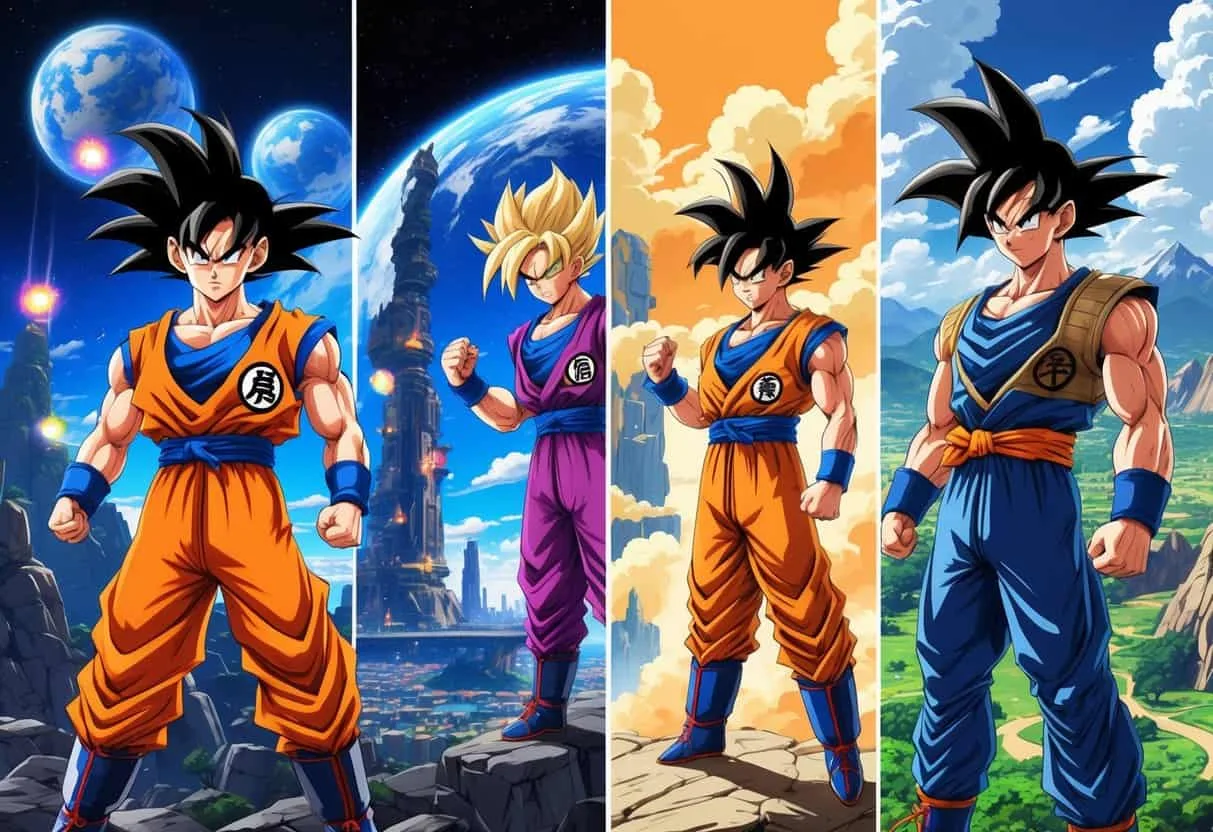
When Dragon Ball Z: Budokai launched on PlayStation 2 in 2002, it was a watershed moment. Developer Dimps discarded the 2D plane and gave players a fully 3D arena fighter that borrowed from the likes of Virtua Fighter and Tekken, yet felt distinctly Dragon Ball. For the first time, you could chain together light and heavy attacks, charge your ki, and unleash iconic special moves with cinematic camera angles. The game covered the Saiyan and Frieza sagas, introducing millions of Western players to the joy of performing a Galick Gun duel with static beam clashes.
Budokai 1 and 2: Laying the Foundation
Budokai impressed with its cel-shaded art style that mimicked the anime, but its fighting system was relatively rigid. You moved along a single axis relative to your opponent, and combos were pre-scripted strings. Still, the Dragon World story mode, capsule skill system, and unlockable characters gave the game serious replay value. Budokai 2 refined the formula by adding more fighters—including Dabura and Majin Vegeta—and introduced a board game-style story mode that, while divisive, attempted to fuse narrative progression with strategic map movement. The core combat tightened up, with slightly faster movement and expanded special moves, but it remained fundamentally a one-on-one arena fighter.
What made the early Budokai titles so important was their accessibility. You didn’t need to master frame data or complex inputs; the game was built to let anyone pick up a controller and feel like a Super Saiyan. That philosophy carried through the entire series and became a benchmark for future Dragon Ball fighters. For many, Budokai 2 was a local multiplayer staple, the game that filled living rooms with hours of ki charging and teleporting counters.
Budokai 3: The Peak of the Dimps Era
Released in 2004, Dragon Ball Z: Budokai 3 is widely regarded as the zenith of the series. Dimps scrapped the board game map and replaced it with a free-flight overworld where you could navigate Goku across Earth and Namek. The fighting system underwent a dramatic overhaul: you could now sidestep, teleport behind opponents at will, and cancel into supers from almost any string. The move from static spell-button inputs to a more fluid combo system rewarded creativity and timing. Ultimates looked spectacular, and beam struggles could be won with furious stick rotations.
The character roster ballooned to over 40 fighters, covering the entire Dragon Ball Z timeline plus movie villains like Broly and Cooler. Characters felt distinct—Goku’s teleport-heavy mix-ups, Vegeta’s high-damage pride attacks, and Krillin’s tricky ki blasts all demanded different approaches. The capsule customisation system allowed players to equip stat boosts, new moves, and passive abilities, adding a rudimentary RPG layer that foreshadowed the direction the franchise would take years later.
Budokai 3 still enjoys a competitive cult following, thanks in large part to its depth and balance. Fan-made tier lists, online tournaments through emulation, and even a re-release in the Budokai HD Collection kept the game alive long after the PS2’s retirement. It crystallised the idea that a Dragon Ball game could be taken seriously as a fighting game while remaining a faithful tribute to the source material.
Infinite World and the Ceiling of the Formula
Dragon Ball Z: Infinite World (2008) arrived on the PS2 near the end of the console’s life cycle. Using Budokai 3’s engine, it added stamina management, more punishing combo breakers, and a host of mini-games. The roster included characters from Dragon Ball GT, but the core combat felt incrementally adjusted rather than revolutionary. While still a solid fighter, Infinite World suggested that the Budokai template had reached its logical endpoint. Players were ready for something that moved combat into fully open 3D spaces and expanded the Dragon Ball experience beyond tournament-style bouts.
Expanding the Arena: Budokai Tenkaichi and Over-the-Shoulder Combat
While Dimps focused on tight, technical combat, Spike Chunsoft took the franchise in a different direction with the Budokai Tenkaichi series. Debuting in 2005, Tenkaichi abandoned the side-view arena in favour of a behind-the-back camera and massive, destructible 3D environments. You could fly freely across mountains, oceans, and cities, matching the anime’s scale in a way Budokai never could. The combat was flashier and more chaotic—perfect for recreating the rapid teleport clashes and multi-opponent beatdowns of the show.
Tenkaichi 3 (2007) remains a colossal achievement, boasting over 160 characters from the original Dragon Ball through GT. Every form, every transformation, and even obscure characters like Appule were playable. The game welcomed button-mashers but hid enough depth for those willing to master the parry, vanish, and dash mechanics. Its split-screen versus mode became a party staple, and its influence can be traced directly to today’s arena fighters like Dragon Ball: Sparking! Zero.
The Tenkaichi lineage proved that Dragon Ball games didn’t need to choose between accessibility and scale. You could have a roster as deep as the anime and a camera that made you feel like you were flying. This philosophy of freedom would later echo in the exploration systems of Kakarot, even if the combat style remained distinct.
Xenoverse: A Persistent World and Player-Created Hero
In 2015, Dimps returned with Dragon Ball Xenoverse, a title that merged Budokai-style combat with a city hub, MMO-lite features, and a time-traveling narrative. Players created their own custom character—from race to fighting style—and were tasked with correcting distortions in the Dragon Ball timeline. Conton City served as a social space where you could accept parallel quests, train with mentors, and challenge other players’ avatars.
The skill system deepened the RPG elements. You could mix and match any character’s signature techniques on your custom fighter, leading to wild combinations like a Namekian using Instant Transmission and Special Beam Cannon. The sequel, Xenoverse 2, expanded this with more races, transformations, and a living world that received regular content updates for years. While the core fighting remained closer to Budokai than Tenkaichi, the addition of lock-on sprinting, stamina breaks, and snap-vanishing gave it a faster, more aggressive feel.
Xenoverse’s biggest contribution was proving that Dragon Ball games could support long-term engagement through online events, raids, and seasonal festivals. It bridged the gap between the arcade-style satisfaction of a fighting game and the persistent progression of an online RPG. This template would heavily inform the side content and community boards introduced in Kakarot, even if the latter chose a single-player, narrative-driven path.
The Competitive Leap: Dragon Ball FighterZ
No discussion of Dragon Ball game evolution would be complete without mentioning Dragon Ball FighterZ, Arc System Works’ 2018 masterclass in 2D tag-team fighting. While it sits outside the direct Budokai-to-Kakarot lineage, FighterZ pushed technical standards to new heights. Its gorgeous 2.5D animation replicated the anime frame-by-frame, and its three-on-three combat demanded high execution, blockstring knowledge, and assist synergy. It became a staple at EVO and brought Dragon Ball into the competitive fighting game community with unprecedented seriousness.
FighterZ’s success told Bandai Namco that Dragon Ball fans would embrace a mechanically deep game if it respected the source material. That same respect would later flow into Kakarot’s meticulous recreation of every major story beat, ensuring that even narrative-focused titles treated the lore with care.
From Fighter to Explorer: Dragon Ball Z: Kakarot
Dragon Ball Z: Kakarot, developed by CyberConnect2 and released in 2020, represents the culmination of two decades of experimentation. It deliberately moves away from the competitive fighting template and instead presents itself as an action RPG that retells the entire Dragon Ball Z saga from the arrival of Raditz to the final battle with Kid Buu. The decision to focus on narrative, exploration, and character progression was a bold pivot that honoured the earlier Budokai titles while answering a question fans had long asked: what if you could live Goku’s life, not just fight his battles?
RPG Systems and Character Growth
Kakarot’s RPG systems are its beating heart. You control multiple characters—Goku, Gohan, Piccolo, Vegeta, and even support fighters like Trunks—each with their own skill trees, super attacks, and passive bonuses. Experience points come from combat, eating meals prepared by Chi-Chi or other cooks, and completing side stories. The “Super Finish” mechanic rewards you for finishing key story battles with specific moves, just like the anime, while the Souls Emblem community board lets you place collected character emblems into grids, buffing stats and providing permanent upgrades.
This emphasis on progression means that training, exploration, and cooking all feed back into your combat effectiveness. It is not enough to button-mash through Raditz; you need to eat, level up, and learn new attacks to survive later encounters. The design echoes Budokai 3’s capsule system but expands it into a full-fledged loop that ties the world’s activities together.
Open-Area Exploration and Side Quests
Kakarot’s maps are not true open worlds, but large interconnected regions that let you fly freely across iconic locations: the plains where Gohan trained, West City’s bustling streets, the rocky deserts where the Androids first appeared, and Namek’s crystalline landscape. You can gather ingredients, fish, hunt dinosaurs, and encounter enemy robots or Red Ribbon remnants. Unlike the narrow corridors of Budokai, Kakarot encourages you to pause the main story and explore.
Side quests fill in the daily lives of the Z Fighters. You might help Krillin retrieve a package, assist Bulma with an invention, or track down a lost child as Gohan. These moments add texture and humanity, grounding the universe-shaking battles in personal stakes. Some quests even reference filler episodes and movies, rewarding long-time fans with deeper lore.
Storytelling: Filling the Gaps
What truly sets Kakarot apart is its approach to the story. The game covers every major arc and includes extended sequences that the anime compressed or the Budokai games skipped entirely. You play through Goku’s time with King Kai in detail, participate in the driving lesson with Piccolo, and experience the emotional aftermath of the Cell Games through the eyes of each character. Cutscenes are fully voice-acted and often use dynamic camera angles that rival the anime itself.
CyberConnect2, known for their work on the .hack//G.U. and Naruto: Ultimate Ninja Storm series, brought a cinematic flair to the project. The beam clashes, transformations, and climactic moments are rendered with such fidelity that many players feel they are watching a playable version of the show. This narrative depth was something the Budokai series touched on with its Dragon World modes, but Kakarot fully realizes it, turning the Dragon Ball Z saga into a single, cohesive interactive epic.
The Phantom Link: How Budokai’s DNA Lives On in Kakarot
For all its RPG trappings, Kakarot retains clear Budokai DNA. The basic combat controls—mashing the attack button for combos, charging ki with a dedicated button, and pressing another to fire a beam—are modern evolutions of the Budokai layout. The high-speed dodging, step cancels, and cinematic camera on finishers feel like Budokai 3 stretched across open terrain. Enemies still crumple and fly back on knockbacks, and you can still chase them into the air with a teleport-rush, a direct descendant of the Dragon Rush mechanic.
Even the “community board” can be seen as a spiritual successor to Budokai’s capsule system, encouraging players to optimise builds and prepare for tougher fights. The bond between these games is not one of direct mechanical replication but of shared philosophy: make the player feel like a Dragon Ball character, from training montages to ultimate showdowns.
A Look Ahead: The Future of Dragon Ball Gaming
The twenty-year journey from Budokai to Kakarot illustrates how Dragon Ball games have expanded in scope and ambition. We have seen the franchise pivot from tight fighters to sprawling RPGs, from small sprite-based sprites to cel-shaded cinematic spectacles. Upcoming titles like Dragon Ball: Sparking! Zero promise to revive the Tenkaichi arena formula with modern visuals, while ongoing support for Xenoverse 2 and FighterZ ensures that every corner of the fandom has a game to call home.
What makes this evolution special is that each style remains relevant. There is no single “correct” way to adapt Dragon Ball. Some players want the razor-sharp competition of FighterZ, others crave the narrative immersion of Kakarot, and still others long for the madcap four-way brawls of Tenkaichi. Bandai Namco has wisely chosen to support multiple genres simultaneously.
If Kakarot teaches us anything, it is that the series can thrive as a story-driven RPG without abandoning the spectacle of fighting. Future sequels could blend Budokai’s tight combat engine with Kakarot’s world, or perhaps explore the original Dragon Ball era with the same treatment. The demand for rich, interactive storytelling is stronger than ever, and Dragon Ball’s expansive universe—with Super, movies, and GT—offers boundless material.
The passion of the community has driven much of this innovation. Modders have extended Budokai 3’s lifespan with texture packs and balance patches; speedrunners have dissected Kakarot’s progression in search of optimised routes; and tournament organisers have kept FighterZ in the global spotlight. The dialogue between developers and players has made Dragon Ball one of the healthiest licensed game franchises in history.
From the pixelated punches of the Famicom era to the soaring, tear-jerking finale of the Buu saga in Kakarot, the evolution of Dragon Ball games is a mirror of gaming itself. It reflects advances in technology, changes in player expectations, and the enduring appeal of a simple story about a warrior who always breaks his limits. The Budokai series taught us how to fight; Kakarot taught us how to live in that world. The next chapter is already being written, and if history is any guide, it will surprise and delight fans once again.