Table of Contents
Anime storytelling often revolves around a hero’s climb to power, but the figure standing in the shadows is the one who tips the scales. A skilled mentor does more than teach a new technique; they reshape the way a protagonist thinks, fights, and endures. The strongest anime mentors push their students past physical and emotional ceilings, forging heroes who are not just stronger, but wiser and more resilient.
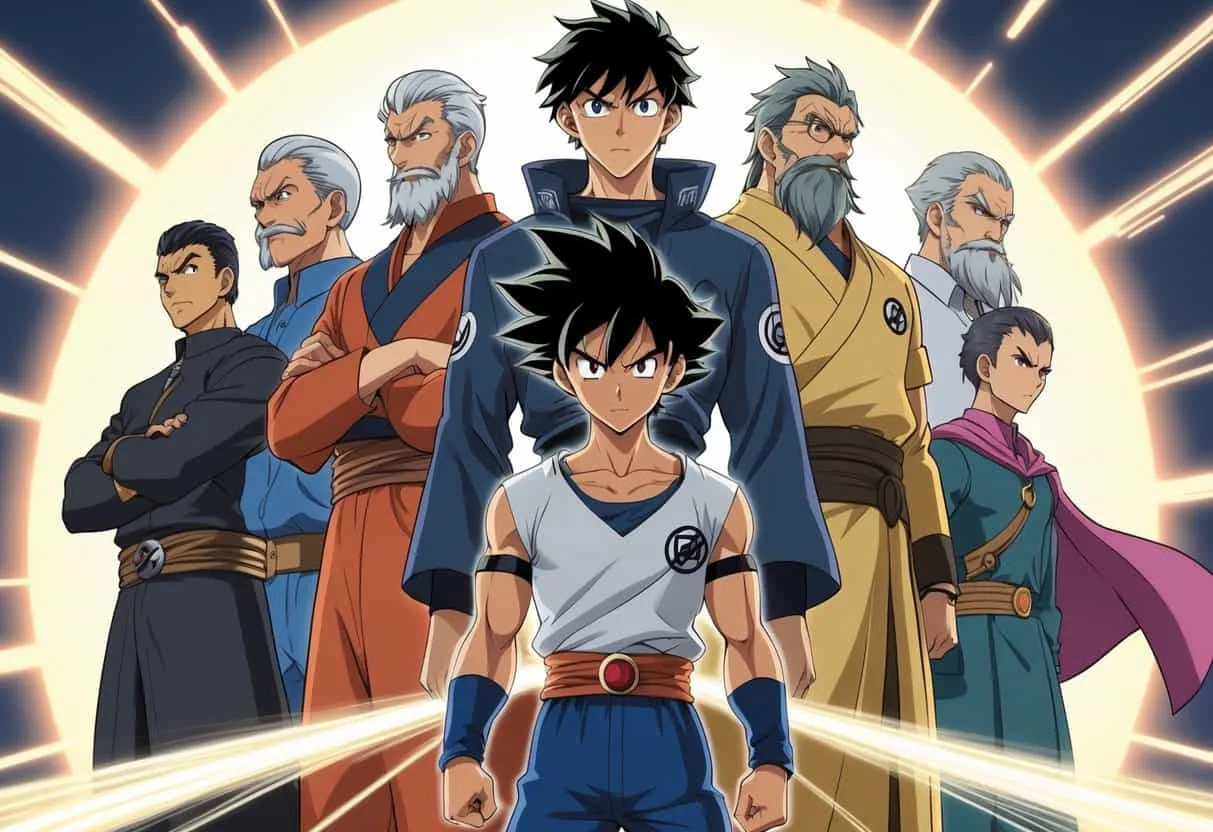
Characters like Jiraiya, Satoru Gojo, All Might, and Biscuit Krueger embody this transformative guidance. They don’t hand out shortcuts—they build discipline, cultivate strategic thinking, and walk beside their students through failure. Without them, iconic protagonists might never have unlocked their true potential, let alone changed the worlds they inhabit.
The Narrative Power of Mentorship
Mentors infuse anime with emotional weight and thematic depth. They are not just training partners; they serve as moral compasses, reality checks, and sometimes tragic catalysts that redefine the entire story. A well-written mentor magnifies the hero’s journey, grounding it in relationship rather than raw power accumulation.
Molding a Hero’s Character
Physical strength alone won’t win the battles heroes face. Mentors cultivate inner qualities like patience, humility, and resolve. Kakashi Hatake’s early tests for Team 7 emphasize teamwork over individual skill, a lesson that shapes Naruto, Sasuke, and Sakura long after the bell test ends. Similarly, Silvers Rayleigh forces Luffy to understand the weight of his ambitions during the two-year timeskip on Rusukaina Island. Through Rayleigh’s coaching, Luffy internalizes that true leadership demands more than a strong punch—it demands responsibility for the crew who believes in him.
Such character molding often involves moments of harsh truth. Genkai from Yu Yu Hakusho rips away Yusuke Urameshi’s arrogance, forcing him to admit fear and weakness before giving him the Spirit Wave. This unflinching honesty turns stubborn teenagers into adults who can carry the weight of a world on their shoulders.
Teaching Through Sacrifice
Some of the most unforgettable lessons come wrapped in loss. Mentors who sacrifice themselves—or who carry visible scars from old choices—teach that power is never free. The death of Jiraiya in Naruto hits Naruto with the reality that protecting what matters can demand everything. That grief does not break him; it crystallizes his resolve. Jiraiya’s final lesson, spoken through action, is about the enduring nature of hope even when the person carrying it falls.
All Might’s gradual decline in My Hero Academia operates in a similar vein. His withered form, hidden behind the symbol of peace, communicates a quiet truth: heroism wears down the body and spirit, yet one still smiles to reassure the frightened. Deku watches his idol crumble and learns that the torch must pass long before the flame goes out. The series treats this sacrifice not as tragedy alone, but as a necessary metamorphosis for both mentor and student.
Beyond Combat Skills
While signature techniques like the Rasengan or One For All dominate fight scenes, mentors rarely stop at combat. Kisuke Urahara, the cryptic shopkeeper from Bleach, spends as much time deconstructing Ichigo’s psychology as training his body. He forces Ichigo to confront the truth of his own Soul Reaper powers in life-or-death scenarios, understanding that a calm mind cuts sharper than any zanpakuto.
Likewise, Izumi Curtis in Fullmetal Alchemist imparts a brutal philosophy: “One is all, all is one.” Her training on Yock Island is less about alchemy and more about grasping interconnectedness and the value of life. Edward and Alphonse leave her tutelage physically stronger but morally anchored—a balance that defines their entire quest to restore what they lost without losing themselves.
Mentors Who Became Legends Themselves
Some mentors shine so brightly that their own stories rival the heroes they train. Their personalities, backstories, and teaching methods become inseparable from the protagonist’s identity.
All Might and Deku: Inheriting the Symbol of Peace
Toshinori Yagi, the emaciated man behind All Might, does more than transfer One For All. He models what it means to be an unwavering pillar. Deku’s early days are a spool of anxiety and self-doubt, but All Might’s booming laughter and steady presence radiate assurance. Their bond illustrates that mentorship thrives on genuine faith. Even as All Might’s muscle form recedes, his belief in Deku never wavers, granting the boy the psychological footing to become the hero who can stand when the symbol fades.
The relationship also confronts Deku with the dark side of singular hero worship. All Might’s lonely burden teaches him that no hero should stand alone—a lesson Deku pays forward by fostering cooperation among Class 1-A.
Jiraiya’s Unshakable Faith in Naruto
Jiraiya’s mentorship transcends the techniques he imparts. While the Rasengan and toad summoning are invaluable, his greatest gift is adopting Naruto as a spiritual heir. He fills the void left by absent parents, treating Naruto as a beloved student and surrogate grandson. This emotional bedrock gives Naruto the stability to bear Kurama’s hatred and the village’s scorn without breaking.
Jiraiya’s masterwork, The Tale of the Utterly Gutsy Shinobi, becomes a narrative thread that ties Naruto to his parents and to Nagato. In the end, Naruto carries forward the novel’s themes of peace and perseverance, proving that a mentor’s legacy can reshape entire nations. The Toad Sage’s influence reaches far beyond a single shinobi.
Kisuke Urahara: The Unpredictable Strategist
Ichigo Kurosaki’s growth might feel explosive at times, but Urahara’s hand guides the detonations. He operates with unnerving calm, setting up elaborate training grounds like the Shattered Shaft or the Dangai Precipice World that push Ichigo to the brink. Urahara never gives answers outright; he drops breadcrumbs that force Ichigo to internalize the lesson. This method builds a fighter who can think several moves ahead—essential when facing masterminds like Aizen.
Urahara’s own scientific curiosity and checkered past as a former captain add layers to his teaching: he knows that the thirst for power can corrupt, and he teaches caution alongside strength.
Biscuit Krueger: Perfection Through Hard Work
Gon Freecss possesses raw potential, but Biscuit Krueger hones it into something lethal. Her absurdly cute appearance masks a demanding instructor who tears down lazy habits and rebuilds them with grueling Nen exercises. Through Biscuit, Gon learns that talent without effort is a brittle blade. Her emphasis on fundamentals—Ren, Gyo, Ken—gives Gon the toolkit to survive encounters with the Phantom Troupe and beyond.
Biscuit also serves as a maternal anchor in the chaotic world of Hunter x Hunter. She nurtures Gon’s and Killua’s emotional resilience, teaching them that rest and recovery are part of getting stronger, not signs of weakness.
Silvers Rayleigh: Charting the Seas of Willpower
Rayleigh, the Dark King, takes a raw rookie pirate and turns him into a captain who can stare down emperors. His tutelage on Rusukaina focuses on all three forms of Haki, but the real curriculum is willpower. Rayleigh hammers home that Conqueror’s Haki reflects the strength of one’s ambition. Luffy emerges not just able to knock out fifty thousand fish-men, but with a matured understanding of what it means to protect his crew without fail.
There is a quiet passing of the torch: Rayleigh, who once served the Pirate King, now invests everything in the boy who will surpass that legend. His retirement from the main stage doesn’t diminish his impact; it amplifies it as Luffy carries the weight of that faith across the Grand Line.
Genkai: The Stern Master of Spirit Energy
Genkai could have been a footnote in Yu Yu Hakusho, but instead she becomes the series’ moral backbone. Her tournament to choose a student weeds out the unworthy; Yusuke wins not because he is the strongest, but because he reveals genuine heart beneath his delinquency. Genkai’s subsequent training strips him of pride, shoves him into a swamp to absorb spirit energy, and ultimately sacrifices her technique to save his life.
Even after death, Genkai’s voice echoes in Yusuke’s decisions. She taught him that spirit energy flows from the soul’s conviction, a lesson that powers his final stand against Toguro. Their relationship is a masterclass in tough love that forges a hero capable of protecting multiple worlds.
How Mentorship Helps Heroes Conquer Adversity
Anime thrives on impossible odds, and mentors are the architects who equip heroes to beat them. They don’t merely give directions—they stand in the storm alongside their students, then step back so the hero can face the thunder alone.
Navigating Trauma and Inner Demons
Trauma often anchors a hero’s deepest potential, but without guidance it becomes a chain. A good mentor helps convert pain into a weapon. Kakashi’s own history of loss and guilt teaches Team 7 that comrades matter above the mission. When Sasuke spirals into vengeance, Kakashi’s words—though not enough to stop him immediately—plant seeds that later bring Sasuke back. Recognizing how mentorship addresses trauma can illuminate why these bonds resonate so deeply with audiences.
Envy, too, finds a cure through mentorship. When Killua wrestles with his brother Illumi’s manipulation, it is Biscuit’s patient training that rebuilds his self-worth. She never compares him to Gon. She shows him that his speed, precision, and strategic mind are assets on their own, independent of anyone else’s flame.
Forging Battle-Ready Minds and Bodies
Brute force fizzles without tactics. Mentors bridge the gap by drilling real combat scenarios until muscle memory takes over. Rayleigh’s blindfolded sparring forces Luffy to read intent before movement. Urahara’s bankai training deploys Zangetsu’s spirit as an opponent, forcing Ichigo to subjugate his own power. These methods compress months of learning into days of survival-level intensity.
Strategic thinking becomes second nature. Deku, once a notebook analyst with no quirk, learns under All Might and later Gran Torino to predict enemy moves rather than simply reacting. That pivot from reactive brawler to predictive fighter saves lives when Shigaraki’s wave of decay surges across the battlefield.
Standing Against Overwhelming Villains
When the League of Villains or All For One loom, a mentor’s preparation is what keeps the hero from crumbling. All Might’s own defeat at Kamino teaches Deku that even legends bleed, but the lesson is not despair—it is adaptation. Deku shifts from emulation to innovation, developing Shoot Style to protect his body while fighting smarter.
Against foes like Meruem or Pain, mentors’ wisdom often arrives in memory rather than in person. Gon’s rage-fueled transformation against Neferpitou is a dark mirror of everything Biscuit warned about reckless sacrifice, and that sobering experience later shapes his recovery. Mentees don’t always win cleanly, but they survive because a mentor built the foundation before the storm hit.
The Ripple Effect of Mentorship
A mentor’s influence rarely ends with one student. It radiates outward, reshaping how future heroes train, how stories are told across different media, and how fans perceive growth itself.
Manga Depth versus Anime Flourish
Printed pages often provide richer interiority for mentors. In the Naruto manga, Jiraiya’s internal struggles and his past with the Ame Orphans get more detailed panel time, deepening the tragedy. The anime adaptation supplements with a stirring soundtrack and voice performance, trading some introspective nuance for visceral emotional punches. Neither medium is superior, but they highlight different facets: manga digs into the mentor’s private thoughts, while anime uses audiovisual synergy to make their presence unforgettable.
Kakashi’s backstory in the Naruto manga unfolds gradually across volumes, while the anime’s Kakashi Gaiden arc presents it as a concentrated emotional arc. Both versions affirm that a mentor’s pain is not ancillary—it is the bedrock of the wisdom they later offer.
Seeding the Next Generation
Master Roshi, the ancient Turtle Hermit, trained Grandpa Gohan, Ox-King, Goku, and Krillin. That lineage spans decades and multiple arcs of Dragon Ball, with each student passing bits of Roshi’s ethos to the next. When Goku later mentors Uub, the chain continues. This intergenerational echo demonstrates that mentorship is never about a single success story—it is an ongoing investment in a philosophy.
Jiraiya’s legacy extends through Naruto to Konohamaru, and eventually to Boruto. The values of guts and empathy become institutionalized in the Hidden Leaf’s teaching. Similarly, All Might’s retirement does not end his purpose; he becomes a strategic advisor and emotional anchor for all of Class 1-A, proving that a mentor’s role can evolve without diminishing.
Why Mentorship in Anime Resonates Universally
Viewers latch onto mentor figures because they embody guidance everyone craves at key crossroads. Anime series that invest in these relationships—Jujutsu Kaisen with Satoru Gojo’s enigmatic push that forces Yuji to confront his own mortality, Demon Slayer with Sakonji Urokodaki’s painstaking water breathing drills—tap into a fundamental human pattern. The teacher-student bond, researched extensively in developmental psychology, accelerates growth, builds resilience, and often provides the emotional core of a narrative.
In anime, this dynamic is amplified because the stakes are planetary, the emotions operatic, and the losses permanent. A great mentor’s teachings echo in the hero’s final showdown, in the quiet moments of doubt, and in the legacy they leave behind. It’s a reminder that even the most overpowered protagonist once needed someone to believe in them first.