Table of Contents
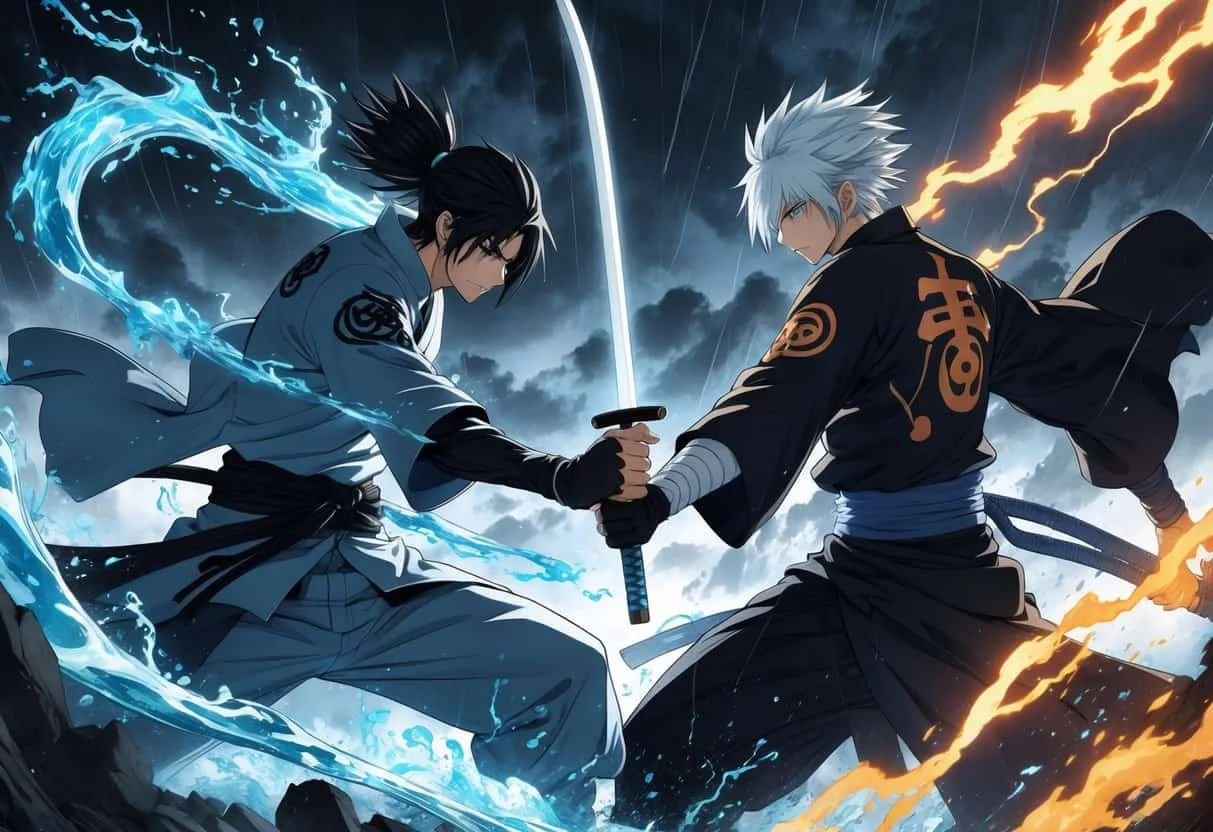
When anime fans pit Tanjiro Kamado from Demon Slayer against Ichigo Kurosaki from Bleach, the debate usually starts with a simple question: who would win in a fight? But a more rewarding conversation examines who actually operates as the better demon slayer. Ichigo’s explosive, reality-warping power makes him one of the most dangerous beings in any shonen universe. Tanjiro, by contrast, commands a razor-sharp technique and a well of determination that allows him to dismantle enemies far beyond his weight class. Comparing them side by side means looking past raw strength and digging into the nuance of their skills, their weapons, and the way they navigate impossible odds.
Both characters changed the landscape of anime, but the way they cut down demons tells two completely different stories about what makes a warrior effective.
Ichigo’s power curve can feel almost unfair when stacked against Tanjiro’s more methodical growth. Yet Tanjiro’s ability to read an opponent’s rhythm, adapt his breathing styles mid-combat, and exploit a demon’s blind spots gives him a creative edge. The real test isn’t who can punch a bigger hole in the sky; it’s who uses their abilities with the least waste and the most impact to protect the people standing behind them. That’s where personality, background, and swordsmanship intersect in fascinating ways.
Background and Character Motivations
Every demon slayer begins with a defining wound. For Tanjiro and Ichigo, those wounds forged their resolve and set them on paths that would reshape entire worlds.
Tanjiro’s Path of Loss, Kindness, and Relentless Purpose
Tanjiro Kamado spent his childhood in the quiet isolation of snowy mountain trails, selling charcoal to support his mother and five siblings. His life was ordinary until the day he returned home to find his entire family slaughtered by a demon, his sister Nezuko transformed into one of the creatures he would grow to hunt. That single night crystallized his mission: protect Nezuko at all costs, restore her humanity, and ensure no other family suffered the same horror. Every drop of training, every drop of blood, fed into that quiet but unbreakable oath.
What separates Tanjiro from many shonen leads is the way his empathy never disappears under layers of combat cynicism. He mourns the demons he destroys, recognizing the human tragedy that created them. This compassion isn’t weakness; it sharpens his focus and earns him allies who would die for him. His motivation is rooted in love and duty, not vengeance, which gives his fighting a clarity that brute anger can’t replicate.
Ichigo’s Sudden Awakening and the Weight of Responsibility
Ichigo Kurosaki’s fight found him before he was ready. Raised in Karakura Town with an innate ability to see spirits, he was thrust into the Soul Reaper world when a Hollow attacked his family and Rukia Kuchiki transferred her powers to him in a desperate gamble. Almost overnight, Ichigo went from a brooding high schooler with a strong sense of justice to a substitute Soul Reaper protecting his town from corrupted souls. His motivation wasn’t steeped in a singular tragedy like Tanjiro’s, but in a fierce, almost instinctive impulse to shield anyone within arm’s reach.
Ichigo’s journey is heavily colored by his mixed heritage—human, Soul Reaper, Quincy, and Hollow—and his battles continually force him to reconcile these clashing identities. Where Tanjiro’s drive is a straight arrow pointing toward his sister’s salvation, Ichigo’s is a tangled web of responsibility, self-discovery, and a personal code that refuses to let anyone die on his watch. That complexity fuels his rapid, sometimes reckless escalation in power.
| Aspect | Tanjiro Kamado | Ichigo Kurosaki |
|---|---|---|
| Origin | Turned Demon Slayer after a demon slaughtered most of his family | Became a substitute Soul Reaper after absorbing Rukia’s powers |
| Core Motivation | Cure Nezuko and prevent further demon tragedies | Protect friends and family while navigating inherited duties |
| Power Growth | Gradual, technique-driven, built on grueling repetition | Explosive, ability-driven, often triggered by life-threatening pressure |
| Emotional Core | Empathy and steeled determination | Protective anger and intense personal loyalty |
Signature Weapons and Combat Techniques
A demon slayer’s sword is more than a weapon; it’s a physical extension of their will and their style. Tanjiro and Ichigo both reach for blades, but the weapons themselves, the way they are forged, and the philosophies behind every swing exist in completely separate leagues.
The Nichirin Blade and the Art of Breathing
Tanjiro wields a Nichirin blade, a katana forged from sunlight-absorbing ore that changes color based on its user’s soul. His turned a deep, uncompromising black. The sword is light, balanced, and crafted specifically to decapitate demons with surgical precision. Tanjiro channels his breathing into two distinct styles: Water Breathing, which generates smooth, wave-like slashes that flow from defense to offense without interruption, and Hinokami Kagura, a sun-blessed dance passed down through his family that delivers searing, high-speed arcing blows. The combination gives him the versatility to face demons with wildly different powers, always searching for the thread of an opening that will let him sever the neck in one clean motion.
His swordsmanship thrives on rhythm and economy of movement. Tanjiro rarely wastes a step, using his heightened sense of smell to read an opponent’s intent, the terrain, and even the emotional state behind a demon’s blood art. This lets him slip into an almost trance-like flow, where every Water Surface Slash or Fake Rainbow is a calculated note in a fight to the death.
Zangetsu and the Evolution of Ichigo’s Swordsmanship
Ichigo’s blade, Zangetsu, defies classical sword logic. In its sealed state, it’s an enormous cleaver-like weapon that looks more like a butcher’s blade than a precise katana. In Shikai, it becomes a massive over-long sword with no guard, capable of launching destructive energy waves. The Bankai, Tensa Zangetsu, condenses all that power into a slender black blade that trades overwhelming size for explosive speed. The weapon physically alters as Ichigo’s understanding of his inner world deepens, mirroring his chaotic, ever-evolving spiritual makeup.
Ichigo’s fighting style is power-forward and aggressive. He swings to shatter, not to dance. Getsuga Tenshō—the crescent-moon energy blast—epitomizes his philosophy: meet a problem with so much force that the problem ceases to exist. While Tanjiro dissects an enemy’s technique to find the single fatal weakness, Ichigo frequently bulldozes through, though his instincts are sharp enough to adapt when pure power isn’t enough. His speed in Bankai is so overwhelming that dozens of precise sword movements happen in the span of a blink, but they serve the goal of delivering one decisive, bone-breaking strike.
Both weapons are tied to their wielder’s spirit, but a Nichirin blade bends toward finesse while Zangetsu bends toward unrelenting domination. Tanjiro’s blade sings; Ichigo’s howls.
Combat IQ and Tactical Effectiveness
Raw strength without the brain to aim it is a liability against cunning demons. Both Tanjiro and Ichigo have been battered and broken in battle, but the way they think their way out of a killing blow reveals the core of their combat intelligence.
Tanjiro’s Analytical Mind and Superhuman Senses
Tanjiro’s secret weapon isn’t just his nose; it’s his ability to translate sensory information into an immediate combat flowchart. His acute smell lets him track demons across miles, detect invisible threats, and even pick up the faint scent of an enemy’s next move—the “thread of opening” that signals the perfect moment to strike. Throughout his battles with the Twelve Kizuki, he repeatedly demonstrates an almost detective-like approach to battle. He studies a demon’s Blood Demon Art, maps its range and cooldowns, and then either lures it into a trap or combines breathing forms in unexpected sequences to bypass its defenses.
That adaptability is what kept him alive against Rui, Daki, and Gyutaro. When his body was pushed past its limits, Tanjiro instinctively switched from Water Breathing to Hinokami Kagura, finding a rhythm that his broken fingers could still execute. He’s not afraid to sacrifice a limb or take a disemboweling hit if it means creating a two-second window for the kill. His resilience is a tactical tool, not just willpower.
Ichigo’s Instinctive Combat and Escalating Power
Ichigo’s battlefield calculus works differently. He doesn’t spend time studying an opponent’s technique in a traditional sense; he feels the pace of a fight and presses down on weak points with overwhelming speed and force. His duels with Byakuya Kuchiki and Ulquiorra Cifer showcased a terrifying ability to close power gaps in real time, often unlocking new layers of his Hollow or Quincy heritage when defeat seemed certain. That reactive power surge is both his greatest strength and his biggest vulnerability: he often relies on being broken before he breaks back harder.
Still, Ichigo’s strategic side shouldn’t be dismissed. Against Aizen, he carefully hid his true power level to land a devastating surprise strike. His fights reveal sharp, split-second decision-making and an intuitive grasp of enemy psychology. Where Tanjiro plans, Ichigo gambles—and his gambles usually pay off because he’s willing to risk everything in a single exchange.
The Role of Allies and Teamwork
Neither Tanjiro nor Ichigo fights in a vacuum. Tanjiro’s battles are frequently joint efforts with Nezuko, whose explosive demon blood buries enemies in flames, Zenitsu’s lightning-fast draw, and Inosuke’s chaotic, unpredictable dual-wielding. Tanjiro coordinates with them seamlessly, setting up openings and covering their weaknesses with a leader’s instinct. One of his greatest strengths is recognizing that a demon can’t be beaten head-to-head and instead weaving his team’s abilities into an unbreakable net.
Ichigo also draws on his comrades, but often as motivators rather than coordinated battle units. Rukia, Renji, Uryū, and Orihime all contribute unique powers, and Ichigo will protect them with everything he has. Yet his most defining victories frequently come from solitary, towering showdowns where he channels the collective trust of his friends into a single world-shattering swing. The teamwork is emotional more than tactical, but its impact on his endurance and willpower is undeniable.
Legacy and Cultural Influence
Tanjiro and Ichigo didn’t just slash their way through demons—they carved permanent marks into the anime and manga industry, reshaping what fans expect from a protagonist and how studios approach action storytelling.
Influence on the Shonen Genre
Tanjiro Kamado’s arrival on screen re-centered the shonen conversation around empathy. Demon Slayer: Kimetsu no Yaiba smashed box office records and ignited global interest in classical Japanese swordsmanship and the visual poetry of fluid, ukiyo-e-inspired animation. The success of the “Hinokami Kagura” sequences pushed studios to integrate traditional art motifs into high-budget action, and Tanjiro’s unwavering kindness became a quiet rebuke to the era of overly aggressive leads. He proved that a hero who weeps for his enemies could still be a commercial juggernaut.
Ichigo Kurosaki, meanwhile, helped solidify the template for the modern shonen protagonist during Bleach’s explosive run in the mid-2000s. His design, the larger-than-life bankai reveal, and the constant hum of inner turmoil set the stage for a wave of series that prioritized style and speed. The Soul Society arc, in particular, is still held up as a benchmark for ensemble-driven action storytelling. Ichigo’s internal struggle with his multiple identities added a psychological layer that deepened the genre’s potential for character drama.
Fan Reception and Enduring Popularity
Tanjiro is beloved for being genuinely good in a world that rewards cynicism. Fans gravitate toward his vulnerability, his refusal to abandon Nezuko, and the way he builds a found family around shared trauma. His popularity has skyrocketed alongside the anime’s visual spectacle, and he’s consistently ranked among the top shonen heroes in global polls. The emotional weight of his journey—especially the heart-rending climax against Muzan—cements him as a protagonist who earns every tear and cheer.
Ichigo’s fan base remains fiercely loyal, built on nostalgia and a deep appreciation for his layered character arc. His design, from the original shihakushō to the sleek Fullbring and true Shikai forms, has inspired countless fan works, and his raw, unpolished attitude resonates with viewers who prefer a hero that punches through pain rather than philosophizing. While Bleach experienced a quieter period, the Thousand-Year Blood War adaptation reignited global excitement and reminded audiences why Ichigo’s presence dominated an entire decade of anime.
Ultimately, picking the “better” demon slayer depends entirely on the yardstick. If the metric is pure destructive capability and the ability to ascend past impossible thresholds, Ichigo’s transcendent power leaves no room for debate. But if the measure is efficiency, refined technique, and the capacity to bring down demons with the minimum necessary force while preserving one’s own humanity, Tanjiro embodies the ideal. They are two sides of the same battered coin—both willing to break themselves for others—but Tanjiro’s demon-slaying craft is a scalpel, while Ichigo’s is a storm.