Table of Contents
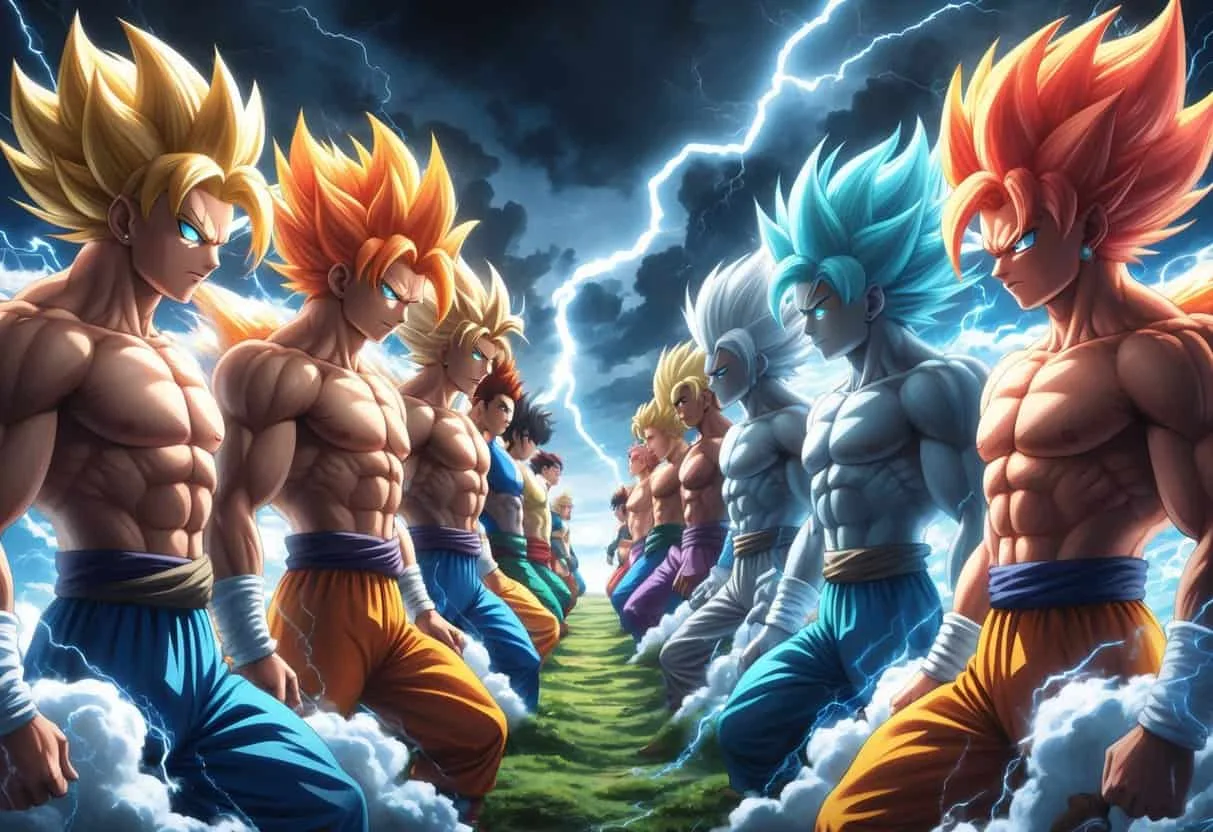
The Super Saiyan transformation stands as one of the most electrifying power-ups in anime history. When golden hair first erupted, and Goku’s eyes turned teal with rage against Frieza, the entire landscape of Dragon Ball Z shifted forever. What began as a legendary myth whispered among Saiyans quickly snowballed into a sprawling catalogue of forms, each with its own visual flair, combat advantages, and narrative weight. Over time, some evolutions became pillars of the series’ identity, while others felt more like flashy add-ons that diluted the very concept of a rare, unattainable power.
This isn't just a list of hair colors. It’s a journey through the peaks and valleys of Dragon Ball’s transformation design, from the moments that left fans breathless to the ones that made them roll their eyes. We’ll explore the origins, the breakthroughs, and the occasional missteps, ranking each major Super Saiyan stage based on its impact, originality, and how well it served the story.
The Saiyan Biology Behind the Transformations
Saiyans are built for battle. Their DNA carries the potential to exceed every limit, thanks to a brutal combination of rapid healing, near-death power boosts, and an emotional trigger system wired to anger. This unique physiology makes them capable of tapping into hidden reservoirs of strength that most species can't even imagine. Unlike humans who plateau after years of training, Saiyans shatter ceilings repeatedly, and each new transformation represents a conscious leap over what was once considered impossible.
The key to unlocking a Super Saiyan form lies not just in physical conditioning, but in an emotional catalyst—often a surge of pure rage, loss, or desperate determination. That's why early transformations felt so earned. The buildup to Goku’s legendary ascension included watching his best friend Krillin die, followed by an explosion of grief so powerful it bent reality itself. This emotional foundation gave every golden-haired warrior an edge that no amount of push-ups could replicate, grounding the spectacle in something deeply human.
As the series progressed, Saiyan biology became more pliable in the writers’ hands, leading to forms that seemed to appear almost on demand. This shift from emotional weight to mechanical accumulation is part of the reason later transformations lose their spark. Understanding the biological resilience and emotional wiring of Saiyans helps frame why some forms hit harder than others.
The Original Super Saiyan: A Legend Realized
No form in Dragon Ball carries the same raw historical significance as the original Super Saiyan. When Goku first transformed on Planet Namek, it wasn’t just a power-up—it was the fulfillment of a prophecy that had haunted the Saiyan race for generations. The golden aura, the spiked, shimmering hair, and the palpable shift in demeanor sent a clear message: the tables had turned. The tyrant Frieza, who had annihilated entire planets, was now facing something beyond his comprehension.
This form marked a turning point not only in that fight, but in the entire storytelling rhythm of the series. Before Super Saiyan, battles were often scrappy, strategic struggles involving teamwork and clever tricks. Afterward, the scale of confrontation expanded dramatically, and the baseline for what constituted a serious threat became permanently elevated. The form’s design was elegant in its simplicity—a golden recolor that signified a massive multiplier in power, speed, and ki output, without overcomplicating the visual language of the character.
Even today, the original Super Saiyan remains the benchmark against which all other transformations are measured. It represents the perfect storm of emotional payoff, narrative buildup, and aesthetic execution. Its impact is so profound that many later forms, despite being technically stronger, never quite matched the electrifying feeling of that first iconic scream.
Super Saiyan 2: The Pinnacle of Controlled Fury
Super Saiyan 2 took everything the original form offered and sharpened it to a lethal edge. The visual cues were subtle but significant—hair became spikier and stood higher, the aura crackled with arcs of bio-electricity, and the fighter’s expression hardened into one of absolute focus. Gohan’s ascension during the Cell Games remains one of the most emotionally charged moments in the entire series, driven by the death of Android 16 and a serene, chilling declaration of restrained destruction.
What sets Super Saiyan 2 apart is the balance it strikes between power and precision. Unlike the bulkier Ascended Super Saiyan forms that Trunks and Vegeta experimented with, this transformation enhances speed without sacrificing agility. It’s a direct upgrade that respects the principles of martial arts—never trading finesse for brute force. The form later became a staple for Goku, Vegeta, and even Gotenks, but its debut with Gohan remains the definitive showcase of what rage, when harnessed correctly, can achieve.
In the broader ranking of Super Saiyan stages, Super Saiyan 2 earns high marks for its narrative weight and combat efficiency. It didn’t introduce a ridiculous color change or a convoluted ritual; it simply refined the existing Super Saiyan concept into something more fearsome. This purity of design keeps it firmly in the iconic tier.
Super Saiyan 3: The High-Stakes Form That Burned Too Bright
Where Super Saiyan 2 refined, Super Saiyan 3 completely untethered. With its dramatic length of golden hair cascading down the back, the absence of eyebrows, and an aura that seemed to reverberate through dimensions, this transformation screamed power. Goku’s demonstration against Majin Buu was a spectacle of raw energy, momentarily halting the fight and astonishing everyone present. The sheer multiplier it offered went far beyond its predecessor, suggesting an almost uncontrollable flood of ki.
Yet Super Saiyan 3’s fatal flaw lay in its stamina consumption. The form drained energy so rapidly that it was impractical for extended combat, particularly for a living body. Goku, in his dead state, could sustain it longer, but when used by a living Saiyan in later arcs, the drawbacks became painfully apparent. This introduced a fascinating dilemma: is overwhelming power worth it if you can’t stay in the fight? The answer, more often than not, turned the form into a risky gamble rather than a reliable trump card.
While the design remains iconic and the initial reveal unforgettable, Super Saiyan 3’s limited tactical utility nudges it slightly down the ranking. It’s a prime example of a transformation that dazzles visually but struggles to maintain narrative viability, especially when compared to the more balanced forms that came after.
The Divine Turn: Super Saiyan God and the Shift to Mythological Scale
The introduction of the Super Saiyan God form in the Battle of Gods arc fundamentally altered Dragon Ball’s power framework. No longer was the ceiling defined by mortal limits; divine ki entered the equation, and with it, an entirely new hierarchy. The ritual involving five righteous Saiyans, the red-haired, slender appearance, and the serene, flame-like aura signaled that the series was venturing into territory far beyond previous transformations.
What makes Super Saiyan God special is its philosophical shift. Rather than a screaming explosion of anger, this form required calm hearts and trust—a communal unlocking that stood in stark contrast to the isolation of earlier breakthroughs. Goku’s fight against Beerus showcased not just a power boost, but a deeper understanding of combat rhythm and energy conservation. The form felt less like a blunt instrument and more like the precision of a deity learning to fight like a mortal.
In the ranking, Super Saiyan God secures a respectful position. It revived the sense of wonder by introducing a transformation born of ritual and lost lore, not just desperation. Though it was soon overshadowed by its more popular blue variant, the red-haired god form remains a pivotal moment that expanded the Dragon Ball cosmos and reminded fans that power could be graceful as well as overwhelming.
(In the next segment, we’ll tackle the evolution of that divine power and the forms that followed—some brilliant, some visibly straining under the weight of their own hype.)
Super Saiyan Blue and Its Many Iterations
Super Saiyan Blue, properly known as Super Saiyan God Super Saiyan, took the divine foundation and infused it with the classic Super Saiyan transformation. The result was a vivid cyan-haired state with an aura that seemed to blend pressure and calm. Achieving this form meant a Saiyan had mastered godly ki to the point where they could stack the Super Saiyan multiplier atop it, creating a fighter who walked the line between mortal emotion and divine poise.
The form’s introduction in Dragon Ball Super sparked initial excitement, but its overuse gradually diminished its impact. Unlike the original Super Saiyan, which felt like a special event, Blue became the default fighting state for Goku and Vegeta. Resurrections, tournament arcs, and villain after villain forced the duo to break out Blue at the drop of a hat, and with that frequency came desensitization. Fans began to feel that the transformation lost its teeth when it failed to decisively end battles.
Even the variations—Super Saiyan Blue Kaio-ken, Super Saiyan Blue Evolution—while visually striking, often felt like patches applied to a form that needed stronger narrative framing. Blue is technically impressive and deserved a spot among the most powerful transformations, but its repetitive deployment knocks it down from legendary status to merely functional.
Super Saiyan 4: The Primal Departure That Divided Fans
Dragon Ball GT’s Super Saiyan 4 broke the golden mold entirely. By combining the Great Ape’s primal energy with Super Saiyan control, the transformation gave Goku and Vegeta a feral, red-furred appearance, complete with dark hair, a tail, and a visual design that screamed untamed power. For many fans, this was a refreshing return to the Saiyan roots—a physical manifestation of the species’ bestial heritage.
The form’s power scaling in GT was inconsistent, but its concept stood out because it integrated Saiyan lore directly into the visual design. Super Saiyan 4 felt like a natural endpoint for a race that had mastered both their humanoid intelligence and their monstrous origins. It was neither glowing gold nor spectral; it was earthy, grounded, and aggressive in a way that the divine forms rarely achieved.
However, because GT exists outside the main canon, Super Saiyan 4’s legacy remains contested. Some view it as the most creative transformation, while others dismiss it as fan-service that doesn’t align with Toriyama’s original vision. In this ranking, it’s a fascinating outlier with undeniable aesthetic appeal, but its non-canon status prevents it from reaching the same iconic echelon as the original or Super Saiyan 2.
Fusion and Hybrid Transformations: Multiplying Power with Mixed Results
Fusion-based transformations like those of Vegito and Gotenks introduced a dynamic where two fighters combined their bodies, personalities, and power levels. Vegito, the fusion of Goku and Vegeta via the Potara earrings, displayed a level of overwhelming confidence and tactical brilliance that neither fighter could achieve alone. He could effortlessly toy with Super Buu, showing that the sum was far greater than its parts. However, the temporary nature of fusion added tension, making each appearance a race against the clock.
Gotenks, the dance fusion of Goten and Trunks, brought a youthful, irreverent energy to the Buu saga. His moves were inventive and absurd—think Galactic Donuts and Super Ghost Kamikaze Attack—but his immaturity often sabotaged his advantages. The Super Saiyan 3 version of Gotenks was visually amusing and briefly dominant, yet the form’s stamina issues were amplified by the fusion’s short duration, making it a high-risk, high-reward spectacle.
Hybrid Saiyans like Gohan also carved their own path with the Ultimate form, which side-stepped the traditional transformation ladder altogether. Unlocked by Old Kai’s ritual, this state granted Gohan access to his full hidden potential without the need for golden hair or auras. It emphasized technical mastery over raw multiplicative boosts, a subtle reminder that a Saiyan’s strength isn’t solely defined by flash.
In the ranking, fusion forms are wild cards. They deliver some of the most entertaining and overpowered moments in the series but can also undermine the journey of individual characters, making them feel like shortcuts when overused. Their placement depends heavily on narrative necessity, and when that necessity runs thin, so does their appeal.
When the Scaling Overshadows the Story
One of the recurring criticisms of Dragon Ball’s later arcs is how transformations became a crutch for escalating stakes without meaningful consequence. When Super Saiyan Blue appeared alongside Super Saiyan God, Super Saiyan Rosé, and Legendary Super Saiyan variants like Broly’s full-power mode, the power scale became a tangled web. What once required emotional devastation now felt like a checklist: new threat, new hair color, rinse, repeat.
This explosion of forms sometimes stripped away the martial arts roots of the series. Fights that were once about technique, timing, and clever feints devolved into aura-smashing contests where each character simply tried to shout louder and glow brighter. The tension evaporated because the audience stopped fearing the drain of a transformation when a new, even higher multiplier would pop up in the next episode. This desensitization is the core reason forms like Super Saiyan Rage (Trunks’ sudden power-up) or Super Saiyan Blue Evolution met with mixed reactions.
Still, Dragon Ball wouldn’t be Dragon Ball without its tendency to push boundaries. Some of these over-the-top forms serve their purpose in specific arcs, providing sheer spectacle for fans who crave power-level fireworks. The key is recognizing that iconic transformations don’t just increase numbers—they resonate emotionally. The more a form is treated as a mere power-up, the less it matters.
Training, Triggers, and the Path to Ascension
Every transformation has a story behind its unlock. Goku didn’t simply will himself into a Super Saiyan; he endured 100 times gravity training, the death of his friend, and the burning despair of facing a seemingly invincible Frieza. Vegeta’s journey to Super Saiyan was a relentless mental battle against his own pride and sense of inadequacy. These narratives of struggle gave the transformations weight, transforming a physical change into a character milestone.
Techniques like the Kamehameha and the Spirit Bomb weren’t just attack moves—they were tools of focus that taught Saiyans to channel their energy precisely, a skill essential for mastering any new form. Piccolo’s mentorship, Gohan’s hidden potential unleashed through anger, and even Trunks’ desperation in the future timeline all show that the path to ascension is rarely smooth. It’s littered with setbacks, rage, and the kind of bone-deep exhaustion that makes the final payoff so satisfying.
In the later series, shortcuts like the Super Saiyan God ritual or the Room of Spirit and Time’s accelerated environment changed the dynamic, allowing rapid progression. While these methods weren’t inherently bad, they blurred the line between earned power and convenient boost. The transformations that still resonate are the ones rooted in personal growth, sacrifice, and the unwavering Saiyan spirit to break every limit—not just by finding the right ritual or fusion partner, but by facing the worst versions of themselves and coming out stronger.
In the end, the Super Saiyan legacy is a spectrum—from the unforgettable roar of the first transformation to the overproduced glimmer of its later iterations. Each form captures a moment in Dragon Ball’s evolution, reflecting not only the Saiyans’ endless hunger for power but also the creative ambitions and occasional missteps of the storytellers. The ones that endure aren’t always the strongest; they’re the ones that made us feel something genuine when the golden light first hit.