Table of Contents
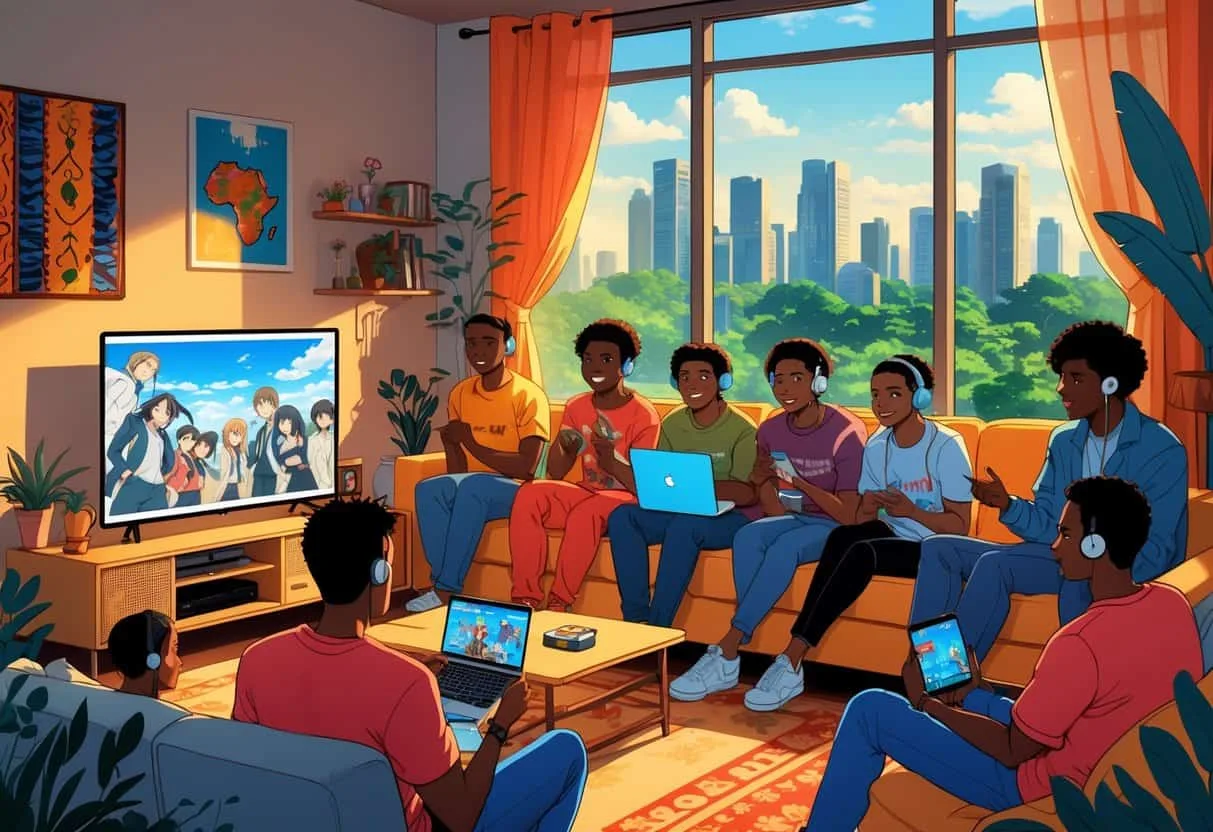
The appetite for anime across Africa has never been stronger. Over the past decade, fast-growing internet penetration, affordable smartphones, and a young, digitally native population have turned the continent into a vibrant hub for Japanese animation. Still, streaming anime in Africa comes with a unique set of obstacles. Regional licensing limitations, patchy broadband coverage, and a shortage of local-language content force fans to become resourceful detectives, hunting down ways to watch the latest episodes of Jujutsu Kaisen or the timeless adventures of One Piece. This article unpacks the current streaming landscape, the platforms delivering anime to African screens, the hurdles viewers face, and the creative ways communities are coming together to enjoy their favourite shows.
The Anime Streaming Landscape in Africa
Anime has moved from a niche pastime to a mainstream cultural force. Viewership numbers across Africa are climbing steadily, driven by social media, word-of-mouth, and easier access to broadband. Yet the experience remains highly uneven, shaped by everything from national internet infrastructure to the licensing strategies of global media companies. Understanding where anime is watched and how it reaches different corners of the continent provides an essential foundation for anyone trying to stream legally and reliably.
Growth of Anime Popularity
In countries such as Nigeria, South Africa, Kenya, and Ghana, anime fandom has expanded beyond school clubs and into large-scale community events. Lagos hosts the annual Anime Festival Nigeria, which draws thousands of cosplayers, artists, and fans. South Africa’s Comic Con Africa and rAge Expo regularly feature dedicated anime tracks, while smaller meetups in cities like Lusaka and Nairobi show that the passion is not confined to the continent’s media capitals. Mobile data affordability has been a major accelerator; with the spread of 4G and increasingly 5G networks, watching a half-hour episode on a commute or during a lunch break has become feasible for millions.
This growth mirrors global patterns but is amplified by Africa’s demographic profile. A median age of under 20 in many African nations means a huge audience of digital natives who are comfortable navigating apps, subtitle toggles, and online communities. Platforms like Crunchyroll and Netflix have taken notice, pumping more resources into regional marketing and expanding catalogues that feature isiZulu or Swahili subtitles in select territories.
Key Streaming Services Available
When it comes to dedicated anime streaming, Crunchyroll remains the undisputed heavyweight. It offers simulcasts of currently airing series just hours after their Japanese broadcast, a deep back catalogue of classics, and a free, ad-supported tier that is especially valuable for cost-sensitive viewers. Most of the content comes with English subtitles, and the platform’s mobile app supports offline downloads for premium subscribers.
Netflix serves as a general entertainment juggernaut with a growing anime wing. While its African library is more limited than its U.S. or European counterparts, it still carries heavy hitters like Attack on Titan, Demon Slayer, Castlevania, and a selection of Studio Ghibli films. Netflix’s investment in original anime and its strong recommendation algorithm make it a go-to for casual viewers who might stumble upon anime while browsing.
In select markets, Yango Play integrates a dedicated Crunchyroll channel, giving viewers who already use the platform for music and local content a seamless way to access anime. Other services such as Showmax, owned by MultiChoice, have dabbled in anime but have not made it a central pillar of their catalogue. Amazon Prime Video offers a modest anime selection, though the service’s availability varies considerably across African countries. This fragmented picture means that no single subscription guarantees unrestricted access to the full spectrum of anime.
| Service | Coverage in Africa | Anime Library Size | Payment Model | Offline Viewing |
|---|---|---|---|---|
| Crunchyroll | Widely available | Very large (simulcasts + classics) | Free (ads) / Premium | Yes (Premium) |
| Netflix | Available in most countries | Medium, region-dependent | Subscription only | Yes |
| Yango Play (with Crunchyroll channel) | Select countries (e.g., Nigeria, Kenya) | Curated Crunchyroll content | Subscription via mobile operators | Limited |
| Amazon Prime Video | Limited availability | Small | Subscription | Yes |
Regional Differences in Access
South Africa enjoys the most mature streaming environment on the continent, thanks to its relatively advanced fixed-line broadband infrastructure and high smartphone penetration. Fans there can usually sign up for Crunchyroll Premium or Netflix without major payment friction. In West Africa, Nigeria’s large and enthusiastic fan base often relies on mobile data bundles optimised for video, such as MTN’s streaming passes, to keep costs down. Kenya’s tech-savvy audience benefits from competitive mobile money integration, making subscription payments via M-Pesa a breeze on supported platforms.
But in other regions, including much of francophone West Africa, Zambia, and parts of East Africa, the official anime streaming footprint is thin. Licensing deals often exclude these territories entirely, leaving fans staring at the dreaded “content not available in your region” message. In such cases, many turn to virtual private networks (VPNs) to connect to servers in the United States or Europe where the full Crunchyroll or Netflix catalogue is unlocked. While effective, this approach can violate platform terms of service and sometimes results in reduced streaming speeds. Local broadcasters like DStv offer little more than a handful of kids’ anime slots, a far cry from the on-demand experience younger audiences demand.
Popular Platforms and Access Methods
Navigating the fragmented streaming ecosystem requires understanding each platform’s strengths and limitations. For many African viewers, the choice of service is shaped as much by payment method and data consumption as by catalogue depth.
Netflix and Licensed Content
Netflix’s strength lies in its polished user experience and high-quality assets. Popular titles like Naruto, One Piece, Death Note, and Hunter x Hunter are available with multiple subtitle options, including Arabic and occasionally Portuguese for the lusophone markets. The download feature is a lifeline in areas with intermittent connectivity, allowing fans to grab episodes during Wi-Fi sessions and watch later without burning through mobile data. The main drawback is the catalogue disparity: a subscriber in Johannesburg may see only 60% of the anime library that a user in New York sees, frustrating fans who rely on online recommendations. Moreover, Netflix’s anime section is not always prominently featured, so discovery can feel hit-or-miss.
Crunchyroll and Dedicated Anime Platforms
For the purist, Crunchyroll is the definitive destination. It boasts thousands of episodes across hundreds of series, from perennial favourites to obscure seasonal picks. New simulcast episodes usually drop within an hour of the Japanese broadcast, and the community features, such as forums and episode comments, replicate the communal feel that anime fans love. The free tier is a crucial entry point for viewers who cannot afford a monthly subscription, though it comes with lower video quality and frequent ad interruptions. Premium plans remove ads, unlock offline downloads, and support multiple devices, making them a worthwhile upgrade for heavy watchers.
Crunchyroll’s mobile app is data-conscious, allowing users to select lower bitrate streams that work well over 3G connections—a small but significant nod to the reality of many African networks.
YouTube and Free Streaming Options
YouTube has quietly become a major anime distribution channel in Africa. Channels like Muse Asia and Ani-One Asia upload entire seasons of select shows with official English and sometimes Arabic subtitles. While these offerings often skew towards older or less mainstream titles, they provide a completely legal, zero-cost option that works on any device with the YouTube app. The trade-off is quality: most free YouTube anime is capped at 720p or 1080p, and the ad load can break the narrative flow. For those with YouTube Premium, the experience improves with ad-free playback and background listening.
Content rotation also means that a series available today might disappear tomorrow, so fans learn to watch while they can.
Mobile-First Solutions and Operator Bundles
Because smartphones are the primary screen for much of Africa’s online audience, mobile operator partnerships play an outsized role. In Nigeria, MTN and Airtel have offered data bundles specifically tailored for streaming platforms, sometimes including zero-rated data for Netflix or YouTube. In South Africa, Vodacom’s video passes allow subscribers to use a set amount of data for video without eating into their general balance. These arrangements make it economically viable to stream anime on the go, a crucial factor when home broadband is scarce. Services like Yango Play go a step further by integrating billing directly with mobile wallets, removing the need for an international credit card—a common barrier to entry.
As more platforms embrace airtime billing and operator billing, the pool of potential subscribers widens dramatically.
Overcoming Access Barriers
Even when a platform is officially available, the real-world experience of streaming anime in Africa is often a balancing act between cost, quality, and legality. Fans have developed a toolkit of strategies to stay current without breaking the bank or flouting rules.
Internet Access and Streaming Quality
Slow and unpredictable internet connections remain the most pervasive challenge. While major cities have decent 4G coverage, rural areas often rely on slower 3G or even 2G networks. On Crunchyroll and Netflix, fans can manually adjust video quality to as low as 360p, which is often the difference between watching an entire episode and waiting for endless buffering. Using a lightweight browser instead of a dedicated app can reduce data consumption on some websites, though this removes the convenience of offline downloads. Peering infrastructure is also important; streamers often report that content cached by local internet exchange points (IXPs) or delivered via content delivery networks like Akamai loads faster than uncached content from distant servers.
Dealing With Geo-Blocking and Regional Restrictions
Geo-blocking is a persistent source of frustration. Many anime titles are licensed exclusively for North America or Europe, leaving African IP addresses locked out. While we cannot endorse violating terms of service, it is an open secret that many African fans use VPNs to appear as if they are in the United Kingdom or United States. This can unlock the full Crunchyroll or Netflix library, but it often causes connection issues, and platforms actively block known VPN IPs. Some users prefer Smart DNS services, which reroute only the location-verification data and leave the video stream untouched, preserving speed and quality.
A more straightforward, fully above-board tactic is to keep multiple region-specific accounts—for instance, a South African Netflix profile and a Crunchyroll subscription tied to a gift card purchased online—to maximise total content without any technical trickery.
Language and Subtitles: Subbed, Dubbed, and Fansubs
English-subtitled anime is the default for most African viewers, but dubbed content in French, Portuguese, or local languages remains scarce. The result is that communities often step in where official services fall short. Fan subtitling groups in Nigeria and South Africa have produced translations for series that never received an African release, sometimes even creating subtitles in Hausa, Yoruba, or Swahili. These fansubs circulate on file-sharing networks and social media groups, operating in a legal grey area but filling a genuine demand. Legitimate platforms are slowly catching on—Crunchyroll now supports Arabic subtitles for select titles, and Netflix has experimented with Swahili dubs in its global originals—but the pace of localisation is still too slow for many.
Payment Challenges and Financial Inclusion
Subscription payments are a major gatekeeper. Many African consumers lack international credit cards, and the ones who have them may be reluctant to use them online due to security concerns. Mobile money services like M-Pesa in Kenya, MTN MoMo in West Africa, and Airtel Money have become the preferred payment method for digital goods. When a streaming service integrates these options, uptake soars. Crunchyroll, for example, accepts PayPal, which can be funded through local bank accounts or mobile wallets in some countries, but it does not universally support direct mobile money billing.
Netflix allows M-Pesa in Kenya and has rolled out other local payment rails. Gift cards sold in supermarkets and through online vendors also offer a workaround for those without traditional banking. Solving the payment puzzle is perhaps the single most effective move platforms can make to boost legitimate anime consumption across the continent.
Community and Cultural Impact
Anime is far more than a consumer product in Africa—it is a social glue. The communities that have formed around shared interests in Japanese animation are influencing local pop culture, inspiring creativity, and even shaping career aspirations.
Notable Anime Titles and Their Resonance
Certain titles have achieved iconic status across Africa. Naruto and Naruto Shippuden are almost universally recognised, resonating with themes of perseverance and communal bonds that echo in many African storytelling traditions. Attack on Titan captivates audiences with its political intrigue and moral ambiguity, generating passionate debate on WhatsApp groups and Discord servers. Pokémon endures as a shared childhood memory for those who grew up in the 2000s, while Dragon Ball Z remains a staple of afternoon TV reruns on free-to-air channels. Studio Ghibli films, particularly Spirited Away and Princess Mononoke, have found a dedicated following through cinema screenings and Netflix availability, introducing a broader aesthetic sensibility to viewers who might never have encountered arthouse animation.
Local Fandom and Events
In-person events are the beating heart of African anime culture. The Anime Festival Nigeria, held in Lagos, has grown from a small gathering into a multi-day extravaganza featuring cosplay competitions, artist alleys, and J-pop dance performances. In South Africa, GeekFest and AnimeZA meetups routinely sell out, while universities host their own anime clubs. These spaces give fans permission to be visibly themselves, often for the first time, and forge friendships across ethnic and economic lines. Online communities are equally robust; Facebook groups with tens of thousands of members, Telegram channels, and dedicated WhatsApp communities share episode links, fan art, and reviews in real time.
The conversation often spills into broader topics like manga, light novels, and even Japanese language learning, which has seen a noticeable uptick in interest.
Inspiring a New Generation of Creators
Perhaps the most exciting long-term impact is the emergence of African creators who grew up on anime and are now producing their own works. Webcomics and animated shorts influenced by anime aesthetics are appearing on platforms like YouTube and Instagram, often with storylines rooted in local mythology or urban life. Studios in Lagos and Nairobi are experimenting with anime-style techniques, blending the visual language of Japanese animation with African narratives. As these creators gain visibility and attract international partnerships, the line between consumer and producer blurs, promising a future where African-made anime becomes a legitimate category on the same streaming services that fans fought so hard to access.
Looking Ahead: The Future of Anime Streaming in Africa
The trajectory is unmistakably upward. As streaming platforms refine their regional strategies and mobile internet becomes faster and cheaper, the barriers that once defined the African anime experience are eroding. Several developments point to a more inclusive and robust ecosystem.
Increased Platform Commitment
Crunchyroll’s parent company, Sony, has stated ambitions to expand its global footprint, and Africa’s sheer youth demographic makes it an attractive frontier. We can expect to see more localised marketing, dedicated server infrastructure to improve streaming speeds, and possibly original programming that reflects African cultures. Netflix has already made inroads with its African Originals collection and could easily commission an African-anime hybrid project that cross-pollinates local storytelling with the anime aesthetic. Smaller players like Showmax may also pivot toward anime as a differentiator, especially if they can secure exclusive rights to popular franchises.
5G, Edge Computing, and Data Optimisation
The rollout of 5G networks in major African cities is set to make high-definition streaming seamless. Lower latency and higher throughput will support not just passive viewing but interactive experiences like watch parties and live fan events. Edge computing will bring content physically closer to users, reducing buffering and enabling 4K HDR anime for the first time on mobile devices. More importantly, service providers are likely to develop smarter data-saver modes that dynamically adjust bitrate without obvious quality loss, addressing the perennial concern of data costs.
Localisation and Inclusivity
As more African languages appear on streaming menus, anime will move from being an English-language enclave to a genuinely pan-African pastime. Even partial localisation—menu interfaces, parental controls, and curated playlists in Swahili, Yoruba, Zulu, or Amharic—can dramatically lower the barrier to entry. Voice-acting communities are already forming, and we may soon see the first full-length African-produced dubs of beloved anime series, distributed on the very same platforms that fans painstakingly accessed through VPNs just a few years ago.
For the millions of African fans who refresh Crunchyroll at midnight or set mobile data reminders before a new One Piece episode drops, the journey to seamless, legitimate access has been slow but unmistakably forward-moving. With community grit, innovative payment solutions, and a growing recognition from global media companies, anime streaming in Africa is no longer a tale of obstacles alone—it is a story of adaptation, passion, and an unstoppable desire to be part of the global anime conversation.