Table of Contents
Introduction
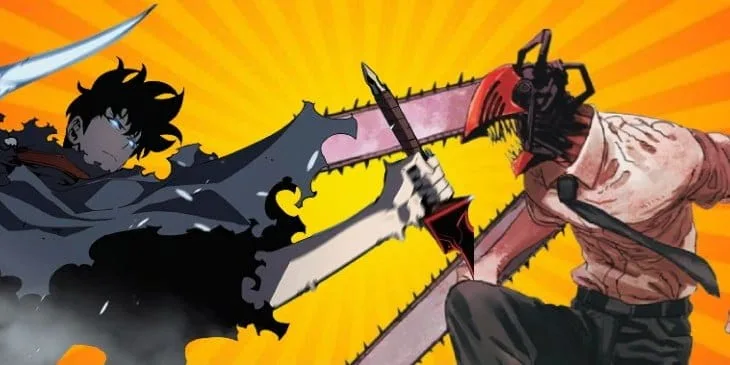
The landscape of modern anime is fiercely competitive, with dozens of new series vying for the spotlight each season. Among the most talked-about titles of recent years are Solo Leveling and Chainsaw Man. Both are adaptations of massively popular manga (and, in Solo Leveling’s case, a Korean web novel and webtoon), and each has carved out a distinct identity. However, when deciding where to invest your viewing time, the choice is rarely straightforward. One show offers a power fantasy driven by personal growth and tactical combat, while the other delivers a chaotic, emotionally charged exploration of survival and identity.
In this deep-dive comparison, we examine the plot, characters, animation, audio design, fan reception, and ultimately help you decide which anime deserves your next binge session.
Story and Worldbuilding: Power Ascension vs. Devil-Hunting Chaos
A strong narrative foundation often dictates whether an anime hooks you from the first episode. Solo Leveling presents a world where mysterious portals called "gates" connect Earth to perilous dungeons filled with monsters. Hunters, individuals gifted with magical abilities, are ranked from E to S based on their power. The protagonist, Sung Jin-Woo, is an E-rank hunter derisively nicknamed "the weakest hunter of all mankind." After a catastrophic double-dungeon incident leaves his entire party dead, he awakens as the sole "Player" of a game-like System that grants him the unique ability to level up without any upper cap.
The plot follows his transformation from a scrawny, timid survivor into an unstoppable force, unraveling the mysteries behind the System and the origin of the dungeons.
Chainsaw Man, on the other hand, pivots on a world where devils are born from human fears—each fear creating a devil whose strength correlates to the intensity of that fear. Denji, a debt-ridden teenager living in abject poverty, survives by hunting devils with his pet devil-dog Pochita, who has a chainsaw for a snout. After being betrayed and killed by the yakuza, Pochita fuses with Denji’s heart, reviving him as a human-devil hybrid. With a pull of a cord sprouting from his chest, Denji can transform body parts into roaring chainsaws. He is recruited by the Public Safety Devil Hunters and thrust into a brutal world where morality is fluid, and the line between human and monster blurs.
The narrative shifts between grotesque fight sequences and bizarre slice-of-life moments, continuously subverting shonen expectations.
While both series thrive on high-stakes action, their tonal execution differs sharply. Solo Leveling’s story is a linear, adrenaline-fueled climb toward godhood, with clearly defined power levels and a systematic approach to growth. Chainsaw Man refuses such structure. Its storytelling is anarchic, often prioritizing raw emotion and absurdity over coherent power scaling. If you crave a meticulously plotted progression saga, Solo Leveling satisfies that itch.
If you prefer a narrative that keeps you guessing—where anyone can die suddenly and the protagonist’s goals shift from material comfort to deeper desires—Chainsaw Man is your match.
Protagonists and Character Dynamics
Sung Jin-Woo: The Silent Architect of His Own Destiny
Sung Jin-Woo starts as a hollow shell of a person—quiet, perpetually underestimated, and riddled with self-loathing. His early demeanor is shaped by poverty and the need to provide for his sick mother and younger sister. What makes his journey compelling is the psychological transformation that runs parallel to his physical power-ups. Once the System grants him a second chance, Jin-Woo’s strategic mind and relentless work ethic take center stage. He doesn’t merely become strong; he becomes a tactical genius, often outwitting foes that vastly outmatch him in raw stats.
His ability to summon and command shadow soldiers extracted from defeated enemies adds a layer of dark majesty to his persona. By the time he dons his iconic dark coat and eyes gleam with a purple aura, Jin-Woo has evolved into a calm, calculating presence whose quiet confidence speaks louder than any shouted declaration.
Denji: The Chainsaw-Wielding Dreamer
Denji is the antithesis of the brooding hero. Raised in a world that offered him nothing, his ambitions are heartbreakingly simple: “I want to eat jam on toast with a girl.” He craves basic comforts and affection, having been denied both. This makes him wildly relatable despite his outrageous circumstances. Emotional, impulsive, and often manipulated by those around him, Denji is a protagonist who makes you wince and cheer in equal measure.
His partnership with Pochita is the emotional core of the series—a bond rooted not in master-servant dynamics but in mutual sacrifice and love. While Jin-Woo’s growth is about self-actualization, Denji’s arc is about figuring out what it means to be human when your body is a weapon and your heart literally belongs to a devil. His relationships with other characters like Makima, Power, and Aki are messy, tender, and frequently tragic, elevating the anime beyond gore-fueled spectacle.
Animation and Visual Philosophy
Production studios can make or break an adaptation, and both series landed in capable hands—though contrary to some early rumors, MAPPA is responsible solely for Chainsaw Man, while Solo Leveling was brought to life by A-1 Pictures. The visual styles these studios adopted align perfectly with the tone of their respective source material.
A-1 Pictures’ work on Solo Leveling emphasizes a sleek, highly polished aesthetic. Combat sequences are fluid, with the animation prioritizing realistic martial arts and weapon-based choreography enhanced by subtle CGI for larger shadow army scenes. The color palette frequently contrasts dark dungeon interiors with neon-blue system prompts, giving the show a crisp, modern video-game feel. Character designs are sharp, and the detail in faces—especially Jin-Woo’s gradual change from gaunt to chiseled—is meticulously rendered.
MAPPA’s treatment of Chainsaw Man is far more cinematic. The studio employed a filmic approach with a soft, almost grainy color grading and naturalistic lighting that grounds even the most surreal devil designs. Fight scenes are an unhinged ballet of blood, chainsaw roars, and smear-frame dynamism. One moment the animation leans into fluid hand-drawn sakuga, the next it integrates 3D backgrounds for dizzying camera rotations. There’s a deliberate weightlessness to some scenes that underscores the dreamlike horror of its world.
Openings and endings received lavish attention, with every episode featuring a unique ending sequence by different artists—a rarity in anime production that highlights MAPPA’s commitment to the series as an audio-visual experience.
Audio Design and Musical Identity
A comparison is incomplete without acknowledging soundtracks. Solo Leveling’s score, composed by Hiroyuki Sawano, pulses with orchestral grandeur and electronic beats that amplify every level-up moment. Tracks like “DARK ARIA
Chainsaw Man counters with a wildly eclectic soundscape. Kensuke Ushio’s compositions swing from eerie, minimalistic synth to frantic drum machines and distorted guitars. The ending themes, performed by acts like Maximum the Hormone and ano, became cultural phenomena in their own right. The use of silence, too, is masterful—scenes of quiet tension suddenly erupting into gory chaos are made more jarring by the sudden absence or explosion of sound.
Reception, Ratings, and Community Sentiment
Both anime arrived with immense hype, but their journey through fandom has taken different paths. Solo Leveling debuted as the most-awaited anime of 2024 on many polls, enjoying a surge of global interest. On MyAnimeList, it quickly earned a score consistently above 8.4, with viewers praising its faithful pacing and jaw-dropping action set pieces. Critics often highlight its polished production and the sheer satisfaction of its power fantasy. Some purists argue the adaptation streamlines certain webtoon elements, but the consensus remains overwhelmingly positive.
Its fanbase thrives on the "zero to hero" narrative and the endless debates around Jin-Woo’s shadow army matches against other anime heavyweights.
Chainsaw Man had an even more explosive cultural footprint. Before airing, its trailer broke records, and upon release it dominated social media. The MyAnimeList score for the series hovers around 8.5, while IMDb users have rated it highly as well. However, its reception is more polarized. While critics lauded its cinematic direction and bold storytelling, a segment of manga readers felt the realistic, subdued character acting clashed with the manga’s raw, sketchy energy.
Nonetheless, it spawned endless memes, fan art, and analytical essays, cementing its place as a modern cult classic that bridged the gap between shonen and arthouse sensibilities.
It is worth noting that Solo Leveling’s global search trends often surpass Chainsaw Man’s, partly because the manhwa built a colossal international readership over years of weekly releases before the anime was even announced. Yet search popularity doesn’t always translate to one being categorically “better” — it merely reflects different audience demographics and release timing.
Core Themes and Deeper Messages
At their heart, both series grapple with what it means to gain power. Solo Leveling frames power as a tool of liberation and responsibility. Jin-Woo’s journey is a meritocratic fantasy: if you work hard and seize the right opportunities, you can transcend your origins. The monsters he fights are often manifestations of ancient forces, but his real enemy is his own former weakness. There’s an underlying message about self-improvement and the loneliness that often accompanies extreme strength.
Chainsaw Man dissects power through a nihilistic lens. Denji’s transformation doesn’t free him from exploitation; it merely changes the nature of his chains. The Public Safety Devil Hunters often act as a different kind of yakuza, and the characters are trapped in cycles of abuse, using intimacy and control as weapons. The series asks whether ignorance is bliss and whether simple dreams can survive in a world designed to crush them. It actively critiques traditional shonen tropes—mentors can be malicious, mentorships are transactional, and the hero’s goalpost shifts because what he thought he wanted was never truly his desire.
The Final Verdict: Which Should You Watch?
Choosing between Solo Leveling and Chainsaw Man ultimately depends on what you seek in an anime experience. They are not in direct competition; they are complementary showcases of how the medium can tell action-driven stories from opposite poles.
- Watch Solo Leveling if: You love seeing an underdog systematically grow into an unstoppable force, backed by crisp animation, a booming soundtrack, and a well-paced plot that delivers payoff after payoff. It’s ideal for fans of power fantasies like That Time I Got Reincarnated as a Slime or game-UI-infused stories such as Sword Art Online, but executed with sharper pacing and a more solitary, epic tone.
- Watch Chainsaw Man if: You crave originality, unpredictable storytelling, and are willing to embrace grotesque comedy and emotional whiplash. Its cinematic approach, subversive characters, and philosophical undercurrents make it a standout experience. If you appreciate series like Jujutsu Kaisen or Dorohedoro, Chainsaw Man’s blend of body horror and heartfelt chaos will resonate powerfully.
In an ideal world, you’d watch both. They represent two masterclasses in adaptation: one a polished, triumphant spectacle, the other a raw, artistic rebellion against formula. Start with the tone that matches your current mood, and know that neither will waste your time.
Frequently Asked Questions
What anime is similar to Chainsaw Man but has more coherent power scaling?
If you enjoy the devil-hunting premise and gritty action of Chainsaw Man but prefer a more structured power system, Jujutsu Kaisen is an excellent alternative. It features cursed spirits, a clear hierarchy of sorcerer grades, and intricate techniques, while still delivering dark themes and explosive battles. Similarly, Dorohedoro offers a bizarre, violent world with a clear magic-based power structure but Chase’s chaotic energy.
Is Solo Leveling the most popular anime of the year it aired?
Solo Leveling was unquestionably one of the most anticipated and widely streamed anime of its debut season, breaking viewership records on Crunchyroll in multiple regions. Its popularity stemmed from years of manhwa reader loyalty and a massive pre-release marketing campaign. While it ranked among the top anime of its year on aggregation sites like MyAnimeList and AniList, it shared the spotlight with other heavy hitters. Popularity, however, doesn’t diminish its quality—the anime delivered on its hype for the vast majority of fans.
Can Makima from Chainsaw Man defeat Sung Jin-Woo?
This is a spirited versus debate with no definitive answer, as both exist in separate universes with incompatible power systems. Makima’s abilities revolve around control and manipulation, and she can regenerate as long as her contracts hold. Sung Jin-Woo possesses immense physical strength, speed, and an entire shadow army that can fight even when he is incapacitated. The outcome heavily depends on whether Jin-Woo’s mental fortitude and divine-level powers could bypass Makima’s contractual immortality. For now, it remains a fun hypothetical that highlights how differently each series conceptualizes invincibility.
Are the manga versions better than the anime for these series?
Both source materials are highly acclaimed. The Solo Leveling manhwa is celebrated for its stunning full-color art and dynamic paneling, which some argue is even more visually striking than the anime. Reading it offers a more detailed look at the System and extended fight sequences. Chainsaw Man’s manga is considered by many fans to be an unfiltered look into Tatsuki Fujimoto’s singular vision, with a rough, expressive art style that complements its themes of imperfection and decay. The anime elevates the material with movement and sound, but the manga’s pacing and panel compositions are an experience all their own.
Ideally, experiencing both mediums enriches your appreciation.
For the latest episodes and official streams, you can watch Solo Leveling on Crunchyroll and Chainsaw Man on Crunchyroll.