Table of Contents
The world of shonen anime is renowned for its explosive action, unwavering determination, and the bonds of friendship that push heroes beyond their limits. Yet beneath the high-octane fights and spirited rivalries lies a quieter, more profound layer of storytelling: the tragic backstory. These heart-wrenching histories do not simply haunt characters—they define their entire journey, giving weight to every victory and depth to every loss. As a viewer, you quickly realize that the characters who suffer the most often become the ones you root for the hardest.
Characters like Hyakkimaru from Dororo or Gaara from Naruto carry burdens of isolation and cruelty that would break most people. Others, such as the Elric brothers or Trafalgar Law, are shaped by catastrophic mistakes and world-shattering losses that forever alter their paths. The sorrow they endure is never gratuitous; it is interwoven into the fabric of their personalities, decisions, and ultimate fates. When you understand a character’s painful past, the story transforms from simple entertainment into an emotionally charged experience that stays with you long after the episode ends.
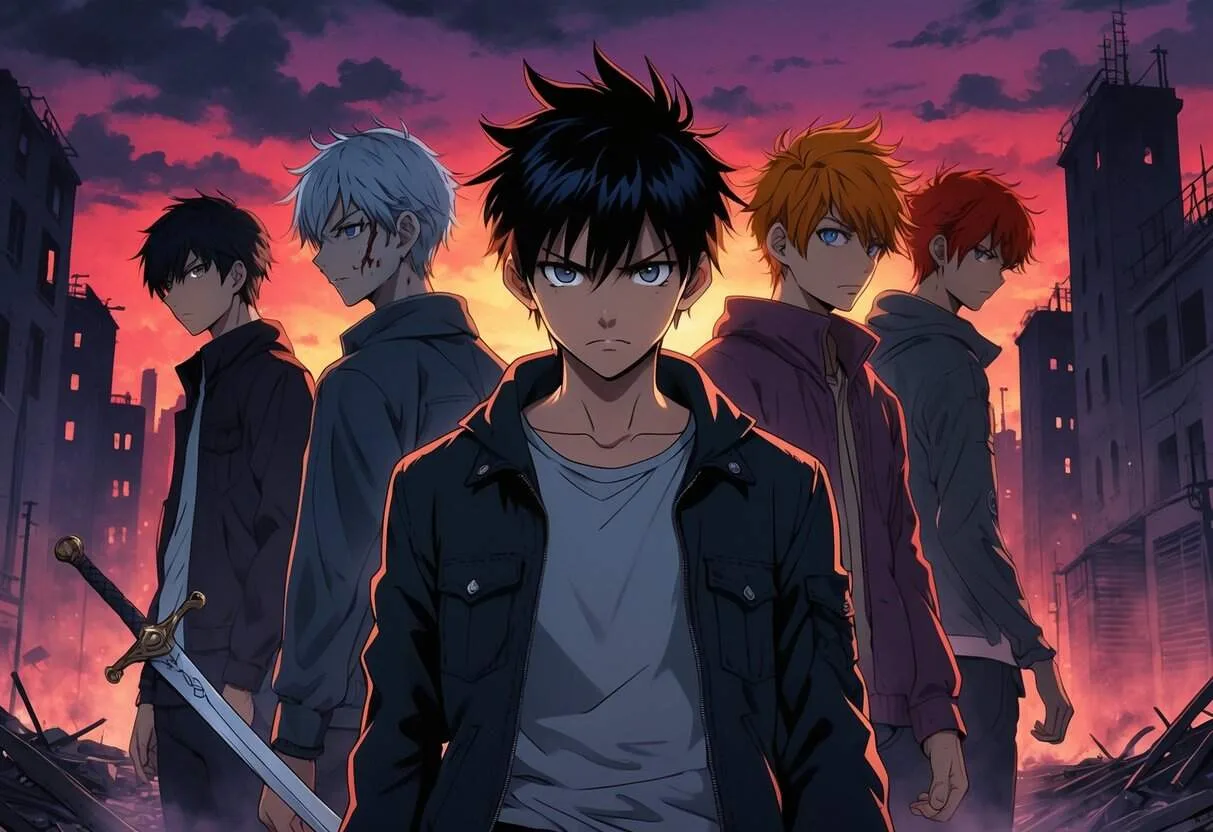
In this exploration, we rank the shonen anime characters whose backstories cut the deepest. You will see how themes of sacrifice, betrayal, and resilience play out across different worlds, and how these tragic origins have cemented some series as masterpieces of emotional storytelling. Reading on, you’ll discover not only who endured the most, but why their suffering matters to the genre as a whole.
What Actually Makes a Backstory Tragic?
Not all sad histories earn the label “tragic” in the shonen anime sense. A truly tragic backstory is one where the character experiences profound, often irreversible loss that fundamentally reshapes their identity. It goes beyond a single bad day—these events are usually rooted in childhood trauma, systemic injustice, or cataclysmic failures that could not be avoided even with the best intentions.
A tragic backstory in shonen typically involves the loss of family, being shunned by society, or bearing witness to unspeakable horrors. The pain is not merely emotional but often physical, leaving scars that characters carry visibly and invisibly. For example, a protagonist might lose their entire family to a massacre, then be left to fend for themselves in a world that sees them as a monster. The key element is that the suffering is undeserved and deeply personal—it is not just a plot device, but a defining scar that informs every decision the character makes.
These backstories work because they create a strong empathetic bond. You see a child forced to grow up too fast, or a sibling grappling with guilt over a death they feel responsible for. The tragedy makes their eventual triumphs feel earned and their moments of happiness precious. Without this layer of sorrow, many shonen heroes would come across as blandly invincible. Instead, the tragedy grounds them in human vulnerability, making their resilience all the more inspiring.
The 10 Shonen Anime Characters with the Most Heartbreaking Pasts
After examining a range of iconic series, we’ve ranked the characters whose backstories stand out for their sheer emotional weight and lasting impact. These are not just sad tales—they are the engines that drive some of the most powerful character arcs in anime history.
1. Hyakkimaru – Dororo
Few characters in any medium begin their lives as utterly stripped of hope as Hyakkimaru from Dororo. Before he could even take his first breath, his feudal lord father offered him to a collection of demons in exchange for prosperity. As a result, Hyakkimaru was born without skin, eyes, limbs, ears, or even a voice—a barely living lump of flesh abandoned in a river. Raised by a compassionate medicine man who fitted him with primitive prosthetics, he grew up in a world of total sensory isolation, unable to see, hear, or feel warmth.
His entire quest revolves around slaying the demons to reclaim his body parts one by one, but each victory brings physical agony as new senses overwhelm him. The tragedy here is absolute: his very existence was a transaction made by someone who should have protected him. Hyakkimaru’s journey is not about glory or revenge—it is a desperate scramble to become whole in a world that never wanted him. This unparalleled betrayal of a parent and the profound alienation it caused secures Hyakkimaru’s place as the most tragic shonen character.
2. Gaara – Naruto
Gaara’s suffering begins before he can even form memories. As a jinchuriki, he was made host to the One-Tailed Beast by his own father, the Kazekage, who then turned him into a weapon to be feared by the villagers. But the deepest wound came from his uncle Yashamaru, the only person Gaara believed loved him. Ordered by the Kazekage to assassinate the boy, Yashamaru revealed that Gaara’s mother never truly loved him and that he was a monster cursed from birth. The betrayal shattered Gaara’s psyche, and the sand shield he developed turned into a permanent barrier against any emotional connection.
Childhood in Sunagakure was a waking nightmare of isolation, failed assassination attempts, and the constant murderous whispers of the beast inside him. Gaara literally carved the kanji for “love” into his forehead as a twisted declaration of his own worthlessness. It took years of violence and an encounter with Naruto Uzumaki to pull him from the darkness. The path from unbridled hate to becoming a beloved Kazekage is one of the most redemptive arcs in shonen history, but the raw agony of his early years remains almost unbearable to witness.
3. Edward and Alphonse Elric – Fullmetal Alchemist
The Elric brothers’ backstory is a masterclass in tragic consequences. After their mother died of illness, young Edward and Alphonse attempted the forbidden practice of human transmutation to bring her back. The alchemical reaction tore their worlds apart: Edward lost his left leg, then sacrificed his right arm to bind Alphonse’s soul to a suit of armor, while Alphonse lost his entire physical body forever. Two children, driven by love and grief, ended up mutilated and trapped in a metal shell—all because they could not accept the natural order of death.
Guilt hangs heavy over both brothers. Edward blames himself for dragging Alphonse into the ritual; Alphonse suffers the cold detachment of a body that can neither eat nor sleep nor feel. Their quest to restore their bodies is fueled by this shared trauma, and every step forward is haunted by the memory of the forbidden act. The tragedy is magnified because it was self-inflicted in a moment of pure, innocent desperation, making their pain both relatable and devastating.
4. Eren Yeager – Attack on Titan
Eren Yeager’s childhood was shattered in the most visceral way imaginable. When the Titans breached Wall Maria, he watched helplessly as a smiling Titan devoured his mother right before his eyes. That single moment of horror ignited a burning hatred that would define his entire life. But Eren’s backstory is not just about witnessing a murder; it is about the gradual unveiling of a world where even his own father used him, injecting him with the Titan serum and burdening him with memories of past and future tragedies.
As the series unfolds, you learn that Eren’s suffering was part of a larger cycle of violence and manipulation. He was not merely a victim of Titans—he was a puppet of history, trapped by powers he never asked for. This eventual descent into becoming the very monster he once hated adds layers of tragic irony. Eren’s backstory warns that unprocessed grief and unyielding rage can transform a freedom-loving boy into a figure of apocalyptic despair.
5. Itachi Uchiha – Naruto
While many tragic characters are victims of circumstance, Itachi Uchiha’s pain stems from an impossible choice he made with full awareness. At just thirteen, he was ordered by his village to prevent a Uchiha coup by slaughtering his entire clan—parents, lovers, children—all to preserve a fragile peace. The one person he could not kill was his younger brother, Sasuke, whom he allowed to live only to be consumed by hatred and a thirst for vengeance against him.
Itachi then spent the remainder of his short life playing the villain, infiltrating the criminal organization Akatsuki while secretly protecting the village from within. The tragedy is absolute: a genius who loved his brother and his village was forced to become the devil in their eyes, all while suffering from a terminal illness. His backstory is not just sad; it is a philosophical nightmare about duty, sacrifice, and the monstrous price of peace. Itachi’s life was a silent, self-inflicted wound that never healed, making him one of the most pitiable and complex shonen characters ever written.
6. Trafalgar D. Water Law – One Piece
Law’s smiling facade hides one of the bleakest histories in the One Piece world. As a child, he lived in Flevance, a town wiped out by Amber Lead Syndrome—a poisoning caused by the very mineral that made the town prosperous. Governments let the citizens die to cover up the truth, and Law lost his parents, sister, and all his friends in a hideous, slow genocide. Alone and doomed to die from the same disease, he joined the Donquixote Pirates with nothing but vengeance festering in his heart.
The one light in that darkness was Corazon, a fellow crew member who secretly worked to cure Law. Corazon sacrificed his own life so that Law could eat the Ope Ope no Mi and escape, giving the boy a second chance with a whispered “I love you.” This act of pure love, followed immediately by brutal death, ripped a permanent hole in Law’s heart. His entire adult life is built around honoring that sacrifice, yet the trauma of losing everyone he ever cared about remains an open wound.
7. Ray – The Promised Neverland
When you first meet Ray at Grace Field House, his calm intelligence masks a soul that has been screaming in silence for years. Unlike the other orphans, Ray discovered the terrible secret of the farm while still an infant—the children were being raised as high-quality meat for demons. He remembered everything, including his own birth mother’s lullaby, and from that moment onward he had to live a double life, pretending to be a normal child while knowing every friend he made would eventually be shipped to slaughter.
Ray spent his childhood methodically planning an escape while being forced to serve as the demons’ informant, a collaboration that sickened him but seemed the only way to save at least some of his siblings. The mental torment of watching Norman and Emma smile in ignorance, and later seeing Norman shipped out, nearly destroyed him. Ray’s tragedy is one of prolonged psychological horror: a boy who had to become a tactical genius just to survive the nightmare he was born into, with no innocence ever afforded to him.
8. Sanji – One Piece
Beneath Sanji’s chivalrous exterior lies a childhood of royal cruelty that few fans forget. Born a prince of the Vinsmoke family, he was the only sibling to retain human emotions after genetic modification. His father, Judge, deemed him a failure and imprisoned him in a dungeon, forcing him to wear an iron mask so no one would have to look at his face. His brothers tormented him without mercy, and his mother, the sole person who showed him warmth, died from the strain of defying Judge’s enhancements.
Sanji eventually escaped, but only after nearly starving to death on a barren rock, an experience that forged his deep-seated reverence for food and his refusal to let anyone go hungry. The trauma of being rejected for his very humanity turned Sanji into a man who defines his worth through his cooking and his protection of others, but the scars of that cold, loveless upbringing resurface constantly. His backstory proves that even the suave chef with a dream of the All Blue is fighting ghosts of inadequacy every single day.
9. Killua Zoldyck – Hunter x Hunter
Killua Zoldyck was born into the world’s deadliest family of assassins, yet the true horror was not the killing but the systematic dismantling of his free will. Trained from toddlerhood and exposed to poisons and electricity, he was physically conditioned to be a perfect killing machine. His family implanted a needle in his brain that forced him to flee from stronger opponents, manipulating his very instincts to keep him “safe.” Killua did not realize for years that his fear was artificially manufactured.
Emotionally, he was taught that friendship was weakness and that his only value lay in his lethal skills. Even Gon’s light could not instantly wash away the self-loathing instilled by his brother Illumi. Killua’s backstory is a study in psychological abuse disguised as care. The moment he rips the needle from his head is a visceral declaration of independence, but the years of conditioning left wounds that no quick fix can entirely heal.
10. Lelouch vi Britannia – Code Geass
Lelouch’s fall from imperial prince to masked revolutionary began with the murder of his mother and the crippling and blinding of his beloved little sister, Nunnally. As children, they were sent as political hostages to Japan, a move their own father—the Emperor—allowed in a cold political calculus. Stripped of protection and forced to fend for themselves in a hostile country, Lelouch hardened into a boy obsessed with destroying the empire that discarded them.
The Geass power merely amplified a tragedy already festering. Every step of Lelouch’s brilliance is shadowed by the ghost of his mother and the image of Nunnally groping in the darkness. His ultimate plan to die as the world’s greatest villain so that peace could reign is the final, bitter fruit of a childhood shattered by betrayal. Lelouch’s backstory poignantly shows how the pain of a child can rewrite the fate of nations.
Common Threads: Themes and Patterns in Tragic Shonen Backstories
Looking across these ten profiles, certain motifs emerge that writers return to because they resonate so powerfully with audiences. The most obvious thread is the loss of family—whether through murder, sacrifice, or abandonment, the severing of the familial bond is the core wound that sets these characters on their path. This is often paired with profound isolation, where the character is treated as an outcast or monster, forced to walk alone before finding a new family in the story’s present.
Sacrifice is another recurring element, but not always of the character’s choosing. Itachi and Law were forced into roles where they had to give up everything for a greater good they could barely grasp. Even the Elric brothers’ tragedy was a sacrifice born from love that went catastrophically wrong. Redemption arcs frequently follow, as the shattered individual slowly rebuilds a sense of purpose—but the scars never truly vanish. This cyclical pattern of loss, sacrifice, and hard-won redemption gives shonen anime its emotional gravity.
It is also notable that many of these tragedies are rooted in childhood, thereby intertwining with the themes of coming of age that dominate the genre. The high school or adolescent environment in series like Blue Exorcist heightens the contrast between everyday life and overwhelming past pain. Characters like Rin Okumura must navigate teenage existence while wrestling with demonic heritage and familial death. This juxtaposition makes the trauma feel both intimate and universal.
How Tragic Backstories Shape the Shonen Anime Legacy
The influence of these painful histories extends far beyond the screen. Series anchored by tragic heroes—such as Fullmetal Alchemist or Naruto—tend to leave a more enduring cultural footprint. They generate fan discussions that dissect character motives for years, spawn deep-dive analysis articles, and foster a sense of emotional investment that fuels merchandise sales. For instance, figures like the Pegasus Cloth from Saint Seiya or replicas of Gaara’s gourd sell not just because they look cool, but because they represent a character’s hard-fought journey from despair to meaning.
Publishers such as Kadokawa Shoten have long understood that tragic backstories are a cornerstone of reader engagement. Manga that explore these painful histories in depth—through side chapters or expanded lore—give fans a richer understanding of the characters they love. This approach turns a simple action series into a layered narrative that can be revisited with fresh eyes. In many ways, the legacy of a shonen anime is built not on its most explosive battles, but on the quiet, haunting moments of loss that made those battles necessary.
Ultimately, the tragic backstory in shonen anime is not a cheap trick for easy tears. It is a narrative tool that transforms a power fantasy into a story about endurance, empathy, and the indomitable human spirit. The characters who suffer the most teach you that strength is not the absence of pain but the ability to keep moving forward despite it—a lesson that resonates as deeply in life as it does in anime.