Table of Contents
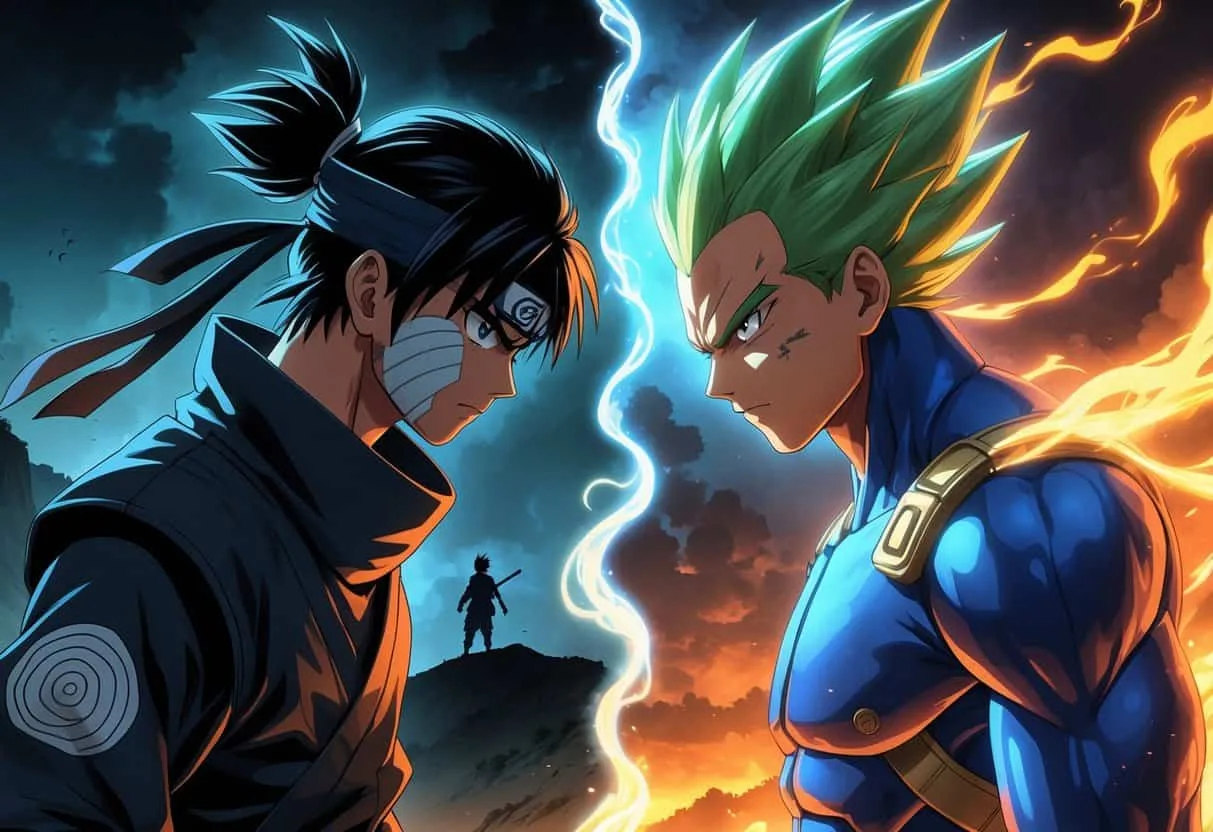
When fans debate the most compelling redemption arcs in anime, two names dominate the conversation: Sasuke Uchiha from Naruto and Vegeta from Dragon Ball. Both begin their journeys as antagonists or morally conflicted warriors, driven by dark impulses that push them away from the heroes they eventually stand beside. What makes their transformations so fascinating isn’t just the outcome—it’s the messy, painful road each travels to get there. Vegeta’s evolution is often praised for its steady, organic progression that reshapes his entire worldview, while Sasuke’s path is a turbulent ride full of backsliding, emotional chaos, and moral ambiguity. This article unpacks the structure, impact, and lasting legacy of both arcs to determine which one truly delivers the more satisfying redemption.
What Makes a Redemption Arc Truly Memorable
Before dissecting the specifics of each character, it’s useful to define the ingredients that elevate a redemption arc from a simple change of heart to a narrative masterpiece. A strong redemption rests on three pillars: a deeply flawed starting point, a believable catalyst for change, and consistent actions that demonstrate the character’s new values over time. Without these, the shift can feel forced or hollow. Audiences need to see the internal struggle, the moments of doubt, and the sacrifices that prove the change is real.
Vegeta and Sasuke both hit these marks, but in sharply different ways. Vegeta follows a gradual, almost linear path from ruthless invader to devoted family man and protector of Earth. Sasuke, by contrast, oscillates wildly between vengeance and connection, making his final atonement feel like a hard-won victory after a long series of missteps. Understanding these differences helps explain why fans remain divided over which journey carries more emotional weight.
Character Journeys: From Downfall to Redemption
Sasuke Uchiha’s Labyrinth of Revenge
Sasuke’s story begins with unimaginable trauma: the slaughter of his entire clan by his beloved older brother, Itachi. That singular event plants a seed of all-consuming hatred that dictates nearly every decision he makes throughout Naruto and Naruto Shippuden. His early arc is defined by a desperate quest for power, a willingness to abandon his comrades in Konoha, and a chilling detachment from anyone who might care for him, including Naruto and Sakura. He walks a path of isolation that turns him from a promising young ninja into a rogue agent willing to ally with the series’ most dangerous villains.
What sets Sasuke’s journey apart is how often he swerves between momentary clarity and deeper darkness. After learning the truth about Itachi’s sacrifice, his grief transforms into a broader, more destructive hatred aimed at the entire shinobi system. His decision to attack the Five Kage Summit and later to clash with Naruto in the Valley of the End shows a character who is never truly lost to evil, but who repeatedly fails to process pain in a healthy way. The turning point comes not in a single battle, but in his final confrontation with Naruto, where he finally acknowledges the bond he spent years trying to sever. His post-war atonement—traveling the world in secret to protect the village from the shadows—is a quiet, introspective penance that fits his reserved nature.
Vegeta’s Ascent from Pride to Protector
Vegeta’s introduction in Dragon Ball Z is pure menace. As the prince of a near-extinct warrior race, he arrives on Earth with nothing but contempt for its inhabitants and a singular obsession with immortality and surpassing Goku. He murders without hesitation, manipulates allies, and views compassion as a fatal flaw. Yet even in those early days, there are cracks in the armor—his fury at Frieza for destroying his planet reveals a sense of honor buried under layers of arrogance.
The beauty of Vegeta’s redemption is that it never happens overnight. It unfolds across multiple sagas, from the grudging alliance against Frieza to the genuine fear he shows when Future Trunks is threatened. His relationship with Bulma, initially a plot convenience, becomes the emotional core of his transformation. By the Majin Buu saga, his relapse—allowing himself to be consumed by dark magic to reclaim his ruthless edge—is a brilliant piece of storytelling because it acknowledges that change is hard, and pride can still poison even a reformed heart. The moment he realizes he is willing to sacrifice himself not for glory but to protect his family and the planet he once tried to destroy marks one of the most powerful scenes in the franchise.
In Dragon Ball Super, his development solidifies further as he mentors Cabba and fights alongside Goku with genuine trust, no longer chasing a bitter rivalry.
Motivations and Turning Points Compared
| Aspect | Sasuke Uchiha | Vegeta |
|---|---|---|
| Initial Motivation | Revenge for his clan, achieved through isolation and hatred | Pride, desire to be the strongest Saiyan, contempt for weakness |
| Catalyst for Change | The truth about Itachi’s love, and Naruto’s unwavering refusal to give up on him | Building a family on Earth, and facing threats that required him to protect others |
| Nature of Growth | Erratic, filled with backsliding and moral confusion; redemption is earned through painful introspection | Steady and incremental; each arc shows him reluctantly but genuinely valuing others |
| Key Relationships | Naruto, Itachi, Sakura, Kakashi | Bulma, Trunks, Goku, Future Trunks, Cabba |
| Ultimate Atonement | Choosing to protect Konoha from the shadows and vowing to break the cycle of hatred | Self-sacrifice against Buu, and later completely embracing his role as Earth’s defender without rivalry |
Sasuke’s arc is a raw exploration of how hatred can consume a person and how forgiveness—both of others and of oneself—can pull them back. Vegeta’s arc is a study in pride being dismantled brick by brick until genuine care takes its place. Both are deeply emotional, but they appeal to different storytelling sensibilities: one catastrophic and soul-searching, the other gradual and relationship-driven.
Impact on Storylines and Supporting Cast
Sasuke’s Ripple Through the Ninja World
Sasuke’s descent and eventual redemption don’t just affect him—they alter the entire trajectory of Naruto. His defection triggers the Sasuke Retrieval Arc, pushing Naruto and the other genin into life-or-death battles that mature them instantly. His alliance with Orochimaru and later with the Akatsuki escalates the series’ stakes, forcing the hidden villages to confront the reality that one of their own can become a worldwide threat. Naruto’s growth from a loud-mouthed underdog to a leader capable of empathy on a grand scale is inseparable from his determination to save Sasuke. Sakura’s development from a girl with a crush into a powerful medical-nin willing to face her former teammate in combat also reflects the emotional earthquake Sasuke’s choices cause.
When Sasuke finally returns to the side of good during the Fourth Great Ninja War, it isn’t a simple homecoming. He still harbors radical ideas about revolution and dictatorship, pushing the ideological conflict to a philosophical breaking point. His final battle with Naruto is as much a collision of worldviews as it is a physical fight. By choosing to accept Naruto’s vision and atone through quiet protection, Sasuke reshapes the future of the shinobi world. His legacy is that of a cautionary tale turned hopeful, one that proves even the darkest paths can loop back toward the light.
Vegeta’s Influence on the Dragon Ball Universe
Vegeta’s presence fundamentally alters the dynamics of Dragon Ball. Without him, Goku’s relentless pursuit of strength might have remained a solitary one, devoid of the complicated respect and rivalry that defines their relationship. Vegeta challenges Goku not as a pure villain but as someone who shares Saiyan blood and a hunger for battle, creating a friction that fuels some of the series’ most iconic moments. His gradual shift from enemy to ally also normalizes the idea that former villains can become essential protectors, a theme that later series like Dragon Ball Super lean into with characters like Buu and even Frieza in some storylines.
Beyond the fights, Vegeta’s humanity blossoms through his family. His love for Bulma and his son Trunks—especially Future Trunks from the alternate timeline—becomes his anchor. The Majin Buu saga’s emotional climax, where he hugs Trunks before his failed suicide attack, remains one of the most heart-wrenching moments in anime history. In Dragon Ball Super, he develops a sense of mentorship, taking Cabba under his wing and even putting aside his pride to learn Ultra Ego in his own way. Vegeta’s redemption proves that a character’s impact isn’t measured only by the battles they win, but by the hearts they change—including their own.
Allies and Rivals Shaped by the Journey
Both characters function as crucibles for the people around them. Naruto’s entire philosophy of never giving up on a friend is tested and forged against Sasuke’s repeated rejections. For Vegeta, Goku evolves from a rival to a benchmark and eventually a true ally, but also someone who learns from Vegeta’s pride—learning that sometimes, protecting others requires a different kind of strength. The supporting casts of both series—Sakura, Kakashi, Piccolo, Gohan—all react to and are shaped by these redemption arcs, creating rich interpersonal networks that make each world feel lived-in and emotionally resonant.
Broader Anime Legacy and Cultural Footprint
How Sasuke and Vegeta Redefined Redemption in Anime
Before Vegeta and Sasuke, anime redemption arcs often followed simpler patterns: a villain sees the error of their ways, maybe sacrifices themselves, and earns a quick burial of their past sins. These two characters, however, showed that redemption could span hundreds of episodes, involve ugly relapses, and demand continuous work. Their stories paved the way for more nuanced character work in shonen anime and beyond. You can trace a direct line from Vegeta’s prideful evolution to characters like Bakugo in My Hero Academia, whose anger and ego slowly give way to a version of heroism that still feels authentically him. Sasuke’s influence echoes in characters like Ken Kaneki from Tokyo Ghoul, whose moral ambiguity and cycles of darkness challenge the audience to question the nature of forgiveness.
In the broader anime landscape, redemption arcs have become more patient and layered because audiences now expect more than a last-minute change of heart. Shows like Attack on Titan and Vinland Saga delve into the long, painful process of atonement, and while they aren’t direct imitators, they benefit from the storytelling ground that Naruto and Dragon Ball broke open. The complexity that Vegeta and Sasuke brought to their respective series became a new standard for what a redemption arc could achieve.
Fan Reception and the Unending Debate
Forums, social media, and conventions are filled with passionate arguments about whose redemption is superior. Vegeta fans often point to the believability of his slow-burn transformation and how every step feels earned. His iconic moments—the Final Explosion, his speech to Goku Black about the sanctity of his timeline’s Trunks—are remembered with deep affection. Sasuke’s defenders, on the other hand, argue that his messy, non-linear path is more realistic and emotionally devastating. His struggle is less about pride and more about a shattered psyche, which resonates with viewers who understand how trauma can warp a person’s decisions.
Fan works, cosplay, and analysis videos endlessly explore both characters, keeping the conversation alive decades after their initial arcs concluded. The debate itself—Vegeta versus Sasuke—has become a touchstone for discussions about redemption in fiction. It pushes fans to examine what they value in storytelling: consistency and gradual change, or messy humanity and the catharsis of a hard-won second chance.
Which Redemption Truly Resonates More?
Choosing between these two iconic arcs forces you to define what a “better” redemption really means. Vegeta’s journey is objectively more consistent. He never truly reverts to his full villainy after becoming a family man, and his moments of weakness—like the Majin relapse—are framed as honest struggles rather than regressions into evil. His redemption feels like a natural evolution of a man who, deep down, always wanted connection but was too proud to admit it. The payoff is a character who can stand at Goku’s side as an equal, not just in power but in moral clarity.
Sasuke’s arc, meanwhile, is a high-risk, high-reward narrative. It frustrates viewers, makes them angry at his choices, and then brings them to tears when he finally breaks down and admits that Naruto was right all along. That emotional volatility gives his redemption a unique punch. The moment he calls Naruto his closest friend, and the quiet shot of him holding his forehead protector before leaving on his journey of atonement, carries a poetic weight that few anime scenes can match.
Both arcs succeed brilliantly, but for different reasons. If you value realism and the depiction of mental health struggles, Sasuke’s path likely hits harder. If you admire a steady, relationship-driven metamorphosis where actions consistently back up the change, Vegeta’s is tough to beat. In the end, these two characters aren’t just benchmarks for redemption in anime—they are complementary examples of how a story can show that no one is beyond saving, as long as they are willing to fight for it.