Table of Contents
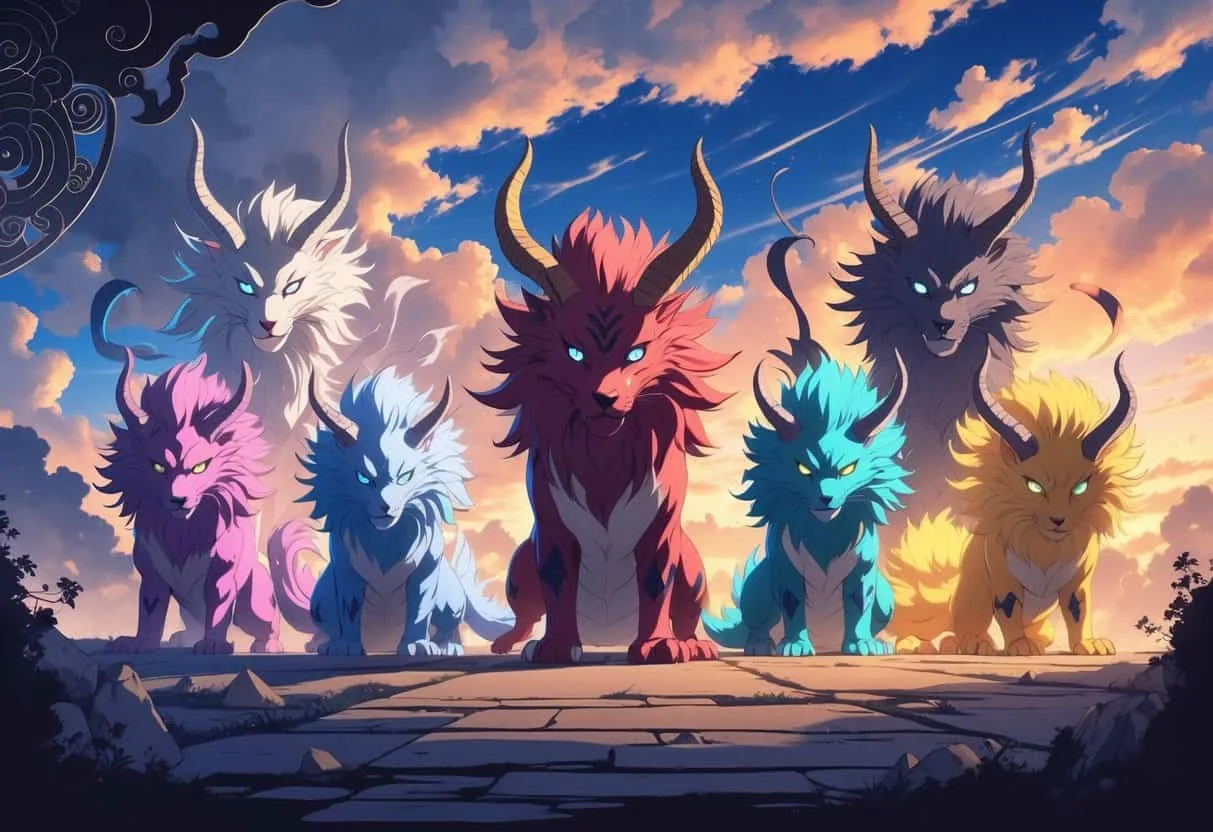
The tailed beasts, known as bijuu, are colossal chakra entities that exist at the intersection of raw power and profound personality. Throughout the Naruto series, these nine living titans — and the lone Ten-Tails that predates them — have driven wars, shaped nations, and forged some of the most iconic character arcs in anime history. Each beast is a unique blend of elemental force, mythological inspiration, and deeply independent will. More than simple weapons, they form intense, often tumultuous bonds with their human vessels, the jinchūriki, turning the concept of internal demons into something both literal and deeply metaphorical.
Key Takeaways
- Every tailed beast possesses a distinct elemental affinity, unique jutsu, and personality that deeply influences its host.
- The bond between a jinchūriki and their beast is a partnership built through struggle, trust, and shared pain, not just imposed control.
- Ranking the tailed beasts factors in raw chakra reserves, combat versatility, special abilities, and the intangible factor of how well they can cooperate with a host.
- The mythology behind the beasts draws directly from Japanese folklore, weaving ancient symbolism into the series’ core themes of balance, chaos, and redemption.
The Mythical Roots and Symbolic Depth of the Tailed Beasts
Before they were battle assets, the tailed beasts were embodiments of cultural memory. Creator Masashi Kishimoto reached deep into Japan’s folkloric pantry, pulling from a rich tradition of shape-shifting tricksters, divine beasts, and phantasmal guardians to give each bijuu a soul that resonates beyond pure action.
Japanese Folklore Woven into Chakra
The nine-tailed fox, Kurama, is perhaps the most direct homage to the kitsune, a yokai famous for its intelligence, cunning, and ability to generate fire or illusions. In many tales, a multi-tailed fox gains additional power and wisdom with each tail, culminating in the awe-inspiring nine-tailed form — a believable prototype for Naruto’s most formidable inner resident. Shukaku the One-Tail draws from the tanuki, the mischievous raccoon dog equally known for its shape-shifting and love of sake, while Matatabi the Two-Tails channels the spectral nekomata, a cat yokai that can manipulate the dead and breathe ghostly flames. The connection doesn’t stop there: Gyuki the Eight-Tails owes its bull-octopus design to ushi-oni legends, and even Chomei the Seven-Tails, with its armoured insect body, echoes the rhinoceros beetle often celebrated in Japanese folklore for its strength and tenacity. These mythic blueprints give the beasts an archetypal weight, making their presence feel ancient and larger than the shinobi world.
The Sage’s Division and the Birth of Nine Souls
Within Naruto’s internal lore, the tailed beasts were born from a single, cataclysmic origin. The Ten-Tails, a mindless force of nature, was sealed and split by the Sage of Six Paths to prevent its destructive power from destroying the world. From its chakra, he created nine separate living beings, each gifted with a sliver of the original colossus’s might but also granted consciousness, emotion, and the capacity for growth. This act of division was not simply utilitarian; it sowed the seeds of individuality that would later blossom into distinct personalities like Kurama’s seething resentment, Saiken’s gentle calm, or Gyuki’s measured wisdom. That one unimaginable entity became a family, fractured and hunted, yet capable of forming attachments that would ultimately decide the fate of the ninja world.
Chakra as Symbol: Order, Chaos, and Inner Turmoil
Each tailed beast carries a dual identity: they are both monstrous disaster and potential guardian. Their very design, a fusion of animal traits with churning chakra, mirrors the ambivalent forces of nature — a mountain that nourishes and erupts, a storm that waters crops and floods villages. In shinobi society, the beasts became symbols of inner struggle. A jinchūriki who learns to accept the beast within doesn’t simply gain a power‑up; they undergo a spiritual reconciliation that reflects the series’ core message about turning hatred into strength. That theme is echoed in the Yin‑Yang balance of Kurama’s halves, the corrosive yet protective alkali of the Six-Tails, and Shukaku’s sand that both shields and buries.
The tailed beasts are never just monsters; they are a canvas for exploring how power, fear, and acceptance coexist in the same chakra network.
Power and Personality: A Definitive Ranking of the Tailed Beasts
Assessing the tailed beasts purely by combat statistics misses the entire point of their storytelling. True strength in the Naruto world emerges from the unique interplay of chakra volume, elemental specialty, unique techniques, and, crucially, personality — a volatile factor that can turn a powerhouse into an uncontrollable liability or elevate a seemingly weaker beast into a world-class ally.
1. Kurama – The Nine-Tailed Fox of Healing and Wrath
No tailed beast rivals Kurama for sheer destructive output and chakra density. For most of the series, the nine-tails is a cauldron of rage, its malevolence poisoning its host until Naruto Uzumaki’s empathy turns the beast from a feral adversary into a devoted partner. Kurama can sense negative emotions across vast distances, a tactical edge that blends seamlessly with its immense healing factor — able to repair its own body, or its host’s, near instantly. Its Tailed Beast Bomb is the apex of bijuu weaponry, and when combined with Naruto’s Sage Mode, it elevates the jinchūriki into a tier beyond even legendary shinobi. Personality-wise, Kurama is cynical, proud, and initially closed off, but once his trust is earned, he becomes fiercely protective, demonstrating that the strongest beast is also the one most capable of profound emotional transformation.
2. Gyuki – The Eight-Tailed Mentor and Shape-Shifting Brawler
Gyuki the Eight-Tails is the closest any beast comes to being a true partner from the start. Bonded with Killer Bee, Gyuki operates as a mentor, tactical advisor, and friend, a dynamic that allows them to execute seamless combos like the Lightning Release-powered Lariat and the escape-artist tentacle substitution. Its ink production grants unique ranged harassment, and the beast’s octopus‑bull physique lets it overwhelm opponents with multiple limbs while maintaining surprising agility. Gyuki’s cool-headed nature contrasts sharply with Kurama’s fire, giving Killer Bee the composure to fight without losing himself to blind fury. That harmony makes Gyuki perhaps the most effective beast when it comes to consistent, cooperative combat, placing it squarely at number two despite not having the same atomic chakra reserves as the nine-tails.
3. Kokūo – The Five-Tailed Brute with a Boiling Core
Resembling a white horse with a dolphin-like head and five majestic tails, Kokūo specialises in pure kinetic force. Its Boil Release pushes the beast’s already extraordinary physical strength to a volcanic extreme, allowing it to melt through defences and deliver bone-shattering charges. Kokūo is not the most talkative or emotionally nuanced of the bijuu; it embodies a focused, almost stoic determination that makes the fight straightforward but devastating. While less versatile than Gyuki, its relentless power and endurance earn it the third spot, especially in drawn‑out battles where raw stamina and destructive capacity become the deciding factors.
4. Saiken – The Six-Tailed Slug and Corrosive Strategist
Saiken, the Six-Tails, doesn’t look intimidating at first glance — a giant, slimy slug with six long tails — but its arsenal demands respect. The beast secretes a potent corrosive alkali that can dissolve armour and even chakra-based defences. Its body is remarkably durable and gelatinous, absorbing blows that would puncture other beasts. Personality-wise, Saiken is surprisingly amiable, exhibiting a childlike, almost cheerful disposition that belies its destructive capability. That gentle nature makes it one of the easier beasts for a host to bond with, though the lack of overt aggression can be a drawback when absolute killing intent is required.
In a battle of attrition, Saiken’s regenerative goo and chemical attacks place it solidly in the middle of the pack.
5. Isobu – The Three-Tailed Recluse and Master of Water
Shelled and shy, Isobu the Three-Tails prefers the depths of lakes and oceans to the battlefield, a preference that reflects its personality: introverted, somewhat timid, and defensive. Its water‑based techniques can flood massive areas, while its hard carapace provides natural protection against physical strikes. Isobu’s most annoying trait is its ability to regenerate lost limbs and even reform from severe damage, dragging conflicts into wars of endurance. However, its passive nature means it rarely exploits its full offensive potential without aggressive prompting from a host, which keeps it from ranking higher. Yugakure’s Mizukage Yagura managed to leverage Isobu’s abilities to dominate, proving that with the right jinchūriki, the three-tails is a force to be reckoned with.
6. Matatabi – The Two-Tailed Cat Who Commands Blue Flames
Matatabi embodies the proud, elegant feline spirit. Wreathed in blazing blue fire, the two-tails combines fire and earth chakra to produce a lava-like supernatural flame that clings and burns relentlessly. Its speed is blistering, and its pouncing attacks can shred even seasoned shinobi. Matatabi’s personality is regal and fiercely independent, but it does form a protective bond with its host Yugito Nii, acting like a guardian more than a servant. Though its power is considerable, the relative lack of supplementary tactics apart from pure pyrotechnics places it slightly below the more versatile beasts above.
7. Shukaku – The One-Tailed Trickster and Sand Tyrant
Shukaku is the original “difficult” tailed beast — abrasive, sadistic, and obsessed with proving its own superiority. Its sand manipulation is legendary, offering near-perfect defence and long-range binding attacks that can swallow entire squads of shinobi. The beast’s tanuki origins shine through in its cunning and love of psychological torment, but that same personality made early cooperation with Gaara nearly impossible, resulting in a jinchūriki who struggled with sanity and insomnia. Over time, Shukaku’s harsh edges soften, and it becomes a grudging ally, but the heavy emotional cost of taming this beast drags it down the rankings. Against a fast, close-range specialist who can bypass the sand, Shukaku can be overwhelmed, a weakness that keeps it from the top tiers.
8. Chomei – The Seven-Tailed Beetle and Aerial Acrobat
Chomei the Seven-Tails is perhaps the most eccentric of the bijuu. With its armoured exoskeleton and six wings plus one tail, it is the only tailed beast capable of sustained flight, granting unparalleled mobility and the ability to rain down attacks from above. Its Scale Powder can blind and disorient, and Chomei’s personality is upbeat, almost cheerfully naive — it considers itself the luckiest of the beasts and is genuinely friendly toward humans. That affable nature makes bonding smoother, but its combat power is comparatively modest. Without substantial raw destruction or an overpowering signature technique, Chomei sits at the lower end of the power scale despite its unique advantages.
9. The Ten-Tails — Primordial Chaos Beyond Ranking
The Ten-Tails is less a tailed beast and more a natural disaster in physical form. It lacks a true personality, operating on pure, unthinking instinct to consume and multiply, which separates it from the nine siblings. Its inclusion in any ranking is almost unfair; its chakra volume dwarfs all other beasts combined, and its final forms can warp reality itself. However, because it cannot be negotiated with, hosted in the traditional sense (without god-tier intervention), or considered a character with agency, it serves as the ultimate benchmark rather than a ranked competitor.
Jinchūriki: The Human Vessel and the Price of Shared Power
The relationship between a tailed beast and its jinchūriki is the emotional engine of the entire Naruto series. Sealing a living chakra titan inside a human being creates a volatile cocktail that can birth a hero, a weapon, or a tragedy depending on how the village, the host, and the beast itself interact.
The Sealing Ritual and Its Immediate Toll
From the moment a bijuu is sealed into a newborn or a trained soldier, life changes irreversibly. The seal itself becomes a constant battlefield. A weak or unstable seal, like the one originally used on Gaara, allows the beast to whisper in the host’s mind, twisting dreams and eroding sanity. Even a sturdy jinchūriki suffers from chakra turbulence, social ostracism, and the psychological weight of housing a different consciousness. Physical manifestations — claw-like nails, feral markings, uncontrollable chakra leaks — constantly remind the host that they are no longer fully human, laying the groundwork for the central conflicts the series explores.
Harmony Versus Domination: The Two Paths of Control
The series draws a sharp line between jinchūriki who suppress their beasts by force and those who achieve true partnership. Early Naruto and Killer Bee represent these opposing philosophies perfectly. Naruto initially wrestles with Kurama, borrowing chakra in moments of rage and risking complete takeover, while Bee has already achieved a synchronised friendship with Gyuki, allowing him to manifest full tailed‑beast form at will and even fool enemies with tentacle decoys. The shift from domination to mutual respect is the key that unlocks chakra modes, tailed‑beast bombs performed in perfect sync, and ultimately the ability to share power with an entire army. This dynamic proves that raw chakra is meaningless without emotional alignment.
Societal Stigma and the Weaponization of Children
For villages, jinchūriki are strategic assets first and people second. That dehumanising perspective bred the loneliness that defined Naruto’s childhood and the bloodthirsty rage that marked Gaara’s early years. Hidden villages frequently kept the host’s identity a secret while simultaneously treating them as pariahs, a contradictory cruelty that left the hosts isolated and unstable. Some, like Killer Bee, managed to overcome this through personal charisma and an unshakeable bond with their beast; others, like Rin Nohara, were used as pawns in schemes that ended in tragedy. The Akatsuki’s systematic hunt for the tailed beasts, chronicled so brutally that it redefined the Fourth Great Ninja War, was only possible because the beasts were seen not as beings with souls but as resources to be extracted.
The Hidden Risks of Running Wild
Losing control to the tailed beast isn’t just a power-up gone wrong — it’s frequently fatal. Full tail transformations, from the initial three‑tail cloak to the ninth‑tail emergence that nearly killed Naruto against Pain, strip away the host’s humanity, often permanently. Even partial rampages can injure allies and destroy everything the jinchūriki loves. The curse of the seal is that the beast’s chakra can heal the body even as it consumes the mind, trapping the host in a cycle of survival and destruction. The real mastery, as Naruto learned on the Turtle Island, isn’t taking the key from the lock; it’s sitting in a meditative space and acknowledging the beast’s existence as a partner, not a prisoner.
Iconic Hosts, Legendary Rivalries, and How Tailed Beasts Reshaped Combat
Specific jinchūriki and their beasts have left such a deep mark on the Naruto timeline that you cannot discuss major arcs without them. Their relationships turned isolated pariahs into world‑saving heroes and transformed entire battle doctrines.
Bonds That Changed the World
Naruto Uzumaki and Kurama completed a journey from mortal enemies to brothers-in-arms that climaxed in the tailed beast’s public defence of Konoha and their combined Susanoo-armoured form during the war. Their evolution is the plot’s thesis statement: even the deepest hatred can be converted into unbreakable loyalty. Killer Bee and Gyuki, on the other hand, demonstrated that this partnership didn’t have to be a lifetime of suffering — they were allies who rapped together, trained together, and laughed in the face of the Akatsuki. Gaara’s arc with Shukaku is darker, a mirror showing what happens when a village treats a child as a monster. Only after losing the One-Tail to the Akatsuki does Gaara become a true leader, proving that the beast’s absence can be just as formative as its presence.
The Akatsuki’s Hunt and the Jinchūriki Ordeal
The systematic extraction of tailed beasts by the Akatsuki turned the map crimson. From Gaara’s capture and resurrection to the fall of Yugito Nii and Fuu of Takigakure, each loss demonstrated the terrifying organisational power of Itachi’s former comrades. The hunts forced the remaining jinchūriki to confront their own mortality and the value of their beast beyond its weaponised chakra. These battles also illuminated harsh truths: a skilled jinchūriki with a cooperative beast, like Bee, could survive where others fell, but a host like the Four-Tails’ Roshi, who never fully communicated with Son Goku, struggled to unlock the true potential that a unified front could provide.
Tactical Evolution Born from Bijuu Mastery
The tailed beasts didn’t just add giant monsters to the field; they forced a complete rethink of shinobi tactics. Sealing teams, barrier specialists, and genjutsu users became essential counters. Shikamaru’s intellect was often the real weapon, planning to immobilise or redirect an uncooperative beast’s attack. Naruto’s innovation of combining Kurama’s chakra with Sage Mode birthed new sensory nets and enhanced medical ninjutsu that could heal entire divisions at once. Even Rock Lee’s speed and Temari’s cutting winds found renewed purpose when coordinated with a tailed beast’s grand-scale assault.
The lesson was clear: the tailed beasts were not just bigger fighters; they were force multipliers that, when paired with creative human tactics, could rewrite the rules of engagement entirely.
In the end, the tailed beasts are far more than a numbered ranking of power levels. They are the beating hearts of one of anime’s richest mythologies — nine spirits forged from a primordial calamity, each carrying a fragment of a world’s pain and the potential to heal it. Their chakra reshapes landscapes, but their personalities reshape the people who hold them, reminding us that the most explosive power in the Naruto universe is still the bond between a host who refuses to give up and a beast who finally decides they have found a home.