Table of Contents
The Quiet Philosophy of Everyday Life
Slice-of-life anime may appear deceptively simple at first glance, yet beneath the surface of shared meals, classroom chatter, and lazy afternoons lies a rich soil of philosophical inquiry. This genre transforms the ordinary into a canvas for exploring what it means to be human, how we connect with others, and why the smallest moments often carry the deepest weight. Rather than chase grand narratives or world-shattering events, these series invite you to sit with characters as they navigate the ebb and flow of daily existence, and in doing so, they hold up a mirror to your own life. The gentle pacing, understated drama, and careful attention to emotional nuance create a unique space for introspection—one where answers are rarely given outright but are instead discovered through quiet observation and personal reflection.
At its core, slice-of-life anime is a meditation on existence anchored in realism. The stories unfold in recognisable settings such as high school clubs, rural villages, cramped apartments, or suburban coffee shops, and the problems characters face—loneliness, self-doubt, the ache of parting, the warmth of a shared laugh—are not unlike your own. This familiarity is the genre’s greatest strength; it disarms the viewer and makes philosophical exploration feel natural rather than academic. As you watch, you gradually notice that the line between simple storytelling and profound insight is wonderfully thin.
Key Takeaways
- Slice-of-life anime uses ordinary experiences to illuminate deep philosophical themes such as impermanence, identity, and human connection.
- Realistic characters and subtle storytelling encourage personal reflection without relying on melodrama or fantasy.
- Visual artistry, music, and voice acting work in harmony to evoke emotional and contemplative responses.
- The genre’s influence extends across the medium, inspiring cross-genre works that blend philosophical inquiry with everyday realism.
The Human Condition Reflected in Mundane Moments
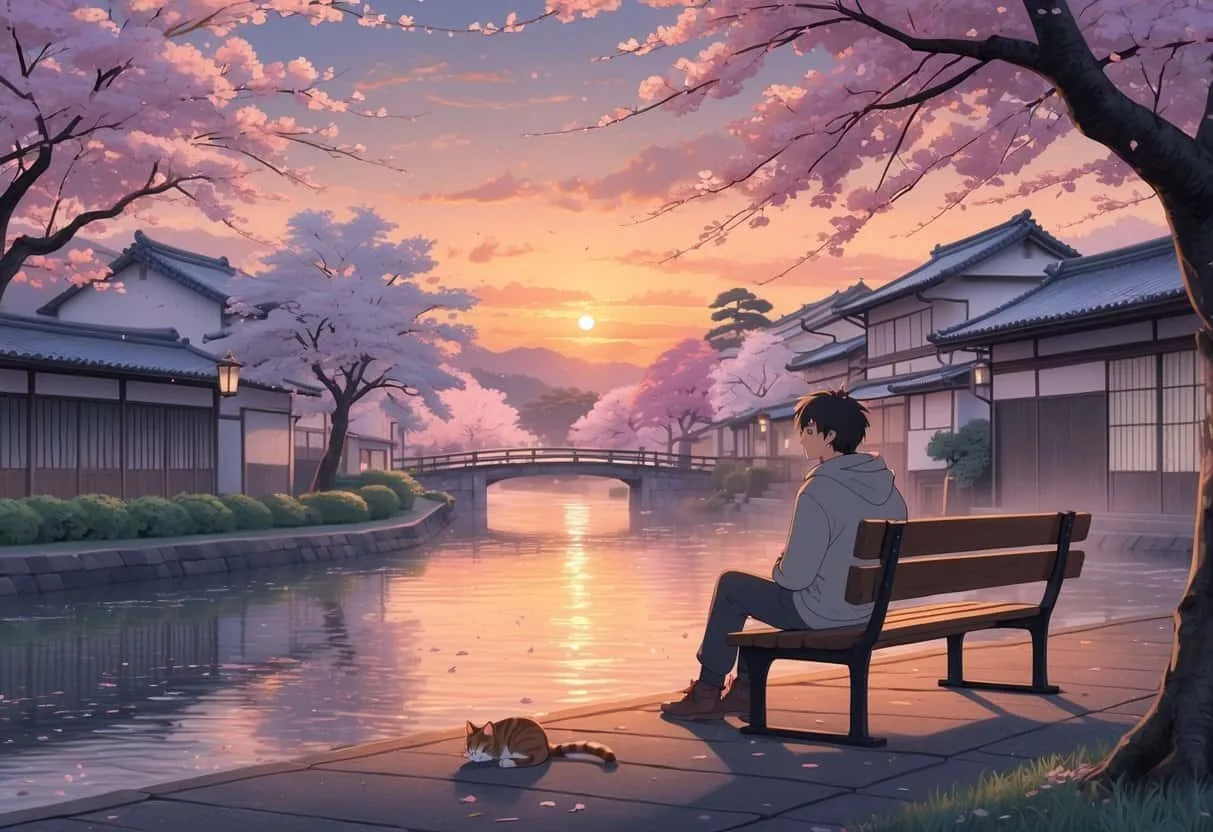
When a character pauses to watch cherry blossoms drift across a schoolyard or sits alone with a cup of tea, the narrative does more than fill time—it opens a window into universal human concerns. Slice-of-life anime consistently returns to questions that have occupied thinkers for centuries, but it does so through the accessible, relatable lens of daily routine. This section examines how the genre transmutes the mundane into a philosophical mirror.
Mono no Aware: The Bittersweetness of Impermanence
One of the most pervasive philosophical currents in slice-of-life anime is mono no aware, a Japanese aesthetic concept often translated as “the pathos of things.” Mono no aware captures the gentle sadness and appreciation one feels when recognising the transient nature of all things. In anime, this sensibility appears in the way a show lingers on fleeting beauty—a sunset, a graduation ceremony, a friendship that slowly drifts apart. Series like Aria and Mushi-Shi are drenched in this awareness; every encounter carries the quiet knowledge that the moment will pass, making it all the more precious. While many action-oriented stories treat change as a problem to be solved, slice-of-life treats transience as a fact to be accepted and even celebrated.
This acceptance encourages you to find value not in permanence but in the very act of being present.
The philosophical weight of mono no aware lies in its call to mindfulness. When you watch a character in Laid-Back Camp savour a simple bowl of noodles on a cold mountain night, the aesthetic asks you to consider the richness of that exact moment—the steam, the silence, the company—and to understand that its beauty is inseparable from its eventual end. In this way, slice-of-life anime becomes a gentle teacher of living with impermanence.
Wabi-Sabi and the Elegance of Imperfection
Closely related is wabi-sabi, the worldview centred on the beauty of imperfection, incompleteness, and simplicity. Slice-of-life anime routinely places flawed, unpolished characters in modest settings and lets their small struggles shine. There is no obsession with heroic transformation or flawless arcs; instead, growth is messy, slow, and often incomplete. March Comes in Like a Lion, for example, presents a protagonist battling depression and isolation, and his healing is never presented as a straight line. The show’s quiet acceptance of his brokenness—and the imperfect warmth of the people around him—is a direct expression of wabi-sabi philosophy.
It suggests that there is profound dignity in accepting your own rough edges and in offering compassion to others who are equally unpolished.
The art direction often mirrors this ethos. Backgrounds may show chipped paint, worn-out furniture, or overgrown gardens, not as signs of neglect but as evidence of life lived fully. By embracing the worn and the ordinary, these visual cues reinforce the idea that perfection is neither attainable nor necessary for a meaningful existence.
Existential Questions in Ordinary Routines
Slice-of-life anime does not shy away from the bigger existential questions, but it approaches them with a whisper rather than a shout. Girls’ Last Tour, despite its post-apocalyptic setting, strips away the urgency you might expect and replaces it with reflective conversations about meaning, purpose, and the nature of hope as two girls wander through a silent world. The absence of high-stakes conflict directs your attention entirely to their inner lives. Even in more grounded series such as My Teen Romantic Comedy SNAFU, characters constantly wrestle with the authenticity of social roles, the fear of vulnerability, and the search for genuine connection. The mundane setting—a high school service club—becomes a crucible for existentialist inquiry, forcing both the characters and you to ask: what does it mean to truly relate to another person, and how much of your daily self is a performance?
These stories suggest that the most profound philosophical struggles are not reserved for extraordinary circumstances; they unfold in the quiet moments of decision, in the choice to reach out or withdraw, to hold on or let go. Watching characters navigate these moments invites a parallel self-examination that is as gentle as it is persistent.
Character Journeys: Growth Through Connection
The philosophical depth of slice-of-life anime is inseparable from its character work. Because the stakes are intimate, character development becomes the primary vehicle for exploring themes of identity, morality, and belonging. Growth does not announce itself with epic battles or dramatic speeches; it seeps in through repeated interactions, small defeats, and incremental realisations.
The Evolution of Self Through Friendship
Friendship in this genre is rarely just a backdrop; it is an active agent of change. In K-On!, what begins as a lighthearted club activity morphs into a narrative about the value of shared experience and the pain of impending separation. The bonds between the girls become threads that tie together themes of creativity, purpose, and the importance of living fully in the present. More subtly, the series shows how friendships provide a safe container for exploring identity—characters try on different roles, fail, and are accepted anyway. In Sound!
Euphonium, the competitive pressure of concert band exposes the delicate balance between individual ambition and group harmony, raising questions about duty, passion, and the sacrifices made for collective dreams. The philosophical undercurrent here is about interdependence: how your selfhood is shaped not in isolation but through the constant friction and support of those around you.
Coming-of-Age as a Quiet Transformation
Coming-of-age stories are a cornerstone of the genre, but they differ markedly from their Western counterparts. Instead of dramatic rites of passage, slice-of-life anime offers incremental maturation. Hanasaku Iroha follows a teenage girl who is uprooted from her comfortable city life and thrust into the demanding world of a rural inn. Her growth is measured not in climactic revelations but in her slowly shifting attitudes toward work, family, and responsibility. The series asks what it means to become an adult in a world that rarely gives clear instructions.
Similarly, Barakamon uses the relationship between a calligrapher and a lively village child to explore humility, creativity, and the re-evaluation of success. The protagonist’s artistic and personal stagnation is cured not by solitary introspection but by chaotic, heartfelt human interaction—a philosophical nod to the idea that growth is relational rather than solitary.
Family Bonds and Social Anchors
Family structures in slice-of-life anime provide a rich terrain for exploring obligation, tradition, and unconditional love. Usagi Drop dwells on the sacrifices and quiet rewards of parenthood as a single man adopts a young girl, probing questions about what makes a family and how care redefines identity. The mundane routines—packing lunches, walking to school, dealing with illness—become meditations on commitment and selflessness. In Natsume’s Book of Friends, the protagonist’s sense of isolation from human society and his ability to see spirits drive a narrative about finding a place where you belong. The series grapples with the philosophical tension between individuality and community, suggesting that true belonging does not require erasing your uniqueness but finding those who value it.
These family and social bonds function as anchors that ground abstract philosophical musings in tangible, emotional realities.
Artistic Expression of Deep Themes
Philosophy in slice-of-life anime reaches the viewer not only through dialogue and plot but through every artistic choice. The sensory experience—what you see and hear—plays an equally potent role in shaping meaning, often communicating ideas that words cannot fully capture.
Visual Storytelling and Atmospheric Design
The art style of many slice-of-life works is deliberately soft and detailed, creating an atmosphere of tranquillity that invites contemplation. Studios like P.A. Works are known for their lush background paintings and careful attention to lighting, which can turn a simple walk to school into a meditation on beauty and solitude. The use of empty spaces, lingering shots of landscapes, and the careful depiction of seasonal changes all serve to evoke mono no aware and wabi-sabi. In Mushishi, the muted colour palette and ethereal mist immerse you in a world where the boundary between the natural and the supernatural is intentionally blurred, inviting philosophical questions about the limits of human perception. By framing the ordinary with such reverence, the visuals teach you to look at your own environment with fresh eyes, recognising the sublime in the banal.
Music and the Emotional Undercurrent
Soundtracks in this genre do more than set a mood; they act as emotional guides that underscore the philosophical subtext. Gentle piano compositions in March Comes in Like a Lion mirror the protagonist’s inner loneliness while also conveying warmth during his moments of connection. The sparse use of music in Girls’ Last Tour—where a simple raindrop melody becomes a poignant motif—raises questions about the role of art and expression in a world on the brink of extinction. Music functions as a form of unspoken communication, reaching into the spaces between words to articulate feelings of longing, acceptance, and quiet joy. This sonic layer encourages a reflective state similar to mindfulness meditation, reinforcing the genre’s invitation to pause and ponder.
Voice Acting as a Window to the Soul
In a genre that thrives on restraint, voice acting becomes a finely tuned instrument for conveying philosophical depth. A slight tremor in a confession, a prolonged silence before an answer, a laugh that breaks just a little too soon—these nuances speak directly to the human condition. Skilful performances let you sense a character’s internal conflict even when the dialogue is deceptively simple. In A Silent Voice, which blends slice-of-life with heavier drama, the voice acting captures the profound difficulty of communication and self-forgiveness, making abstract concepts like guilt and redemption feel immediate and physical. The marriage of vocal subtlety and minimalist animation demonstrates that deep reflection often requires less noise, not more.
Legacy, Influence, and Essential Viewing
Slice-of-life anime has not only cultivated a devoted following but has also reshaped the broader animation landscape. Its influence can be seen in the growing number of series that prioritise character introspection over spectacle, and its philosophical DNA has seeped into genres as diverse as supernatural thriller and science fiction.
How Slice-of-Life Reshaped Anime
Before the rise of slice-of-life as a recognised category, anime was largely dominated by action, mecha, and fantasy epics. The success of shows like Azumanga Daioh and Lucky Star proved that audiences craved low-stakes, relatable storytelling. This shift opened the door for studios to invest in character-driven narratives that trust the viewer to find meaning without constant plot hooks. Nichijou, with its absurdist humour wrapped in mundane school life, demonstrated that even comedy could carry philosophical weight by highlighting the surreal nature of ordinary existence. The legacy endures on streaming platforms like Crunchyroll, where the slice-of-life category remains a staple, continually introducing new audiences to its reflective charm.
Genre Blending and Philosophical Crossovers
The philosophical toolkit of slice-of-life has proven remarkably adaptable. Series like Death Parade pair a supernatural gameshow premise with intimate inquiries into morality and regret, using the quiet moments between games to unpack what it means to live a good life. Ghost in the Shell: Stand Alone Complex may be a sci-fi thriller at heart, but its most memorable episodes—like the Tachikoma shorts—function as pure slice-of-life vignettes that ponder consciousness and identity through the everyday “thoughts” of AI tanks. Even Studio Ghibli’s Spirited Away, for all its fantasy spectacle, grounds Chihiro’s journey in slice-of-life sensibilities: the fear of the new, the dignity of work, and the slow, emotionally honest path to self-reliance. These cross-genre experiments validate the idea that the philosophical depth of slice-of-life is not confined to a single setting but is a lens that can enrich any story.
A Curated Watchlist with Philosophical Depth
If you are ready to explore the philosophical side of slice-of-life, the following titles offer rich starting points. Each uses everyday moments to ask significant questions about existence, identity, and human connection.
- Aria the Animation – A masterclass in mono no aware, set in a terraformed Venice where gondoliers learn to find wonder in the simple act of giving tours.
- March Comes in Like a Lion – An intimate look at depression, community, and the slow rebuilding of a life, delivered with tenderness and visual poetry.
- Mushishi – Episodic wanderings into the relationship between humans and nature, steeped in animistic philosophy and quiet awe.
- Girls’ Last Tour – Post-apocalyptic musings on hope, companionship, and the meaning of survival, deceptively gentle yet profound.
- Hanasaku Iroha – A coming-of-age story that questions the nature of hard work, family obligation, and self-discovery against a backdrop of rustic beauty.
- Natsume’s Book of Friends – A blend of supernatural and slice-of-life that explores loneliness, empathy, and the healing power of connection.
- Barakamon – A creator’s crisis leads to a rediscovery of joy through community, tradition, and the unpredictable honesty of children.
- Laid-Back Camp – Outdoors and solitude become a canvas for mindfulness and the celebration of small, shared comforts.
| Anime | Genre Mix | Philosophical Focus |
|---|---|---|
| Haibane Renmei | Slice-of-Life, Mystery | Life, death, redemption |
| Girls’ Last Tour | Slice-of-Life, Post-apocalyptic | Survival, meaning, companionship |
| Aria the Animation | Slice-of-Life, Iyashikei | Mindfulness, impermanence, wonder |
| March Comes in Like a Lion | Slice-of-Life, Drama | Depression, healing, human interdependence |
| Mushishi | Slice-of-Life, Supernatural | Transience, nature, the limits of knowledge |
Reclaiming the Everyday As a Source of Meaning
Slice-of-life anime gently dismantles the assumption that profundity requires spectacle. It insists that the daily grind—the morning commute, the shared meal, the hesitant conversation, the quiet evening—is saturated with philosophical possibility. Through patient storytelling, empathetic character work, and art that treats the ordinary as sacred, the genre cultivates a way of seeing that resonates far beyond the screen. You come away not with definitive answers but with a renewed sensitivity to the textures of your own existence. In a culture that often glorifies speed and achievement, these series are an act of resistance, suggesting that a well-lived life may be nothing more—and nothing less—than paying attention to the small things, again and again, with an open heart.