Table of Contents
Understanding Parental Trauma as a Narrative Engine
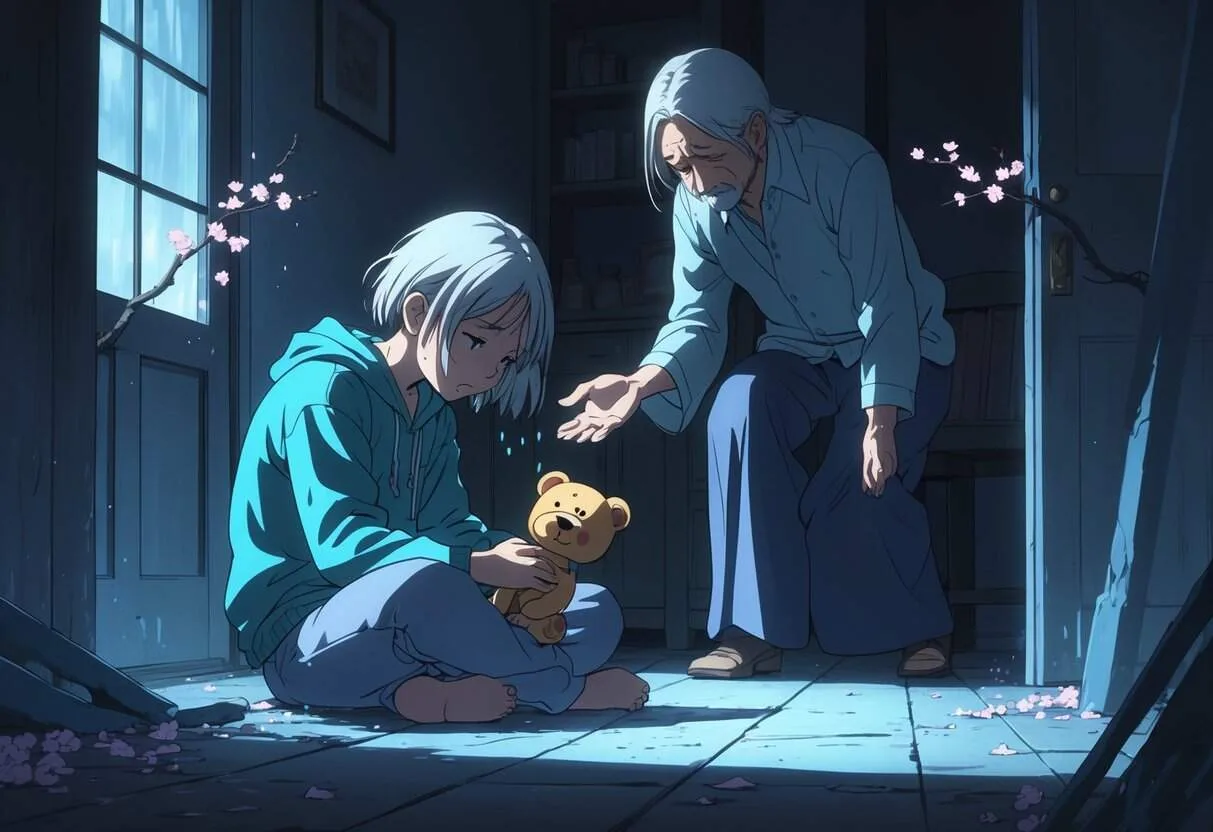
Parental trauma is one of the most emotionally resonant and recurring themes in anime. From silent family meals to explosive confrontations between children and their absent parents, the medium reveals how pain echoes across generations. Unlike many Western stories that treat trauma as a single character's backstory, anime often unfolds the complex web of inherited suffering, showing that a parent's unresolved grief or abuse becomes a living force within the next generation. These narratives carry a brutal truth: wounds of the past do not fade; they are carried forward in behavior, silence, and the ways love itself becomes twisted. Parental trauma shapes not only character arcs but the entire moral and emotional landscape of a series.
Understanding this dynamic reveals why certain characters lash out, withdraw, or fight fiercely for connection—and why healing is often positioned not as a solitary act but as a shared, generational struggle.
The power of these stories lies in their willingness to sit with discomfort. Anime rarely offers easy resolutions or tidy moral lessons about forgiving absent parents. Instead, it charts the slow, painful work of recognizing inherited patterns and deciding which ones to keep and which to discard. This depth of psychological realism, wrapped in fantastical or hyperstylized settings, allows audiences to process their own experiences through proxy. Whether it's a teenage mecha pilot or a quiet shogi prodigy, the core struggle remains the same: how do I become myself when my family's pain has already written so much of my story?
Generational Pain: A Definition
Intergenerational trauma describes the psychological and emotional wounds passed from parents to children. According to the American Psychological Association, this transmission can stem from acute events like abuse or from chronic neglect, emotional unavailability, and the silent legacy of grief. In anime, this concept becomes a central engine for character motivation and conflict. Characters inherit not only physical traits but also coping mechanisms, fears, and relational patterns. A father who buried his trauma under stoicism may raise a child who learns that showing emotion is dangerous.
A mother defined by self-sacrifice might teach her child that love requires erasing the self. These patterns create a cycle where the original pain is never spoken of, yet it governs everything from career choices to romantic relationships. Anime captures this through internal monologues and symbolic dreamscapes, making the invisible weight of inherited suffering undeniably tangible.
The insidious nature of this inheritance is that it operates below conscious awareness. A character who flinches at sudden movements may never connect that reflex to a parent's unpredictable rage. A person who cannot accept compliments may not realize they are repeating a caregiver's dismissive language. Anime excels at showing these unconscious repetitions through visual metaphor: a shadow looming over a child's bed, a mirror reflection that morphs into a parent's face, or a recurring nightmare that collapses past and present into a single unbearable moment. By externalizing internal states, these sequences allow viewers to see trauma not as a character flaw but as a conditioned response that was once necessary for survival.
Cultural Silence and Emotional Restraint
Deeply rooted values like gaman (enduring hardship with patience) and the family-centric ie system encourage suppressing individual pain for the sake of group harmony. Mental health issues are often stigmatized, and open discussion of emotional distress within the family can feel like a threat to stability. This cultural backdrop means that trauma in anime frequently manifests through what is not said. A parent's refusal to discuss a sibling's death, a prolonged silence after an argument, or a character's inability to cry in front of others all signal deeper, unprocessed pain. Anime creators use these culturally specific silences to make the audience feel the weight of the unspoken.
Moreover, the pressure to conform can compound the trauma: parents who experienced shame may project intense expectations onto their children, viewing them as extensions of lost dreams. The resulting narrative tension is both culturally specific and universally relatable.
The concept of honne (true feelings) versus tatemae (public facade) is particularly relevant here. Many anime families maintain a surface-level harmony while festering with unresolved resentments. A mother may smile through dinner while her son knows she is drowning in grief. A father may provide materially while being emotionally absent for decades. This gap between appearance and reality creates a confusing environment for children, who learn to doubt their own perceptions.
They may grow up feeling that something is wrong but lack the language to name it, leading to a pervasive sense of guilt and inadequacy. Anime gives voice to this confusion by allowing characters to articulate what their families cannot, often through inner monologues or confessions to trusted friends.
How Generational Trauma Shapes Characters and Relationships
Internalizing Parental Wounds
A protagonist raised by an emotionally volatile parent may develop hypervigilance, constantly scanning for rejection. A character whose parent died by suicide might wrestle with a desperate need to earn love, feeling inherently unworthy of being kept. These survival mechanisms, formed in childhood, dictate adult behavior and often lead to self-sabotage. In March Comes in Like a Lion, Rei Kiriyama's early loss and subsequent emotional exploitation leave him with a profound sense of dislocation. He isolates himself because he sees his existence as a burden—a belief silently inherited from a family environment that never allowed him to grieve.
His journey to accept kindness is a slow reclamation of self. The series devotes entire episodes to small moments of connection: a shared meal, a quiet walk, a hand on the shoulder. These micro-interactions gradually rewire Rei's expectations of love, showing that healing often happens in incremental steps rather than dramatic breakthroughs.
Similarly, in Your Lie in April, Kousei Arima internalizes his late mother's abusive perfectionism. Her violence, born from her terror of leaving him alone, warps his relationship with music. He can no longer hear his own playing, only the ghost of her demands. This illustrates how parental trauma can distort even the things a child once loved, freezing them in a time where they could not meet a parent's impossible standards. Kousei's recovery is not about forgetting his mother but about separating her love from her abuse—an agonizing process that requires him to reclaim his passion on his own terms.
The series uses music as a direct channel for emotional expression, with each performance revealing layers of grief, anger, and eventual acceptance.
Another powerful example is Shinji Ikari from Neon Genesis Evangelion, whose father Gendo's emotional abandonment creates a deep-seated fear of intimacy. Shinji runs from connection because he has learned that closeness leads to pain. His famous line, "I mustn't run away," becomes a mantra he cannot fully believe. The series refuses to give him a clean victory over his trauma; instead, it forces him to sit in his discomfort and make a choice about what kind of life he wants to live. This unflinching portrayal of psychological fragmentation resonated with audiences because it mirrored the real experience of trauma recovery: progress is rarely linear, and setbacks are part of the process.
Familial Patterns and Sibling Dynamics
Anime reveals how family systems become machinery for trauma transmission. In Fruits Basket, the Sohma zodiac curse is an explicit metaphor for intergenerational trauma—a toxic structure that forces members into roles and punishes deviation. The family head, Akito, is both abuser and victim of a mother who used love as a weapon. The curse cannot be lifted until the family faces its own origin story of rejection and loneliness. Each Sohma member embodies a different coping strategy: some comply, others rebel, and a few try to escape entirely.
The brilliance of the narrative lies in showing that none of these strategies work until the underlying wound is acknowledged. Akito's mother's cruelty is contextualized without being excused, illustrating the difficult balance between understanding and accountability that real families must navigate.
Sibling relationships also become battlegrounds for inherited pain. The Zoldyck family in Hunter x Hunter trains its children as assassins, instilling obedience and emotional suppression. Killua's escape is not just about physical freedom but about dismantling the belief—planted by his parents—that his worth is tied to his capacity to kill. His brother Illumi's obsessive control shows how even victims can perpetuate the cycle, becoming more dangerous than the original abuser. Killua's arc involves learning to value himself outside of his family's definitions, a process that requires him to confront not just his parents but the parts of himself that internalized their lessons.
When families never speak of a past war or loss, children fill the void with imagined guilt, as seen in Grave of the Fireflies, where a brother's pride and trauma doom his sister—not through malice but through a stubborn refusal to seek help. The film's devastating conclusion is a direct result of Seita's inability to process his own grief and accept support, a pattern learned from a culture that prizes self-reliance over vulnerability. The silence around their mother's death becomes a second death for Setsuko, illustrating how unspoken trauma can be as destructive as the original event.
In Attack on Titan, the theme of inherited trauma reaches epic proportions. Eren Yeager's mother's death sets him on a path of vengeance, but the series complicates this by revealing that his father's own unresolved trauma—and the memories implanted in Eren—drive the cycle further. The series asks whether any individual can break free from the weight of centuries of conflict, or whether trauma is an inescapable inheritance passed down through blood and history. This grand-scale treatment of intergenerational pain mirrors real-world cycles of political violence and ethnic conflict, showing how trauma can become a collective inheritance as well as a personal one.
Societal Reinforcement of the Cycle
External institutions, especially schools, can amplify inherited trauma. The rigorous Japanese educational system, with its emphasis on conformity, becomes a pressure cooker for students already carrying emotional burdens from home. In Assassination Classroom, the stigmatized Class 3-E mirrors how parental rejection makes a child feel defective; the system repeats the message that they are not good enough. The students' growth comes from finding value in themselves despite what their families and society have told them, a process that requires rejecting external validation and building internal worth.
Bullying often intersects with parental trauma. A child taught powerlessness at home may become a target or, as in A Silent Voice, a perpetrator. Shoya Ishida's bullying is partly a misguided attempt to assert power after internalizing neglect. The cycle moves from parent to child to peer, showing trauma is never private. Shoya's redemption arc is not about being forgiven by his victims but about learning to forgive himself, a journey that requires him to understand the roots of his behavior without using them as excuses.
The series handles this with remarkable nuance, refusing to let Shoya off the hook while still acknowledging that he too was a child shaped by inadequate care.
The absence of mental health support in many anime settings mirrors real-world gaps. Characters rarely access therapy, so healing must be found in friendships, mentorship, or the slow creation of a new, intentional family. This scarcity of professional help makes the process harder and more heroic, but it also reflects the reality of many viewers who do not have access to mental health resources. The reliance on community-based healing underscores anime's emphasis on connection as the primary vehicle for recovery, a theme that appears consistently across genres and demographics.
Healing and Breaking the Cycle
Pathways to Recovery
Anime often builds its most hopeful arcs around the messy, nonlinear process of recovery. Acknowledging trauma, speaking the unspeakable, and extending compassion to the wounded self and the flawed parent align with narrative therapy principles. In Clannad: After Story, Tomoya Okazaki moves from bitterness over his father's neglect to becoming a present parent himself. The series shows that acknowledging pain without letting it define every action requires enormous courage; recovery is not forgetting but rewriting the script so love becomes the central thread. Tomoya's transformation is catalyzed by having a child of his own, which forces him to confront his father's humanity and his own capacity for repetition.
The famous field scene, where he finally understands his father's sacrifices, is one of anime's most moving depictions of intergenerational reconciliation.
In Naruto, Gaara's transformation from isolated weapon to protective leader is triggered by a single act of empathy—Naruto seeing and validating his pain. The narrative insists that a genuine human connection can rewrite a person's relationship with the past. Recovery happens through bonds that serve as counterweights to generational wounds, proving that trauma can be alchemized into something that connects rather than isolates. Gaara's story is particularly powerful because it shows that healing does not require the original abuser to change; it requires the wounded person to find a new source of belonging.
The process of healing in anime often involves what psychologists call "re-authoring." Characters must take the story they were given by their families and rewrite it with themselves as the protagonist rather than the victim. This is explicitly shown in Re:Zero kara Hajimeru Isekai Seikatsu, where Subaru Natsuki must repeatedly confront his own weaknesses and the traumas that shape his behavior. His growth comes not from external power but from learning to accept help and believe that he deserves it. The series demonstrates that healing requires vulnerability, a lesson that is as terrifying for characters as it is for real people.
Symbols of Descent and Rebirth
Anime frequently turns to symbolic underworld journeys to portray the interior work of healing. Entering a dark psychic space represents the decision to face buried trauma. In Neon Genesis Evangelion, the abstract dissolution of ego boundaries forces characters to experience each other's pain directly, mirroring the breakdown of psychological defenses needed for genuine connection. The sea of LCL is a visual metaphor for how trauma erases the line between self and other; rebirth follows only after confronting that chaos and choosing to reassert individual existence. Shinji's final choice to return to the painful reality of human connection—despite knowing it will involve suffering—is one of the most profound statements about trauma recovery in any medium.
Even a film like Spirited Away can be read as an underworld journey where Chihiro navigates spirits of greed and loss—echoes of adult trauma. Remembering her true name and her parents' humanity allows her to return changed. This symbolizes how confronting generational pain requires holding onto one's core identity while immersed in a family's distorted legacy. The bathhouse becomes a liminal space where Chihiro must learn to assert boundaries, recognize toxic relationships, and ultimately choose compassion without losing herself. Her parents' transformation into pigs represents the consequences of unchecked consumption, a metaphor for how trauma can consume a family's humanity if left unexamined.
In Made in Abyss, the descent into the Abyss itself becomes a literal and metaphorical journey into inherited trauma. Riko's search for her mother is driven by a desire to understand a parent who abandoned her, while Reg's lost memories suggest a past too painful to hold. The Abyss's curse, which inflicts physical and psychological damage on those who attempt to ascend, mirrors the way trauma distorts time and memory. Each layer of the descent forces the characters to confront new forms of suffering, suggesting that healing requires going deeper into pain rather than running from it. The series is unflinching in its portrayal of the cost of this journey, refusing to offer easy comfort.
Chosen Families and the Power of Witness
One of anime's most hopeful messages is the concept of the chosen family. Because biological families are often the source of deep pain, characters find healing in communities they intentionally build. In One Piece, the Straw Hat crew functions as a reparative family where each member's past trauma is acknowledged and held, allowing them to become more than what their parents or society predicted. This mirrors what psychologists call "earned secure attachment"—consistent, caring relationships can rewire expectations of love and trust. Robin's journey from believing she should never have been born to trusting her crew with her life is a powerful testament to the healing power of chosen bonds.
Similarly, Nami's trust issues, born from years of exploitation by Arlong, are slowly dissolved by Luffy's unwavering faith in her.
Demon Slayer offers another compelling example: Tanjiro's relentless compassion, born from a family love that survives tragedy, becomes a weapon against the cycle of violence. Even when a family is physically destroyed, the emotional truth of the love shared can be inherited and act as a chain breaker. A friend who stays, a meal given without strings, or a refusal to leave despite a character's destructive behavior becomes a lifeline that interrupts the transmission of pain. Zenitsu's arc is particularly instructive: his constant self-deprecation and fear of abandonment directly stem from a grandfather who, while loving, never taught him to trust his own worth. The kindness he receives from Tanjiro and others begins to fill that gap, showing that healing can come from unexpected sources.
The concept of "witnessing" is crucial here. In many anime, a character's trauma is only transformed when someone else sees it fully and does not look away. This act of bearing witness validates the pain and proves that the wounded person is not alone. In Violet Evergarden, Violet's journey to understand love is itself a form of witnessing—she must learn to see others' pain without being consumed by it. Her work as an Auto Memory Doll involves channeling the emotions of others, a process that teaches her to connect with her own buried grief.
The series argues that healing happens in community and that witnessing is an active, often painful choice.
The Particular Resonance of Parental Trauma in Anime
Why This Theme Resonates Across Audiences
Parental trauma in anime resonates so deeply because it combines cultural specificity with universal emotional truth. Japanese family structures, with their emphasis on hierarchy, obligation, and emotional restraint, create particular dynamics that produce recognizable patterns of inherited pain. Yet the core experience—of feeling unseen by those who should see you, of carrying blame that belongs elsewhere, of loving someone who hurt you—transcends cultural boundaries. Audiences around the world see themselves in Shinji's fear of abandonment, Rei's isolation, or Tomoya's bitterness because these emotions are not bound to any single cultural context.
Anime's willingness to depict parental figures as deeply flawed human beings rather than villains or saints also contributes to its resonance. A character like Gendo Ikari is not a cartoon monster but a grieving man who cannot process his loss and therefore inflicts it on his son. This complexity allows viewers to hold multiple truths simultaneously: parents can be both victims and perpetrators, love can coexist with abuse, and understanding does not require forgiveness. These nuanced portrayals give audiences permission to explore their own complicated feelings about their families without demanding a tidy resolution.
The medium's visual storytelling capabilities amplify this emotional impact. A single image of a child standing in a doorway while a parent walks away can communicate years of abandonment more effectively than paragraphs of dialogue. The interplay of light and shadow, the framing of characters within empty spaces, and the use of color palettes to signal emotional states all contribute to a visceral understanding of trauma that words alone cannot achieve. Anime's aesthetic traditions, from the stark realism of Grave of the Fireflies to the surreal expressionism of Evangelion, provide directors with a diverse toolkit for representing interior states.
The Enduring Resonance
Anime's exploration of parental trauma endures because it offers no simple fixes. It validates those who feel defined by their family's pain, showing that such pain does not make them irreparably broken. Instead, trauma is framed as a terrible inheritance that can be examined, partially surrendered, and transformed into a source of empathy and strength. By weaving cultural nuance, psychological depth, and narrative symbolism, anime creates a space where viewers can safely recognize their own reflections and absorb the quiet possibility that speaking the pain is possible and the cycle can, with effort and support, be broken.
These stories remind us that parental trauma is a first chapter, a conditioning, but never the entire book. Every generation holds the power to rewrite the ending. This is not a naive optimism—anime often shows how hard that rewriting is, how many false starts and backward steps it involves. But the very existence of these narratives, their persistence across decades and genres, testifies to a belief that change is possible. The characters who break their cycles do not do so through a single dramatic gesture but through thousands of small choices: to stay when they want to run, to speak when silence would be easier, to trust when every instinct says to protect themselves.
In showing this incremental, painful, and deeply human process, anime offers one of popular culture's most honest and hopeful treatments of what it means to heal from the wounds of those who came before us.
The conversation continues to evolve. More recent series like To Your Eternity, The Ancient Magus' Bride, and Ranking of Kings have pushed the theme further, exploring non-human perspectives, adoption, and the ways communities can act as incubators for healing. As anime gains a global audience, these stories of inherited pain find new resonance with viewers from different cultural backgrounds who recognize their own family dynamics in Japanese narratives. The universality of parental trauma, filtered through the specific lens of Japanese culture and anime's unique visual language, has created a body of work that functions as both art and therapy for millions of people worldwide. This is the power of anime's engagement with parental trauma: it does not offer answers but companionship, not solutions but the courage to keep asking the questions.