Table of Contents
Key Takeaways: Regional Streaming Trends in 2024
- Streaming growth is most explosive outside Japan, with South Africa, India, Canada, and several European nations leading the expansion.
- Each region’s list of top anime is shaped by local culture, platform availability, and language preferences—there is no single global favorite.
- Global streaming platforms like Netflix and Crunchyroll now control more than 80% of anime streaming outside Asia, actively shaping consumption through originals and simulcasts.
- Action-driven, story-heavy series dominate in the West, while Asia enjoys a broader mix of long-running franchises and new hits.
- Localization—subtitles and dubs—directly impacts a title’s international uptake, turning regional hits into global phenomena.
The Global Anime Boom of 2024: A Data Snapshot
Anime streaming isn’t just a niche pastime anymore—it’s a global entertainment pillar. In 2024, the worldwide anime market was valued at an estimated $34.5 billion, with a compound annual growth rate approaching 9.7%. The engine fueling this growth is clearly streaming: platforms like Netflix, Crunchyroll, and regional services have turned anime into an on-demand, borderless experience. What makes 2024 particularly notable is how deeply anime has embedded itself in regions that were once considered fringe markets.
In South Africa, for instance, anime watchlists swelled by over 60% year-over-year on major platforms. India’s streaming hours dedicated to anime grew by nearly 40%, driven in part by cheap mobile data and localized dubs. Canada mirrored many US trends but showed a stronger affinity for slice-of-life and isekai titles. Across Europe, countries like France, Germany, and Italy saw anime consumption rise by double digits, with local-language dubs and subtitles becoming standard on all major services. Even markets with historically low penetration, such as parts of the Middle East and Africa, are developing vibrant fandoms thanks to improved internet access and localized content.
Streaming platforms haven’t just made anime available—they’ve made it discoverable. Sophisticated recommendation engines, social media integrations, and aggressive marketing campaigns now push anime titles onto millions of screens daily. In the United States, about 75% of Netflix subscribers watched at least one anime title in 2024, according to internal platform data shared at industry events. Crunchyroll, the dedicated anime service, surpassed 15 million paid subscribers globally, with the fastest growth occurring in Latin America, Asia-Pacific, and Europe. These numbers underscore a fundamental shift: anime is no longer something you need to seek out; it finds you.
Regional Analysis of Most Streamed Anime in 2024
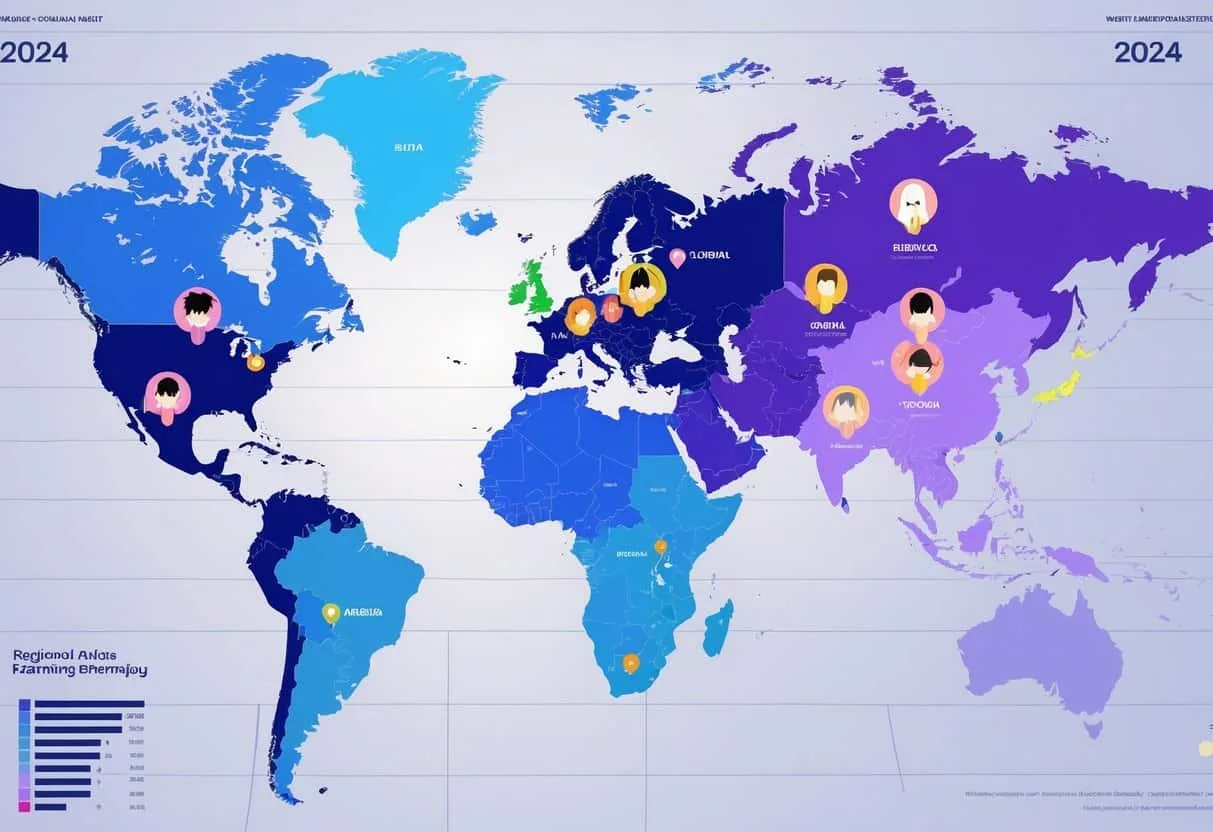
What’s fascinating about anime’s global march is how taste varies by geography. While certain mega-franchises appear everywhere, the shows that top the weekly charts in India look surprisingly different from those in Brazil or Germany. Culture, history, and the specific catalogs of available streaming platforms all influence which series dominate. Below, we break down the most streamed anime across major regions in 2024, backed by data from Parrot Analytics, platform heatmaps, and regional media reports.
Asia – The Historic Heartland of Anime
Asia remains both the birthplace and the largest consumer base for anime, yet the landscape is far from monolithic. In Japan, perennial favorites like One Piece, Detective Conan, and Dragon Ball still draw massive television and streaming audiences, but newer series like Jujutsu Kaisen and Demon Slayer are rewriting all-time records. Jujutsu Kaisen Season 2 became the most-watched anime on Japanese streaming service d Anime Store in early 2024, while Netflix Japan reported that One Piece retained the top spot for total hours viewed by a wide margin.
China’s streaming landscape is dominated by platforms like QQ and Bilibili, where local regulations and collaboration with Japanese studios heavily influence availability. Top titles in China this year include Naruto, One Piece, and domestic productions inspired by manhua. Demon Slayer also enjoys immense popularity, though its reach is sometimes staggered due to licensing. India, a market turbocharged by cheap data and Hindi, Tamil, and Telugu dubs, saw Naruto, Attack on Titan, and Death Note consistently rank among the most streamed, reflecting a preference for completed, high-octane series. Across Southeast Asia, mobile-first platforms like WeTV and iQIYI report strong demand for fantasy and romance titles, with Spy x Family and That Time I Got Reincarnated as a Slime performing exceptionally well.
North America – Where Action and Story Reign
North America’s anime audience is now massive and surprisingly sophisticated. In 2024, Solo Leveling became the undisputed champion of the first quarter, recording over 800,000 simultaneous viewers on Crunchyroll for its premiere—a staggering number for an anime debut. The series’ blend of dark fantasy, underdog narrative, and slick animation from A-1 Pictures tapped directly into what Western audiences love: character-driven action with high stakes.
Other top performers this year included Attack on Titan: The Final Chapters, which continued to pull enormous streaming numbers on both Crunchyroll and Hulu, and My Hero Academia, whose sixth season delivered record engagement. Demon Slayer also remained a fixture in the top 10 weekly rankings. Meanwhile, Netflix’s original anime Cyberpunk: Edgerunners enjoyed a second wave of popularity thanks to the game’s resurgence, proving that cross-media synergy is a powerful retention tool. Demographically, North American viewers skew slightly older, with a strong appetite for darker, morally complex stories and high-quality animation. Services like Crunchyroll’s data hub consistently show that action, adventure, and fantasy command over 60% of viewing time.
Europe – A Growing, Diversified Market
Europe’s anime consumption in 2024 is characterized by increasing fragmentation and deepening fandom. France remains the world’s second-largest manga and anime market after Japan, and this year One Piece and Attack on Titan dominated streaming charts, fueled by a robust dubbing industry and dedicated anime TV channels. Germany and Italy, too, have mature markets where dubbed anime like Demon Slayer and Sword Art Online attract mainstream audiences. In the United Kingdom, the picture is slightly different: Crunchyroll and Netflix reign, and simulcast titles like Jujutsu Kaisen and Chainsaw Man routinely top weekly trending lists.
Eastern Europe is an emerging frontier. Poland, for example, saw anime streaming hours jump by 55% in 2024, with shows such as Naruto and Black Clover serving as entry points for new fans. Across the continent, the availability of subtitles in over a dozen languages has lowered barriers significantly, and platform recommender systems increasingly push anime alongside popular Western series. According to Parrot Analytics’ Global Demand Report, European demand for anime is growing faster than any other scripted genre, a clear signal that localisation and cultural acceptance have reached a tipping point.
Africa – Emerging Fandom and Accessibility
Anime in Africa is still in its early innings but growing at a remarkable pace. In South Africa, Netflix and Crunchyroll remain the primary portals, with Naruto and Pokémon leading the charge—familiar, long-running IPs that have been broadcast on local television for years. Nigeria and Kenya are seeing similar trends, though mobile data costs and intermittent broadband still limit the on-demand experience. Interestingly, Chinese anime (donghua) is also making inroads via platforms like WeTV, particularly in East Africa.
Local entrepreneurs are beginning to fill the gap. In 2024, a handful of homegrown streaming services launched across the continent, licensing anime directly and offering more affordable subscription tiers. As internet penetration deepens, expect Africa to mirror the growth pattern seen in India a few years ago, with dubbed content and mobile optimization playing decisive roles.
Latin America – Anime’s Fiery New Frontier
Latin America’s love affair with anime is decades old, but 2024 marked a new high in streaming engagement. Brazil and Mexico alone accounted for nearly a quarter of Crunchyroll’s total subscriber base. The most streamed titles reflect a blend of nostalgia and new hits: Dragon Ball Z and Naruto remain cultural touchstones, while Attack on Titan and Demon Slayer drive the current conversation.
Regional dubs in Latin American Spanish and Brazilian Portuguese are a major growth catalyst. When Crunchyroll announced same-day dub releases for popular series, viewership spiked. In 2024, Jujutsu Kaisen and Chainsaw Man saw some of their highest per-capita streaming numbers in Argentina and Chile, proving that a passionate, vocal fanbase can turn a regional market into a global trendsetter. Anime conventions in São Paulo and Mexico City now rival those in US cities in attendance, and social media traction often drives titles into the mainstream entertainment conversation.
How Streaming Platforms Are Reshaping Anime Consumption
The gateway to anime is now digital, and the services competing for your attention are deploying vastly different strategies to win loyalty and viewing hours.
| Region | Most Streamed Anime in 2024 | Leading Platforms |
|---|---|---|
| Asia | One Piece, Jujutsu Kaisen, Demon Slayer | Netflix, d Anime Store, QQ, Bilibili |
| North America | Solo Leveling, Attack on Titan, My Hero Academia | Netflix, Crunchyroll, Hulu |
| Europe | Attack on Titan, Demon Slayer, One Piece | Netflix, Crunchyroll, Wakanim |
| Africa | Naruto, Pokémon, Attack on Titan | Netflix, emerging local platforms |
| Latin America | Dragon Ball Z, Jujutsu Kaisen, Chainsaw Man | Crunchyroll, Netflix, Amazon Prime |
Netflix and Crunchyroll’s Global Push
Netflix cemented its role as an anime powerhouse in 2024, not just by licensing titles but by commissioning originals that live exclusively on the platform. Series like Cyberpunk: Edgerunners and Pluto drew audiences who might never have considered anime before, while high-profile live-action adaptations of One Piece and Yu Yu Hakusho created crossover audiences that subsequently explored the anime catalog. Netflix’s “top 10” feature regularly highlights anime alongside mainstream Hollywood fare, further normalizing the medium. The platform’s investment in AI-driven recommendation algorithms ensures that a viewer who finishes a superhero show is likely to encounter My Hero Academia in their suggestions.
Crunchyroll, owned by Sony, takes a different tack. Its core value proposition is speed and breadth: the service offers same-day simulcasts of nearly all seasonal anime, often with subtitles available in multiple languages within hours of the Japanese broadcast. In 2024, Crunchyroll boasted a library exceeding 1,300 titles and became the central repository for fans who want to follow weekly releases as they air. By forging direct partnerships with Japanese studios, Crunchyroll secures exclusive streaming rights, effectively making it the primary platform for the most in-demand seasonal hits. This strategy has paid off handsomely; the platform’s subscriber base grew by 25% year-over-year, with international markets driving the bulk of that increase.
Platform-Specific Content Strategies and Original IP
Beyond licensing, the battle for subscribers is now fought over original anime. Netflix has announced a slate of over 30 new original anime projects for 2025 and beyond, including collaborations with top-tier studios like MAPPA and Bones. Amazon Prime Video, while less dominant, has made inroads with exclusives like The Idolmaster franchise and by bundling anime with its broader Prime membership. Disney+ entered the arena aggressively in 2024 with the release of Sand Land and the exclusive international streaming of Studio Ghibli’s catalog—a move that instantly gave the platform a prestige anime library without needing to produce new content.
Regional platforms are also rising. In China, Bilibili and QQ are investing heavily in donghua and Japanese co-productions, while in Southeast Asia, iQIYI and WeTV are locking down local distribution rights for top seasonal shows. These services often bundle anime with live-action dramas and variety shows, creating a stickier ecosystem. The fragmentation is both a challenge and an opportunity for consumers, who may now need multiple subscriptions but also enjoy more localized and varied content than ever before.
Market Dynamics and Revenue Growth in 2024
Global Anime Market Revenue and Regional Contributions
The anime industry’s revenue streams have diversified significantly. While streaming licenses and subscriptions account for the lion’s share, merchandise, theatrical releases, games, and music rights all contribute to the $34.5 billion annual figure. Japan remains the largest producer and revenue hub, but overseas markets now account for more than 50% of total anime industry income, a milestone first crossed in 2023 and cemented in 2024.
North America leads streaming revenue contributions, driven by high subscription fees and a mature digital advertising market. Europe’s share is growing, buoyed by expanding streaming infrastructure and local language dubs. Asia’s revenue is more complex: in Japan, physical media (Blu-ray, DVDs) and merchandise still generate significant sums, while in China, licensing and mobile game tie-ins are the dominant monetization paths. Latin America, though lower in per-capita spending, makes up for it with sheer volume; Brazil alone accounts for over 8% of Crunchyroll’s global subscription revenue.
Advertising, Sponsorships, and Influencer Marketing
In 2024, anime advertising moved beyond traditional trailers and banner ads. Streaming platforms have embraced dynamic ad insertion and targeted campaigns that serve tailor-made promotions based on viewing history. A fan of isekai shows, for instance, might see ads for upcoming light-novel adaptations or merchandise from partner brands. Sponsorships have also become deeply embedded: beverage companies, tech brands, and automotive giants now regularly feature anime characters in global campaigns, leveraging the medium’s cross-demographic appeal.
Influencer marketing has exploded. Anime YouTubers, TikTok creators, and podcasters command millions of followers, and platforms actively court them to drive premiere-night engagement. Simultaneously, events like virtual watch parties and live-tweet sessions are orchestrated to trend anime titles globally, feeding into platform algorithms and attracting new viewers. This convergence of fan culture and corporate strategy has turned word-of-mouth into a measurable marketing metric.
Merchandise and Cross-Media Expansion
Merchandise sales remain a massive and rapidly growing piece of the pie. In 2024, North America and Asia saw a surge in licensed products ranging from high-end collectible figures to affordable apparel. Retail partnerships with chains like Hot Topic, Uniqlo, and Target have made anime merchandise accessible to mainstream shoppers. Limited-edition drops and brand collaborations—think Naruto x Adidas or Demon Slayer x Uniqlo—often sell out within hours, driving both revenue and viral social media buzz.
The lines between media formats are also blurring. Anime series are increasingly conceived alongside manga, light novels, webtoons, and mobile games, creating a synergistic ecosystem that maximizes intellectual property value. For example, the simultaneous release of a Chainsaw Man anime season and a manga volume reprint in multiple languages led to record-breaking numbers for both. Global publishers like VIZ Media and Kodansha have expanded digital access to manga through apps and subscription services, directly linking readers to anime adaptations and fueling a continuous cycle of consumption.
Technological and Content Innovations Enhancing the Streaming Experience
AI-Powered Recommendations and High-Quality Streaming
Behind the scenes, artificial intelligence is quietly reshaping how you discover and enjoy anime. Machine learning models analyze not just your watch history but also pacing, genre tropes, and even visual style to recommend shows that feel tailor-made. Netflix’s recommendation system famously segments its anime catalog using thousands of micro-genres, ensuring that a fan of “emotionally intense fantasy” finds To Your Eternity while a “lighthearted school comedy” seeker lands on Kaguya-sama: Love is War.
Streaming quality has also leveled up. In 2024, 4K HDR streaming became standard for new anime on major platforms, and adaptive bitrate technology means that even viewers on slower connections in emerging markets can enjoy a crisp, buffer-free experience. AI-driven compression techniques reduce data usage without sacrificing visual fidelity, a crucial advancement for mobile-dominated regions like India and Africa.
Expanding the Content Universe: Manga, Light Novels, and OVAs
Modern streaming platforms are transforming from simple video players into broad content hubs. Many now integrate manga chapters directly into the anime viewing interface. For instance, when a One Piece episode ends, you might be offered the corresponding manga volume or a follow-up OVA episode—creating a seamless narrative thread. Services like Shonen Jump and Crunchyroll Manga (in select markets) bundle anime and reading subscriptions, encouraging fans to explore source material.
This integration reduces fragmentation and increases engagement, as fans can immediately dive deeper into a story without switching apps. Light novels—the source of many popular isekai series—are increasingly available as digital exclusives alongside their anime adaptations, providing backstory and lore that enriches the viewing experience. The result is an ecosystem where the anime becomes the gateway to a franchise, and the franchise, in turn, fuels sustained streaming interest.
Interactive Features and Esports Integration
Anime streaming is becoming a more participatory experience. Some platforms have begun testing interactive elements, such as real-time polls during simulcasts where fans vote on their favorite character moment, with results displayed on screen. Virtual viewing parties and integrated chat functions let communities gather around episode premieres, mimicking the communal feeling of a live broadcast.
Esports tie-ins have also deepened the connection between gaming and anime. Competitive titles based on anime franchises—like Dragon Ball FighterZ and Genshin Impact (anime-adjacent)—host global tournaments streamed on Twitch and YouTube, often featuring exclusive anime clips or tie-in episodes. In 2024, the Demon Slayer: The Hinokami Chronicles championship garnered millions of views and drove a measurable spike in anime streaming for the series on Crunchyroll. These cross-platform experiences turn passive viewers into active participants, strengthening brand loyalty across media types.
The Importance of Localization: Subtitles, Dubbing, and Cultural Nuance
If there’s one factor that consistently dictates whether an anime breaks out globally, it’s localization. Accurate, culturally nuanced subtitles and high-quality dubs in the viewer’s native language can make the difference between a niche title and a worldwide sensation. In 2024, the industry’s investment in localization reached an all-time high, with major platforms employing dedicated teams for German, French, Latin American Spanish, Brazilian Portuguese, Hindi, and Arabic, among others.
The demand for same-day dubs has skyrocketed. Crunchyroll now offers English, Spanish, Portuguese, French, and German dubs within hours of the Japanese broadcast for many top-tier series. This speed is critical for maintaining momentum in social media conversations; if fans can’t watch the latest episode until days later, local buzz often dies out. Meanwhile, Netflix’s approach to dubbing—which often involves assembling separate voice casts for multiple languages—has made shows like Castlevania and Cyberpunk: Edgerunners feel native to audiences worldwide.
Subtitling has become more sophisticated, too. AI-assisted tools now generate initial transcription and translation drafts that are polished by human linguists, cutting turnaround time in half. Cultural adaptation goes beyond simple translation; jokes, honorifics, and culturally specific references are carefully adapted to preserve meaning and emotional impact. This attention to detail is why a series like Attack on Titan resonates as powerfully in Paris as it does in São Paulo, and it will continue to be the bedrock upon which anime’s global expansion rests.