Table of Contents
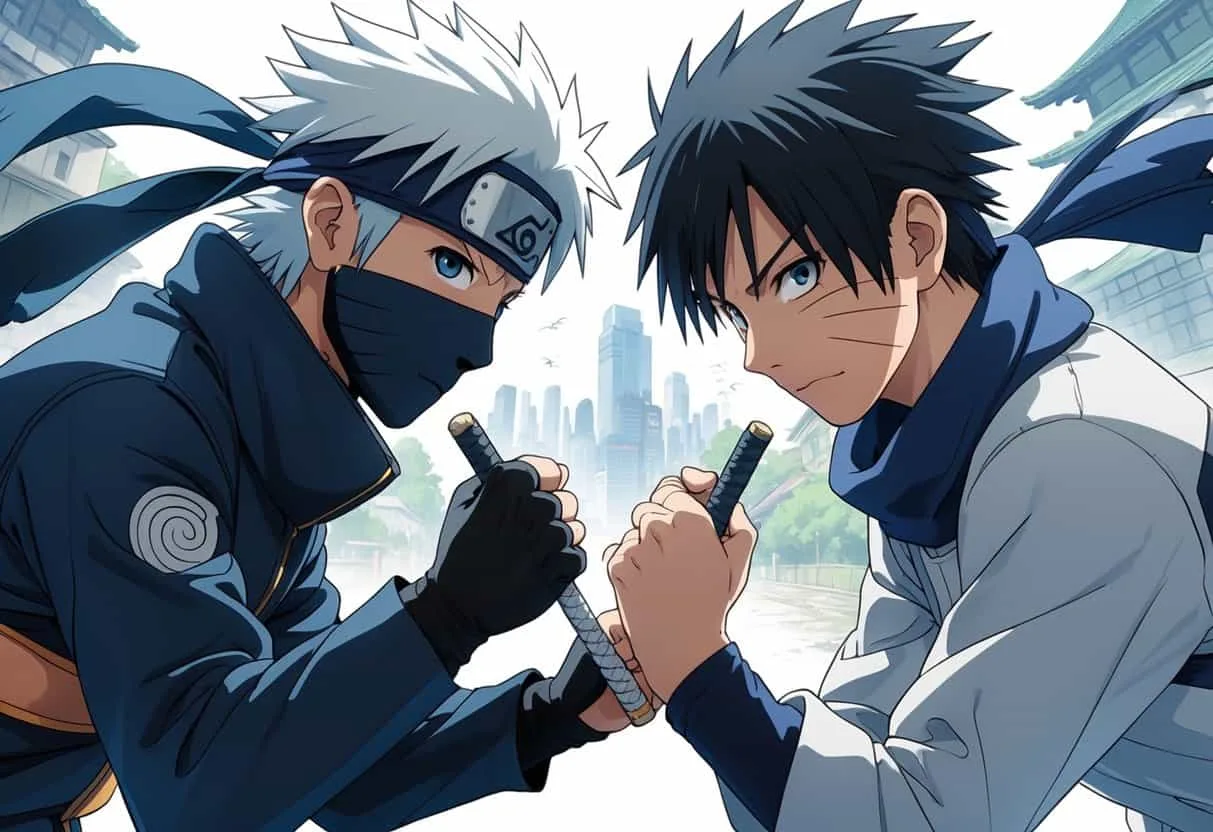
Few anime debates ignite as much passion among fans as the question of who stands as the better mentor: Kakashi Hatake from Naruto or Shota Aizawa from My Hero Academia. Both characters have defined generations of storytelling with their iconic looks, sharp minds, and unorthodox training methods. Yet their philosophies could hardly be more different. One believes in patience, personal growth, and the quiet power of letting students find their own way; the other demands immediate discipline, cold realism, and an unflinching readiness for a world that will never pull its punches. Which approach ultimately produces stronger heroes, and what does that tell us about the nature of teaching itself?
This comparative analysis breaks down their backgrounds, classroom strategies, student outcomes, and cultural legacies to find out.
The Foundations of Teaching: Tragedy vs. Pragmatism
Every great teacher is shaped by the scars they carry. For Kakashi and Aizawa, those scars run deep and directly inform how they interact with the next generation. Understanding their histories is essential to grasping why they teach the way they do.
Kakashi Hatake: The War-Hardened Mentor
Kakashi’s childhood was a masterclass in loss. He watched his father, Sakumo Hatake, be ostracized and driven to suicide for choosing comrades over a mission. Later, he lost his teammate Obito Uchiha in a disastrous mission and was subsequently forced to kill Rin Nohara, another teammate, when she became a threat. These events forged a man who understood that the ninja world chewed up the young and the unprepared. Instead of becoming bitter, however, Kakashi internalized the lesson that rules are not absolute and that protecting one’s comrades matters above all else.
This trauma explains his laid-back, somewhat detached demeanor. He arrives late to every meeting, lazily reads his adult novels in public, and often deflects serious conversations with a flippant smile. But that mask hides an intensely analytical mind that is constantly testing those around him. Kakashi’s teaching philosophy is built on two pillars: the bell test, which drives home the importance of teamwork over selfish ambition, and the principle of “those who break the rules are scum, but those who abandon their friends are worse than scum.” He doesn’t want obedient soldiers; he wants shinobi who can think for themselves and protect each other when orders no longer make sense.
Shota Aizawa: The Realist Behind the Scarf
Aizawa’s backstory is less overtly tragic but no less formative. As a student at U.A. High School, he was part of a hero course that saw promise crushed by the brutal reality of the field. He witnessed the death of a dear friend, Oboro Shirakumo, which taught him that idealism without power is a quick ticket to an early grave. Taking on the underground hero identity “Eraser Head,” Aizawa learned that flashy quirks mean nothing if the user lacks tactical discipline and the will to act when the world is falling apart.
This perspective turned him into the strict, no-nonsense teacher that Class 1-A encounters on their first day. For Aizawa, a school is not a daycare; it is a forge. His famous “Quirk Apprehension Test” in the very first episode of the series—where he threatens to expel whoever comes in last—is not a bluff but a statement of intent. He would rather crush a student’s dreams early than send them into a battle they cannot survive. Yet Aizawa’s coldness hides a fierce protective instinct; he pushes students to the brink because he knows that villains won’t hold back.
His pedagogy is governed by a singular, unwavering truth: the world outside these walls is merciless, and a teacher’s greatest kindness is to prepare students for it.
Teaching Methods: Hands-Off Guidance vs. Rigorous Discipline
The classroom becomes a microcosm of each mentor’s worldview. While both share a desire to create capable warriors, their methods of getting there are almost polar opposites, and each has distinct advantages and drawbacks.
Kakashi’s Trial-by-Fire Approach
Kakashi is rarely found lecturing from a textbook. His lessons are experiential, often involving high-stakes missions where failure has immediate consequences. After the bell test, he takes Team 7 on increasingly dangerous tasks, from escorting a bridge builder in the Land of Waves to direct confrontations with Zabuza and Haku, two deadly adversaries. When it becomes clear that Naruto struggles with basic chakra control, Kakashi doesn’t drill him mercilessly; instead, he hands him off to Ebisu initially, then steps in only when necessary to teach the Rasengan—a technique that requires the student to figure out the final step himself.
This Socratic, hands-off style has the benefit of fostering immense creativity. Naruto, Sasuke, and Sakura learn to adapt because Kakashi refuses to give them all the answers. He leaves notes, offers cryptic hints, and expects them to connect the dots. The famed tree-climbing exercise in the Land of Waves was less about chakra and more about learning to support one another when individual strength failed. Yet this method also has clear weaknesses.
Kakashi occasionally shows blatant favoritism, spending far more time training Sasuke during the Chunin Exams than the other two, which nearly fractures the team. His reluctance to intervene in interpersonal conflicts can allow problems to fester until they explode.
Aizawa’s Quirk Assessment and High Stakes
Aizawa, by contrast, omits the guesswork. He communicates expectations with brutal clarity and enforces them without hesitation. The Quirk Apprehension Test is just the beginning; throughout the series, he designs training exercises that simulate real-world villain attacks, disaster rescues, and psychological pressure. He does not flinch from telling students that their current level would get them killed. When Izuku Midoriya repeatedly breaks his bones using One For All, Aizawa doesn’t offer gentle encouragement.
He bluntly states that if Midoriya can’t find a way to control his quirk without self-destructing, he will be a liability to everyone around him.
This approach builds mental toughness and a keen sense of consequence. Students know that slacking off is not an option. They also learn the value of their peers because Aizawa designs scenarios where individual failure means collective punishment, subtly reinforcing teamwork through a shared sense of dread. However, this rigidity can cross into unforgiving territory. Some students with unique quirks or slower growth curves, like Yuga Aoyama or Koji Koda, may feel overlooked or crushed under the weight of constant high expectations.
Aizawa’s methods risk alienating those who need a softer touch to unlock their potential, a criticism that often surfaces in fan discourse about his treatment of Midoriya early in the series. For further reading on the psychological effects of such teaching styles, an in-depth look at authoritarian versus coaching approaches in education reveals similar trade-offs.
Student Outcomes and Legacy
Ultimately, a teacher is judged by the success of their students. Both Kakashi and Aizawa can boast rosters of extraordinary individuals, but the nature of that success looks very different.
Team 7’s Evolution Under Kakashi
Kakashi’s direct pupils—Naruto Uzumaki, Sasuke Uchiha, and Sakura Haruno—are arguably the most iconic shinobi of their generation. Naruto rises from the dead-last troublemaker to the Hokage, a hero who unites the five great nations. Sakura overcomes her early insecurities to become one of the greatest medical ninja and a combat powerhouse. And while Sasuke’s path is a long and painful detour into darkness, his eventual redemption and role as the “Shadow Hokage” are inseparable from the foundational lessons Kakashi imparted about bonds and loss.
What stands out is the personal nature of Kakashi’s influence. He tailors his mentoring to each student’s emotional needs: giving Naruto the familial approval he craved, pushing Sakura to move beyond her crush and find her own worth, and desperately trying to anchor Sasuke to a sense of family before it was too late. Even when he fails, as with Sasuke’s defection, the failure is a lesson in itself—one that eventually leads to the team’s reaffirmation of their bond. Kakashi’s legacy is one of profound emotional growth, where students become not merely strong but whole.
Class 1-A’s Growth Under Aizawa’s Watch
Aizawa’s impact is more systemic. Class 1-A is not a trio but a machine of 20 individuals, many of whom could headline their own series. Under his guidance, Izuku Midoriya grows from a hero fanboy with a self-destructive quirk into the next Symbol of Peace. Katsuki Bakugo learns to channel his explosive ego into genuine leadership and care for his allies. Shoto Todoroki confronts the trauma of his upbringing and forges his own flame, both literally and metaphorically.
Even less prominent students like Fumikage Tokoyami and Tsuyu Asui display remarkable tactical maturity in crisis situations.
Whereas Kakashi’s legacy is often expressed through intimate, one-on-one moments (like teaching Naruto the Rasengan or comforting a dying Sasuke), Aizawa’s crowning achievement is the class’s collective tenacity. When villains attack U.A. during the training camp arc, it is Aizawa’s relentless drilling that keeps the students alive long enough for help to arrive. His insistence on emergency protocols and constant vigilance turns panic into organized counterattacks. This is the mark of a teacher who builds culture, not just a star pupil. For a deeper dive into how Aizawa plans his curriculum, the official character profile on the My Hero Academia wiki details his many training regimens and expulsion record.
Visual Identity and Personality: The Mask and the Scarf
A teacher’s appearance may seem trivial, but in anime, character design is a language. Kakashi and Aizawa’s visuals telegraph their teaching styles before they ever speak a word.
Kakashi is defined by concealment. The face mask, the slanted forehead protector over his left Sharingan eye, the slouch, the ever-present book—it all suggests a man who is at once approachable and unknowable. He looks like someone who could give you a life-changing lesson while napping on a tree branch. His laid-back persona invites students to let their guard down, creating a space where they feel safe to make mistakes. Yet the moment combat starts, that demeanor evaporates into chilling precision, reminding everyone that the goofy sensei is also a legendary assassin.
Aizawa, in contrast, wears his exhaustion like a uniform. The messy long hair, stubble, and bag-laden eyes suggest a man who has not slept properly in years because he is too busy worrying about his students and the city. His capture weapon, a long gray scarf made of carbon fiber and special alloy, is a perfect metaphor for his teaching: flexible, restraining, and always ready to yank a student out of danger. Aizawa’s design rejects glamour. He is the underground hero who doesn’t care about rankings or adoration—only results.
This raw authenticity is what draws many fans to him, as explored in various anime teacher rankings and analysis pieces that consistently place both him and Kakashi at the top.
Fan Reception and Cultural Impact
The debate between Kakashi and Aizawa mirrors a larger conversation within the anime community about what kind of mentor is truly effective. Fan reception splits along these lines, generating endless forum threads, video essays, and fan art.
The Case for Kakashi: Charisma and Mystery
Kakashi’s popularity is staggering. He has consistently topped character polls in both Japan and internationally, and his face (what little we see of it) is plastered on everything from t-shirts to energy drinks. Fans are drawn to his tragic backstory, his wit, and the way his cool exterior gives way to moments of profound vulnerability. He represents the ideal that a teacher doesn’t have to be an authority figure barking orders; he can be a quiet, guiding presence who trusts his students to make the right call—even when he’s haunted by all the times he got it wrong.
Merchandise and crossovers reinforce this appeal. Kakashi’s image has appeared in video games like Jump Force and Fortnite, where his stoic charm translates seamlessly into other universes. His visual elements—the mask, the headband, the silver hair—are instantly recognizable cosplay staples. The fandom loves a flawed genius who can make them laugh and then break their hearts in the same episode.
The Case for Aizawa: Relatability and Tough Love
Aizawa’s fanbase is quieter but fiercely loyal. He is celebrated as the teacher everyone wishes they’d had when they were slacking off but also the teacher they’d dread having on Monday morning. His exhaustion, dry humor, and refusal to sugarcoat the truth resonate with older fans and educators who understand that love sometimes means being the bad guy. Events like the U.S.J. attack, where Aizawa fights a horde of villains alone to buy his students time and gets his face smashed into concrete without giving an inch, cement his status as a fearless protector.
His scruffy, no-frills aesthetic also translates well into merchandise: scarves, figurines depicting him in his yellow sleeping bag, and art prints highlighting his “don’t talk to me until I’ve had my coffee” energy. Both teachers feature heavily in fan discussions about ideal pedagogy in superhero settings, a topic often dissected on platforms like CBR and across social media.
The Verdict: So Who Is the Better Teacher?
Declaring a definitive winner between Kakashi Hatake and Shota Aizawa feels somehow unfair, because the question itself is deeply personal. It depends on what you believe the ultimate goal of teaching should be.
If the goal is to produce self-actualized individuals capable of independent thought, deep emotional intelligence, and a personal moral compass strong enough to defy even the system that trained them, Kakashi takes the crown. His philosophy of “inventing the shape of one’s own strength” and his emphasis on interpersonal bonds created the greatest protector the ninja world has ever seen. He excels at healing the invisible wounds that combat carves into young minds.
If the goal is to build a disciplined, battle-ready cohort that can function as a cohesive unit under the most horrific pressure imaginable, Aizawa is unmatched. His unforgiving standards and refusal to coddle weed out those who aren’t prepared to sacrifice everything, and they forge a group of heroes capable of adapting to any threat. He prepares students not just for fights but for the bureaucratic nightmares and moral compromises of professional heroism, making him a far more pragmatic mentor.
The truth is that the best teachers combine elements of both. Kakashi’s willingness to trust his students with dangerous information and techniques accelerated Naruto’s growth, but his leniency nearly lost Sasuke permanently. Aizawa’s harsh dismissal of Deku on day one nearly broke the boy’s spirit, yet without that wake-up call, Deku might never have searched for alternatives to full-cost arm breaking. Both men make mistakes, and both learn from them. That, perhaps, is the final lesson: great teachers are not paragons but perpetual students of their own craft.
Whether you’d rather run laps under a lazy eye and a pervy novel or stand trembling at the bottom of a cliff with expulsion looming, you can be sure these two have changed anime and the way we think about mentorship forever. For those who want to dive deeper into the original source material, the Naruto wiki’s extensive Kakashi entry chronicles every teaching moment in painstaking detail, just as the Hero Academia resources do for Aizawa.