Table of Contents
When you dive into a Japanese role‑playing game, you step into a world where familiar story beats, character types, and visual cues remind you of the anime shows you grew up watching. JRPGs have borrowed heavily from classic anime, absorbing their narrative rhythms, emotional extremes, and even the way the camera frames a dramatic moment. This cross‑pollination didn’t happen by accident—many game creators grew up on the same animated series, and they deliberately wove those influences into the games we still celebrate today.
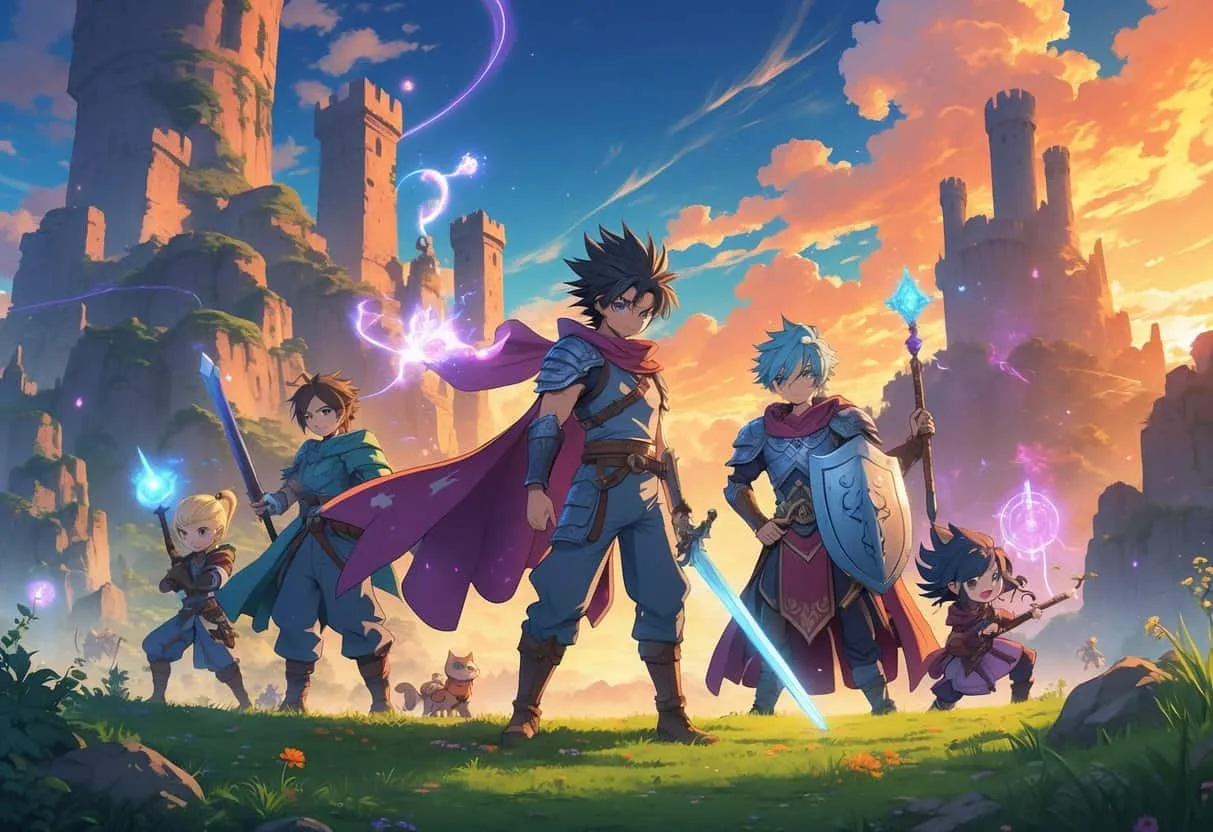
Understanding where these tropes come from helps you appreciate why a turn‑based battle feels so cinematic or why a quiet moment of dialogue can be more gripping than a boss fight. The following exploration breaks down the most iconic borrowings, from the hero’s journey to flashy transformations, and shows how classic anime continues to shape the games that define a genre.
Key Takeaways
- JRPG narratives closely mirror the hero’s journey and coming‑of‑age arcs found in classic anime.
- Character archetypes such as the reluctant hero or the tsundere ally create immediate emotional connections.
- Visual design, including art style and color symbolism, echoes famous anime studios like Toei and Ghibli.
- Gameplay systems—turn‑based combat, cinematic cutscenes, power‑up transformations—directly translate anime pacing into interactive form.
- Recognizing these borrowed elements reveals why JRPGs feel both comfortably familiar and emotionally resonant.
Core JRPG Tropes Shaped by Classic Anime
The Reluctant Hero and the Chosen One
Many JRPGs start with a protagonist who has no interest in saving the world—until fate forces their hand. This echoes countless anime series where an ordinary teenager discovers hidden powers or a sealed destiny. Cloud Strife in Final Fantasy VII begins as a mercenary only to be pulled into a conflict far larger than himself, much like Shinji Ikari in Neon Genesis Evangelion is thrust into piloting a mech against his will. The reluctant hero allows you to grow alongside the character; their initial resistance makes eventual acceptance feel earned. As the story progresses, you often unlock abilities tied to their unique lineage, a trope made famous by anime such as Dragon Ball, where Goku’s Saiyan heritage defines his power ceiling.
Ensemble Casts: More Than a Party
While the hero stands at the centre, JRPGs mirror anime’s love for ensemble storytelling. You rarely adventure alone. Instead, you gather a cast of allies, each with a different fighting style, backstory, and personal motivation. This structure comes directly from shows like One Piece or Sailor Moon, where the group’s chemistry fuels both comedy and drama. In Chrono Trigger, the party includes a frog knight, a robot, and a cavewoman, each bringing distinct narrative threads that intertwine.
The game lets you explore their perspectives through optional side quests, much like an anime filler arc that deepens your attachment to the whole crew. The ensemble cast also serves gameplay: it encourages strategic switching in battle and gives you a reason to care about equipment load‑outs beyond the main character.
Coming‑of‑Age Journeys
The teenage protagonist who matures through hardship is a staple of both anime and JRPGs. In Persona 4, you play a high‑school student who moves to a rural town and must confront inner shadows, learning hard truths about identity and acceptance. This mirrors anime such as FLCL or Naruto, where growing up means mastering inner demons. The coming‑of‑age arc often spans a calendar year, with seasonal festivals and school exams breaking up the dungeon crawling, a technique that mimics the episodic structure of a television anime series. You witness the protagonist’s confidence grow, friends drift apart and reconcile, and a final confrontation forces them to apply every lesson they’ve learned.
Epic Narratives and World‑Building
JRPGs love a sprawling map filled with ancient histories, political factions, and world‑threatening calamities. This scale is lifted from epic anime such as Record of Lodoss War or The Vision of Escaflowne, where entire continents are fleshed out with their own myths and power structures. In Xenoblade Chronicles, you explore the body of a fallen titan while unravelling a millenia‑old conflict between gods and machines. The lore is delivered through hundreds of optional dialogues and descriptions, inviting you to piece together the history just as a dedicated anime fan might track down OVAs and light novels to understand every subplot. World‑building in these games gives you a sense that the story continues even when you put down the controller.
The Power of Friendship
No JRPG is complete without a scene where the hero draws strength from their bonds. This concept, often called “nakama power” by fans, originated in anime like Fairy Tail and Digimon, where emotional connections literally fuel ultimate attacks. In Persona 5, your Confidant relationships unlock powerful fusion abilities and group attacks; the game explicitly rewards you for investing time in your teammates’ personal struggles. The trope can feel predictable, but it gives every relationship mechanical weight. When a character you’ve spent hours bonding with is threatened, the battle carries real emotional stakes, just as an anime’s climactic fight does after a dozen episodes of character development.
Emotional Storytelling Techniques
JRPGs borrow anime’s willingness to linger on a tear‑streaked face or a silent sunset. Music swells, the camera holds, and you’re forced to sit with a character’s grief or triumph. The famous death of Aerith in Final Fantasy VII uses a slow pan and an iconic theme to imprint the loss permanently in your memory, a moment that echoes the heartbreaking goodbyes seen in Cowboy Bebop or Clannad. Beyond loss, these games also celebrate quiet joys—a group sharing a meal, an unexpected romantic confession—giving you the same emotional variety you’d find in a well‑balanced anime season.
Iconic Visual and Thematic Influences
Character Archetypes from Anime
JRPG character design relies on instantly recognizable anime archetypes. The tsundere ally, who masks affection with hostility, appears in Tales of Symphonia’s Sheena and Fire Emblem’s Severa. The kuudere, cold on the outside but warm inside, is embodied by Final Fantasy VIII’s Squall. These templates speed up your connection to a new party member; you know what to expect, but the games often subvert the mold in the third act. The mentor figure, borrowed from anime like Hunter × Hunter, appears as an older warrior who teaches you new skills before a noble sacrifice.
These archetypes give developers a shorthand that immediately communicates personality, freeing up screen time for deeper plot twists.
Distinctive Art Styles and Animation
The look of a JRPG often owes its vividness to anime studios. Akira Toriyama’s distinctive style defines the Dragon Quest series, giving slimes and heroes a clean, rounded charm that feels straight out of Dr. Slump. Similarly, Studio Ghibli’s collaboration with Level‑5 on Ni no Kuni brought fluid, hand‑drawn animations and painterly backgrounds into a game, making exploration feel like walking through a Spirited Away landscape. Even games without a direct anime tie‑in borrow the large, expressive eyes and dramatic sweat drops that make emotions readable at a glance on low‑poly models. This visual continuity builds a bridge between the two mediums.
Color Symbolism and Mood
Anime teaches JRPGs to use color as a narrative tool. A character’s hair color often hints at their personality: fiery red for the passionate leader, cool blue for the calm strategist. Antagonists frequently wear dark purples or black, while divine beings glow with pure white or gold. Environments follow suit: green, pastoral villages signal peace; jagged, grey‑and‑magma wastelands promise danger. This visual shorthand, perfected in shows like Revolutionary Girl Utena and Madoka Magica, lets you read a scene’s emotional temperature before a single word of dialogue appears.
Mythology and Supernatural Elements
Anime’s fascination with Shinto spirits, Norse gods, and original mythologies permeates JRPGs. In Okami, you literally paint the world back to life as the sun goddess Amaterasu, blending Japanese folklore with a painterly anime aesthetic. Shin Megami Tensei summons demons from global myth, giving you a party composed of creatures from Egyptian, Hindu, and Christian lore, all rendered with a stark, angular anime edge. Supernatural elements push the stakes beyond political conflict; when a god descends to judge humanity, your party feels small, and victory requires out‑of‑the‑box thinking that mirrors the mind‑bending finales of anime such as Serial Experiments Lain.
Signature Gameplay Elements Inspired by Anime
Turn‑Based Combat Systems
The rhythm of a turn‑based JRPG battle—charge up, unleash a special attack, watch the animation unfold—mimics the pacing of an anime duel. You decide whether to defend, cast a spell, or trigger a powerful limit break, just as a shonen hero decides which technique to use next. Games like Persona 5 stylise this further by adding baton passes and all‑out attacks that explode with comic‑book flair. The system gives you time to strategise while preserving the tension of a well‑choreographed fight. According to IGN’s breakdown of turn‑based combat, this format originated from tabletop inspirations, but anime’s influence is what made it cinematic rather than purely mechanical.
Cinematic Cutscenes
When the story needs a grand payoff, JRPGs often switch to a full‑motion video or a highly polished in‑engine sequence that could be mistaken for an anime OVA. Final Fantasy X’s opening blitzball sequence and its tearful underwater embrace rely on framing, music, and voice acting honed by decades of anime. These cutscenes reward you for hours of dungeon crawling with moments of visual spectacle. They borrow anime’s habit of using dynamic camera angles—low shots to make a villain loom, quick zoom‑ins on wide eyes—to amplify emotion without breaking the interactive flow.
Transformation and Power‑Up Mechanics
A sudden metamorphosis mid‑battle is a hallmark of both anime and JRPGs. Think of the Super Saiyan transformation in Dragon Ball Z or the magical girl sequences in Sailor Moon. Xenoblade Chronicles 2 lets Blades transform into more powerful forms, complete with a dramatic cutscene and a new costume. Fire Emblem heroes promote to advanced classes after a flash of light and a new outfit. Triggering these moments yourself puts you in the director’s chair; you choose exactly when the tide turns.
The mechanic taps into the same rush you feel when an anime hero finally stops holding back.
Pacing and Structure Mirrors Anime Episodes
JRPGs often unfold in clearly defined chapters that mimic an anime season. A dungeon might end with a boss fight and a narrative cliffhanger—just like an episode closing on a “to be continued” card. Trails of Cold Steel structures each in‑game day with a morning briefing, a mission, and an evening wrap‑up, complete with a preview of the next day’s events. This episodic pacing makes a 60‑hour game feel digestible and encourages you to play “one more chapter,” the same way you’d binge the next episode of a series. It also gives you natural rest points and keeps the story’s momentum from stalling.
Examples of JRPGs That Embrace Classic Anime Tropes
Several landmark titles wear their anime influences proudly. Dragon Quest XI, with Akira Toriyama’s character designs, delivers a classic hero‑versus‑demon‑lord tale that feels like a playable Saturday‑morning cartoon. Persona 5 blends high‑school life and supernatural heists with an intricately stylized anime aesthetic that makes every menu burst with personality. Ni no Kuni: Wrath of the White Witch directly involved Studio Ghibli’s animators, creating a world that feels like a lost Miyazaki film. Even a series as sprawling as Final Fantasy continually returns to anime roots, from FFVII’s bleak, mako‑infused Midgar mirroring post‑apocalyptic anime to FFX’s blitzball and pilgrimage structure that echoes a sports‑themed adventure.
These games do not try to hide their inspirations—they amplify them, giving you an active role in the stories you previously only watched.
The Enduring Appeal
Why do these borrowed tropes persist after decades? Because they work on a deep, emotional level. The hero’s journey, the power of friendship, the transformation sequence—each taps into universal feelings of growth, connection, and triumph. JRPGs wrap these themes around interactive systems, so you are not just observing a character’s struggle; you are navigating it yourself. Classic anime provided a visual and narrative language that game developers refined into a genre that feels like coming home every time you boot up a new adventure.
By recognizing these borrowed threads, you gain a richer appreciation for the artistry that makes the hours you spend grinding levels, forging bonds, and saving worlds something far more meaningful than a simple game.