Table of Contents
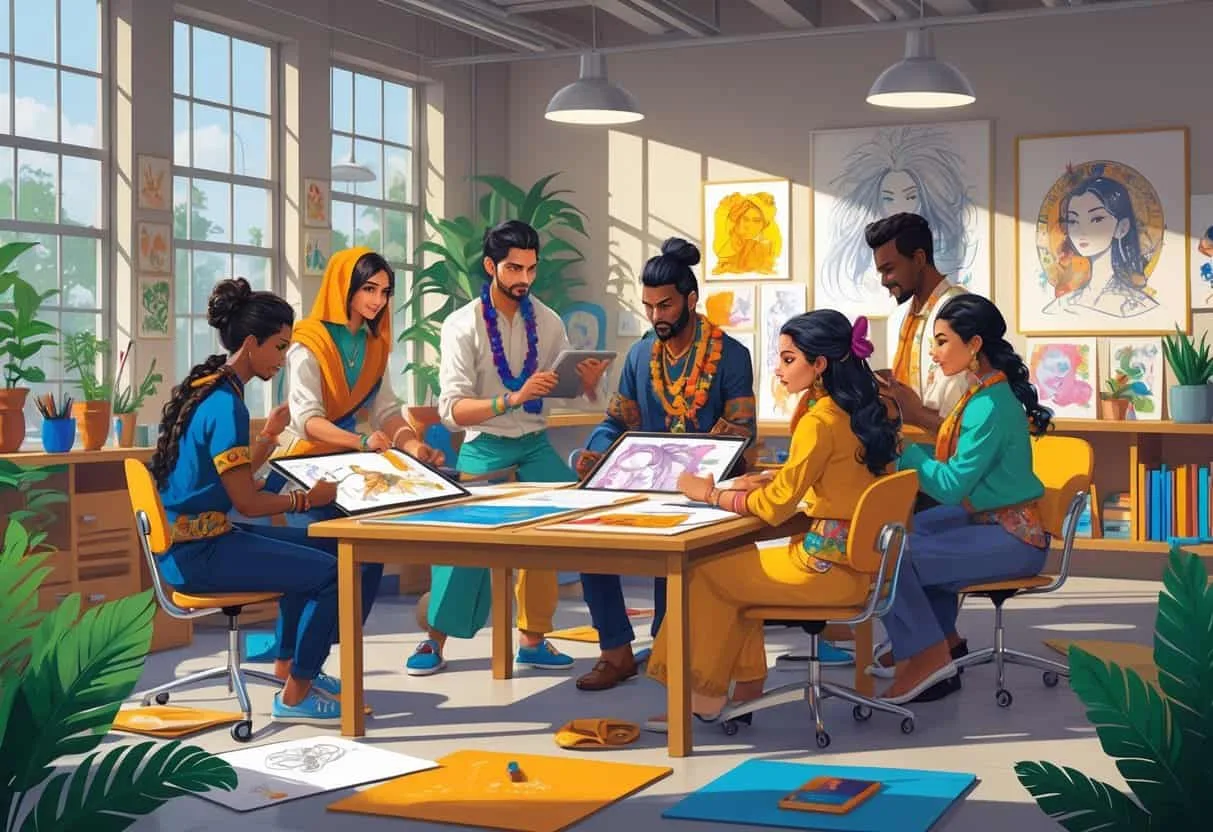
The global landscape of anime-inspired art is undergoing a profound transformation, driven by the creative energy of Indian and African artists. These creators are moving far beyond mimicry or homage, forging a new visual language that merges the dynamic aesthetics of Japanese anime with their own cultural narratives, artistic traditions, and contemporary experiences. The result is a body of work that feels both unmistakably anime and entirely new, redefining what the genre can express and who gets to tell its stories.
For decades, anime has been a dominant force in global pop culture, but its imagery often centered on East Asian contexts or Western reinterpretations. Now, artists from Mumbai to Nairobi, from Chennai to Lagos, are inserting themselves into that visual vocabulary. They bring with them centuries of indigenous art, mythology, textile design, and social commentary, creating a fusion that challenges the homogenization of global visual culture. You’ll find the signature large eyes and expressive linework, but you’ll also encounter temple carvings, adinkra symbols, Bollywood glamour, and African futuristic aesthetics woven into every frame.
Key Takeaways
- Indian and African artists are blending distinct cultural elements with anime stylistic conventions, producing genuinely hybrid art forms.
- These artists draw from local folklore, religious iconography, and contemporary social issues, expanding the thematic range of anime-inspired visuals.
- Digital tools and online platforms are enabling unprecedented global visibility, creating new support ecosystems for this emerging movement.
- The cross-pollination of Japanese traditions with South Asian and African heritage is fostering a more inclusive and diversified global art dialogue.
Indian and African Artists Influencing Anime-Inspired Art
Across India and the African continent, a growing number of visual artists are turning to anime not as a style to be copied, but as a framework to be localized. They recognize that anime’s visual language — its emphasis on exaggerated emotion, kinetic composition, and meticulous detail — can carry their own stories with remarkable potency. This section profiles some of the most compelling voices in this movement and examines how they blend heritage with aesthetic innovation.
Profiles of Notable Contemporary Artists
In India, Rohan Narang has gained attention for his series that places anime-styled characters within sprawling Mughal-era architectural backdrops. His protagonists often wear traditional attire reinterpreted through a cyberpunk lens, merging the grandeur of miniature painting with the neon glow of science fiction. His work challenges the viewer to see Indian history not as static but as a canvas for futuristic imagination.
Another Indian artist making waves is Meera Joshi, whose digital paintings reimagine scenes from the Ramayana and Mahabharata using anime’s visual shorthand. Her gods and heroes possess the fluid action poses of shonen protagonists, while her demonic figures echo the grotesque beauty of classic anime villains. Her art has been featured in several online exhibitions, bridging the gap between devotional art and pop culture fandom.
From Uganda, Aisha Kambugu stands out for her radiant color palettes and strong visual storytelling. She frequently incorporates patterns from East African textiles and traditional barkcloth into character designs, then places her figures in dynamic, almost cinematic scenes. Her series “Spirits of the Lake” draws on local mythologies, portraying water spirits with the fluid, emotive features typical of anime heroines. You can explore her portfolio on platforms like Behance.
Nigerian artist Olumide Akintola works primarily in digital illustration, fusing Yoruba folklore with mecha anime aesthetics. His giant robotic figures, orò and egúngún-inspired, reference both ancestral masquerades and Gundam-style combat suits. This melding of the ancient and the hyper-technological creates a visual dialect that speaks to the continent’s rapid urbanization and enduring spiritual traditions.
Blending Cultural Heritage With Anime Aesthetics
What distinguishes this wave of anime-inspired art is the depth of cultural integration. Indian artists often draw from architectural motifs — the intricate jali screens of Rajasthan, the sculpted pillars of Hampi — as settings for their characters. Meanwhile, African creators infuse their work with the geometric precision of Ndebele house painting, the symbolism of Ashanti gold weights, or the vivid fabric patterns of Ankara and Kente. These aren’t superficial decorations; they carry layers of meaning that reshape the narrative possibilities of anime art.
For instance, in Joshi’s work, the traditional Indian color theory of raga — where specific hues evoke emotional states — is applied to anime character design, giving her figures a symbolic resonance that moves beyond simple costume. Similarly, Akintola’s use of indigo and terracotta references the natural dyes of Yoruba textile arts, grounding his futuristic visions in tactile heritage.
Such fusion demonstrates that anime’s global appeal need not dilute local identity. Instead, it can provide a new vocabulary for expressing heritage that younger generations, steeped in both their own traditions and global media, can immediately connect with.
Innovative Techniques and Intricate Compositions
The techniques employed by these artists are as hybrid as their subject matter. Many work exclusively in digital painting, using software like Clip Studio Paint and Procreate to achieve the crisp line art and layered shading synonymous with anime. Others combine hand-drawn sketches with digital coloring, or even create physical mixed-media pieces that are then scanned and refined.
Several artists are experimenting with 3D modeling and texturing to create anime-style scenes with a sculptural depth. Rohan Narang’s recent work incorporates 3D-rendered architectural elements, overlaid with hand-painted characters, resulting in compositions that feel immersive and cinematic. Aisha Kambugu often uses motion graphics, creating short looping animations that bring her characters’ subtle expressions to life for social media audiences.
The intricacy of these compositions speaks to a meticulous work ethic. Akintola’s mecha designs are so detailed that every plate and joint tells a story about the character’s origin. This precision, combined with the emotive expressiveness of anime faces, yields a style that is at once technically impressive and deeply human.
Cross-Cultural Dialogues in Modern Anime Art Styles
The creations of Indian and African artists do not emerge in a vacuum; they are part of a broader cultural exchange that flows in multiple directions. This dialogue encompasses pop culture, traditional art forms, and the legacy of Japanese visual traditions, all intersecting to form a richly interdependent artistic landscape.
Cultural Exchange Between Traditions
Far from being a one-way appropriation, the adoption of anime styles by Indian and African artists has sparked reciprocal interest. Japanese artists and studios are increasingly curious about these cross-cultural interpretations. Collaborative projects have begun to emerge, such as illustrated anthologies that pair Japanese manga-ka with artists from the Global South to produce stories rooted in shared mythologies. In cities like Chennai, youth-led workshops encourage participants to retell local folktales using anime-style storyboarding, effectively creating a new generation of visual storytellers who are bilingual in their cultural expression.
This exchange is also evident in the way African artists have responded to Japanese mecha and science fiction tropes. By infusing them with African mythology and futurism, they offer a counter-narrative to the often Eurocentric visions of the future. Olumide Akintola’s work, for example, has been exhibited in Tokyo, where audiences were struck by the seamless integration of ancestral motifs with high-tech aesthetics, revealing how universal the desire to imagine alternative futures can be.
Pop Culture Inspirations and Customary Motifs
Pop culture influences run deep. Anime’s global dominance through streaming platforms has made series like “Demon Slayer” and “One Piece” staple viewing for young people in India and across Africa. These narratives provide a shared reference point that artists can twist to local contexts. Aisha Kambugu’s characters might wear kimono-inspired silhouettes but are adorned with Maasai beadwork; Rohan Narang’s warriors strike poses straight out of action sequences, yet their weapons are based on historical Indian weaponry like the chakram or urumi.
Additionally, the interplay with local entertainment industries — Bollywood, Nollywood, and the vibrant music scenes of both regions — creates a feedback loop. Music videos frequently employ anime-inspired animation, and artists are commissioned to create promotional artwork for films. This integration cements anime aesthetics as a legitimate part of the mainstream visual culture, not just a niche fandom pursuit.
The Impact of Traditional Japanese Art and Global Movements
Understanding this fusion also requires looking back to traditional Japanese art forms like ukiyo-e, whose flat planes of color, bold outlines, and dramatic compositions are direct ancestors of modern anime. Many Indian and African artists study these classical works and find surprising parallels with their own artistic heritages. The flat, decorative quality of Mughal miniature painting or Ethiopian iconography, for example, shares a visual kinship with ukiyo-e woodblock prints.
Contemporary Japanese artists such as Takashi Murakami have further blurred the lines by injecting anime into high art and embracing global collaboration. His “superflat” movement, which posits a flattened visual culture where high and low art intersect, resonates with the approach of artists who now seamlessly connect anime with folk motifs. This global art environment, influenced by movements from Impressionism to Afrofuturism, encourages an open-ended fusion. The result is an artistic expression that belongs neither to Japan nor to any single nation, but to a transnational community of creators who find in anime a lingua franca of the imagination.
Shaping the Future of Anime-Inspired Artistic Expressions
The trajectory of this art form is being shaped not only by creativity but also by digital tools, market forces, and institutional support systems. Artists are leveraging technology to push boundaries, while audiences and critics are beginning to recognize the value of this hybrid genre.
Embracing CAD and Digital Innovations
Computer-aided design and other digital innovations have become indispensable for artists working at the intersection of tradition and anime. CAD software allows for the precise construction of complex settings, enabling artists like Rohan Narang to render intricate temple architecture with mathematical accuracy before stylizing it. Digital painting applications offer limitless experimentation with color palettes that blend natural dyes with synthetic neon, creating a visual language that feels both ancestral and futuristic.
Many artists are now venturing into virtual reality and augmented reality to create immersive anime-inspired experiences. Projects that allow viewers to step into a painting and explore a mythological landscape from the inside are gaining traction, especially among tech-savvy youth. The use of non-fungible tokens (NFTs) has also opened new avenues for monetization and authenticity, giving artists direct access to a global collector base without traditional gallery gatekeeping. Platforms like OpenSea have seen dedicated collections that celebrate this very fusion.
Critical Reception, Sales, and Support Systems
While local markets in many African and Indian cities may still be developing a taste for anime-inspired fine art, online communities have proven to be a lifeline. Artists build loyal followings on Instagram, Twitter, and DeviantArt, where they can sell prints, stickers, and commissioned works directly to fans worldwide. Some have successfully used crowdfunding platforms to finance ambitious projects like art books or short films.
Institutional support is gradually catching up. Galleries like Eden Gallery have begun showcasing works from these regions, recognizing the commercial and cultural value of this fusion. Art fairs in India, such as the India Art Fair in Delhi, have started including booths dedicated to pop and digital art, where anime-inspired pieces find curious buyers. In Lagos, the annual LagosPhoto festival and specialized pop-up events provide platforms for artists to exhibit and network. Critical reviews, while often framed within Western art criticism, are increasingly acknowledging the sophistication of these works, moving beyond labeling them as mere fan art to understanding them as legitimate contemporary expressions.
Sales data indicates a growing appetite. Limited-edition prints of Meera Joshi’s mythological series sell out quickly on platforms like Society6. Such commercial viability is essential for artists to sustain their practice and invest in better tools and education.
Preserving Insights for Future Generations
As this movement matures, preserving the knowledge and creative processes behind the art becomes crucial. Veteran artists are beginning to document their techniques through detailed online tutorials and workshops. In India, organizations like the Anime and Manga Association of Chennai hold regular sessions where experienced artists mentor beginners, ensuring that skills like digital line art and cultural storytelling are passed on systematically.
African digital collectives are creating open-source libraries of local patterns, mythological references, and visual asset packs that can be used by emerging artists. This kind of shared resource not only accelerates learning but also safeguards cultural motifs from being lost or misrepresented. Online archives, such as the Internet Archive’s art documentation section, are being populated with interviews, time-lapse videos, and process notes that future generations can study.
"When I teach young artists, I tell them: the pen is the weapon, but the story is the soul. Anime gave us the weapon; our cultures provide the soul." — Aisha Kambugu, in a 2023 online workshop.
Supporting educational exchange programs, whether through grants or cross-continental residencies, will strengthen this pipeline. Art schools in India and Africa are beginning to incorporate anime and manga into their curriculum, not as a fringe topic but as a serious subject of study. By recording these formative years, the art community ensures that the innovations of today become the foundations of tomorrow, allowing the genre to keep expanding without losing the wisdom of its pioneers.