Table of Contents
Yu-Gi-Oh! didn't just introduce a card game; it fused strategy with a sprawling, character-driven narrative that turned cardboard into a global phenomenon. The franchise gave fans a shared language of duel disks and trap cards, and in doing so, rewired the way people think about trading card games. It created spaces where casual players and competitive minds converged, building communities that spanned schoolyards, convention halls, and digital lobbies.
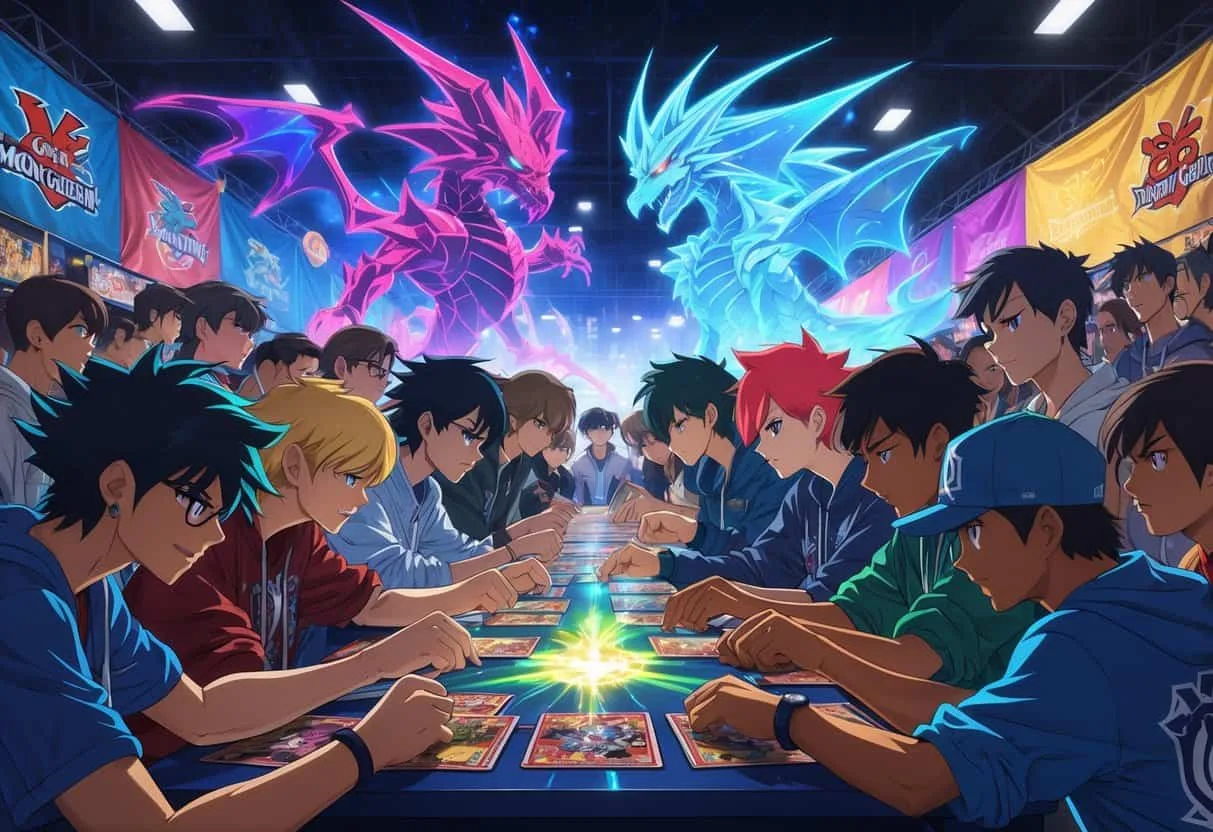
That blend of approachable rules and layered mechanics gave Yu-Gi-Oh! an unusually wide net. A new player could understand the basics in a single match, but mastery demanded tens of thousands of card interactions, combo lines, and meta-awareness. This dual appeal is what nudged so many fans toward other TCGs like Magic: The Gathering, Pokémon, and later digital card battlers—all while keeping Yu-Gi-Oh! firmly at the center of their gaming identity.
Your own card collection might sit in a binder, dog-eared and scuffed from years of table battles. That physical record isn't just nostalgia; it's a testament to how a game can anchor friendships and fuel creativity. Yu-Gi-Oh! shaped routines: Saturday morning anime sessions, lunchtime duels, tournament prep that felt half-ritual and half-obsession. Those rhythms turned players into lifelong collectors and eventually into mentors passing decks to the next wave of duelists.
The game also left a permanent stain on pop culture. It raised the bar for anime tie-in merchandise, pushed competitors to invest in deeper lore systems, and reshaped how fans connect online through deck-building forums, YouTube meta-analysis, and Twitch streaming. Even today, you can trace its fingerprints across modern TCG design—from resource systems borrowed and remixed to the very idea that a card game can be a storytelling engine.
Key Takeaways
- Yu-Gi-Oh! merged strategic gameplay with a compelling narrative, setting a standard that later card games tried to match.
- The game’s scaling complexity attracted both casual duelists and hardcore competitors, fueling a massive, multi-generational community.
- Its influence extends beyond the card table, shaping entertainment media, online fan culture, and the DNA of other TCGs.
Origins and Global Rise of Yu-Gi-Oh!

The journey from ink-on-paper to international sensation began with a single creator’s vision, a weekly magazine’s reach, and a game company that recognized a cultural goldmine. Understanding that trajectory explains why Yu-Gi-Oh! hit with the force of a Blue-Eyes White Dragon.
The Creation and Vision of Kazuki Takahashi
Kazuki Takahashi first introduced Yu-Gi-Oh! in the pages of Weekly Shōnen Jump in 1996. The early chapters were darker, more akin to a horror anthology linked by a boy who solved mystical puzzles and challenged bullies to shadow games. But when a one-shot card battle called “Duel Monsters” appeared, reader response was explosive. Takahashi pivoted the series to center on this card game, embedding it within a mythos of ancient souls, the Millennium Items, and a protagonist whose alter ego knew no mercy at the table.
Takahashi's philosophy wasn't just about competition. He wanted to show how games could reveal character—how bluffing, trusting your deck, and reading an opponent were metaphors for life. That thematic depth resonated well beyond typical shōnen territory. The manga sold millions of copies, and even before the physical card game launched, its fictional version had already captured imaginations. Takahashi’s approach gave the eventual TCG a built-in narrative that no rulebook could fabricate.
From Manga to Anime Series
The anime adaptation in 2000 was the catalyst that turned a hit manga into an international obsession. Studio Gallop produced a series that streamlined the manga’s early plot and doubled down on the card duels. Characters like Yugi Mutou, Seto Kaiba, and Joey Wheeler became household names. Crucially, the anime didn’t just entertain; it taught viewers how to play. Every episode broke down card effects, chain mechanics, and strategic pivots, giving the audience a crash course in the soon-to-be-real trading card game.
For many Western audiences, the anime was the first exposure to anything resembling a strategic card battle. The visual spectacle—monsters springing from holographic projectors, dramatic life point counters ticking down—made the card game feel alive. It turned abstract rules into high-stakes drama and converted passive viewers into active players. By the time the physical cards hit shelves outside Japan, there was already a hungry, pre-educated fanbase ready to invest.
Adaptation by KONAMI and Weekly Shonen Jump
Konami secured the rights to produce the Yu-Gi-Oh! Official Card Game (later the TCG) and launched it in Japan in 1999, with English releases following in 2002. The synergy between Weekly Shōnen Jump’s serialization, anime broadcasts, and card product releases created a feedback loop that few franchises have replicated. New cards premiered on screen, then appeared in booster packs weeks later, stoking collector frenzy.
This cross-media engine also meant that Konami could continuously introduce new mechanics—Fusion, Ritual, Synchro, Xyz, Pendulum, Link—each tied to a narrative arc in the anime. For a deeper look at how Konami managed this global rollout, you can visit the official Yu-Gi-Oh! TCG website. The alignment of story and product turned every new season into a meta-shifting event, keeping the player base in a state of permanent anticipation.
| Entity | Role |
|---|---|
| Kazuki Takahashi | Original creator and manga author |
| Weekly Shonen Jump | Publishing home for the manga |
| Konami | Global developer and distributor of the TCG |
| Anime series | Multi-generational gateway and rules educator |
The Trading Card Game Revolution
When Konami transformed Duel Monsters from a story element into a physical product, it reshaped the entire trading card landscape. The game didn't just sell well; it redefined what a TCG entry point could look like and proved that strong theming could be just as important as refined mechanics.
How Duel Monsters Brought Card Gaming to Life
From the outside, a card game is a set of rules and cardboard rectangles. Yu-Gi-Oh! flipped that perception. The anime had convinced a generation that holding a Dark Magician card was akin to wielding real magic. When players sat across from each other and declared attacks, they weren’t just moving cards; they were reenacting duels they’d watched the night before. This emotional investment lowered the barrier to entry dramatically.
The game’s early rule set was surprisingly digestible: normal summon once per turn, play spells and traps, aim to reduce your opponent’s life points to zero. Yet that simplicity belied an intricate lattice of card interactions. Trap cards could be chained, monster effects could interrupt plays, and the stack-like chain system demanded careful timing. Beginners could enjoy the thrill of summoning a big monster, while veterans could obsess over card advantage, field control, and side-decking strategies. The competitive scene grew organically, with local hobby shops becoming weekly battle arenas.
The Influence of Ancient Egypt and the Millennium Puzzle
At the core of Yu-Gi-Oh!’s identity lies a heavy debt to Egyptian mythology. The Millennium Puzzle, an ancient artifact that housed the spirit of a pharaoh, is the narrative linchpin. This lore gave the game a sense of gravity that other TCGs lacked. Cards like The Winged Dragon of Ra, Obelisk the Tormentor, and Slifer the Sky Dragon weren’t just powerful; they were divine beings with lore stretching back millennia. The concept of Ka (spirit monsters) and Ba (life force) added a mystical framework that made collecting feel archaeological.
By weaving hieroglyphics, ancient prophecies, and tomb-guardian aesthetics into card design and story arcs, Takahashi created a world where a card game could decide the fate of souls. This thematic depth influenced later TCGs that sought to craft their own worlds rather than remain abstract systems. It became a template for how to ground mechanical gameplay in a resonant cultural myth.
Guinness World Record and Prestigious Recognition
By 2009, Yu-Gi-Oh! had earned a place in the Guinness World Records as the best-selling trading card game of all time, with over 25.1 billion cards sold worldwide. That figure has only ballooned since, cementing its status as a commercial titan. Such recognition isn't merely a marketing stat; it reflects the depth of player engagement across continents and languages.
The record also validated the TCG as a legitimate competitive pursuit. It wasn't just a children's pastime at that point—it was a global industry with organized play circuits, YCS (Yu-Gi-Oh! Championship Series) events, and eventually a World Championship structure. When you shuffle up for a locals tournament today, you’re participating in a system that has been refined over decades and validated by both commercial and competitive standards on the world stage.
Impact on Pop Culture and Fan Communities
Yu-Gi-Oh! moved beyond the card shop and into film, digital media, and the fabric of internet culture. Its influence on how fan communities organize, create content, and sustain themselves is arguably as significant as its mechanical innovations.
Inspiring Passion and Lifelong Fandom
The game’s ability to inspire obsessive dedication is legendary. Players memorize banlists, catalog rarities, and build elaborate duel setups for regional events. Collectors chase first-edition prints and ghost rares, turning binder pages into prized possessions. This passion often starts in childhood and follows individuals into adulthood, creating meetups, Discord servers, and YouTube channels dedicated to deck profiles and pack openings.
Beyond collecting, Yu-Gi-Oh! serves as a social scaffold. Many players credit the game with helping them develop critical thinking, probabilistic reasoning, and even public speaking through judging and tournament reporting. The community’s resilience—weathering rule changes, format rotations, and the controversial Master Rule shifts—shows a fanbase that adapts and grows rather than splinters. For countless fans, the phrase “it’s time to duel” is a call to something deeper than a game.
Yu-Gi-Oh! Movies, Video Games, and Spin-offs
The multimedia expansion kept the franchise alive between card set releases. Feature films like Yu-Gi-Oh! The Movie: Pyramid of Light and Bonds Beyond Time offered cinematic showcases of iconic monsters. Anime spin-off series—GX, 5D’s, Zexal, ARC-V, VRAINS, and SEVENS—each introduced new summoning mechanics while maintaining a thread of legacy characters. These series weren’t just marketing vehicles; they often experimented with tone and structure, attracting a wider demographic and keeping the brand from stagnating.
Video games, from the early Duelists of the Roses to Master Duel, allowed players to engage without physical cards. Yu-Gi-Oh! Master Duel, released in 2022, brought the full TCG experience to PC, consoles, and mobile, with cross-play and ranked ladders. It became an instant esports-ready platform and introduced millennia-old strategies to a new digital-native audience. The official Master Duel site provides ongoing tournament data and card updates, showing how deeply the franchise now integrates online play.
Influence on Other Card Games
Yu-Gi-Oh! didn’t exist in a vacuum, but it exerted gravitational pull on the entire TCG genre. Its emphasis on boss monsters and swingy, anime-style turns influenced the design philosophy of games like Cardfight!! Vanguard and Future Card Buddyfight. The chain system and trap card activation windows prefigured responsive, instant-speed interaction in games that historically relied on sorcery-speed actions. Even digital card games like Hearthstone and Legends of Runeterra drew inspiration from the fast-paced, single-player turn structure and secret-like trap mechanics.
Moreover, the business model—frequent booster releases, rarity tiers, and a rotating banlist—became standard practice. The game proved that a living card environment, where rules evolve and old cards get new support, could sustain a player base for decades. This model now underpins everything from Magic: The Gathering’s Standard format to Pokémon’s annual rotation. Yu-Gi-Oh! demonstrated that a TCG could be a lifestyle product rather than a one-time purchase.
Legacy, Memory, and Enduring Influence
The physical game continues to dominate sales charts, but its legacy reaches further. It lives in the memory of those who shaped it, in the tournaments that fill convention centers, and in the design language that new card games speak fluently.
Remembering Kazuki Takahashi
Kazuki Takahashi passed away in July 2022, leaving behind a body of work that touched millions. Tributes poured in from duelists, industry figures, and fans who had grown up with his characters. His influence extended beyond manga; he had a hand in film production, card design, and the philosophical undercurrents that made Yu-Gi-Oh! more than a product. Artists and writers have pointed to his world-building as an inspiration for their own creative careers.
Honoring his memory, fans have organized memorial tournaments, charity events, and art collaborations. The Takahashi estate continues to support the franchise, ensuring that the game’s development remains faithful to his vision. You can read more about his life and the outpouring of tributes in this Anime News Network article. His story underscores how a single creative spark can ignite a perpetual cultural engine.
The Modern Dueling Scene
Today’s competitive circuit is more structured and far-reaching than ever. Year-long World Championship Qualifier seasons feed into the Yu-Gi-Oh! World Championship, where duelists from over 80 countries compete. Remote Duel formats, popularized during the pandemic, now coexist with in-person YCS events, ensuring accessibility. Prize pools have grown, and professional players maintain sponsorships and streaming channels, turning the game into a viable career path for top talent.
Deck diversity reflects the game’s historical depth: a format might simultaneously feature a classic HERO strategy from the GX era, a modern Branded Despia combo, and a control-oriented Runick variant. The Yu-Gi-Oh! Card Database is an essential resource, indexing tens of thousands of cards and official rulings, enabling players to theorycraft with surgical precision. Local game stores remain community hubs, running weekly Advanced Format tournaments and Speed Duel sessions for a more retro experience.
Yu-Gi-Oh!’s Enduring Influence on TCG Design
When new card games pitch their unique mechanics, they often borrow language and systems that Yu-Gi-Oh! popularized. The concept of an “Extra Deck” — a sideboard of monsters that can be summoned under specific conditions without being drawn — influenced the side-deck and companion mechanics in later games. The Chain Link system provided a model for nested effect resolution that many players consider intuitive.
Equally significant is the aesthetic inheritance. Card frames with bold colors, multi-layered holographic foiling, and card text that tells a micro-story are now standard. The idea that each pack could contain a meta-defining staple or a high-rarity chase card originated from the booster pack lottery that Yu-Gi-Oh! perfected. Designers learned that a TCG’s visual and tactile appeal could be just as sticky as its gameplay.
The community’s own longevity—spanning from 1999 starters to 2024’s Phantom Nightmare set—proves that the game has become a continuous dialogue between past and present. Players who once dueled with Summoned Skull now theorycraft with S:P Little Knight, yet the fundamental thrill of drawing a match-turning topdeck remains identical. That continuity of feeling is perhaps Yu-Gi-Oh!’s most impressive design achievement.
Whether you’re a returning duelist dusting off a Kaiba structure deck or a new player installing Master Duel for the first time, the invitation is the same: build your deck, trust your strategy, and step into a tradition that has shaped the card gaming world for a quarter of a century. The duel has never truly ended; it just keeps finding new players to answer the call.