Table of Contents
Before Studio Ghibli entered the global conversation, Japanese animation was often confined to niche fan circles or dismissed as disposable children's programming. The medium had devoted followers abroad, but broad cultural institutions and casual moviegoers rarely took it seriously. That reality began to change dramatically in the late 1990s and early 2000s, driven by a studio that refused to treat animation as a lesser art form.
Studio Ghibli fundamentally reframed what anime could mean to the world. Its films demonstrated that hand-drawn animation could carry the emotional weight of live-action cinema while exploring themes that transcended cultural boundaries. Rather than chasing trends, the studio built a body of work that invited everyone—regardless of age or background—into its richly imagined worlds.

The studio’s ascent was not accidental. It rested on a steadfast commitment to meticulous craftsmanship, layered storytelling, and a willingness to trust audiences with complex moral landscapes. With the international success of Spirited Away, which became the first hand-drawn, non-English-language film to win the Academy Award for Best Animated Feature, Studio Ghibli catapulted anime into the center of global film culture. That moment did not simply validate one movie; it signaled that Japanese animation had arrived as a legitimate, high-impact art form.
This reconfiguration continues to ripple outward. Distributors, festivals, and streaming platforms now actively seek out anime features for mainstream audiences. Critics routinely place Ghibli works alongside the finest live-action films. Most importantly, a generation of viewers worldwide has grown up understanding that animation is not a genre—it is a medium capable of profound human expression.
Key Takeaways
- Studio Ghibli dismantled the notion that anime was solely for children or niche enthusiasts.
- Its hand-drawn aesthetic and emotionally complex narratives established new benchmarks for global animation.
- International distribution partnerships and major awards helped anime gain mainstream credibility in the West.
- The studio's fusion of Japanese cultural elements with universal themes made its films accessible and resonant worldwide.
- Ghibli's influence now extends beyond cinema, shaping video games, visual arts, and environmental discourse.
Studio Ghibli’s Influence on Global Perceptions of Anime
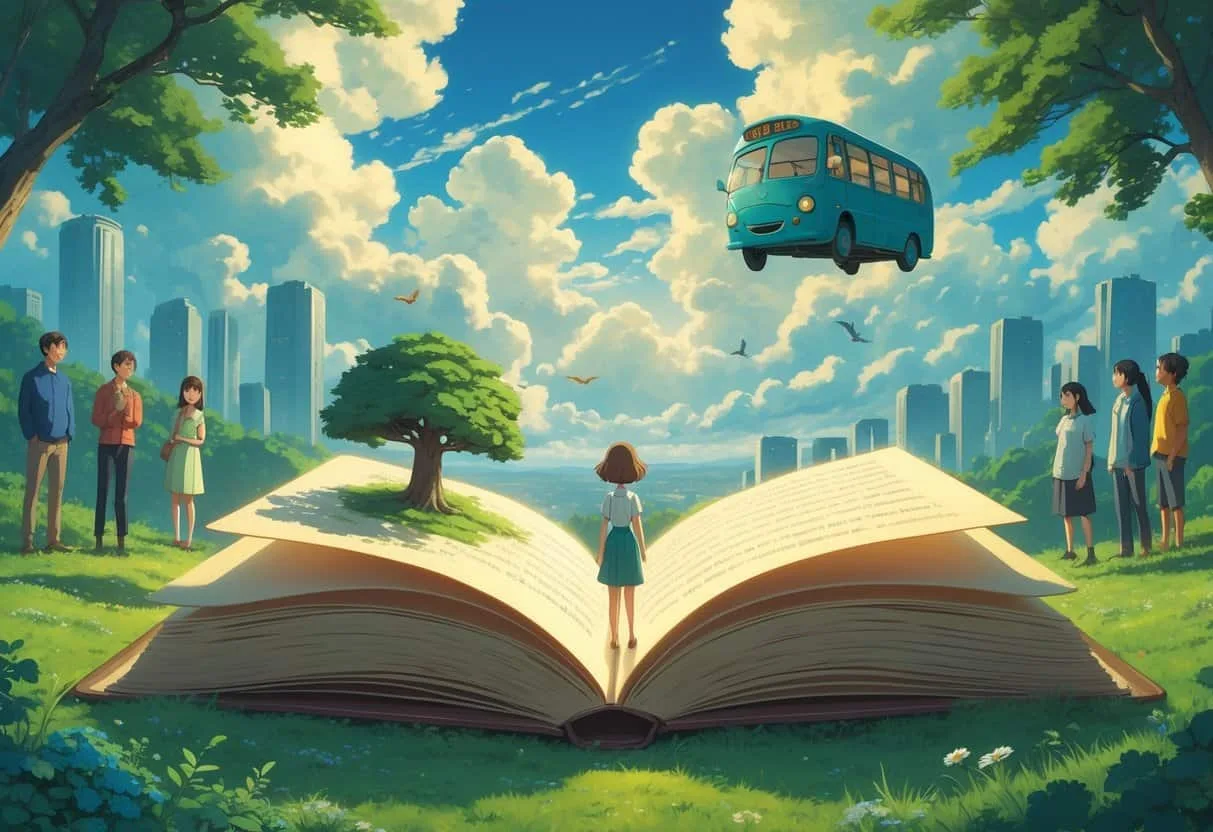
Studio Ghibli achieved what few entertainment companies manage: it rewired a long-standing cultural bias. Where outsiders once saw anime as a narrow, sometimes impenetrable subculture, Ghibli offered a clear entry point grounded in relatable emotions and astonishing beauty. That shift did not happen overnight; it was the product of decades of artistic rigor punctuated by strategic distribution decisions.
Breaking Stereotypes About Anime
In many Western markets, anime’s early ambassadors were action-driven series and late-night broadcasts that reinforced a stereotype of flashy violence or juvenile humor. Ghibli films cut through those assumptions with understated power. My Neighbor Totoro, for example, builds its entire narrative around quiet wonder and the rhythms of rural childhood, while Grave of the Fireflies presents a searing wartime tragedy that few live-action films have matched in emotional devastation. These stories refused to talk down to their audiences, no matter the age.
The artistry itself was a counterargument. Ghibli’s backgrounds are dense with hand-painted detail: light filtering through leaves, moss clinging to ancient stones, steam curling from a kitchen pot. Such visual fidelity communicates that these frames are not merely “drawn”—they are composed with the precision of a painting. This level of care challenged the cartoon label and invited comparisons to fine art. When viewers saw that an animated film could feel as immersive as any prestige drama, the old stereotypes began to collapse.
Mainstream Acceptance in the West
Artistic merit alone rarely guarantees a global audience. Ghibli’s breakthrough required deliberate partnerships. In the late 1990s, Disney struck a distribution deal that brought Ghibli titles to North American theaters, home video, and television under the careful stewardship of producer John Lasseter. This collaboration between Disney and Studio Ghibli gave the films unmatched marketing muscle while preserving the artistic integrity of the original works.
The 2003 Oscar win for Spirited Away further accelerated acceptance. Suddenly, a Japanese animated film was being discussed in the same breath as the year’s top live-action pictures. The award did more than boost box-office numbers; it granted cultural permission for serious filmgoers to explore anime without embarrassment. In the years that followed, Ghibli retrospectives became staples at major museums and cinematheques, cementing the studio’s place in the global film canon.
Cross-Cultural Storytelling
One of Ghibli’s quietest achievements is its ability to be deeply Japanese and universally legible at once. Spirited Away brims with Shinto spirits, bathhouse rituals, and folkloric creatures that might puzzle non-Japanese viewers, yet Chihiro’s journey—from frightened child to resourceful employee—hits with raw clarity. The studio treats cultural specificity not as a barrier but as texture that enriches the emotional core.
This approach proved that stories rooted in a particular heritage could still travel far. By focusing on real human dilemmas—finding courage, coping with loss, protecting loved ones—Ghibli made Japanese narrative traditions feel like everyone’s inheritance. The result was a form of soft cultural diplomacy that changed how global audiences perceive not only anime but Japan itself.
Signature Storytelling and Artistic Style
Ghibli films are immediately recognizable. Something in the weight of the characters, the way wind moves grass, or the careful pacing sets them apart from mainstream animation. That distinctiveness arises from a philosophy that values patience, observation, and emotional honesty above spectacle.
Miyazaki’s Narrative Techniques
Hayao Miyazaki rarely builds stories around simple heroes and villains. His characters inhabit moral gray zones; antagonists often reveal sympathetic motives, while protagonists wrestle with selfish impulses. This narrative maturity encourages viewers to sit with complexity rather than escape into easy resolutions. In Princess Mononoke, there is no purely evil force—only competing systems of survival that collide with devastating consequences.
Miyazaki also employs what might be called a “gentle pacing” that respects the audience’s intelligence. Long stretches of the films are devoted to mundane tasks: cooking, cleaning, walking through a forest. These sequences are not filler; they ground the fantasy in physical reality and build a deeper bond between the viewer and the world on screen. By the time extraordinary events occur, they feel earned rather than arbitrary.
Visual Aesthetics of Ghibli
Ghibli’s visual language is rooted in hand-drawn animation, a costly and time-intensive choice that the studio has stubbornly maintained even as the industry shifts toward digital pipelines. Every background is a watercolor-like composition, and characters are drawn with subtle, often asymmetrical facial expressions that humanize them far more effectively than perfectly symmetrical features ever could.
Nature functions as a character in its own right. Forests rustle with unseen life, oceans shimmer with an almost tactile translucence, and sunlight behaves with atmospheric accuracy. This reverence for the natural world is not merely decorative; it anchors the thematic concerns that run through all of Ghibli’s work—the fragility of ecosystems, the hubris of industrial growth, and the healing power of connection to the land.
Themes of Childhood and Imagination
Children in Ghibli films are not miniature adults; they think, act, and feel with an authenticity that reflects the studio’s respect for real childhood. Their fears, curiosities, and moments of irrational joy are treated with the same narrative weight as an adult’s political crisis. In Ponyo, a five-year-old’s belief that a goldfish can become a friend carries the entire film, and that trust feels completely justified within the story’s logic.
Imagination serves as both a shield and a lens. Fantastical creatures and impossible landscapes do not merely dazzle; they give shape to internal struggles. The soot sprites of Spirited Away embody the drudgery and hidden warmth of labor, while the Catbus in Totoro turns a simple errand into a moment of pure exhilaration. By weaving the surreal into the everyday, Ghibli reminds viewers that imagination is not escapism—it is a vital tool for understanding reality.
Cultural Representation and Inspiration
Ghibli’s stories draw heavily from Japanese Shinto animism, folk tales, and historical settings, yet they never treat tradition as a museum piece. In Nausicaä of the Valley of the Wind, the toxic jungle and its giant insects evoke post-apocalyptic dread, but the film’s ecological philosophy is rooted in a Japanese reverence for nature’s regenerative power. Similarly, The Tale of the Princess Kaguya adapts a 10th-century folktale with a raw, sketch-like animation style that feels startlingly modern.
This interplay between old and new gives Ghibli films their double identity. They are thoroughly Japanese artifacts that anyone can access, because the emotions underneath the cultural references are always immediate. Ghibli proves that honoring one’s heritage does not require shutting out the rest of the world; it can actually be the most generous invitation to understand it.
Iconic Ghibli Films and Their Global Impact
Certain Ghibli titles have become cultural landmarks far beyond Japan. They function as entry points into the studio’s filmography and, by extension, into anime as a whole. Each of these films reshaped international expectations of what animation could accomplish.
Spirited Away and the Academy Award
Spirited Away (2001) remains the studio’s most visible triumph. The story of ten-year-old Chihiro trapped in a spirit bathhouse after her parents are transformed into pigs is at once a coming-of-age fable, a critique of greed, and a celebration of quiet resilience. Its historic Oscar win shattered the assumption that only Western studios could produce award-worthy animated features.
That victory triggered a chain reaction. Art-house theaters began screening anime films regularly. Academy voters started paying closer attention to international animation. And viewers who had never watched an anime before found themselves weeping over a girl who simply refuses to forget her name. More than twenty years later, the film still sits atop global best-of lists, a testament to its enduring emotional architecture.
How Totoro Became an International Symbol
My Neighbor Totoro (1988) may lack a traditional villain or high-stakes conflict, yet its central creature has become one of the most recognizable characters in animation history. Totoro’s plush, rounded form and wordless roar convey a sense of ancient, benign power. Children immediately trust him, and adults are reminded of a time when the world felt larger and more mysterious.
The character’s migration into global popular culture is remarkable. Totoro appears on airline liveries, environmental campaign posters, and high-fashion collaborations. The Ghibli Museum in Mitaka draws visitors from every continent, many of whom make the pilgrimage specifically to stand beside the plush Totoro that greets them at the entrance. This gentle forest spirit has done more to soften the image of anime than any marketing campaign could.
Legacy of Princess Mononoke
When Princess Mononoke (1997) hit theaters, it represented a significant shift. The film throbs with severed limbs, festering hatred, and the thunder of industrial iron against ancient forest gods. Ashitaka, cursed by a demon boar, must navigate a war between a mining settlement and the spirits of the wild. Neither side is entirely right; both are fighting for survival.
Western critics who had previously pigeonholed anime as juvenile were forced to recalibrate. The film’s environmentalist message—delivered without sanctimony—felt urgent and adult. Its commercial success in Japan and its critical reception abroad proved that animation could tackle large-scale ethical dilemmas while still delivering visceral spectacle. Many directors, animators, and screenwriters cite Princess Mononoke as the film that expanded their sense of narrative possibility.
Celebrated Classics: Ponyo, Howl’s Moving Castle, and More
Ghibli’s catalog extends far beyond its most famous three titles. Ponyo (2008) reimagines Hans Christian Andersen’s “The Little Mermaid” as a riotous celebration of childhood love and the ocean’s primordial energy. Its pastel palette and swelling orchestral score make it one of the studio’s most purely joyful works, yet it also contains a subtle warning about ecological imbalance.
Howl’s Moving Castle (2004) filters an anti-war parable through magical transformations, star-filled skies, and a deeply unconventional romance. Sophie, aged prematurely by a witch’s curse, discovers agency and strength that youth alone could not supply. The film’s depiction of war as a senseless, consuming machine resonated strongly with post-9/11 international audiences.
Earlier works such as Kiki’s Delivery Service and Nausicaä of the Valley of the Wind similarly combine genre elements with character-driven introspection. Kiki’s burnout and creative crisis feel startlingly modern, while Nausicaä’s pacifist environmentalism prefigures debates that only intensified in later decades. Together, these films form a body of work that rewards repeat viewing at any stage of life.
Long-Term Effects on Animation and Popular Culture
Studio Ghibli did not simply produce a string of beloved movies; it recalibrated the ambitions of an entire industry. The studio’s influence now shows up in unexpected places: the pacing of an indie video game, the palette of a graphic novel, the narrative structure of a Disney feature, and the educational curricula of art schools worldwide.
Elevating Animated Films Worldwide
Before Ghibli, the notion that an animated film could compete for the Palme d’Or at Cannes or top Sight & Sound’s critics’ poll was virtually unheard of. Today, such inclusions feel natural. Ghibli’s insistence on treating animation as a director-driven medium, on par with live-action cinema, cracked open a door through which many others have walked. Pixar, Cartoon Saloon, and countless independent animators have cited Ghibli as the creative permission they needed to tackle serious themes without apology.
The studio also raised the bar for background art and environmental storytelling. Modern animated features now routinely invest in painterly textures and atmospheric details that owe a clear debt to Ghibli’s example. Audiences, meanwhile, have internalized these standards. They expect animation to offer visual richness and emotional depth—a shift in taste that traces directly back to Ghibli’s catalog.
Collaboration with Disney and Miramax
The distribution agreement with Disney was a historically unusual arrangement. A massive American conglomerate agreed to finance English dubs, manage theatrical rollouts, and release DVDs under its banner—all while pledging to protect the original edits and artistic vision of the films. Voice casting was handled with unusual care, often featuring respected actors rather than celebrity stunt casting, and the dubs maintained a fidelity rare in foreign-language imports.
This partnership effectively normalized anime on U.S. store shelves. A Ghibli DVD sitting next to The Lion King signaled to casual shoppers that animation from Japan belonged in the same category as Disney classics. The commercial success of these releases—combined with rotating television broadcasts—built a multi-generational fan base that continues to grow with each new streaming acquisition.
Shaping Future Generations of Creators
Walk through an animation festival or browse the portfolios of young illustrators, and Ghibli’s fingerprints appear everywhere. The influence extends beyond visual mimicry into storytelling philosophy. Aspiring directors learn from Miyazaki’s use of negative space, his reliance on environmental soundscapes over constant dialogue, and his willingness to let characters sit in quiet moments of reflection.
The studio’s approach to character design—features that are expressive without being exaggerated, bodies that move with realistic weight—has become an aspirational benchmark. Even outside traditional animation, video game studios like thatgamecompany (Journey) and Team Ico (Shadow of the Colossus) have openly credited Ghibli’s emotional language as a formative influence. The ripple effect is now so broad that it is sometimes invisible, simply because the standards Ghibli established have become part of the creative air that artists breathe.
Environmental and Social Messaging That Resonates Globally
Many entertainment properties address social issues superficially; Ghibli bakes them into its narrative DNA. The studio’s films consistently return to the tension between humanity and the natural world, the horror of war, and the dignity of ordinary labor. These are not mere themes tacked onto adventure plots—they form the moral engine of each story.
Nature as a Central Character
In Ghibli’s universe, nature is neither a passive backdrop nor a simplistic victim. Forests and oceans hold ancient intelligence, spiritual power, and the capacity for fury. The Shishigami in Princess Mononoke embodies both life and death, a cycle that human greed disrupts with catastrophic results. Even in lighter films, like My Neighbor Totoro, the natural world is shown as a realm of subtle magic that asks only for respect and attention.
This consistent ecological awareness has earned the studio a following among environmental educators and activists. The films function as conversation starters about sustainability, overconsumption, and the spiritual cost of disconnecting from the land. They convey their warnings not through lectures but through images so beautiful that viewers feel an immediate, protective attachment to the environments on screen.
Anti-War Sentiment and Humanistic Values
Hayao Miyazaki’s pacifism is well documented, and it saturates his filmography. Howl’s Moving Castle presents war as a bureaucratically managed absurdity that devours civilians indiscriminately. The Wind Rises follows an aeronautical engineer whose dream of flight becomes entangled with the machinery of conflict. Even the whimsical Porco Rosso uses a pig-faced pilot to examine survivor’s guilt and the cynicism bred by combat.
These anti-war threads run alongside an equally strong commitment to humanistic values: kindness as a form of heroism, community as a source of resilience, and the belief that no person is beyond redemption. Such messages travel easily across borders. They offer a moral counterweight to the cynicism of much modern entertainment, and they give Ghibli films their staying power in an era hungry for sincerity.
The Dignity of Work and Everyday Ritual
One of Ghibli’s most distinctive motifs is its loving depiction of work. Characters cook elaborate meals, sweep floors, till fields, and tend machinery with focused dedication. These sequences are animated in almost hypnotic detail, elevating routine tasks to small meditations. The act of making breakfast in Howl’s Moving Castle becomes a moment of tenderness, while Chihiro’s scrubbing of a filthy bathhouse tub symbolizes her acceptance of responsibility and community membership.
This respect for labor resonates globally with audiences who recognize their own daily efforts in the characters’ motions. It also conveys a subtle ethical argument: that an honorable life is built not on grand gestures but on the care taken in ordinary acts. That message, wrapped in the most beautiful animation technique, has helped define the studio’s unique emotional signature.
Ghibli’s Enduring Legacy and Future Directions
Studio Ghibli has reached a crossroads that many storied institutions face. Hayao Miyazaki, now in his eighties, has announced and retracted retirement multiple times, with The Boy and the Heron (2023) standing as his latest—and perhaps final—directorial statement. The question of succession looms, but the studio’s cultural footprint is already so deep that its influence will persist regardless of future output.
Archival Preservation and the Ghibli Museum
The Ghibli Museum and the recently opened Ghibli Park in Aichi Prefecture serve as living archives. They preserve original cels, storyboards, and animators’ tools in an immersive environment that educates visitors about the labor behind the magic. These institutions do not merely celebrate nostalgia; they function as active educational centers that train new generations of artists in traditional techniques.
This commitment to preservation ensures that Ghibli’s methods will not vanish into digital oblivion. As the wider animation industry shifts toward procedural generation and AI-assisted pipelines, the studio’s archives stand as a tangible argument for the irreplaceable value of the human hand.
Streaming and the New Global Accessibility
For years, Ghibli resisted digital distribution, insisting that its films be experienced in theaters or on physical media. That changed when the studio’s catalog became available on HBO Max and later on Netflix in most territories outside Japan and the United States. The decision was seismic. Overnight, millions of viewers who might never have sought out an anime film discovered Spirited Away or Totoro through algorithmic recommendations and casual browsing.
This expanded accessibility has introduced Ghibli to a demographic that ranges from preschoolers to retirees. The streaming era has also sparked a surge in critical re-evaluation and fan scholarship, with video essays, podcasts, and academic papers analyzing the films frame by frame. Ghibli, remarkably, is now as much a subject of digital culture as it is a producer of analog art.
The Next Creative Generation
While Miyazaki’s presence still looms large, other directors within and beyond Ghibli are carrying its ethos forward. Hiromasa Yonebayashi’s Mary and the Witch’s Flower (produced by Studio Ponoc, founded by former Ghibli staff) bears the studio’s visual hallmarks. Isao Takahata’s late-career masterpiece The Tale of the Princess Kaguya pushed hand-drawn abstraction to astonishing new heights before his passing in 2018.
Outside Japan, the influence permeates the indie animation scene. Films such as Cartoon Saloon’s Wolfwalkers echo Ghibli’s tactile quality and environmental themes. The next generation of creators, raised on a steady diet of Ghibli DVDs, is now entering studios with the studio’s values baked into their creative DNA. That cultural transmission ensures that the revolution Studio Ghibli started will continue to evolve, long after the final frame of the last Miyazaki film has been projected.