Table of Contents
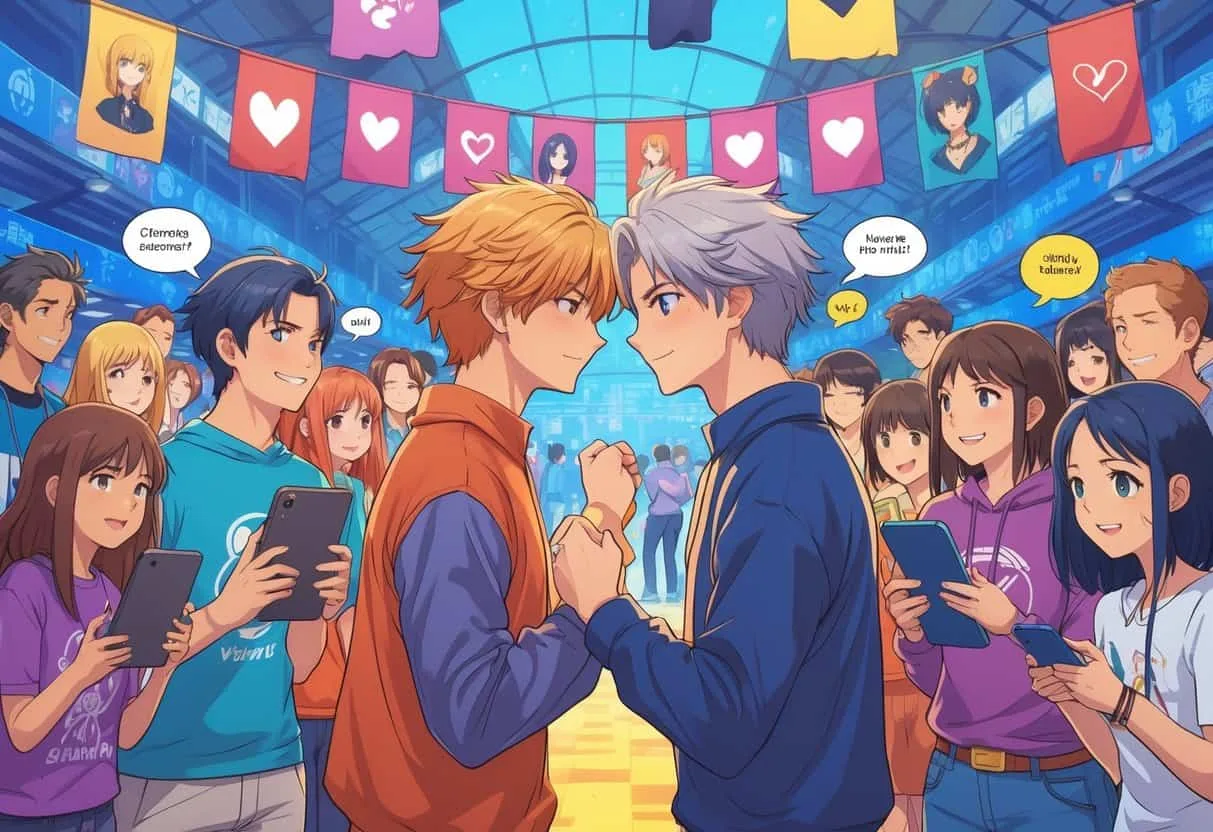
The anime fandom is a vibrant, creative, and often fiercely passionate space. At the heart of many community conversations lies shipping—the desire to see two characters together romantically—and when those desires collide, shipping wars erupt. Far from being mere playground squabbles, these conflicts reshape fan identities, dictate the flow of discussion, and even influence how stories are perceived and created. Understanding how shipping wars influence anime fandoms means looking beyond the arguments to see a complex ecosystem of loyalty, creativity, and human emotion.
The Anatomy of Anime Shipping Wars
To understand their impact, it’s essential to grasp what shipping wars actually are and how they differ from casual fandom chatter. Shipping, as a term, originated in the X-Files fandom of the 1990s but has since become inseparable from anime and manga culture. A “ship” can range from a canonical couple—like InuYasha and Kagome—to a deeply platonic friendship like Gon and Killua from Hunter x Hunter, where fans imagine a romantic dynamic the show never endorses. The most passionate shippers adopt an OTP, or “One True Pairing,” and defend it with near-religious zeal.
A shipping war breaks out when two or more fan groups clash over which pairing is superior, more canonical, or more emotionally resonant. These disputes are rarely simple disagreements; they often involve elaborate textual analysis, insults, and even coordinated online harassment. A 2021 study on fan behavior showed that shipping-based conflicts were among the most common triggers for community fractures in entertainment fandoms (Transformative Works & Cultures, “Fan Conflict and Community Structure”). The emotional stakes feel real because, for many fans, a ship isn’t just a fleeting preference—it’s a lens through which they understand the entire story.
Origins and How Shipping Wars Evolved
Shipping culture predates anime’s global peak. Early Star Trek zines in the 1970s saw fans advocate for Kirk/Spock, creating a template for slash shipping that anime later adopted through yaoi and yuri fandoms. But anime’s serialized storytelling, vast character ensembles, and frequent romantic subtext made it a perfect breeding ground. The rise of internet forums, LiveJournal, and eventually social media platforms like Twitter and Tumblr accelerated the transformation from whispered fan theories to loud, public debates.
By the time Naruto, Bleach, and Attack on Titan dominated global discussion, shipping wars had become a defining feature of anime fandom. They moved from private message boards to public hashtags, generating their own meta-conversations about toxicity and obsession. Today, entire YouTube analysis channels dissect shipping dynamics, while Discord servers host dedicated spaces for rival ships. The evolution shows that what began as a niche hobby is now a cultural force that influences fan engagement at every level.
Common Shipping Tropes That Fuel Conflict
Certain narrative archetypes almost guarantee a shipping war. The love triangle—where the protagonist must choose between two equally compelling options—is the most obvious. Series like Fruits Basket or Nisekoi deliberately bait fans into picking sides. Enemy-to-lover pairings, such as Eren and Levi (a non-canon pairing that nonetheless has a massive following), thrive on tension and redemptive arcs. Childhood-friend ships versus newer arrivals create a sense of loyalty versus mystery.
And same-sex pairings in shows that offer subtext but no explicit confirmation often lead to intense battles over whether the characters are “coded” as queer.
These tropes matter because they tap into deep psychological preferences. Fans who see a character as a reflection of their own experiences become especially protective of a ship that validates those feelings. When another fan group insists that the pairing is “wrong” or “toxic,” it feels like a personal attack. The war, then, becomes about far more than fictional romance.
How Shipping Wars Reshape Fan Communities
Shipping wars don’t just exist in a vacuum; they actively redraw the map of anime fandom. They determine who becomes a friend, what content gets amplified, and whether a community thrives or implodes.
Fracturing into Ship-Specific Cliques
One of the most visible effects is the formation of micro-communities centered on a single ship. On Tumblr, users use tags like “#teamichigo” or “#teamruki” to filter their experience and only interact with like-minded fans. On Reddit, entire subreddits exist for rival ships of the same series. While this can create a safe haven where fans freely share art and fanfiction, it also leads to echo chambers. When fans never encounter opposing views, their own ship’s primacy feels self-evident, and any outside dissent becomes an intrusion.
This balkanization often means that the broader fan community stops being a cohesive space. You might love a series but feel unable to participate in the main subreddit because it’s dominated by a ship you dislike. Over time, this can drive casual fans away, leaving only the most hardcore shippers to define the fandom’s voice.
The Social Cost of Declaring a Ship
In many anime fandoms, simply stating a ship preference in a public forum is a loaded act. A fan who says “I ship Midoriya and Bakugo” in a My Hero Academia discussion might receive immediate pushback from those who ship Midoriya with Uraraka, or from those who view the ship as problematic. This can lead to self-censorship, where fans avoid talking about ships altogether out of fear of harassment. Studies on online community dynamics note that when a small but vocal minority polices shipping discourse, general participation drops (Pew Research Center, “Online Harassment”). The result is a quieter, less diverse conversation, which hurts the organic joy of fandom.
On the flip side, shipping wars can also be a bonding mechanism. Veterans laugh about the “Great Naruto Ship Wars” of the 2000s, and the shared memory of that conflict can unite fans who survived it. For better or worse, these wars become part of the fandom’s identity, a story within the story.
The Creative Explosion Fueled by Shipping Wars
One of the less discussed aspects of shipping wars is how they supercharge fan creativity. Conflict breeds content, and a fandom’s output often skyrockets when tensions rise.
Fanfiction as Advocacy and Escape
When a fan feels that the canon story has either abandoned or botched their ship, they turn to fanfiction to “fix” it. Websites like Archive of Our Own (AO3) are filled with tags like “Alternate Universe — Canon Divergence” and “Fix-It” that directly respond to disappointing narrative choices. A shipper who believes that Ayase and Kaneki from Tokyo Ghoul should have ended up together writes a 100,000-word novel where it happens. This isn’t just wish fulfillment; it’s a form of argument. The fanfiction becomes a detailed case for why the ship works, often citing overlooked moments from the source material.
The volume of such content can be staggering. Data from AO3 shows that in 2023 alone, the anime/manga category added over 600,000 new works, many driven by shipping desire. The competitive edge of a shipping war pushes creators to produce more and to improve their craft, because the best-written fic can sway neutral fans to a ship—or at least earn respect within the community.
Visual Art and Memes as Weapons and Olive Branches
Fan artists, too, are drawn into the fray. A detailed digital painting of a ship’s tearful reunion can go viral on Twitter, serving as a rallying cry for shippers. Meanwhile, memes are used to mock rival ships or to diffuse tension. An edit that juxtaposes a rival ship with a humorous caption like “this you?” can launch a thousand replies. But art can also bridge gaps: a skilled artist who draws multiple ships equally beautifully might attract a crossover audience that learns to appreciate different perspectives.
The economic ecosystem around shipping art is also notable. Commissioned pieces and fan-made merch often focus on the most competitive ships, turning community division into a creative marketplace. In this sense, shipping wars directly contribute to the sustainability of fandom as a cultural economy.
The Dark Side of Shipping Wars: Toxicity and Harassment
Not all impact is positive. Shipping wars have a well-earned reputation for breeding some of the most toxic behavior in online spaces. The line between passionate defense and outright abuse is frequently crossed.
Harassment Campaigns and Doxxing
There are documented cases where shippers have organized harassment campaigns against fans, voice actors, or even creators who favor a rival ship. In the Voltron: Legendary Defender fandom, the shipping war between Klance and Sheith supporters became so intense that it led to death threats and the doxxing of fan artists. While Voltron is technically a Western-animated series with a huge anime-influence fandom, similar patterns occur in pure anime communities. The Attack on Titan fandom has seen repeated harassment of fans who ship Eren with Mikasa versus those who pair him with Levi or Historia, often targeting their mental health or personal identity.
This behavior has real-world consequences. Fans have left communities, deleted accounts, or stopped creating entirely because of shipping-related abuse. The Mental Health Foundation has highlighted how online harassment in fandom spaces contributes to anxiety and depression among young participants (Mental Health Foundation, “Online Mental Health”). What starts as a disagreement over fictional characters can spiral into a deeply personal trauma.
Gatekeeping and Moral Judgment
Shipping wars are also a vehicle for moral gatekeeping. Fans who ship an age-gap pairing or a relationship with a power imbalance are often accused of endorsing real-world abuse. In anime, where characters can be hundreds of years old but look like children, these disputes become especially heated. The argument shifts from “does this make narrative sense?” to “are you a bad person for shipping this?” Moving the goalposts from taste to morality makes resolution impossible and steeps the fandom in guilt and accusation.
Platform moderation struggles to keep up. Tumblr’s infamous NSFW ban in 2018 was partly a response to the sheer volume of contentious fan content, though it hurt LGBTQ+ creators disproportionately. Today, server admins and subreddit mods craft intricate rules to contain shipping wars, but enforcement is uneven at best.
Canon vs. Fanon: The Tug-of-War Over Storytelling
The relationship between shipping wars and the anime itself is a feedback loop. While creators rarely rewrite entire arcs to satisfy shippers, the pressure does leave marks.
When Creators Respond to Shipping Noise
Manga artists and anime directors are not oblivious. They see hashtags and read letters. In some cases, they insert small “fanservice” moments that nod to popular ships without altering the main plot. A brief, charged glance between two characters who have a large slash following can be a wink to that fandom. When Tite Kubo was drawing Bleach, the ship war between Ichigo/Orihime and Ichigo/Rukia supporters reached such fever pitch that Kubo famously addressed it in interviews, stating he always knew who would end up together.
That didn’t stop the wars, but it set a boundary.
Creators sometimes play with ambiguity deliberately, knowing that shipping wars keep the series in the public eye. An ambiguous ending or a spin-off that offers multiple romantic options can prolong a franchise’s relevance. The “harem” genre is built on this principle, but even non-harem shows use ship-baiting to boost fan engagement.
The Pressure That Alters Canon
There are rare instances where fan ship passion may influence the story, though it’s hard to prove. When a supporting character in a long-running shonen gains massive popularity partly due to a ship, they might get more screen time or a more prominent ending. The dynamic between queer coding and explicit representation is also in play: years of vocal shipping for a same-sex couple can sometimes lead a creator to acknowledge or even canonize the relationship, as seen in shows like Yuri!!! on ICE, which was heavily shaped by the fans’ desire for genuine LGBTQ+ romance.
But canonization isn’t always a happy ending. When a long-contested ship finally becomes official, the rival fanbase may feel betrayed and leave the fandom entirely. The death of a central ship war can, paradoxically, lower overall engagement because there’s nothing left to fight about. Communities that were built around the debate struggle to find a new purpose.
The Psychology Behind Why Fans Fight
To fully grasp how shipping wars influence anime fandoms, it’s essential to look at the psychology of the fans themselves. Shipping isn’t a trivial pastime—it’s an extension of identity.
Parasocial Relationships and Emotional Investment
Fans form parasocial bonds with anime characters, treating them almost as real friends or partners. A ship represents an idealized relationship that the fan can project onto. When that ship is threatened, it feels like a personal loss. This explains why neutral criticism of a ship can be received as an attack. Research on parasocial attachment shows that the brain activates similar regions when a favorite character is criticized as when a person experiences social rejection (Psychology Today, “Parasocial Relationships”).
In a shipping war, every negative tweet is a little sting, and the cumulative effect drives fanaticism.
Identity and Representation
For many LGBTQ+ fans, shipping same-sex couples is a process of seeking representation that anime often withholds. When a fan says “Sasuke and Naruto belong together,” they are often reading into subtext that validates their own sexuality. A rival ship that threatens to erase that subtext can feel like erasure of the fan’s own identity. This raises the stakes beyond entertainment into a struggle for visibility. Similarly, fans of color or disabled fans might ship characters in ways that reflect their experiences, making ship wars part of larger cultural conversations.
Understanding these psychological dimensions doesn’t excuse toxic behavior, but it explains it. Shipping wars are intense because they are a proxy for deeply personal needs.
Navigating Shipping Wars: Moderation and Healthy Engagement
Given the ubiquity of shipping wars, fandoms are slowly learning to build structures that contain the chaos while preserving the passion.
Community Guidelines and Moderation Tools
Successful anime communities now spell out explicitly how shipping discussions should be conducted. The r/anime subreddit has rules against “ship shaming” and “brigading,” while many Discord servers require that ship debates be kept to designated channels. The “ship and let ship” philosophy has gained traction, urging fans to focus on what they love rather than attacking what they hate. The Organization for Transformative Works has published guides for fan spaces, emphasizing that “your fandom experience is your own” (OTW, “Fandom Etiquette”). The more communities adopt these norms, the less likely casual fans are to be driven away.
Fostering a Multi-Shipping Culture
One of the most effective antidotes to shipping wars is encouraging multi-shipping—accepting and enjoying multiple pairings for the same character. When fans learn to appreciate different relationship dynamics as equally valid interpretations rather than competing truths, the temperature goes down. Events like “Rare Pair Week” on Tumblr celebrate obscure ships, redirecting energy away from the big rivalries. Art challenges that invite artists to draw a variety of ships also promote inclusivity.
Ultimately, shipping wars are an unavoidable side effect of passionate engagement with art. They can destroy communities, but they can also galvanize them, producing a wealth of creativity and a profound sense of belonging. The key is recognizing the influence they wield and channeling that energy toward building spaces where every fan, regardless of their OTP, can find a home.