Table of Contents
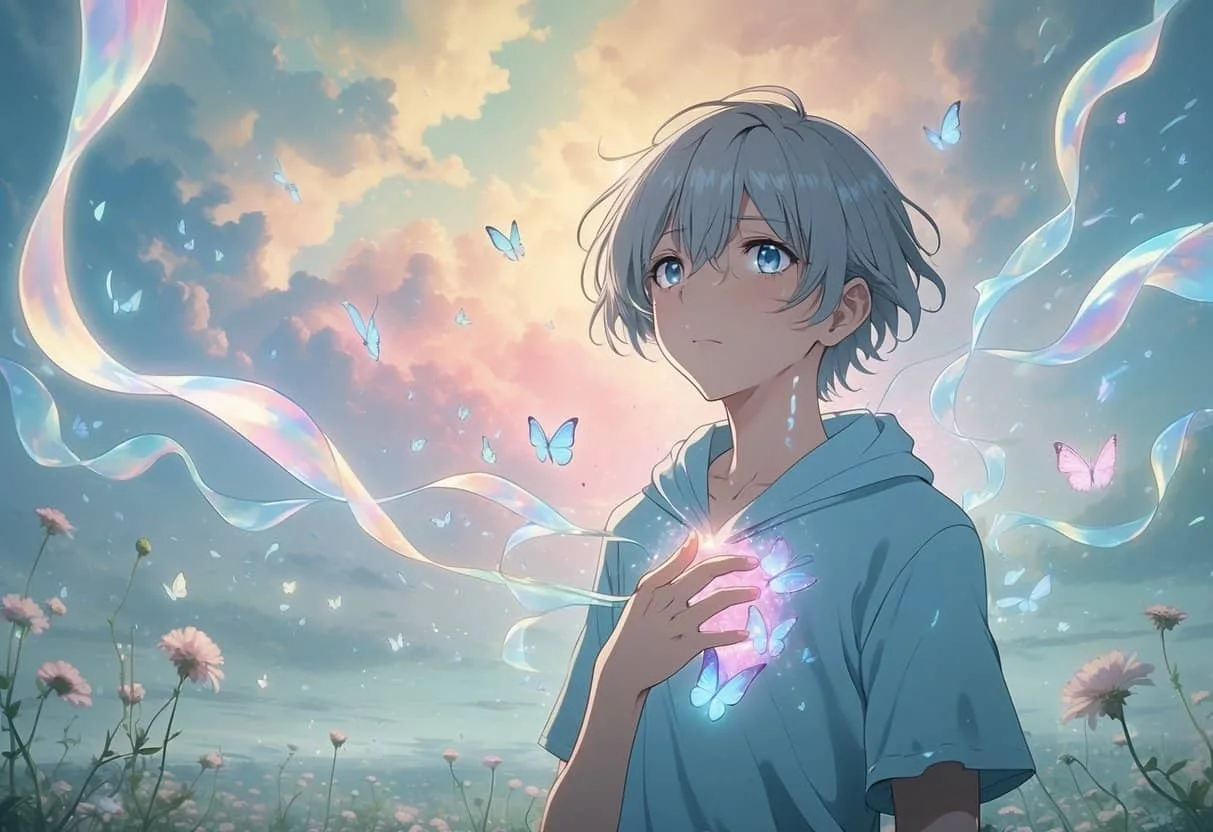
Anime has long pushed the boundaries of storytelling, but when it blends the ordinary with the inexplicable, something extraordinary happens. Magical realism—a mode where supernatural elements coexist seamlessly with everyday life—provides a powerful canvas for depicting emotional trauma. In this tradition, a character might walk through a rain-soaked street only to witness glowing memories bleed from the pavement, or confront a spectral double forged from their own suppressed grief. This mix of the real and the surreal transforms internal suffering into visible, symbolic experiences, making the intangible weight of trauma profoundly tangible. Unlike pure fantasy, magical realism refuses to separate the miraculous from the mundane; instead, it reveals how trauma distorts perception, fractures identity, and ultimately forces a confrontation with buried pain.
Japanese animation, with its deep roots in folklore, Buddhist philosophy, and a cultural emphasis on subtle emotional expression, has become a fertile ground for this narrative approach. From the quiet, spirit-haunted corridors of everyday life to the chaotic collapse of reality itself, anime uses magical realism not just as an aesthetic choice but as a psychological tool. By watching these stories, you are invited to see trauma not as a clinical condition alone, but as a lived, felt environment where the mind's deepest wounds take on a life of their own.
Understanding Magical Realism in the Anime Medium
Magical realism first emerged in literature as a way to challenge strict divisions between reality and imagination. In anime, the technique is adapted with a distinctly Japanese sensibility. The supernatural is not an escape from the world but a deeper layer of it—spirits inhabit abandoned shrines, memories manifest as physical objects, and emotional states warp the laws of physics. This narrative approach resonates with Shinto animism, where everything in the natural world can possess a spirit, and with Buddhist concepts that blur the line between illusion and truth. As a result, anime frequently presents trauma through an intimate intertwining of the psychological and the mystical, making the viewer’s experience immediate and viscerally unsettling.
Unlike high fantasy, which often builds entirely separate worlds, magical realism in anime grounds itself in recognizable settings: a school hallway, a family home, a busy city. The intrusion of the miraculous into these spaces signals that trauma does not exist in isolation—it infects the everyday. A simple tearoom might become a labyrinth of frozen time, a train ride could turn into a journey through a loved one’s dying consciousness, and a phone call might connect a living person directly to the spirit of someone they have lost. This blurring of boundaries reflects the way trauma erodes the normal separation between past and present, self and other, memory and reality. Studies on narrative therapy and trauma representation suggest that such symbolic storytelling can help viewers process their own emotions by externalizing them safely.
The Role of Magical Realism in Depicting Emotional Trauma
Interplay Between Fantasy and Reality
In magical realist anime, fantasy elements are not marked as extraordinary; they simply happen. A girl might find that her shadow moves independently and whispers secrets she refuses to acknowledge. An office worker might discover that the elevator in his building opens onto a childhood bedroom that burned down years ago. Because these events are treated as mundane, you experience them the way a traumatized person experiences intrusive memories or dissociative episodes—without warning, without context, and with the full emotional force of the real. The technique replicates the psychological phenomenon where the victim’s internal world overwhelms the external, creating a reality that feels both recognizable and alien.
This approach makes trauma something you not only observe but inhabit, forcing you to question what is actually happening and what is a product of a wounded mind. The lack of clear borders becomes a direct metaphor for the way trauma distorts one’s sense of continuity and safety.
Allegory and Symbolism in Storytelling
Magical realism thrives on allegory, allowing the unspeakable to be communicated through objects and events. In anime, a character’s guilt might appear as a bloodstain that spreads across walls no matter how many times it’s cleaned; a forgotten childhood promise could return as a silent creature that follows the protagonist everywhere. These symbols operate on multiple levels, offering a way to express pain that resists direct articulation. This indirect method mirrors how trauma often resides in the body and subconscious, bypassing language. Because the symbols are culturally and personally layered, they reward careful attention and invite you to interpret rather than simply receive.
A broken mirror, for instance, doesn’t just signal bad luck; in a story about fractured identity, it suggests a self that cannot be viewed whole. This symbolic density is deeply influenced by Japanese aesthetic principles like yūgen, which values profound, mysterious depth over overt explanation.
Character Development Through Surreal Experiences
Rather than presenting trauma as a static injury that a character simply “gets over,” magical realist anime treats it as an evolving landscape through which the character must travel. Surreal experiences become rites of passage. A young woman might be forced to repeatedly relive the day of her sister’s death, each time noticing a new detail that shifts her understanding and eventually allows her to say goodbye. A boy might encounter a doppelgänger that embodies all the rage he’s suppressed, and rather than defeating it, he must integrate it. These encounters reflect the psychotherapeutic concept of confronting and reintegrating dissociated parts of the self.
The magical elements externalize inner conflicts, turning therapy into a tangible, often perilous, journey. The character’s growth is measured not by returning to a pre-trauma self—which is impossible—but by learning to coexist with the transformed reality trauma creates. This arcs toward post-traumatic growth, showing resilience not as a restoration but as a new, richer form of wholeness.
Key Motifs and Techniques in Anime Representations
Memory and Identity
Memory in magical realism anime is rarely a faithful record; it is an active, morphing force that reconstructs identity. Trauma fragments memory, and anime visualizes this fragmentation directly. Characters may enter archives of their own mind where memories are stored as cracked porcelain dolls, or they may discover that their entire autobiographical timeline has been rewritten by a single traumatic event. This technique underscores the psychoanalytic view that the self is narratively constructed, and that when that narrative is shattered, identity dissolves. By giving memory a physical form—a house with endless corridors, a photo album that bleeds ink—the stories show how the past incessantly intrudes upon the present.
The struggle to piece together a coherent identity from fragments becomes a central driving force, illustrating that healing involves not erasing the traumatic memory but finding a way to live with it that doesn’t destroy the self.
Dreams and Imagined Realities
Dream sequences in magical realist anime often become indistinguishable from waking life, forcing both characters and audiences to navigate a seamless blend. You might watch a character fall asleep in one world and wake up in another that is at once a nightmare and the source of crucial insight. These dreamscapes function like the Freudian unconscious made manifest—they are sites where repressed desires, fears, and memories speak in the condensed language of symbols. Traumatic reenactments occur in these spaces, but they also offer the possibility of mastery: a nightmare that repeats may eventually be rewritten. By weaving these imagined realities into the main narrative without clear demarcation, anime suggests that trauma is not a single event that ends but an ongoing state of mind, a parallel reality that runs alongside the ordinary.
The technique invites you to sit with ambiguity, mirroring the therapeutic process of holding conflicting feelings without rushing to resolve them.
Folklore, Witches, and the Supernatural
Japanese folklore offers a rich lexicon of supernatural beings that anime repurposes to symbolize psychological states. A yūrei (spirit) may represent the lingering presence of a person who died unexpectedly, and its ghostly attachment to a living character can embody the survivor’s unresolved grief. Witches, as depicted in many titles, are not simply villains; they can be avatars of unexpressed female rage, societal rejection, or the magical thinking that often follows trauma. The figure of the witch or the stray spirit externalizes what has been marginalized or silenced. Additionally, Buddhist ideas of suffering and rebirth inform these depictions.
Trauma becomes a karmic loop that characters must recognize and transcend, not by destroying the supernatural entity but by acknowledging the pain it represents. This spiritual framework provides a vocabulary for trauma that goes beyond Western psychology, integrating cosmic cycles of suffering and compassion.
Dark Fantasy and Science Fiction Elements
While magical realism typically stays rooted in the everyday, anime often expands its palette with dark fantasy and science fiction that serve the same symbolic function. A cybernetic body that malfunctions or a cloning process that creates a haunting duplicate can explore identity crises and the trauma of bodily violation. Monsters in a grim fantasy world might be literalizations of a character’s self-loathing or fear of abandonment. The key is that these elements still operate in a world that feels lived-in and personal; the trauma is not a world-ending threat to a kingdom but a manifestation of one person’s suffering. In series that mix genres, the high-tech or otherworldly setting becomes a metaphorical stage on which psychological battles are fought.
For instance, a pilot synchronizing with a biomechanical unit may relive a childhood trauma through that fusion, the machine acting as an amplifier of suppressed memory. (Anime News Network)
| Motif | Role in Depicting Trauma | Examples |
|---|---|---|
| Memory and Identity | Shows fragmented self and emotional history; reconstruction of narrative | Flashbacks as physical spaces, altered autobiographies |
| Dreams and Imagined Realities | Reveals subconscious fears and desires; blurs lines between real and psychic | Shared dreamscapes, lucid nightmares, meta-narratives |
| Folklore and Supernatural | Symbolizes internal struggles and societal repression; spiritual dimensions of suffering | Yūrei as grief, witches as rage, Buddhist rebirth cycles |
| Dark Fantasy & Sci-Fi | Represents emotional pain through altered bodies, monsters, and tech | Cybernetic breakdowns, monstrous guilt, identity clones |
Cultural Context and Adaptation Influences
Adaptations from Manga and Literature
Many of anime’s most poignant magical realist works originate from manga, light novels, or even traditional Japanese diaries. These source materials carry a literary density that translates into the anime’s layered visual symbolism. When adapted, the internal monologue so common in literature becomes external imagery: a description of “a black sun sitting in her chest” might turn into an actual dark orb hovering over the character’s heart. The adaptation process also allows directors to embed additional cultural references, such as seasonal motifs (cherry blossoms for transience) or architectural spaces (the engawa, a veranda, as a liminal zone between inner and outer worlds). This deepens the emotional texture, connecting personal trauma to a wider aesthetic tradition.
Because manga often serializes over years, it can explore the long-term impact of trauma in a way that mirrors real-life recovery curves, a quality that anime faithfully preserves through extended, meditative pacing.
Language and Symbolism Unique to Japanese Culture
The Japanese language itself facilitates ambiguity and layered meaning, which magical realism exploits. Honorifics, indirect expressions, and the strategic use of silence can suggest a character’s eroded sense of self or unspoken dread. Moreover, culturally specific symbols—such as the torii gate as a threshold between the sacred and the profane, or cicada cries as a symbol of ephemeral life—act as shorthand for emotional states. When an anime character steps through a torii and finds the world subtly altered, you implicitly understand they have crossed into a space where normal rules do not apply, a perfect metaphor for entering a dissociated state. The integration of Shinto purification rituals and Buddhist meditation into the narrative can signal a character’s attempt to cleanse or understand their trauma, embedding the psychological within the spiritual.
This cultural coding makes the portrayal of trauma feel organic and rooted, rather than imported or clinical.
Portrayal of Women and Social Rebellion
Anime often channels social critique, particularly regarding female experiences, through magical realism. Characters who struggle against restrictive gender roles may find that their suppressed rebellion manifests as poltergeist activity or witch-like powers. In many stories, a young woman’s trauma—stemming from family neglect, societal pressure to marry, or workplace harassment—is not merely internal; it spills outward, reshaping domestic spaces into labyrinths of horror or wonder. The magical elements function as a protest that cannot be spoken aloud. This approach echoes historical Japanese women’s literature, such as the works of Fumiko Enchi, where the supernatural expressed female agency in a patriarchal society.
By linking personal trauma to larger structures of control, these narratives expose the systemic sources of suffering and reframe madness or hysteria as legitimate, even transformative, responses. The rebellion is not always triumphant, but the very act of visualizing it breaks the silence that surrounds so many traumatic experiences.
Iconic Anime That Exemplify This Approach
Several anime have become touchstones for how magical realism can depict trauma with nuance. Spirited Away (2001) remains a classic: Chihiro’s entry into the spirit world parallels a child’s traumatic loss of home and identity, with the bathhouse acting as a dream-space where she confronts her own fears and learns the names of her pain. Her parents’ transformation into pigs is a startlingly literal symbol of the loss of familial stability. More recent series like Mushishi treat supernatural creatures (mushi) as manifestations of natural and emotional imbalances; each episode becomes a quiet exploration of grief, guilt, or isolation, with the mushi acting as both cause and cure. Puella Magi Madoka Magica twists the magical girl genre by revealing that a character’s wish-making power inevitably traps her in a cycle of despair—a potent metaphor for how adolescent trauma can feel inescapable and self-perpetuating.
And in Mononoke (the series), the formless, shapeless mononoke only takes a monstrous shape when the Medicine Seller uncovers its three truths (form, truth, regret), suggesting that trauma remains diffuse and haunting until its hidden story is acknowledged. Each of these works anchors supernatural events in the intensely human, making them resonant case studies in emotional realism. (Nippon.com)
The Psychological and Emotional Impact on Viewers
Watching magical realism in anime does more than entertain; it can reframe your understanding of your own emotions. When a character’s trauma is externalized as a walking shadow or a recurring storm, you are given permission to view your own pain from a safe distance. This externalization reduces the shame and confusion often attached to trauma, because the symbol carries the burden while the character—and by extension, you—can examine it without being consumed. The blending of the mundane and the magical also normalizes the experience of living with trauma; it is not a flaw but a transformed reality that many others inhabit. Fan communities often discuss how these narratives helped them articulate feelings they had no words for, demonstrating the therapeutic potential of art that doesn’t preach but simply shows.
Moreover, because the supernatural in these stories rarely offers an easy fix, the anime respects the complexity of healing. There is no magical cure, only the slow, uncertain integration of the wounded self into a life that now includes the fantastic as a part of its truth.
Magical realism in anime provides a language for pain that conventional realism cannot. It acknowledges that trauma is not always logical, linear, or visible. It can be a room that grows larger when you try to leave, a sound you hear when no one is around, a person you love who is no longer there but who appears in every reflection. By merging the real with the impossible, these stories give form to the formless and voice to the voiceless. They remind you that the inner world is a landscape as vast and unruly as any physical territory, and that healing might mean learning to walk through it with open eyes, even when the path twists into the fantastical.
Through delicate animation, culturally embedded symbols, and psychologically acute storytelling, anime’s brand of magical realism opens a door to empathy and understanding that few other genres can match.