Table of Contents
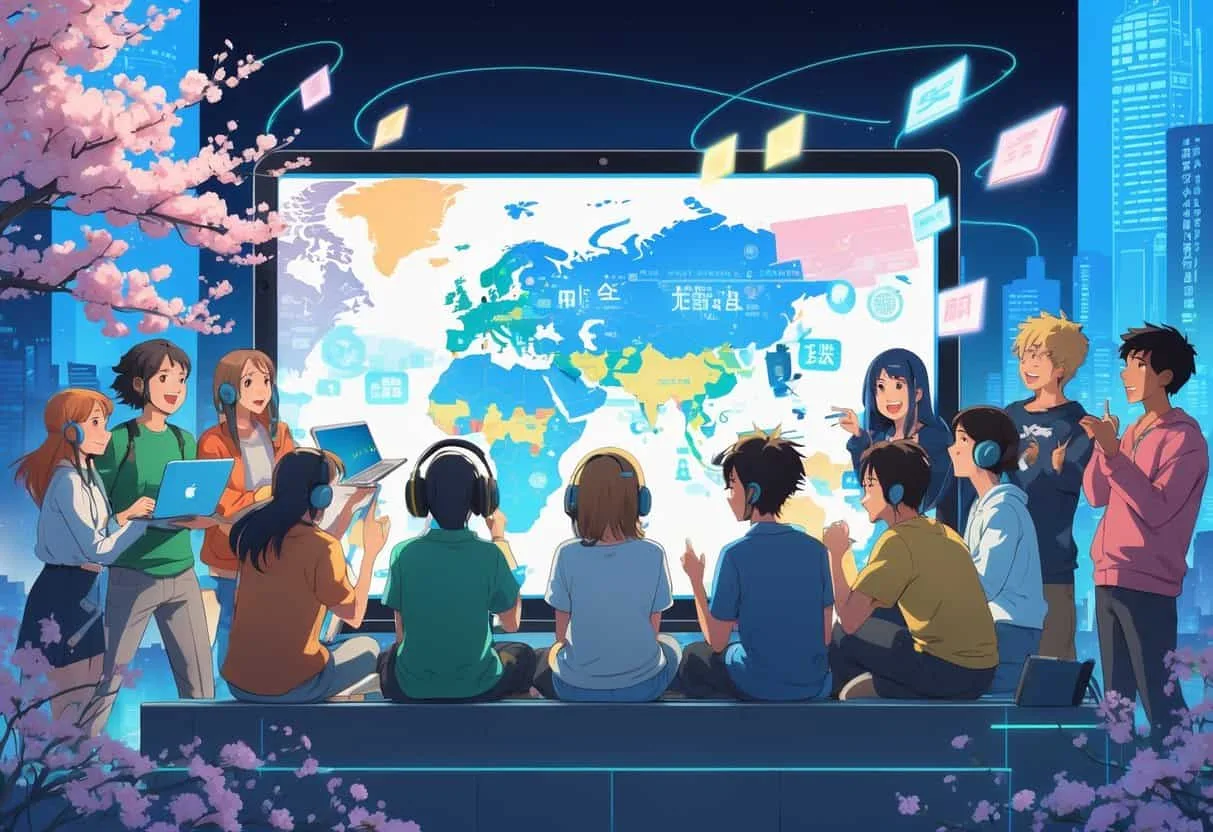
Anime’s worldwide popularity is no accident—it was sparked by a dedicated underground movement of fans who took it upon themselves to translate, subtitle, and distribute Japanese animation long before official streams existed. This practice, known as fan subbing, bridged language gaps and time zones, turning a niche import into a cultural juggernaut. From hand-labeled VHS tapes traded at sci-fi conventions to lightning-fast digital releases on IRC channels and BitTorrent, fan subbing shaped not only how we watch anime but how we connect across borders. The movement did more than deliver subtitles; it built a global community of enthusiasts who championed stories that the commercial industry had overlooked, creating a blueprint for participatory media culture that persists today.
The Birth of Fan Subbing: From Analog Passion to Digital Speed
Before broadband, before Crunchyroll, anime enthusiasts faced a daunting landscape. Official English-language releases were sparse, heavily edited, and often arrived years after a show aired in Japan. Fan subs filled the void, driven purely by passion and a desire to share stories that would otherwise remain inaccessible. This section traces the evolution from clunky VHS tapes to sophisticated digital releases.
The Early Pioneers and VHS Tapes
The earliest fan subbing took root in the 1980s, when small groups of Japanese-speaking fans in the United States and Europe began dubbing and subtitling anime on VHS. They would obtain raw Japanese recordings—sometimes mailed by pen pals in Japan—then painstakingly add subtitles using genlock devices and simple video editing hardware. Tapes were duplicated on consumer VCRs, often at the cost of quality, and distributed through fan clubs, anime clubs at universities, and by mail. A single fansubbed copy of a show like Space Battleship Yamato or Mobile Suit Gundam could circulate for years, passed from hand to hand. This analog era demanded enormous time and technical skill, but the reward was immediate: seeing the astonishment of fellow fans who could finally understand the dialogue and cultural nuances.
Groups like Anime Labs and Kraken became legends, their work synonymous with the early North American fandom. The physicality of these tapes—worn labels, generation loss in video quality, hand-drawn cover art—added a layer of artifact-like reverence that digital files would later struggle to replicate.
The Rise of Digital and the IRC Era
The mid-to-late 1990s brought digital video and the internet, transforming fan subbing from a niche hobby into a global phenomenon. Groups moved to digital capture cards, editing with software like Aegisub and SubStation Alpha, and sharing via Internet Relay Chat (IRC) bots and early peer-to-peer networks. Release speed soared. Dedicated teams—translators, timers, typesetters, editors, and encoders—collaborated remotely, often spanning continents. A single fan sub group could turn around a new episode within 24 hours of its Japanese broadcast.
This efficiency not only expanded the audience exponentially but also set an expectation of instant gratification that the official industry would later have to match. Key groups such as Live-Evil, Anime-Keep, and Fansub (the eponymous group) perfected the art of simultaneous multi-language releases, offering Spanish, French, and German subtitles alongside English within days. The IRC channels became hubs where translators debated kanji meanings and typesetters competed to create the most artistic subtitle overlays, blending technical precision with creative expression.
How Fan Subbing Expanded Access to Anime Worldwide
Fan subbing fundamentally altered the geography of media consumption. Language ceased to be a barrier, and geography blurred. Fans in Argentina, Germany, Malaysia, and Nigeria could all watch the same series within days of each other, discussing it in real time on forums and social media. The anime world suddenly felt borderless. This section examines the mechanisms that broke down access barriers.
Democratizing Viewership Across Languages
Before fan subs, watching anime outside Japan typically meant learning Japanese or waiting for a commercial release in your native language—often English, leaving non-English-speaking regions in the dark. Fan subbers from diverse linguistic backgrounds started translating into Spanish, French, Russian, Arabic, and dozens of other languages. A single Japanese raw episode could spawn dozens of fan-made subtitle tracks, each tailored to local idioms and cultural references. This decentralized model democratized access like nothing before, giving rise to vibrant fan communities in regions where anime had no official presence. It also pressured licensors to expand beyond English-language markets once they saw the untapped demand.
For instance, the explosive popularity of Dragon Ball in Latin America can be directly traced to fansubbed episodes that aired on local fan-run stations and conventions, creating a market that later justified official dubbing and broadcasting.
The Speed of Release: Beating Official Channels by Years
Throughout the 2000s, fan sub groups routinely beat official licensors to market by months or even years. A show like Naruto or Bleach would be subbed and uploaded to aggregator sites within hours of its Japanese TV airing. Fans could watch the latest episode long before a dubbed version existed. This speed culture reshaped fan expectations; the idea of waiting for a DVD box set felt archaic. It also forced the industry’s hand—first into faster DVD releases, then into day-and-date simulcasts that mirrored the fansub model, eventually leading to the streaming platforms we know today.
The “speed sub” phenomenon, where teams competed to release first, sometimes sacrificed translation accuracy for immediacy, sparking debates about quality versus timeliness that still echo in legal streaming circles.
The Cultural Impact: Building a Global Anime Community
Beyond mere consumption, fan subbing created a shared global culture. Online hubs became spaces for discussion, critique, and the formation of identities around favorite series. This communal fabric knit together people from vastly different backgrounds, all united by a love for Japanese animation. The cultural ripples extended far beyond screens, influencing fashion, language, and even life choices.
Forums, Fansites, and the Social Web
In the late 1990s and early 2000s, places like AnimeSuki, Anime News Network forums, and LiveJournal communities became the watercoolers of the anime world. Fansubbers would announce new releases, fans would dissect plot points, and flame wars erupted over translation choices or video encoding quality. These platforms accumulated immense collective knowledge—episode guides, cultural notes, translation glossaries—that deepened everyone’s appreciation. They also spawned early forms of viral marketing, with fan art, AMVs (anime music videos), and memes spreading organically, turning obscure series into global phenomena. The community-driven encyclopedic effort, such as the bilingual episode summary projects, foreshadowed user-generated content platforms like MyAnimeList and AniDB, which still serve as essential resources.
Cross-Cultural Exchange and Hybrid Identities
Fan subbing did more than transmit entertainment; it transmitted cultural context. Subtitlers often included translator’s notes explaining honorifics, food, folklore, or puns that would otherwise be lost. This sparked curiosity about Japanese language and society, leading many fans to study the language, travel to Japan, or incorporate Japanese aesthetics into their own art, fashion, and storytelling. Cosplay—costumed performance—became a powerful medium for fans to inhabit characters, blending their local traditions with anime tropes. The result was a hybrid global fan culture that feels both indigenous and universal.
As cultural scholar Mizuko Ito has observed, these fan networks “operate as transnational publics, redefining what it means to be a fan in a connected age.” The enthusiastic embrace of kawaii culture, Japanese food, and even religious festivals among international fans is a direct legacy of the cultural annotations embedded in fansubs. Study-abroad programs in Japan saw a surge in applications during the 2000s, often attributed to the cultural curiosity ignited by fansubbed anime.
Fandom Activism and Community Values
Fan subbing also cultivated a strong ethos of volunteerism and mutual aid. Groups operated on donations and goodwill, often without financial reward. This spirit translated into real-world activism: fundraisers for earthquake relief in Japan, charity cosplay events, and campaigns to localize unreleased series legally. The sense of ownership over the fandom, born from the DIY nature of fansubbing, made fans protective of their community’s authenticity and resistant to corporate co-optation, a tension that still surfaces in debates over crowdfunding and official merchandise.
The Industry Response: From Resistance to Strategic Partnership
Initially, the anime industry viewed fan subbing as outright piracy that threatened its bottom line. Over time, however, many companies recognized the role fansubs played in building an international market. The relationship evolved from antagonistic to cautiously symbiotic, and eventually to a strategic acknowledgment of the value of grassroots promotion.
Legal Challenges and Copyright Debates
Legally, fan subbing exists in a gray zone. Under Japanese copyright law, unauthorized translation and distribution constitute infringement, and major studios periodically issued cease-and-desist letters to fansub groups. High-profile cases, such as the closure of the streaming site KissAnime, signaled that rights-holders could crack down. Yet, many groups operated for years without interference, as long as they stopped distributing a series once it was officially licensed. The ethical debate persists: some fansubbers justified their work as a promotional tool, arguing that they introduced series to audiences who later bought merchandise, DVDs, and streaming subscriptions.
Industry insiders remain divided, but there is a broad recognition that fan subbing cultivated the very demand that now sustains legal platforms. Notable legal actions, such as the 2010 lawsuit by Media Factory against fansub group Live-Evil, sent shockwaves but ultimately led to a tacit understanding: most rights-holders tolerated fansubs if groups removed releases upon licensing. This informal code of conduct became the industry’s quiet compromise.
How Fansubs Influenced Official Localization and Simulcasts
The fan sub model directly inspired the modern simulcast. In the mid-2000s, companies like Crunchyroll (which started as a fansub-hosting site before pivoting to legitimacy) proved that viewers would flock to a legal, high-quality alternative if it matched the speed and subtitle quality of fan releases. Official localizers studied fansub translation styles—often more literal and culturally explanatory than traditional dubs—and began incorporating detailed notes. The industry’s shift toward same-day worldwide streaming, pioneered by services like Crunchyroll and Funimation (now part of Crunchyroll), was a direct response to fansub-driven demand. Today, many series premiere globally within hours of their Japanese broadcast, with subtitles in multiple languages—a reality unthinkable without the fansub precedent.
The translation style even influenced dubbing: modern dubs often retain honorifics and culturally specific terms, a nod to the fansub era’s emphasis on preserving original meaning.
The Shift to Streaming and the Paradox of Piracy
Ironically, the legal streaming era has not eliminated fan subbing; it has transformed it. While most viewers now access anime legally, a persistent subculture of fan translators continues to subtitle shows that fall through the licensing cracks—older, niche, or region-locked titles. There is also a growing preservationist movement: fansubbers digitize and subtitle out-of-print anime that might otherwise vanish. This highlights a paradox: even as legal options proliferate, the ethos of fan work persists, now framed more as an archival and accessibility mission than as a piracy pipeline. At the same time, some groups have turned to private trackers and encrypted channels to avoid detection, continuing the tradition of circumventing geographic and economic barriers.
The emergence of “simulcast remastering”—where fans refine official subtitles by adding translation notes, song lyrics, or correcting errors—shows how fansubbing remains a parallel track of quality control and cultural enrichment.
Fan Subbing’s Legacy in the Modern Anime Landscape
The fingerprints of fan subbing are visible in nearly every aspect of today’s anime fandom, from the structure of conventions to the proliferation of niche genres. The movement didn’t just break down barriers; it built lasting institutions and shaped consumption habits that define the industry’s global reach.
Conventions, Cosplay, and Fan Creations
Today’s sprawling anime conventions—Anime Expo, Anime NYC, Japan Expo in Paris—trace their lineage to the small fan-run gatherings where VHS tapes were first traded. What were once modest meetups now host tens of thousands of attendees, featuring artist alleys bursting with fan-made comics (doujinshi), elaborate cosplay competitions, and industry panels. The participatory culture that fan subbing nurtured—where everyone could be a creator—now extends to fan art, fan fiction, and music remixes. This creative ecosystem thrives online and offline, turning fans from passive consumers into active contributors. Many convention panels now include “how to fansub” workshops, preserving the technical knowledge of earlier generations.
The popularity of AMV contests at conventions is a direct descendant of the fan video scene that paralleled fansubbing.
Niche Genres and the Long Tail of Anime
Without fan subbing, countless niche genres—mecha, yuri, slice-of-life, horror, avant-garde—might never have found international audiences. Fansub groups often specialized, taking on shows that were too obscure for commercial licensing. As a result, global fans developed sophisticated tastes and encyclopedic knowledge. Today, streaming platforms still benefit from this “long tail,” as fans continue to demand and discover anime beyond the mainstream. The diversity of the current catalog is a direct legacy of the years when fansubbers served as unofficial curators.
Series like Legend of the Galactic Heroes, Mushishi, or Kino’s Journey owe their English-language cult status entirely to dedicated fansub groups. The long tail also fostered sub-fandoms that later drove official releases, such as the yaoi and BL genres, which gained traction through fansubs before becoming commercially viable.
Nostalgia, Preservation, and the Role of Archives
Many classic anime from the 1970s, ’80s, and ’90s survive today only because fan subbers preserved them. Series that never received a DVD release or whose masters were lost have been kept alive through digitized fansub copies. Groups like Anime Oldies and various private trackers maintain extensive archives. For longtime fans, these tapes and files evoke deep nostalgia, but they also serve as a vital historical record. The preservationist impulse—originally born from a fear that titles would disappear—now ensures that future generations can study and enjoy the full breadth of anime history.
Academic researchers increasingly rely on these fan archives for studying media history, fan labor, and transnational reception. The tension between copyright and cultural heritage is ongoing, but the archival value of fansubs is now acknowledged in academic discussions, with some institutions like the University of Texas’s Anime Archive actively curating fansub materials.
The Ethical and Future Perspectives
As legal streaming solidifies its dominance, fan subbing occupies an increasingly complex space. Some groups have become tools for circumventing regional blocks, raising questions about the ethics of bypassing licensing deals. Others focus exclusively on abandoned media, aligning more closely with open culture movements like the Internet Archive. The line between piracy and cultural preservation blurs. What remains undeniable is the foundational role fan subbing played in creating the global anime market.
Any future model of international distribution owes a debt to those early pioneers who believed that a great story deserves to be understood by everyone, regardless of language or location.
Looking ahead, artificial intelligence and machine translation are beginning to challenge the role of human translators. However, the nuance and cultural sensitivity that human fansubbers provide remain irreplaceable for many titles. Fan subbing may evolve into a hybrid model where AI generates preliminary subtitles and human editors refine them, preserving the community-driven spirit. The rise of “official” fan subtitling—where studios hire former fansubbers—further legitimizes the practice. Projects like Crunchyroll’s Fan Powered Subtitle Program (which allows fans to contribute subtitles for certain titles) indicate a future where fan labor is officially recognized and compensated, albeit carefully managed.
In the end, fan subbing is more than a chapter in anime history—it is a case study in how grassroots movements can reshape an entire industry. It proved that passion, community, and technology can overcome institutional inertia, forging connections that span continents and generations. The next time you press play on a legally streamed episode mere hours after its Japanese debut, you are witnessing the legacy of those fansubbers who, decades ago, dared to share what they loved with the world. Their unpaid labor built a bridge between cultures, and that bridge now carries the weight of a billion-dollar industry—a testament to the enduring power of fan-driven cultural exchange.