Table of Contents
How Audience Age Shapes Anime Engagement Today
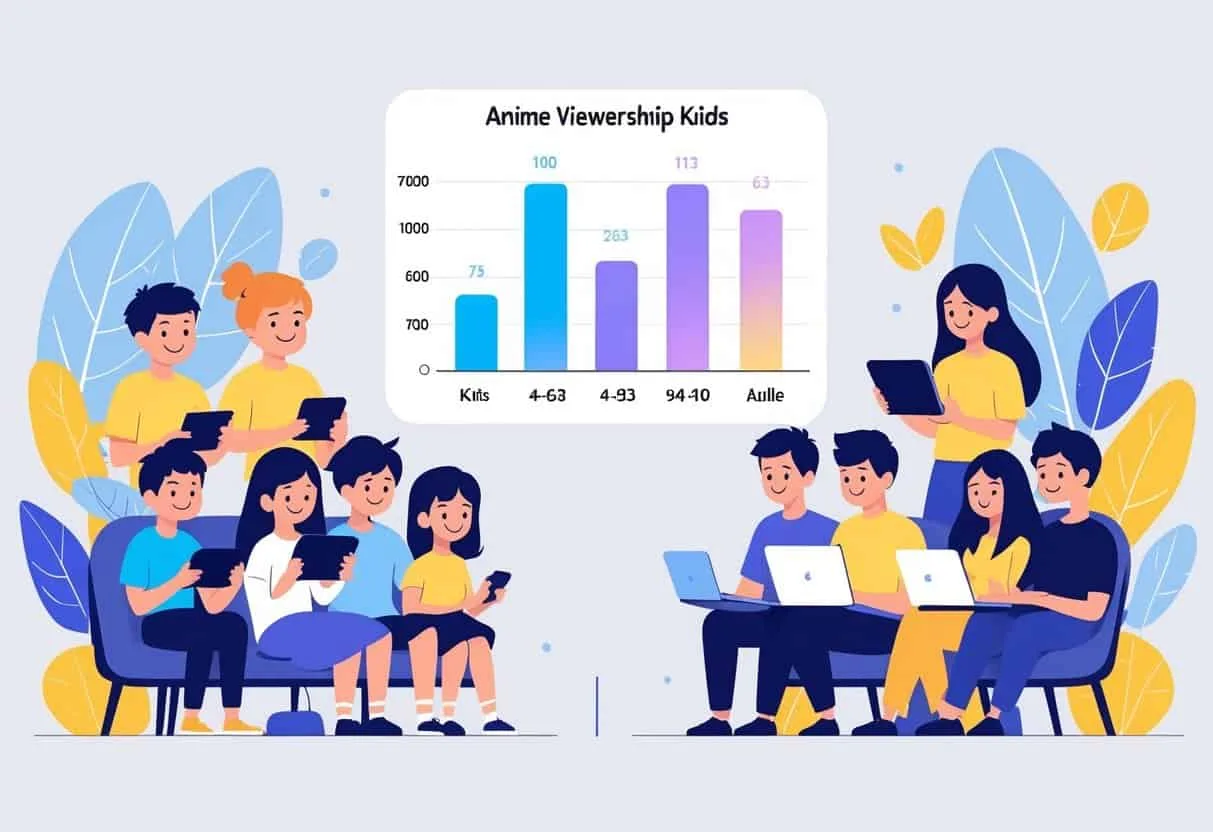
Anime viewership is no longer a niche hobby confined to a single demographic. Data from across the globe confirms that age plays a decisive role in who watches, what they choose, and how deeply they interact with the medium. Children between five and ten remain a vital audience, but the seismic growth of the industry in recent years has been powered by adults—especially Millennials and Gen Z viewers in their twenties and thirties. Understanding these shifts is not just an academic exercise; it drives production decisions, streaming platform curation, and the way stories are told. Research from Statista shows that in major markets, regular anime consumption peaks in the 18-to-34 age bracket, while the under-12 segment remains solid but less dominant than it was two decades ago.
This article examines the trends, preferences, and cultural currents that define how kids and adults experience anime.
Key Takeaways
- Kids gravitate toward anime with bright visuals, straightforward narratives, and strong moral clarity.
- Adults—particularly those aged 18-35—represent the largest and most commercially influential fan cohort, driving demand for complex storytelling and genre diversity.
- Teenagers often show a surprising dip in anime engagement compared to both younger children and adults, influenced by social pressures and competing media.
- Streaming platforms and manga adaptations significantly shape viewing patterns, with age-specific curation altering discovery.
- Animation styles and narrative depth expectations evolve dramatically as audiences mature, impacting what studios produce and how they market it.
Viewing Preferences by Age Group
Anime tastes are not static; they shift as cognitive development, emotional maturity, and cultural exposure expand. When you watch Pokémon at age seven, you are drawn to the colourful creatures and simple battles. By your mid-twenties, you may find yourself deeply invested in the political machinations of Attack on Titan or the existential questions of Paranoia Agent. This evolution is predictable but also heavily influenced by the gatekeeping roles that parents, peers, and platforms play.
Anime Genres Popular with Kids
For children, anime is first and foremost a visual and emotional experience. The genres that dominate are action-adventure, fantasy, and the magical girl category, all built on easily identifiable heroes, clear-cut villains, and upbeat resolutions. Kids’ anime thrives on high-contrast colour palettes, exaggerated facial expressions, and repetitive, formulaic story structures that provide comfort and predictability. Talking animal companions, collectable monsters, and school settings where friendship solves every crisis are hallmarks of the segment.
Content boundaries are strict: graphic violence, sexualization, and morally ambiguous outcomes are almost entirely absent. Studios and licensors actively self-censor to meet the expectations of parents and broadcast regulations. Shows like Doraemon, Yo-kai Watch, and the ever-green Pokémon franchise land safely in this zone, offering humour and light peril without crossing into distressing territory. These series also tend to run in long, episodic formats that allow children to drop in and out without losing narrative thread—a design choice that suits fragmented attention spans and after-school viewing habits.
Anime Genres Preferred by Adults
The adult anime palette is far broader and more nuanced. While shōnen battle series like Demon Slayer or Jujutsu Kaisen attract huge cross-generational audiences, the core adult viewership also drives consumption of seinen (young men), josei (young women), psychological thriller, and slice-of-life dramas. Genres that interrogate relationships, mental health, social alienation, and moral ambiguity resonate strongly because they mirror the complexities of adult life. Monster, Vinland Saga, and March Comes in Like a Lion are not about clear victories but about messy human journeys.
Adults also engage more with anime that incorporates political intrigue, historical allegory, and philosophical subtext. The body horror and existential dread in Neon Genesis Evangelion or the cyclical violence portrayed in Berserk speak to a desire for media that does not shy away from difficult material. There is also a smaller but acknowledged market for explicitly adult content—erotic anime and extreme gore—though this remains a niche compared to the mainstream adult demand for mature storytelling that does not rely on shock value alone.
Differences in Content Expectations
Children expect safety and moral clarity. The hero will win, lessons will be learned, and the world will be restored by the end of an episode. This predictability is not a flaw but a developmental necessity. Adults, by contrast, actively seek out narratives that challenge their worldview. They tolerate—and often welcome—ambiguous endings, flawed protagonists, and situations where no ethical high ground exists.
Pacing also diverges: kids typically prefer rapid-fire action and quick scene changes, while adults appreciate slow-burn character studies, dense dialogue, and atmospheric world-building that can take multiple episodes to pay off. Strong language, sexual themes, and graphic violence are evaluated differently; for adults they can be essential to a story’s authenticity, while for children they are automatic disqualifiers.
Streaming Platforms and Accessibility Trends
Where and how anime is consumed has fragmented along age lines just as dramatically as content tastes. The shift from traditional TV blocks to on-demand streaming has allowed each age group to self-segregate into platform ecosystems that serve their specific comfort levels and viewing habits.
Streaming Services Used by Different Age Groups
Kids aged 5–12 predominantly watch anime through family-friendly hubs such as Netflix (especially its kids’ profile) and Disney+. Both platforms invest heavily in licensed, curated libraries that parents trust. The interface limits accidental exposure to mature content, and algorithmic suggestions keep young viewers in a loop of safe, brightly coloured shows. Amazon Prime Video also carries a decent kids’ anime catalogue, though it is less prominently featured.
For viewers aged 18 and above, the centre of gravity shifts decisively to dedicated anime platforms. Crunchyroll dominates this space globally, offering simulcasts, subbed and dubbed options, and a catalogue that spans all genres, including seinen and josei titles that are harder to find on generalist services. Netflix remains a major secondary player for adults due to its investment in original anime and high-profile exclusives, but Crunchyroll’s community features and library depth make it the home base for serious fans. Niche platforms like HIDIVE further serve adult audiences by licensing lesser-known mature works, while retro-focused services like RetroCrush cater to nostalgic older viewers who want to revisit cel-animated classics.
Impact of Platform Curation on Viewership
Curation is the invisible hand that shapes age-specific consumption. Family-oriented platforms deploy recommendation engines that steer children away from anything that could alarm parents. This has the effect of reinforcing the existing content bubble: a child who starts with Pokémon will likely be served Beyblade or Cardcaptor Sakura next, not Death Note.
On adult-focused services, curation works differently. Crunchyroll’s seasonal lineups, user-generated reviews, and interest-based tags—psychological, body horror, politics—allow viewers to drill down into highly specific subgenres. Editorial picks and fan-curated lists expose audiences to under-the-radar series and films they would never encounter on a mainstream platform. This recommendation architecture amplifies the fragmentation of tastes: a 30-year-old fan of slow-burn sci-fi can easily bypass shōnen power fantasies, while a younger adult chasing the latest hype can ride the simulcast wave. The result is an experience that feels personal and deeply segmented by emotional maturity.
Art, Animation, and Manga: How Age Shapes Perception
Visual language in anime is not just a stylistic choice; it functions as a signal of intended audience. The way characters are drawn, the animation techniques employed, and the adaptation relationship with manga all correlate strongly with target age brackets.
Art Style and Animation Techniques Preferences
Children’s anime leans on simplified, iconic design: oversized eyes, rounded shapes, and minimal shadow work. The 2D animation is often bright and busy, with rapid action cuts and frequent visual gags to hold attention. Character models remain consistent and easy to recognise, a necessity for young viewers who track narratives by visual recognition as much as by plot. Studios like OLM and Toei Animation have refined these approaches over decades, and they remain commercially bulletproof.
As viewers age, they develop a more sophisticated appreciation for varied art styles. Adults are more likely to notice and value the integration of CGI for dynamic camera movements, the atmospheric use of lighting and shading, and the deliberate choice of a muted colour palette to convey mood. The blend of hand-drawn 2D characters with digitally rendered backgrounds—seen in films by Makoto Shinkai or in series like Violet Evergarden—resonates because it signals technical ambition. Adults also gravitate toward projects that push the medium’s boundaries, such as the rotoscoped realism of The Heike Story or the painterly frames of Mushishi. This audience is more likely to follow specific studios and directors based on aesthetic signatures, making artistry a key driver of loyalty.
Role of Manga and Adaptations in Viewer Demographics
The pathway into anime often depends on age. Younger viewers generally enter through the animated series first and may never engage with the source manga. Their exposure is passive, shaped by what appears on TV or in the kids’ section of a streaming app. Because children’s manga often mirrors the tone of the anime, there is less incentive to seek out the original material.
For older fans, the dynamic reverses or expands. Adults frequently discover a story through its manga, especially works published in seinen or josei magazines that never receive a broad anime adaptation. When a series does get adapted, adult viewers are likely to compare the anime against the manga, appreciate subtle changes in pacing, and discuss directorial choices in online forums. Manga often provides more elaborate character introspection and side arcs that would be too dense for a weekly broadcast. Attack on Titan, Berserk, and Vinland Saga all built enormous adult followings first through their manga, and the anime served as a amplified entry point that rewarded source-material literacy.
This symbiotic relationship means that adult demographics actively sustain both print and streaming industries, while children remain a more broadcast-dependent audience.
The Teenage Dip: Why Interest Wanes in Adolescence
One of the most persistent patterns in anime viewership surveys is a drop in engagement during the teenage years. While children and young adults report high interest, the 13–17 cohort often registers lower viewing frequency and weaker fandom identification. Several factors contribute to this phenomenon.
Social identity formation plays a major role. Teenagers navigating middle and high school social hierarchies may distance themselves from media that is perceived as childish or uncool. In many Western markets, anime can still carry a stigma in certain peer groups, especially compared to live-action dramas, blockbuster films, or competitive gaming. Even for teens who still enjoy anime, public expression of that fandom is sometimes suppressed until later adolescence or college, when social circles diversify.
Competition for leisure time is also fiercest during the teenage years. Extracurricular activities, academic pressure, and the gravitational pull of social media and multiplayer gaming often displace passive media consumption. When teens do watch anime, they may gravitate toward accessible action series that require less emotional investment, but they are less likely to self-identify as anime fans in survey contexts. This creates a statistical dip even if actual occasional viewing remains relatively common.
In Japan, a parallel phenomenon has been observed where the sheer volume of manga and anime targeting young adults can overwhelm teens, causing them to hang back until they feel they have the cultural literacy to navigate the landscape. The result is a temporary valley that the industry increasingly seeks to bridge with teen-friendly gateway titles that carry enough depth to feel mature without alienating younger sensibilities.
Marketing and Production Respond to Age Shifts
Anime studios and distributors have not passively observed these demographic trends; they have reshaped their strategies to capitalise on adult audiences while maintaining a foothold with children. The economic weight of the 18–34 demographic means that late-night TV slots in Japan, once reserved for experimental or risqué content, have become prime real estate for blockbuster series with high production values. Shows like Chainsaw Man and Jujutsu Kaisen are produced with the awareness that their primary revenue will come from adult collectors—Blu-ray sales, merchandise, and premium streaming subscriptions.
At the same time, the children’s market remains a crucial entry pipeline. Franchises like Pokémon and One Piece are engineered to be intergenerational, offering simple enough narratives for first-time viewers while layering in references and character beats that reward long-time followers. Merchandising, movie releases, and mobile games reinforce these ecosystems, creating a funnel that carries kids into adulthood as lifelong consumers. According to data from Nippon.com, the expanding global footprint of anime has made the under-18 market a priority for international licensing, while domestic marketing continues to pivot toward young adult and middle-aged fans with higher disposable income.
Streaming platforms have also started commissioning original anime that target specific age bands. Netflix’s family-friendly slate includes titles like Pokémon Concierge, while its adult offerings push into dark fantasy and science fiction. Crunchyroll’s data-driven approach allows it to greenlight series that match the tastes of its core subscriber base, which skews heavily toward viewers in their twenties. This dual-pronged production logic ensures that the medium grows without alienating any single age group.
Global Trends and the Future of Age-Specific Anime Viewing
As anime becomes a truly global entertainment force, the age boundaries that once defined its audience are softening. International distribution has introduced classic series to new generations, creating nostalgia loops where a 40-year-old parent and a 12-year-old child might both be watching Dragon Ball Z—albeit for different reasons. Streaming has collapsed the release window, meaning that a 15-year-old in Brazil and a 35-year-old in Germany can watch the same episode of a new shōnen hit simultaneously.
Cultural acceptance has also broadened. Anime fandom is no longer a subcultural identity; it is mainstream pop culture. As Vox has noted, the American anime market’s explosion over the past decade has been driven by streaming accessibility and the normalisation of adult animation. This means that the teenage dip may gradually flatten as the stigma evaporates, and adult viewership is likely to keep expanding as the Millennial and Gen Z cohorts age.
Looking ahead, the industry will continue to segment its output: high-budget, globally accessible franchise films for families; intense, narratively ambitious series for adults; and short-run, concept-driven originals that bridge artistic ambition with commercial viability. The data is clear: anime is a lifelong companion for millions, but the way it is experienced depends profoundly on where a viewer is on the timeline of life. Understanding that shifting dynamic is the key to appreciating why the medium has become one of the most adaptable and resilient storytelling formats in the world.