Table of Contents
Anime’s Deep Roots in African-American Communities
For decades, anime has quietly woven itself into the cultural fabric of African-American life. What started as a niche interest has blossomed into a vibrant, self-sustaining subculture that touches everything from visual art and fashion to music, slang, and personal identity. The connection runs deeper than simple entertainment; it is a meeting point where Japanese storytelling collides with the lived experiences of Black Americans, producing something altogether new and resonant.
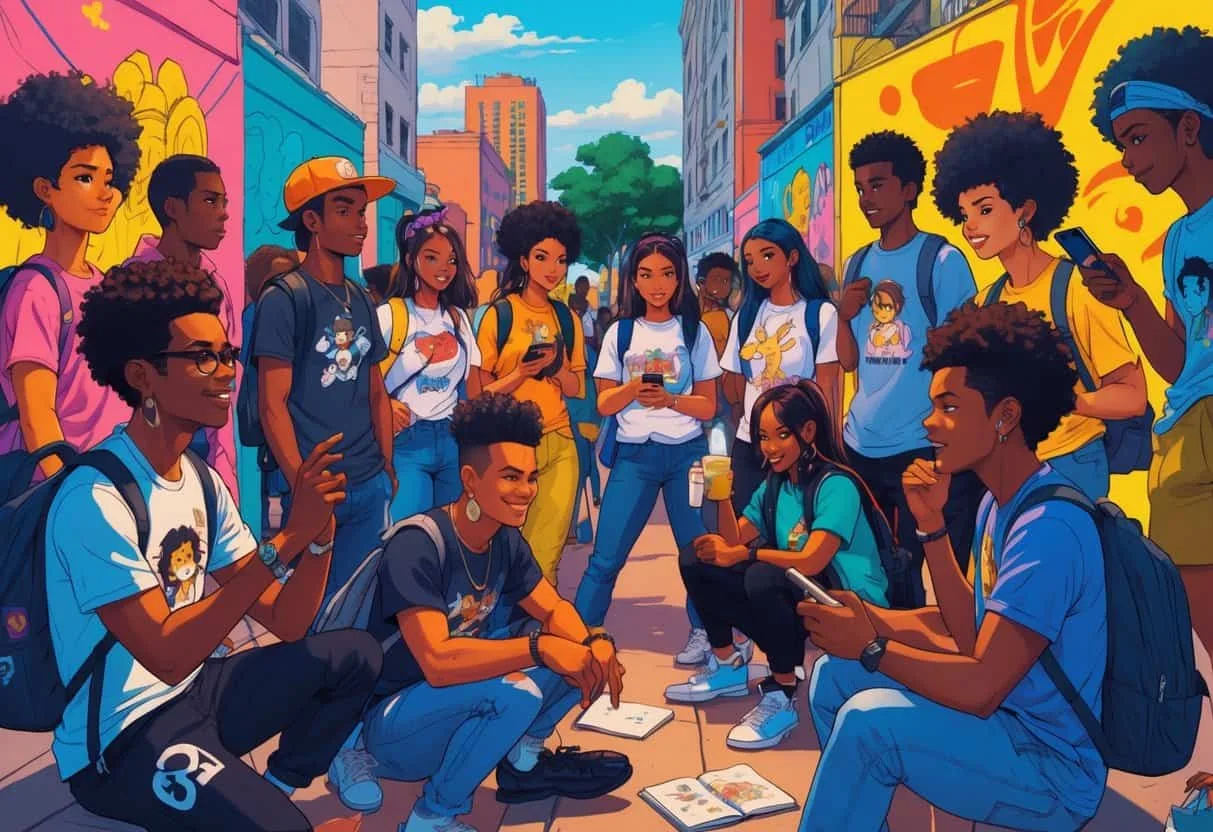
Walk through any major city, and you will see the evidence. A teenager’s backpack adorned with Naruto keychains, a streetwear brand releasing a Dragon Ball Z capsule collection, a barbershop conversation about the latest Jujutsu Kaisen episode—these are not anomalies. They are indicators of a relationship built on shared themes of struggle, resilience, and transformation. Anime offers a lens through which many African Americans re-examine their own stories, finding power in narratives that refuse to shy away from hardship.
Why Anime Resonates: Shared Narratives of Struggle and Triumph
At its core, much of anime is about the underdog. Goku’s relentless training, Naruto’s fight against loneliness and prejudice, Ichigo’s drive to protect those he loves—these arcs mirror the historical and contemporary challenges faced by Black communities. The theme of being underestimated or misjudged is immediate and familiar. In a society that often imposes limiting stereotypes, seeing a character defy odds through sheer determination is not just inspiring; it feels personal.
Perseverance becomes more than a plot device; it becomes a survival manual. Many fans point to the classic shonen trope of pushing past one’s limits as a direct parallel to the real-world demand for greatness in the face of systemic barriers. This is not a passive consumption of media. It is an active, almost therapeutic engagement where the hero’s journey maps onto personal ambition and collective memory.
Furthermore, anime often questions authority and challenges the status quo. Series like Attack on Titan and Code Geass examine corrupt systems and the price of freedom. These stories spark conversations within African-American anime circles about social justice, autonomy, and the ethics of rebellion. The metaphorical layers allow for discussions that might otherwise feel too raw or confrontational, providing a safe space to explore difficult truths under the guise of fiction.
The Fusion of Aesthetics: When Black Culture Meets Anime Art
One of the most visible outcomes of this subculture is the aesthetic merger of anime imagery with African-American art forms. Black artists have taken the clean lines and exaggerated features of anime and infused them with textures, patterns, and symbols drawn from African diasporic traditions. The result is a hybrid style that shows up on canvas, in digital illustration, and across social media platforms like Instagram and TikTok.
Streetwear brands specifically have capitalized on this fusion. Collaborations between independent Black designers and anime studios are increasingly common, though even unlicensed homages flood the market with vibrant designs. A hoodie might reimagine the Uchiha clan crest in red, black, and green, while a pair of custom sneakers carries hand-painted scenes from My Hero Academia. This style extends to hair, too—cosplay wigs and natural hairstyles alike incorporate anime-inspired color streaks and silhouettes, from Sailor Moon buns to Super Saiyan spikes done with locs or braids.
Music videos by hip-hop and R&B artists regularly include anime cutscenes or direct visual references. Rappers like Denzel Curry, Megan Thee Stallion, and Lil Uzi Vert have name-dropped anime in their lyrics or adopted personas that blur the line between rapper and shonen protagonist. The exchange is bidirectional: anime gets a remix, and Black music gets a fresh visual lexicon.
Cosplay as a Radical Act of Self-Expression
Cosplay within African-American communities often goes beyond dress-up. It is a declaration of belonging in a fandom that has not always visually reflected them. When Black cosplayers step into the role of a beloved character, they challenge narrow definitions of who gets to be a hero. A Black Sailor Moon, a Black Tanjiro, a Black Mikasa—all push against a predominantly white or Asian cosplay norm and assert that character allegiance has no race.
Online movements like #BlackCosplayersHere and dedicated convention meetups amplify this visibility. They provide support networks where cosplayers can swap construction tips, celebrate each other’s work, and combat the harassment that unfortunately still plagues non-white cosplayers. For many, the process of designing and wearing a cosplay that blends cultural identity with canon accuracy is a reclaiming of space. It is not unusual to see an Afro-puffed Android 18 or a Zora-inspired Link, creations that speak directly to the creativity and dual consciousness of the wearer.
Role-playing and fan fiction further enrich this expression. Online forums and Discord servers host collaborative storytelling where Black fans write themselves into the anime universes they love, creating original characters (OCs) that possess both anime aesthetics and backstories rooted in the Black experience. These narratives often become wildly popular within niche communities, proving that representation doesn’t have to wait for official studios; it can be built from the ground up.
Black Voices in Anime Commentary and Media
The digital age has given rise to a powerful wave of Black anime commentators, reviewers, and content creators. YouTube channels such as Get In The Robot and AnimeUproar (diverse in their own teams) are joined by dynamic voices like The Black Nerd and Akidearest (who, while defying a single demographic, reflect the community’s range). These creators offer cultural critique alongside episode breakdowns, linking anime themes to real-world issues in ways that legacy anime journalism often misses.
Podcasts like Blk Anime Podcast provide a platform for deep-dive discussions on representation, colorism in anime, and the best new shows that handle Black-coded characters respectfully. These shows do not just consume content—they curate it. They steer audiences toward series that get it right and call out those that fall back on tired tropes.
On platforms like TikTok, short-form creators stitch and duet clips to add context that resonates with Black viewers. A scene from Hunter x Hunter might be re-contextualized as a metaphor for code-switching, or a One Piece fight montage set to a hip-hop track to emphasize the defiance in the narrative. The collective effect is an ongoing, decentralized conversation that solidifies anime’s place in Black popular culture.
Anime Conventions: Where the Subculture Comes Alive
Major anime conventions like Anime Expo, Otakon, and Blerdcon (which specifically centers Black nerd culture) have become pilgrimage sites. For African-American fans, these gatherings offer more than merchandise and panel discussions; they provide a physical location where their dual identity as Black and anime-obsessed is the norm, not the exception.
Blerdcon, in particular, stands out as a transformative space. Founded in 2017, it celebrates “Black nerd culture” across comics, sci-fi, and anime. Here, attendees can experience cosplay contests where the majority of participants are people of color, attend workshops on drawing anime characters with Black features, and hear from pioneering Black voice actors and animators. The energy is one of unapologetic joy and ownership.
Even at more mainstream cons, Black fan meetups organize via social media to claim space. Group cosplay photos of all-Black Demon Slayer corps or a gathering of Black JoJo’s Bizarre Adventure enthusiasts are common sights that document the growing confidence of the community. Artist alleys increasingly feature Black artists selling prints that reimagine anime classics with dark skin and textured hair, making the con floor a marketplace for inclusive creativity.
Representation On Screen: The Hunger for Black Anime Characters
For years, Black characters in anime were either absent or reduced to gross caricatures. Early examples often relied on exaggerated features and stereotypical behavior, reflecting Japan’s limited and often problematic exposure to Black culture. However, the landscape has shifted, and fans now have a small but meaningful roster of characters they can look to with pride.
Characters such as Yoruichi Shihōin from Bleach and Afro Samurai (voiced by Samuel L. Jackson in the English dub) are celebrated for their depth and coolness. More recently, Canary from Hunter x Hunter, Killer Bee from Naruto Shippuden, and Michele from the rebooted Fruits Basket demonstrate that Japanese creators are—slowly—becoming more conscious of global diversity. The Netflix series Carole & Tuesday prominently features a Black female protagonist, and Yasuke, the historical figure reimagined as a mecha-fantasy hero, gives Black audiences a lead who anchors his own story.
Still, the hunger for robust representation persists. Many fans argue that it is not enough to simply include a Black character; that character must possess agency, screen time, and a personality that transcends tokenism. This demand fuels a lot of the fan-made content that thrives online, where Black creators can literally draw themselves into the frame and write the narratives they wish to see.
Iconic Anime Series That Define the Subculture
Certain titles have achieved legendary status within African-American anime communities. Dragon Ball Z is arguably the cornerstone, its influence extending from childhood memories to adult workout philosophies. The series’ emphasis on surpassing limits, combined with its muscular, larger-than-life hero Goku, made it an instant fixture in households. Dubbing on networks like Toonami in the late 1990s and early 2000s introduced the show to a generation that latched onto its energy.
Naruto and Naruto Shippuden deepened the emotional resonance. The nine-tailed fox’s rejection by society, his loud-mouthed front hiding deep pain, and his eventual recognition as a hero offered a clear allegory for marginalization and redemption. The bonds of Team 7—often summed up in the phrase “the friends who become family”—echo the importance of kinship in Black communities, where chosen family can be just as vital as blood ties.
Akira occupies a different space, appealing to lovers of dystopian cyberpunk and avant-garde animation. Its revolutionary spirit and gritty portrayal of power resonate with fans who appreciate a darker, more intellectual anime. Samurai Champloo, with its anachronistic hip-hop soundtrack by Nujabes and Fat Jon, directly bridges the gap between Japanese animation and Black music, creating a seamless cultural product that still inspires fashion and music today.
Anime-Inspired Creativity: Fan Art, Music, and Everyday Language
The ripple effects of anime fandom extend deep into creative industries dominated by African-American talent. Visual artists like Uzumaki Cepeda, known for blending anime and Black experiences in vibrant murals and installations, have garnered national attention. Tattoo artists ink hyper-detailed anime portraits alongside African patterns, while graphic designers incorporate manga-style speed lines into cover art for rap albums.
Musically, the influence is undeniable. Producers sample anime soundtracks; rappers reference “going Super Saiyan” as a metaphor for peak performance. The late rapper XXXTentacion frequently used anime visuals and sampled ambient tracks from shows. Megan Thee Stallion’s cosplay-inspired photoshoots and her “Anime Bae” persona celebrate the culture openly. Even R&B artist SZA has incorporated anime aesthetics into her music videos, contributing to a feedback loop that normalizes and elevates the subculture.
Language, too, absorbs anime jargon. Terms like senpai, kawaii, and nakama slip into everyday Black vernacular in some circles, alongside phrases like “this ain’t my final form” or “believe it!”—even for those who have never watched a full episode. Memes and reaction GIFs sourced from anime dominate Black Twitter and Instagram threads, acting as a shared vocabulary that crosses age groups and geography.
Building Digital Safe Havens and Educational Spaces
Online communities specifically curated for Black anime fans have flourished. Facebook groups like Black Anime Cosplayers and Anime & Chill for Black Nerds host tens of thousands of members. Discord servers offer real-time chat, streaming parties, and channels devoted to mental health—a vital resource in a time when fandom can be a lifeline. These spaces are carefully moderated to filter out racism and ensure that members can discuss both the latest anime drop and the socio-political issues affecting their lives.
Academically, the intersection of anime and Black studies is gaining recognition. Scholars analyze how African-American reception of anime challenges Western media hierarchies and creates transnational solidarity. Courses and online lectures delve into how Black fans reinterpret texts, using anime as a tool for cultural critique and identity formation. These intellectual contributions lend weight to what has always been an intuitive truth: anime studies cannot ignore the Black gaze.
An NPR Code Switch segment on anime and Black culture highlighted this phenomenon, featuring interviews with fans who described anime as a “doorway into other possibilities.” Similarly, the BBC has explored how anime became a home for Black nerds seeking expansive, imaginative worlds.
Challenges and the Path Forward
Despite the vibrancy of the subculture, challenges persist. Anti-Black sentiment within broader anime fandom surfaces with regularity. Black cosplayers are targeted with harsh criticism, their skin color deemed “inaccurate” for favorite characters. Black voice actors face death threats when cast in anime adaptations. The gatekeeping is real, and the community continuously fights to assert that fandom has no racial prerequisite.
However, the very structure of this subculture—rooted in mutual support and creative reclamation—turns those challenges into fuel. Organized hashtag campaigns quickly rally supporters and report harassment en masse. Community elders who’ve been in the scene for decades mentor younger fans on how to navigate spaces without losing their voice. The result is a fortified, resilient network that only grows stronger in the face of opposition.
Looking ahead, the increasing global reach of anime alongside a heightened demand for diverse storytelling suggests that the bond between African-American communities and anime will deepen. Studios are beginning to collaborate with Black talent for both voice work and character design, and crowdfunding has proven that there is a market for anime-inspired projects led by Black creators. The subculture is poised to shift from consumer to producer, with independent animations and comics already in development that center Black heroes in anime-style narratives.
Conclusion: A Living, Breathing Fusion
Anime in African-American communities is far more than an imported pastime. It is a living, breathing fusion of artistic languages, a mirror for identity exploration, and a communal bond that stretches across the country. The mix of perseverance narratives, visual reinvention, and grassroots community organization has created a subculture that is both distinctly Black and authentically anime. It thrives in convention halls and group chats, on canvas shoes and YouTube channels, proving that the stories we love can become part of who we are—and who we are can reshape the stories.
The journey from Toonami afternoons to dedicated Blerd conventions represents a cultural milestone. As new generations discover the medium, they inherit not just a library of shows, but an entire infrastructure of expression built by those who came before. And in their hands, the fusion will continue, spawning art, language, and connections that keep the subculture alive and fiercely original.