Table of Contents
The Evolving Relationship Between Anime and Video Games
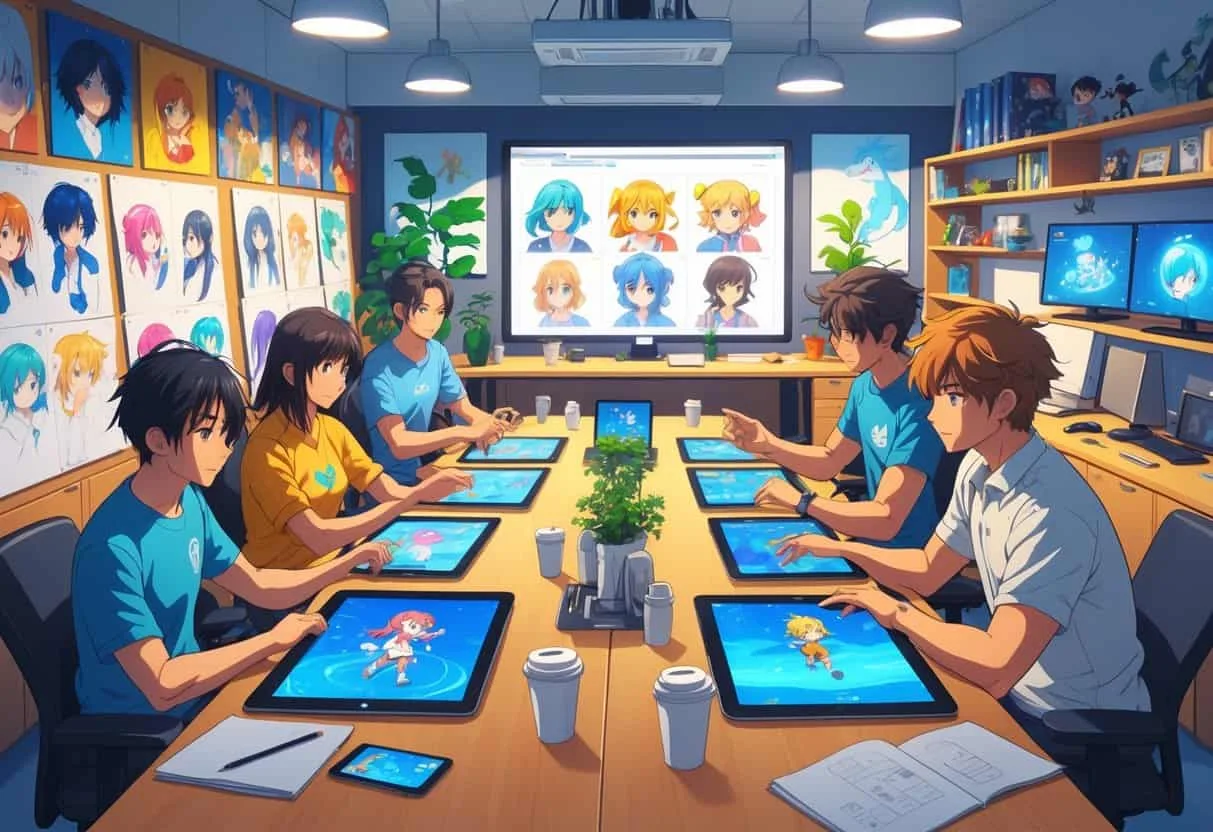
The fusion of anime studios and game developers has moved far beyond simple licensing deals. Today, it represents a sophisticated partnership model that shapes entire franchises, blending hand-drawn artistry with interactive design to create experiences that resonate across continents. What began as straightforward adaptations—anime turned into fighting games, or visual novels receiving animated cutscenes—has matured into deep co-development, where both sides influence story arcs, visual identity, and gameplay mechanics from the earliest planning stages.
The growing appetite for immersive cross-media storytelling is not accidental. It reflects a deliberate strategy by publishers to tap into the passionate loyalty of anime fanbases while offering gamers a richer narrative texture. When an anime studio directly contributes to a game, the authenticity is palpable. Familiar character expressions, idiosyncratic movement styles, and carefully curated voice performances carry the emotional weight that generic imitations lack. This authenticity drives engagement, fuels in-game purchases, and often extends the lifecycle of both the game and the anime property.
Strategic Drivers and Business Synergies
Shared Audiences and Cross-Promotion
The primary engine behind anime-game collaborations is the overlap between viewers and players. In Japan, the crossover is nearly seamless; a hit anime often spawns a console or mobile title within months, and popular games regularly receive anime adaptations. Internationally, the synergy has expanded dramatically as streaming platforms make anime accessible worldwide. A gamer who discovers a title through an anime tie-in may then explore the source material, and vice versa. This mutual discovery loop is immensely valuable for both industries, lowering user-acquisition costs and building a durable fan ecosystem.
Major publishers structure cross-promotion carefully. A new anime season might launch alongside a game update that introduces story chapters only hinted at in the show. Exclusive character skins, in-game events themed around anime arcs, and limited-time collaborations featuring voice actors from the original cast all serve to unite the two audiences. The marketing push often becomes a single, coordinated campaign, maximizing reach without diluting the brand message.
Monetization Models and Revenue Streams
Revenue in these partnerships flows from multiple directions. Direct game sales remain important for console and PC titles, but the real driver is the live-service model. Mobile games especially thrive on gacha mechanics and battle passes that offer anime-inspired characters, weapons, and cosmetic items. Collaborations with anime studios frequently trigger large spikes in player spending, as fans chase limited units of beloved characters.
Publishing strategies are increasingly joint ventures. Some anime studios partner with heavyweight game publishers like Bandai Namco, Tencent, or Square Enix to share development costs and distribution networks. This approach reduces risk while amplifying global visibility. Special edition releases—bundled with art books, soundtrack CDs, or exclusive figurines—further monetize the overlap, turning a single fan into a multi-category consumer.
Defining Roles and Responsibilities
Anime Studios: Guardians of Visual Identity and Narrative
Anime studios such as ufotable, MAPPA, or A-1 Pictures bring decades of expertise in character acting, dynamic composition, and emotionally charged storytelling. Their role in a collaboration extends far beyond producing a few animated trailers. They typically oversee character design consistency, provide detailed model sheets, establish color palettes, and sometimes produce entire in-game cutscenes. The narrative tone of the original anime—whether it is the frantic comedy of a shounen series or the moody introspection of a seinen drama—must be preserved, and the studio acts as the final arbiter of what “feels right.”
Voice acting is another critical contribution. The same seiyuu who breathe life into the anime characters often reprise their roles for the game, recording extensive dialogue trees that react to player choices. This consistency in voice talent anchors the experience, ensuring that the game does not feel like a separate, parallel universe but rather an extension of the anime’s world.
Game Developers: Architects of Interactivity and Technical Execution
Game developers shoulder the technical weight of turning a passive viewing experience into an interactive one. They design combat systems, user interfaces, and progression loops that honor the anime’s spirit while functioning as compelling games. Studios like CyberConnect2, known for their work on the Naruto Shippuden: Ultimate Ninja Storm series, have mastered the art of translating exaggerated anime action into fluid, real-time combat. They must balance the anime’s distinct color saturation and line art with the demands of real-time rendering, all while maintaining a stable frame rate across multiple platforms.
The developer also manages the production pipeline, scheduling regular feedback loops with the anime studio to review art assets, animation cycles, and narrative beats. Clear delineation of these roles from the outset prevents costly rework and ensures that neither side oversteps into unfamiliar territory. In successful collaborations, the game does not try to be an anime, and the anime does not dictate game balance—instead, a respectful synergy emerges.
Integration of Art, Animation, and Technology
From 2D Character Sheets to In-Game Assets
The journey from an anime character sheet to a fully rigged 3D model or a 2D sprite is a meticulous process. Anime studios provide model sheets that illustrate every angle, expression, and costume detail. Game artists then interpret these sheets, often using tools like Maya or Blender to sculpt high-poly models that retain the distinct silhouette and facial proportions of the original design. Regular art reviews—sometimes daily during intense production periods—help catch inconsistencies early. Shared asset libraries in Perforce or Git ensure that both teams always work from the latest approved version.
Color accuracy is another pain point. Anime cel shading relies on large, flat areas of color with subtle gradients, but game lighting and post-processing can wash out those hues. Developers must write custom shaders that mimic the anime look, preserving the crisp shadows and vibrant highlights that define the style. When done correctly, the player often cannot tell where the anime ends and the game begins.
Bridging Hand-Drawn Animation with Real-Time Engines
Anime studios traditionally use software like RETAS, OpenToonz, or Clip Studio Paint to produce hand-drawn frames. Game engines such as Unity or Unreal Engine 5 operate on entirely different principles. To merge the two, teams exchange animation data: keyframe files, motion capture data, or even rotoscoped footage. Some developers opt for a frame-by-frame approach within the engine, carefully spacing sprites to replicate anime timing, while others use 3D models with cel-shaded materials that emulate the hand-drawn aesthetic through stylized rendering techniques.
Cutscenes present a special challenge. High-end anime cutscenes may be pre-rendered at 24 frames per second with advanced compositing effects, then compressed for the target platform without introducing artifacts. Real-time cutscenes, on the other hand, must run at 30 or 60 fps and react to player-chosen outfits or character variants. Both teams collaborate on the staging and camera work, ensuring that dramatic moments—like a signature attack sequence—match the anime reference from start to finish.
AI and Machine Learning in the Production Pipeline
Automation is quietly reshaping how anime studios and game developers collaborate. AI-driven tools can now generate in-between frames, clean up line art, and even colorize rough sketches based on a predefined palette. Machine learning models trained on a studio’s past work can suggest motion arcs for characters, reducing the manual labor of animating complex fight scenes. In-game, AI upscaling can enhance texture resolution on the fly, allowing anime-style assets to look crisp on 4K displays without ballooning file sizes.
These technologies are not replacing human artists but accelerating tedious portions of the workflow. By cutting hours of repetitive labor, studios and developers can allocate more time to creative iteration and polish. The result is a faster production cycle and a higher-quality final product that still bears the unmistakable hand of the original creators.
Co-Developing Stories Across Media
When an anime and a game are developed simultaneously, the storytelling possibilities expand enormously. Shared writers’ rooms and synchronized timelines allow the game to explore side stories or character backstories that the anime only hints at. Conversely, the anime can foreshadow game-exclusive arcs that reward attentive viewers. This kind of synchronized transmedia planning requires constant communication, often through weekly video conferences and a shared online story bible that tracks every canonical event.
Assets flow both ways. A background illustration created for the game might appear in the anime’s ending credits. Voice lines recorded for the game can be repurposed for promotional anime shorts. This asset reciprocity reduces production costs and reinforces the sense of a unified world. Fans who consume both media are rewarded with a deeper, more coherent narrative that feels meticulously crafted rather than haphazardly assembled.
Real-World Case Studies
One of the most visible recent examples is the partnership between HoYoverse and anime studio ufotable for a Genshin Impact animated project. Announced in 2022, the long-term collaboration aims to produce a full anime series that expands the game’s lore, with ufotable—renowned for its work on Demon Slayer—bringing its signature fight choreography and visual flair. While the anime is still in development, the partnership has already intensified fan anticipation, demonstrating how a game studio can leverage an anime powerhouse to deepen its world.
Bandai Namco’s long-running Naruto Shippuden: Ultimate Ninja Storm series, developed by CyberConnect2, offers another instructive model. The studio worked directly with the anime’s production committee to ensure that boss battles mirrored iconic moments from the show, frame for frame. Developer insights show that the team studied TV episode storyboards to replicate camera angles and timing, resulting in a game that many fans consider the definitive interactive expression of the Naruto saga. This level of fidelity required a deep, ongoing dialogue between the animators and game designers throughout the project’s multi-year development cycle.
Challenges and How Teams Overcome Them
Creative Clashes and Communication Gaps
Cultural and procedural differences can create friction. Anime production often follows a more fluid, director-driven model, while game development adheres to sprint-based agile methodologies with rigid milestone deadlines. Misunderstandings arise when an anime studio requests iterative changes late in a game’s production cycle, or when a developer pushes back on a design choice that conflicts with gameplay balance. The solution lies in appointing dedicated producers on both sides who speak the language of both industries and can translate creative intent into actionable tasks. Early alignment on a shared creative brief, coupled with regular “look and feel” reviews, reduces the risk of major disagreements.
Technical Hurdles in Porting Art Styles
Maintaining anime fidelity across different hardware targets is a constant battle. A richly detailed background that looks stunning on a high-end PC may crush performance on a mid-range smartphone. Teams compromise by creating scalable asset pipelines: high-resolution source files for console and PC, and optimized versions for mobile, with attention to silhouette readability and texture compression. Similar challenges arise with VR, where hand-drawn elements must feel integrated into a 360-degree space without breaking the illusion. Collaborative technical tests early in development help surface these issues before they become entrenched.
Scheduling and Cultural Differences
Time zone gaps and regional holidays can slow down communication, but modern distributed workflow tools mitigate much of the friction. Many partnerships adopt a “follow the sun” approach: the anime team in Tokyo works on assets during their day, uploads them to a shared repository, and the game team in Los Angeles or Europe reviews and implements them when they come online. Building a culture of mutual respect—where each side acknowledges the other’s craft and constraints—turns potential conflicts into opportunities for innovation.
The Role of Hardware and Platform Strategies
The choice of platform fundamentally shapes the collaboration. Mobile games dominate the revenue charts in Japan and across Asia, thanks to accessible microtransactions and the ubiquity of powerful smartphones. Anime studios must therefore design character silhouettes and UI elements that remain legible on smaller screens, often simplifying line work without losing personality. On consoles and PC, developers have the headroom to push graphical fidelity, incorporating high-resolution textures, complex particle effects, and longer, more intricate cutscenes that blur the boundary between game and anime.
Hardware cycles also open new possibilities. The arrival of the PlayStation 5 and Xbox Series X, alongside advancements in mobile chipsets, enables real-time ray tracing and more sophisticated cel-shading techniques. Anime studios can now see their art rendered with dynamic lighting that respects the original color keys, creating a level of visual cohesion that was previously only achievable in pre-rendered sequences.
Emerging Trends: VR, Esports, and Indie Collaborations
Virtual reality introduces an immersive frontier where anime aesthetics meet spatial interaction. A VR experience based on a popular anime can place the player inside iconic locations, surrounded by characters animated with full-body 3D rigs that preserve the 2D appeal. While still niche, these experiments are generating excitement at events like Anime Expo and Tokyo Game Show, hinting at a future where viewers step directly into the worlds they once only watched.
In esports, the clean, exaggerated silhouettes and flashy particle effects of anime-style games have proven highly spectator-friendly. Titles like Guilty Gear Strive and Dragon Ball FighterZ draw massive crowds, and their success has encouraged anime-adjacent developers to invest in robust netcode and spectator modes. The collaboration therefore extends beyond art into competitive game design, where frame data and balance must co-exist with dramatic, anime-inspired super moves.
Indie studios are also entering the fray, often with smaller, more experimental partnerships. These collaborations trade the massive budgets of AAA productions for creative freedom, allowing anime studios to contribute to projects that might explore niche genres or unconventional art styles. The looser structure demands even more transparent communication, but it can result in games that feel genuinely fresh and personal.
Looking Ahead: The Future of Anime-Game Cross-Media
The line between anime and video game will continue to blur. As generative AI matures responsibly, studios will further automate asset generation while preserving human authorship. Cross-media franchises will launch with synchronized anime, game, manga, and merchandise from day one, orchestrated by central production committees that include representatives from all media. Fans will come to expect that a game is not merely an adaptation but an integral chapter of a larger story, one they can influence through their choices.
This evolution demands that anime studios and game developers build lasting relationships rather than one-off deals. The partnerships that succeed will be those built on deep mutual respect, shared creative vision, and a willingness to adapt to each other’s workflows. In a global entertainment landscape hungry for narrative depth and visual spectacle, the collaborative spirit between these two industries will shape the most memorable cross-media experiences of the next decade.