Table of Contents
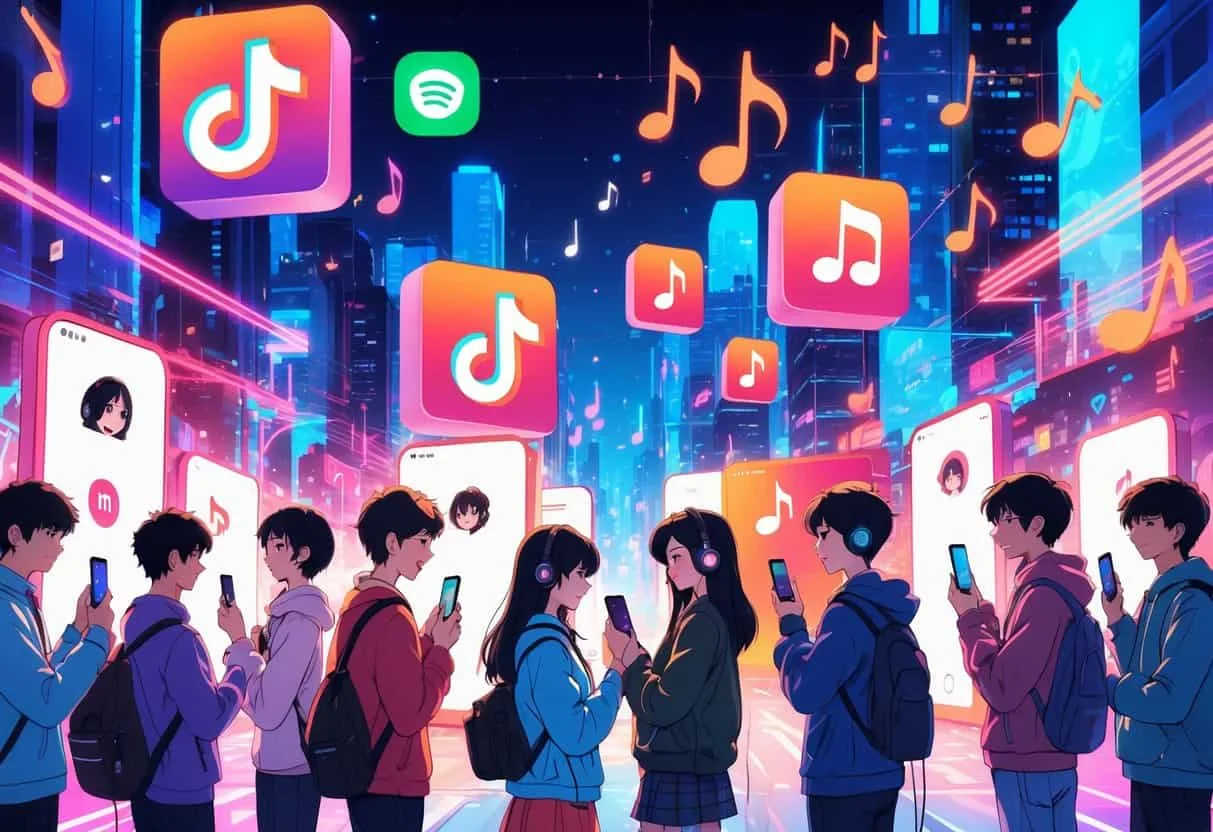
Anime openings have graduated from being playful television intros to full-blown global music phenomena. On TikTok, a 15-second clip of a soaring chorus layered beneath a fan-favorite fight scene can rack up millions of views in a weekend. On Spotify, tracks like YOASOBI’s “Idol” and Kenshi Yonezu’s “Kick Back” hold court on curated playlists right next to top 40 pop hits, pulling in listeners who have never watched a single frame of the shows they represent. What was once a niche corner of fan culture now drives international music trends, shapes streaming charts, and rewires how record labels think about cross-platform promotion. The speed and scale of this shift reveal a new kind of viral magic: one where music, short-form video, and visual storytelling combine to create something impossible to ignore.
The Evolution of Anime Openings Into Mainstream Music
For decades, anime openings functioned as tightly packaged promotional tools, serving fans already invested in the series. They showcased the main characters, hinted at plot arcs, and delivered an energy boost before the episode proper began. The songs, while often beloved within the fan community, rarely escaped the orbit of the shows themselves. Today that boundary has dissolved. Anime themes now compete for space on top-tier global charts and are looped endlessly by users who treat them as stand-alone pop singles, not just as soundtracks attached to a specific narrative.
From Niche Themes to Mainstream Trends
The pivot began when streaming services dissolved traditional broadcast windows. Suddenly, a show airing in Japan could be watched simultaneously by someone in São Paulo, and the accompanying opening song could be saved to a playlist in Berlin minutes after the simulcast ended. But the true explosion came with the rise of TikTok. Short, high-impact clips showcasing memorable animation sequences set to anthemic choruses turned anime openings into reusable sound assets. A clip from “Demon Slayer” paired with LiSA’s “Gurenge” or a montage of “Jujutsu Kaisen” moments over Eve’s “Kaikai Kitan” would surface on For You pages worldwide, algorithmically divorced from the original context.
New listeners encountered the song first, then later discovered the anime, reversing the traditional fan journey. Data from TikTok’s annual music report confirms that anime-related sounds consistently rank among the fastest-growing audio categories on the platform, with some tracks seeing 400% year-over-year growth in user-generated content.
Japanese Pop and the Influence of J-Pop Artists
Much of this crossover success is driven by top-tier J-Pop acts who have turned anime tie-ins into a strategic career pillar. Artists like YOASOBI, Official HIGE DANdism, Ado, and King Gnu are not just recording a throwaway theme; they are crafting full-fledged pop compositions with meticulous production, earworm hooks, and emotionally charged lyrics that resonate independently of any show. YOASOBI’s “Idol,” written for the series Oshi no Ko, blends rapid-fire rap verses with explosive pop choruses and a dark undercurrent that mirrors the series’ commentary on fame. The song shattered streaming records and became the first Japanese-language track to top the Billboard Global Excl. U.S. chart, a feat that signals how J-Pop, packaged through anime, has become a formidable export.
This symbiotic relationship elevates the artist—who gains an instant international audience—and the anime studio, which secures a sonic identity that primes the series for virality before it even airs.
Cross-Media Collaborations in the Music Industry
The line between music, television, and live entertainment continues to blur. Anime studios and record labels now coordinate elaborately staged world premieres, where a new opening debuts not as a TV cut but as a live performance streamed globally on YouTube during a virtual concert. Manga promotions integrate QR codes that launch the music video, and official partnerships between Crunchyroll and Spotify curate dedicated hubs that pull together official soundtracks, artist interviews, and exclusive behind-the-scenes content. This cross-media orchestration means a single song becomes a multi-platform event. Fans can watch the opening on a streaming service, add it to a Spotify playlist, use the sound on TikTok for a cosplay transition, and then attend a live virtual meet-and-greet with the artist—all within the same release week.
Each touchpoint fuels discovery, making the song feel less like a theme and more like a cultural moment.
TikTok’s Viral Engine: Short Clips, Global Reach
TikTok’s architecture is built for exactly the kind of rapid, visual, and emotional bursts that anime openings deliver. A soaring chorus paired with a dramatic character transformation or a perfectly timed lip-sync to a screamed lyric can trigger an immediate impulse to reuse the sound. Because the platform’s algorithm surfaces content based on engagement rather than follower count, a 15-second anime edit posted by a fan with 200 followers can snowball into a trend seen by millions.
How TikTok Audio Trends Spread
Once a sound goes viral, the feedback loop is self-reinforcing. Users who encounter the audio in a popular video can tap the sound name to see every other video using the same clip, spawning a cascading network of interpretations. An anime opening used in a dance challenge by a K-pop fan account might be picked up by a beauty influencer doing a character-inspired makeup transformation, then by a comedy creator mimicking an over-the-top anime expression. Each iteration pulls the song further from its original context and deeper into mainstream consciousness. This dynamic explains how tracks like “Idol” generated over 5 billion TikTok views across user videos within months of release, turning the song into an unavoidable earworm even among demographics that never interact with anime content directly.
The Role of Dance Challenges and Memes
Anime openings thrive in meme formats that leverage exaggerated emotions and high-contrast visuals. A clip of a protagonist unleashing a signature move synced to the beat drop of an opening track becomes a template for humor, aspiration, or relatable frustration. Dance challenges built around anime choreography—often originally performed by characters in the ending credits—allow users to film themselves replicating the moves, adding their own flair. These challenges bridge the gap between fan community and casual scroller: you don’t need to know the show to replicate the dance, but you might get curious enough to look it up. The participatory nature of these trends turns passive listeners into active promoters, effectively crowdfunding a song’s success one duet at a time.
Spotify’s Playlist Power and Streaming Dominance
While TikTok provides the spark, Spotify supplies the sustained burn. When a trend explodes on short-form video, users scramble to find the full track, and Spotify’s playlist ecosystem is ready to capture that intent. Official editorial playlists like “Anime Now,” “Tokyo Super Hits,” and the massive “Anime on Replay” aggregate trending tracks, while user-generated lists like “Anime Openings (Top 100)” accumulate hundreds of thousands of saves. The platform’s algorithm then weaves these tracks into personalized mixes, pushing them into the daily routines of listeners who might have shown only passive interest in a related genre.
Algorithmic Discovery on Spotify
Spotify’s recommendation engine excels at drawing connections between disparate listening habits. A user who streams BTS and occasionally dabbles in lo-fi hip hop might suddenly find “Kick Back” in their Discover Weekly, linked through a web of data signals that detect the song’s increasing popularity among similar listener clusters. Once the track lands in a personalized radio or daily mix, it becomes a natural part of that listener’s rotation, erasing the arbitrary distinction between an anime opening and any other pop song. This algorithmic assimilation is critical because it normalizes the presence of Japanese-language music in playlists that were once dominated entirely by English-language hits.
Playlist Curation and Cross-Promotion
Spotify’s official partnerships further grease the wheels. The dedicated Anime Now playlist, co-branded with anime licensors, features fresh openings and endings alongside deep cuts from iconic series, creating a discovery funnel that introduces new fans to older catalog while serving die-hards the latest releases. When a track like Tatsuya Kitani’s “Where Our Blue Is” lands simultaneously in that anime hub and in the global “New Music Friday” playlist, it receives a double dose of visibility—catching both the fan who seeks it out and the casual listener who simply scrolls through new releases. This strategic cross-pollination is a deliberate marketing choice that accelerates the transition from niche interest to global phenomenon.
Cross-Platform Synergy: TikTok, Spotify, and YouTube
The three platforms function as an interconnected ecosystem. TikTok creates the initial buzz and the FOMO (fear of missing out) that drives users to search for the full song. Spotify captures that intent and converts it into streams, playlist adds, and long-term listening habits. YouTube then provides the visual anchor—official music videos, lyric videos, and high-quality fan edits that deepen the emotional connection and give the trend a visual home that can accumulate views for years. A track that trends on TikTok often sees a simultaneous spike in Spotify streams and YouTube views, and analyzing these parallel rises reveals a remarkably synchronized global listening behavior.
The YouTube Music Video Effect
Official anime music videos on YouTube regularly break into the platform’s trending tab in multiple countries. For instance, the music video for “Idol” surpassed 200 million views within two months of release, driven not only by the anime’s fanbase but by users who discovered the song on TikTok and returned to YouTube to watch the full performance. Creators who produce “anime-style” edits using the song further amplify its reach, legally or otherwise, and these edits often rank alongside official content in search results. YouTube’s recommendation algorithm then connects viewers to other anime openings, creating a deeply immersive rabbit hole that cultivates new fans in real time. The combination of high production value, narrative storytelling, and emotive music makes anime openings uniquely suited to the platform’s appetite for visually compelling content.
How Platforms Feed One Another
A common trajectory for a viral anime opening looks like this: a fan uploads a 10-second snippet of a new opening to TikTok set to a heart-pounding scene from the newest seasonal anime. Viewers rush to Shazam the track or search for it on Spotify. Simultaneously, the official artist uploads the full-length anime music video to YouTube. Spotify playlist curators notice the spike in search queries and add the song to editorial flagship lists. Influencers on Instagram Reels then replicate the trend, further expanding the demographic footprint.
This multi-stage journey collapses the traditional sales cycle into a matter of days, and the song can go from unreleased to omnipresent faster than any label campaign could engineer on its own.
The “Fingers Crossed” Effect: When Non-Anime Songs Become Anime Anthems
The flow is not one-way. A track like Lauren Spencer-Smith’s “Fingers Crossed,” an emotionally raw ballad originally unconnected to any anime, found its way into countless anime mood edits on TikTok, where users paired the heartbreak lyrics with clips of tragic character moments from series like Violet Evergarden or Attack on Titan. The song surged onto Spotify’s viral charts not because of its original radio play, but because the anime community adopted it as the unofficial soundtrack to their favorite sad scenes. This phenomenon demonstrates the cultural authority anime visuals now hold: they can recontextualize a pop song and infuse it with new meaning, propelling the track to audiences who might otherwise never have heard it. The reciprocal nature of this trend—anime visuals boosting non-anime songs, which then loop back to amplify anime openings when the pattern repeats—underscores how thoroughly anime aesthetics have infiltrated the mainstream music discovery pipeline.
Globalization and Marketing of Anime Openings
The globalization of anime music is not an accident; it is the result of deliberate, carefully structured marketing that blends Japanese artistry with international collaboration and platform-native strategy. Record labels and anime production committees now conceive the opening song as a global product from day one, not as an afterthought tacked onto the Japanese broadcast.
International Collaborations with DJs and Producers
Japanese artists increasingly tap Western producers and DJs to add a sheen of global familiarity without losing the distinct flavor of the original. Collaborations between J-Pop vocalists and electronic producers like Zedd, Slushii, or Madeon have given birth to tracks that feel equally at home at an EDM festival and in a high-energy anime credit sequence. These partnerships open doors to playlists and radio formats that have historically ignored Japanese-language music. Even when the lyrics remain in Japanese, the beat structures, synth textures, and mixing styles align with international production standards, making the song instantly legible to a listener in Mexico or Germany. This cross-pollination lowers the barrier to entry for non-Japanese audiences, turning the opening into a piece of music that can compete with any other global pop track.
Strategic Marketing for Worldwide Audiences
Marketing anime openings to a global audience requires more than just translation. Teams release multiple versions of the song—TV-size edit for TikTok, full-length for Spotify, instrumental for gaming content—and stagger the rollout across time zones to match the simulcast. Hashtag campaigns on social media invite fans to post their own transitions, song covers, or dance renditions, effectively crowdsourcing the promotion. Behind-the-scenes content, interviews with subtitles, and collaborative live streams on platforms like Twitch create a sense of participatory fandom that transcends language. Even the visual art for the single is designed with global shareability in mind, often featuring a striking character illustration that doubles as a mobile wallpaper, encouraging organic spread.
This comprehensive approach treats the song as a content universe rather than a static audio file.
Branding and the Power of the Title
The title of an anime opening carries surprising weight. A short, evocative name like “Idol,” “Kick Back,” or “The Rumbling” immediately signals a mood or a story, making it easy to remember and search for. When the title also doubles as a common English word or phrase, it crosses the language barrier effortlessly and becomes a hashtag that fosters community conversation. The visual branding attached to the song—the distinctive logo font, the character artwork, the color palette—travels across platform interfaces, making the track instantly recognizable in a crowded playlist. This cohesive branding turns the opening into an identity marker, something fans can attach to their own social profiles.
A strong title transforms a theme song into a cultural token that carries meaning far beyond its original purpose.
The Fan-Driven Movement: Remix Culture and Community
Perhaps the most potent force behind the viral life of anime openings is the fan community itself. Remixes, nightcore versions, mashups, and language cover versions proliferate on YouTube and SoundCloud, each iteration introducing the song to a slightly different audience segment. A Brazilian artist might re-sing the opening in Portuguese, a bedroom producer might flip it into a future bass remix, and an AMV (anime music video) editor might stitch together 20 different shows into a single emotional montage. Each of these derivative works acts as a new entry point for discovery. The decentralized nature of this remix culture means no single gatekeeper controls the song’s distribution; rather, it travels through a web of niche communities that collectively amplify its reach.
Official rights holders increasingly embrace this creativity through hashtag challenges, reaction videos, and remix competitions that legitimize fan labor and funnel it back into the official ecosystem.
What the Data Tells Us: Streaming Numbers and Chart Performance
Hard numbers underscore the scale of this transformation. According to Billboard, YOASOBI’s “Idol” spent multiple weeks at No. 1 on the Global Excl. U.S. chart, a first for a Japanese-language song, and accumulated over half a billion Spotify streams within a year. Other tracks like “The Rumbling” by SiM and “Gurenge” by LiSA have similarly crossed the billion-stream milestone on YouTube and the half-billion mark on Spotify, numbers that rival major Western pop releases. Data from Spotify’s Wrapped reports consistently highlight anime music as one of the fastest-growing genre categories globally, with stream counts rising by over 30% year-over-year in regions like Latin America and Southeast Asia.
These metrics have attracted major label investment, with Sony Music and Universal Music Group now actively scouting J-Pop acts specifically for their anime tie-in potential. The numbers don’t lie: anime openings are no longer a sideshow; they are a core driver of global music consumption.
The Future of Anime Openings in Global Music
Looking ahead, the relationship between anime openings and global pop will deepen. Artists will likely negotiate simultaneous global releases with multi-language versions, and we’ll see more English-language pop stars seeking anime tie-ins as a credibility boost. The line between the TV theme and the lead single will dissolve entirely, with music videos designed to appeal as much to TikTok creators as to traditional viewers. AI-driven remixing tools will allow users to generate personalized versions of their favorite openings, further personalizing the listening experience. The industry will also invest in virtual artist concerts that seamlessly blend anime visuals and live music, turning a three-minute opening into a two-hour interactive event that can be streamed worldwide.
All of this points toward a future where a hit anime opening is not just a song but a multifaceted media franchise in miniature, and its success will be measured not by TV ratings but by total streams, video views, and the number of TikTok duets it inspires.
Anime openings have become the unlikeliest of global hitmakers. They carry the emotional weight of beloved stories, the craft of world-class pop songwriting, and the viral mechanics of modern social platforms. The next time you hear a Japanese chorus looped over a dance challenge or nestled between Drake and Taylor Swift in your algorithmic playlist, you’re not just hearing a television theme—you’re witnessing a worldwide movement that has permanently rewritten the rules of how music travels.