Table of Contents
Anime has fundamentally reshaped how Western animation looks, feels, and tells stories. For decades, Western cartoons operated in a relatively narrow band—colorful, gag-driven, and largely aimed at children. Then came the steady drip of Japanese animation, with its intricate art, dynamic cinematography, and willingness to tackle emotionally complex narratives. That influence didn’t just nudge Western creators; it opened new creative doors. You can see the results today in everything from character design and visual pacing to the very structure of animated series.
The most sweeping change anime brought was the expectation that animation could feature detailed visuals, layered characters, and stories that resonate across every age group. Western studios began to recognize that cartoons didn’t have to talk down to their audience. They could borrow anime’s dramatic framing, expressive character acting, and even its approach to long-form storytelling—turning what was once a children’s medium into a rich canvas for all viewers.
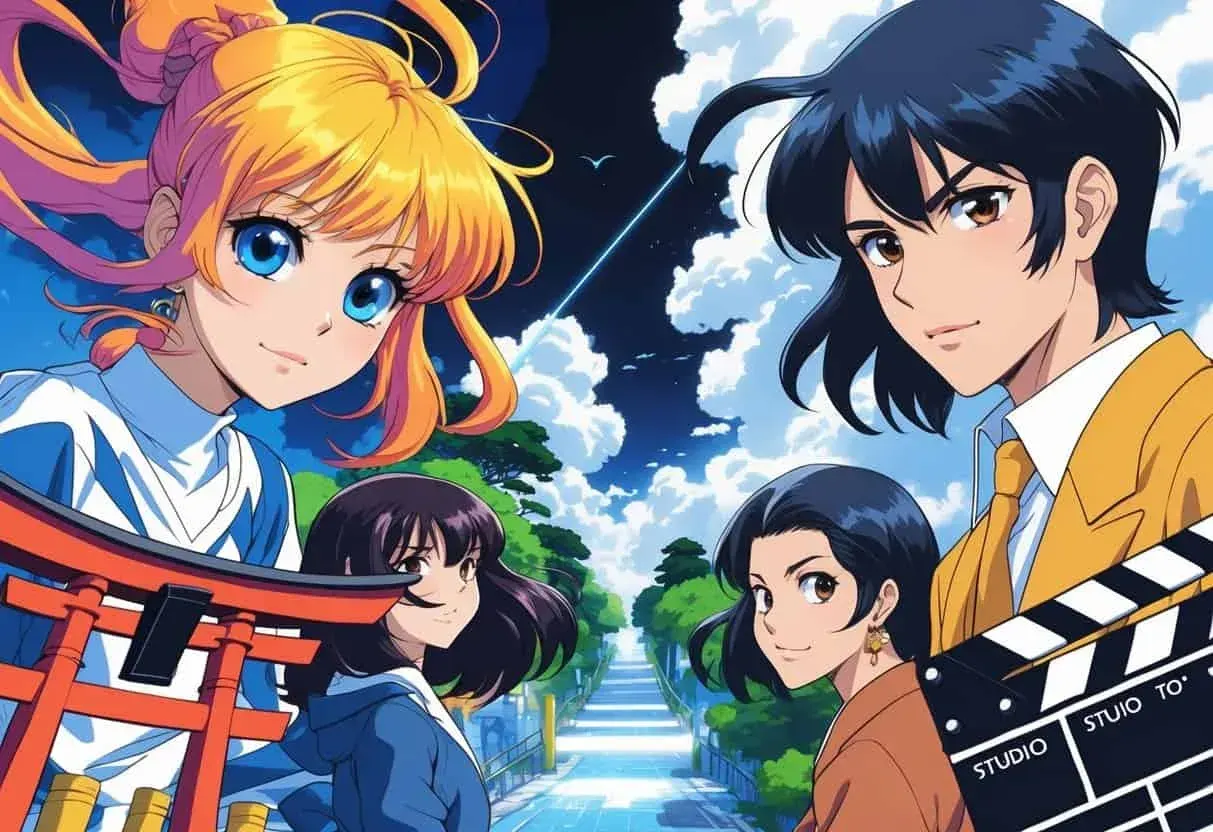
If you watch a modern Western action series, you might catch a burst of speed lines, a dramatic Dutch angle, or a character’s face contorting with exaggerated emotion—all techniques anime helped popularize outside Japan. This cross-pollination didn’t just make shows look cooler; it helped attract an audience that previously might have ignored Western animation altogether. Suddenly, the line between “cartoon” and “anime” started to blur, and a new generation of artists grew up drawing from both traditions.
Key Takeaways
- Anime introduced richer visual language—detailed character designs, painterly backgrounds, and dynamic camera work—to Western productions.
- Western storytelling moved from isolated, episodic gags to serialized arcs with emotional weight, a direct echo of anime’s long-form narratives.
- The blending of anime aesthetics with Western sensibilities expanded the demographic reach of animation, pulling in older viewers and diverse communities.
- A vibrant fan culture—conventions, cosplay, and online communities—has amplified the exchange, turning anime influence into a permanent fixture of global pop culture.
Foundations of Anime and Western Animation
To appreciate how anime reshaped Western styles, it helps to look at where each tradition began. Japanese and Western animation grew out of noticeably different cultural soil. One arose from the pages of manga and a hunger for cinematic storytelling, while the other emerged from vaudeville, comic strips, and a push for technical perfection in motion. Understanding these roots clarifies why the two approaches were so distinct—and why the crossover has been so powerful for both sides.
Origins of Anime and Manga
Anime’s DNA is tightly wound with manga, the vast universe of Japanese comics that serialized everything from children’s adventures to dense adult dramas. Osamu Tezuka, often called the godfather of manga, set the template in the 1960s with Astro Boy (Tetsuwan Atomu). His work introduced a visual language that balanced simple, expressive character designs with surprisingly mature thematic content. Tezuka didn’t work in a vacuum—he admired early Disney shorts and the storytelling economy of American comics—but he steered Japanese animation toward something entirely its own.
What emerged was an industry that treated animation as a legitimate vehicle for any genre: science fiction epics like Gundam, historical dramas, romantic comedies, and psychological thrillers. The art style could be lush and realistic or sharply stylized, but it almost always emphasized a strong emotional core. This foundation—animation as a serious storyteller—paved the way for later Western creators to see the medium differently. They started to realize that a cartoon character could cry, rage, and grow up over the span of a series, not just reset at the end of an episode.
Early Western Animation Influences
Western animation’s own roots stretch back to the early 20th century, when figures like Walt Disney and the Fleischer brothers turned the moving image into a playground of personality. By the 1920s and 1930s, characters like Mickey Mouse, Betty Boop, and Popeye were worldwide celebrities. Disney’s Snow White and the Seven Dwarfs (1937) proved that a feature-length animated film could rival live-action in terms of artistry and audience investment, establishing an exacting standard for smooth, full animation.
In those early decades, the emphasis was squarely on entertainment: short gags, musical numbers, and slapstick humor. Even full features like Pinocchio or Bambi, while emotionally potent, were packaged as family spectacles. Japanese animators, Tezuka included, absorbed these lessons about fluid motion and expressive design, but they layered on something Western studios hadn’t yet fully embraced: the notion that animation could carry a long-form, serialized narrative with true dramatic stakes. That difference in ambition would later boomerang back across the Pacific, as Western creators recognized the storytelling possibilities they’d been leaving on the table.
Visual Styles and Artistic Techniques
When you see a Western cartoon that feels just a little bit different—more cinematic, more emotive, more stylized—there’s a good chance it’s borrowing from the anime playbook. The exchange of visual techniques has been a two-way street, but the flow from east to west intensified dramatically in the 1990s and early 2000s, when shows like Sailor Moon and Dragon Ball Z hit North American television. Artists who grew up watching those series started applying anime’s aesthetic tricks to their own work, gradually altering what mainstream Western animation could look like.
Adoption of Anime Aesthetics
The most obvious borrowings are visual. Anime’s use of large, luminous eyes to telegraph emotion has become a recognizable shorthand even in Western character designs, particularly in shows that target a slightly older demographic. Beyond eyes, the color palettes in many Western productions have grown bolder and more contrast-heavy, a nod to anime’s love of vibrant shadows and glowing highlights. Animanga influence seeps through in clean linework, chunky silhouettes, and a willingness to let a character’s expression stretch to theatrical extremes.
There’s also the matter of action choreography. Anime introduced a grammar of motion that relies on speed lines, dramatic freeze frames, and exaggerated perspective shifts to amplify impact. Western shows like Teen Titans and Rise of the Teenage Mutant Ninja Turtles openly deploy these techniques, creating fight sequences that feel closer to a shonen battle arc than to a traditional American cartoon brawl. Even ambient moments—a character walking home against a sunset, a slow pan across a detailed background—often carry an anime-informed sense of atmosphere, where the environment itself describes the character’s internal state.
Animation Technology and Production
Anime studios have long relied on limited animation to manage budgets while still creating dramatic impact. The approach prioritizes key poses and emotionally resonant frames rather than the smooth fluidity prized by classic Disney. In limited animation, a character might hold a static expression while the camera drifts or a background element cycles—an economy of motion that, when done well, feels intentional and moody. Western studios, particularly those producing action-heavy or serialized shows, have adopted similar strategies, learning that you don’t need 24 drawings per second to land an emotional beat.
Digital tools further blurred the line. Compositing software, originally used in anime to layer glows, shadows, and particle effects, now sits in the toolkit of Western productions. This tech allows teams to blend 2D characters with 3D environments, or to apply hand-drawn textures over CG rigs, all while maintaining a cohesive visual identity. The resulting hybrid—seen in projects from Netflix’s Castlevania to Cartoon Network’s Steven Universe—feels simultaneously modern and deeply indebted to anime’s visual culture. It’s a technical language that Western animators have learned to speak fluently, often accenting it with their own traditions of squash-and-stretch exaggeration.
Narrative Themes and Storytelling
If anime’s visual impact was a spark, its approach to storytelling was a sustained fire. Japanese animation historically didn’t shy away from serialized plots, complex character arcs, and themes that touched on mortality, identity, and existential dread. Western TV animation, for much of the 20th century, was built on the opposite principle: episodes had to be self-contained, characters rarely changed in any permanent way, and anything too heavy was usually softened by a joke. Anime offered a different model—and Western creators noticed.
Integrating Anime Storytelling in the West
The shift became visible in the late 1990s and early 2000s, as Western series began to experiment with ongoing narratives. Shows like Avatar: The Last Airbender wore the anime influence openly: a young protagonist on a quest, an ensemble cast with evolving relationships, and a storyline that unfolded across seasons without a hard reset button. That kind of structure had been standard in anime for decades—think of Naruto’s multi-episode battles and One Piece’s sprawling worldbuilding—but it was revolutionary for a Western action cartoon.
Slice-of-life storytelling, another anime staple, also began to appear in Western contexts. Episodes that simply followed characters through an ordinary day, layered with quiet emotional growth, became more common. Western writers started borrowing anime’s deliberate pacing, where a moment of silence or a lingering shot could convey more than a line of dialogue. This freed animation from the expectation that it must always be frantic or joke-dense, opening a path for series that trusted young audiences to sit with a feeling.
Big, multiseason arcs and morally ambiguous characters are now so embedded in Western animation that it’s easy to forget how recent the shift is. Anime showed that cartoons could explore friendship, sacrifice, loss, and self-discovery without losing their younger viewers. That lesson has helped produce a generation of Western shows—from Adventure Time to The Owl House—that treat character continuity as essential, not optional.
Influence of Specific Series and Characters
Certain anime titles have acted like narrative blueprints. Sailor Moon blended magical-girl action with an emphasis on emotional support among teammates, a formula echoed in Western shows like Winx Club and Star vs. The Forces of Evil. The sprawling shonen epics—Dragon Ball, Naruto, One Piece—normalized the idea that a cartoon hero could train, fail, and grow over hundreds of episodes, and Western series like Steven Universe and The Dragon Prince carry that DNA.
On the darker end of the spectrum, landmark films like Akira and Ghost in the Shell demonstrated that animation could plunge into cyberpunk dystopias, philosophical quandaries, and visceral body horror. Their impact rippled into Western adult animation and even live-action cinema, influencing the visual and thematic boldness of projects like The Animatrix and Love, Death & Robots. The character archetypes born in anime—the reluctant hero, the tsundere, the wise mentor with a hidden past—now surface routinely in Western writing rooms, often adapted to fit local sensibilities but still carrying the original emotional charge.
And then there’s Pokémon, a cultural juggernaut that proved a story could be simultaneously goofy and high-stakes, balancing episodic adventure with a long-term goal. Its influence appears wherever Western shows combine collectible monsters, friendship, and a sense of journey. By absorbing these specific narrative flavors, Western animation expanded its tonal range and gave creators permission to be earnest, weird, and serialized all at once.
Cultural Exchange and Community Impact
The influence of anime on Western animation isn’t just an industry phenomenon; it’s a community-driven movement. Fan culture has acted as a bridge, pushing niche obsessions into the mainstream and creating a feedback loop that encourages studios to keep blending styles. Conventions, online forums, and the rise of streaming have all accelerated the exchange, making anime a reference point that Western artists share with their audiences in real time.
Fandom, Conventions, and Otaku Culture
Walk through any major North American anime convention and you’ll see cosplayers dressed as both My Hero Academia characters and Western-inspired designs. These gatherings are where animanga culture solidifies into something tangible: panels with voice actors, artist alleys brimming with fan comics, and screenings of obscure titles that inspire the next wave of creators. The term otaku, originally a Japanese descriptor for deeply passionate (sometimes obsessive) fans, has taken root globally, describing a community that lives and breathes animation from both sides of the Pacific.
Online spaces amplify this bond. Platforms like Tumblr, Reddit, and TikTok overflow with fan art that mash up anime styles with Western cartoons, while casual viewers discover series through shared clips and recommendation threads. This ecosystem doesn’t just consume content; it actively shapes it. Western animators scroll through the same feeds, absorbing what fans respond to—whether that’s a specific eye shape, a combat stance, or a narrative beat—and then weaving it into their professional work.
Growth of Anime Influence in North America
Anime’s journey in North America went from late-night cable oddity to a cornerstone of pop culture. In the 1990s, blocks like Toonami introduced a generation to Dragon Ball Z, Sailor Moon, and Gundam Wing. These weren’t just shows; they were formative experiences that taught young viewers a different storytelling rhythm. By the time that generation entered animation schools and studios, they carried anime’s sensibilities with them.
Streaming services erased the last barriers of access. A viewer today can jump from a Disney Channel cartoon to a Studio Ghibli film, then to a gritty anime thriller, all in one evening. That seamless exposure has normalized the aesthetic blend. Western series like The Boondocks and Castlevania explicitly cite anime as a visual and tonal touchstone, while even mainstream superhero cartoons borrow heavily from anime’s action choreography. The result is a visual culture where influence flows in multiple directions, and labeling a show as purely “Western” or “anime” feels increasingly beside the point.
The otaku community continues to swell, and with it, the appetite for animation that defies easy categorization. Studios are paying attention. Netflix, HBO Max, and Disney+ all invest in anime-inspired projects, and Western creators who grew up drawing fan art of Naruto or Evangelion are now in charge of their own shows. The boundaries that once separated Japanese and Western animation have become porous, and what’s emerging is a global visual language that respects the roots of both traditions while constantly pushing into fresh territory.