Table of Contents
War leaves deep scars, but for those who survive, the psychological burden can be heavier than any physical wound. Anime offers a uniquely intimate lens into survivor’s guilt, exploring how characters in war-torn worlds wrestle with questions of worthiness, memory, and the moral weight of outliving others. Unlike live-action media, hand-drawn animation can bend reality, using color, silence, and fragmented storytelling to mirror the fractured inner worlds of its characters. This article unpacks the narrative techniques and psychological depth anime employs to bring survivor’s guilt to life, examining iconic series, character archetypes, and the cultural ripple effects that extend far beyond the screen.
The Psychology of Survivor’s Guilt in Anime Landscapes
Understanding Survivor’s Guilt: A Psychological Foundation
Survivor’s guilt is defined by mental health experts as a condition in which a person believes they have done something wrong by surviving a traumatic event when others did not. According to the American Psychological Association, it often manifests alongside PTSD, anxiety, and depression. Anime translates this clinical profile into visceral experience. Characters might describe a suffocating sense of having stolen life, replaying final moments of fallen comrades in obsessive mental loops. The guilt is rarely a one-note emotion; it intertwines with self-loathing, rage at an unfair world, and a desperate need to assign meaning to the loss.
Why War-Torn Settings Magnify the Condition
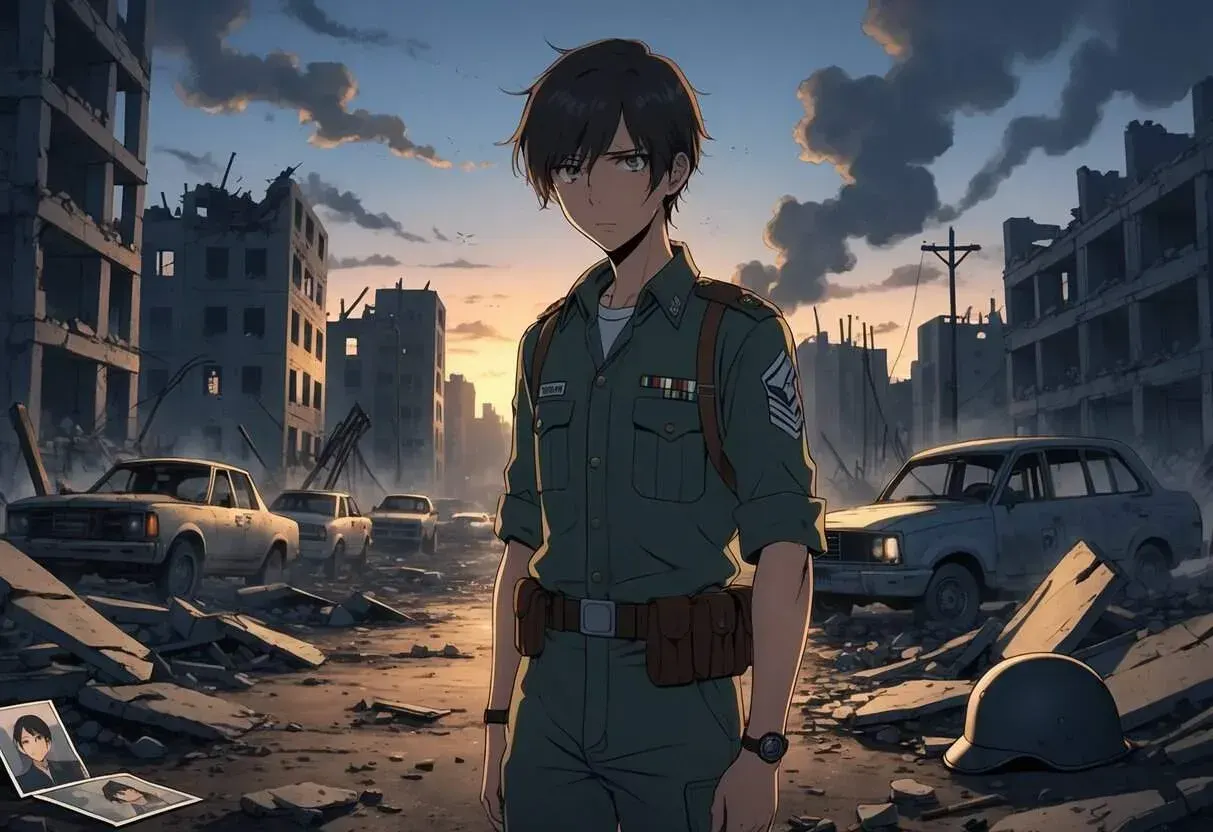
War strips away normalcy and creates circumstances where survival often comes at a cost—abandoning a wounded friend, failing to protect a sibling during an air raid, or being the sole survivor of a platoon. In a civilian setting, survivor’s guilt might follow a car accident; in war, the scale is multiplied by constant exposure to death and moral compromise. Anime leverages this to show how characters internalize systemic violence. The destroyed landscapes, ration lines, and pervasive fear are not just backdrops but active participants in the characters’ downward spirals. The trauma is never just personal; it’s woven into the fabric of their crumbling society.
Distinguishing Survivor’s Guilt from Moral Injury and War Guilt
It’s crucial to differentiate the branches of war-related guilt that anime so often depicts. Survivor’s guilt is centered on the question “Why did I live?” while moral injury reflects a deep sense of having violated one’s core values—for example, killing a child soldier or following orders that led to a massacre. War guilt, broader still, can involve a soldier’s collective shame for their nation’s actions. Anime excels at layering these together. A single character might simultaneously grapple with being the last one alive (survivor’s guilt), having executed prisoners (moral injury), and serving a regime that committed atrocities (war guilt).
This complexity creates characters who feel broken in multiple dimensions, giving the audience a more authentic window into post-conflict psychology.
| Guilt Type | Core Question | Anime Example |
|---|---|---|
| Survivor’s Guilt | "Why did I survive?" | A lone soldier emerging from a bunker after an artillery strike. |
| Moral Injury | "What have I become?" | A pilot who bombed a civilian shelter under orders. |
| War Guilt | "What have we done?" | A former imperial officer haunted by national wartime atrocities. |
Mechanisms of Anime Storytelling: How Visuals and Narrative Convey Trauma
Symbolism, Color, and Visual Metaphors
Anime’s ability to externalize internal states is its greatest asset in exploring survivor’s guilt. Directors use desaturated palettes to depict a character’s emotional deadening—the world literally leeches of color as hope fades. In sharp contrast, a sudden splash of red may represent not just blood but the inescapable memory of a fatal moment. Flower petals, falling rain, and crumbling buildings often double as metaphors for fragile life. For instance, a scene where a survivor stands in a field of flowers that rapidly wilt under a black sun can convey the perversion of innocence and the sense that their continued existence is an unnatural wrong.
These visual cues bypass dialogue, hitting the viewer’s subconscious directly.
Non-Linear Storytelling and the Weight of Flashbacks
War trauma doesn’t follow a tidy timeline, and neither do many anime that tackle survivor’s guilt. Fragmented narratives, sudden flashbacks, and time loops mirror the intrusive memories that plague survivors. A character might be mid-conversation before the scene dissolves into a chaotic battle, the audio drowning in screams before snapping back to a silent room. This technique forces viewers into the character’s disorienting present, where the past is never truly past. By refusing a clean before-and-after structure, anime shows that survivor’s guilt is an ongoing, circular trap—a mental war continuing long after the physical one has ended.
Sound, Voice Acting, and The Power of Silence
The auditory landscape is equally deliberate. A sudden, ringing silence after an explosion can evoke the shock and dissociation that follow near-death experiences. Veteran voice actors often deliver lines in a hollow, breathy tone that suggests exhaustion beyond tears. Soundtracks that shift from orchestral crescendos to minimalist piano notes mirror the swing between panic and numbed despair. Even ambient noise—distant shelling, a ticking clock, the slow drip of water—becomes a psychological pressure valve.
This sonic layering ensures that survivor’s guilt isn’t just described; it’s felt in the gut.
Key Anime Series That Masterfully Depict Survivor’s Guilt
"Grave of the Fireflies": The Civilian Perspective on Irreparable Loss
Studio Ghibli’s Grave of the Fireflies stands as perhaps the most devastating portrayal of war’s collateral damage. The story follows teenage Seita and his young sister Setsuko after the firebombing of Kobe during World War II. While both children are victims, Seita’s arc is drenched in survivor’s guilt. He blames himself for Setsuko’s gradual starvation, for his pride that led them away from a cruel aunt, and ultimately for failing to protect the one person he lived for. The anime makes no space for catharsis; Seita’s guilt is total and eternal, underscored by the film’s framing as a ghost story.
The firefly motif—brief, beautiful, and extinguished—serves as a crushing visual metaphor for the fragility that haunts him. For more context on historical anime trauma, BBC Culture’s analysis explores its lasting emotional impact.
"Attack on Titan": The Burden of Being the Last One Standing
While known for its colossal action sequences, Attack on Titan is a dense examination of survivor’s guilt as a generational curse. Eren Yeager’s childhood is defined by watching his mother devoured by a Titan, and that primal guilt—why was I saved? what if I had been stronger?—fuels his destructive trajectory. But the theme extends to nearly every major character. Reiner Braun’s split psyche fractures under the guilt of surviving when comrades didn’t, and his desperate search for a noble death becomes a defining character trait. The series relentlessly forces its cast to ask how much death a survivor can cause before their own life becomes unforgivable, effectively blurring the line between victim and perpetrator.
The narrative’s refusal to offer easy redemption makes it a landmark in war psychology fiction.
"Violet Evergarden": Piecing Together a Soldier’s Soul
At first glance a story about a ghostwriter, Violet Evergarden is fundamentally about a child soldier’s reentry into society after losing both her arms and the commanding officer she loved. Violet’s survivor’s guilt is tightly bound to her misunderstanding of the phrase “I love you,” last spoken to her by Major Gilbert before he presumably died saving her. She internalizes her survival as a failure to be a tool; if she had been better, he would have lived. The series uses her prosthetic hands and letter-writing work as metaphors for rebuilding identity and communication. Each client’s story of loss reflects a fragment of her own, and the meticulous, almost painterly animation contrasts with the violent memories she struggles to process.
The show is a quiet, profound study of how guilt can render a person unable to accept their own right to happiness.
"86 Eighty-Six": The Guilt of Command and the Dehumanized War
In 86 Eighty-Six, the Republic of San Magnolia wages a drone war while pretending its casualties are zero. In reality, the “drones” are piloted by the oppressed 86—a minority forced to fight and die. Shin, the protagonist, has earned the grim title “Reaper” because he alone survives every mission, forced to carry the fragments of his fallen comrades’ memories. His survivor’s guilt is compounded by the systemic racism that considers his people disposable. The series brilliantly contrasts Shin’s internal deadness with the naïve guilt of Lena, a handler on the outside who must confront her complicity in sending young people to their deaths.
Through their parallel journeys, the anime examines how bureaucratic distance and technological mediation can mask genocide, and how those who survive such a machine are left carrying a collective grief that words can barely articulate.
"Now and Then, Here and There": Innocence Executed in a Child Soldier’s Hell
This older but uncompromising series shoves its young protagonist Shu into a dystopian war where water is scarce and child soldiers are standard. The anime doesn’t flinch from showing how organizations strip children of their futures, forcing them to commit violence and watch peers die. Shu’s guilt is not born from malice but from the sheer shock of surviving when so many around him are broken or killed. The show’s brutal realism—handled without stylization—makes the guilt of witnessing death a wound in itself. It remains a difficult but necessary watch for anyone studying how anime depicts the weaponization of innocence and the corrosive guilt that follows those who outlive the slaughter.
Anime’s Cultural Impact and the Global Conversation on War Trauma
Shaping International Understanding of Psychological Wounds
Anime’s reach has brought survivor’s guilt into living rooms worldwide, often serving as a first introduction to the psychological aftermath of war for younger viewers. Because these shows center emotional truth over spectacle, they foster empathy for veterans and civilians alike. Academic discussions, such as those in Journal of War & Culture Studies, have noted how Japanese animation’s post-war narratives open a transcultural space for processing collective trauma. Fans engage not just with plot but with the ethical dilemmas; forums dissect whether a character’s guilt is justified and debate paths to healing. This active discourse transforms the viewing experience into a kind of communal processing, demystifying survivor’s guilt as a universal human crisis rather than a niche theme.
Comparisons with Western Media and Literature
American and European war films often focus on external heroism, brotherhood, and eventual triumph, even when acknowledging trauma. Anime, however, frequently allows the internal wound to remain unhealed, rejecting closure. When comparing Ken Burns’s documentary style to a series like Grave of the Fireflies, the difference is stark: one analyzes guilt through historical narration, the other embeds you so deeply into a character’s suffering that you feel complicit in their hope. The influence of epic literature like The Odyssey is present—the long, guilt-ridden journey home is a shared archetype—but anime infuses it with modern psychological realism and often denies the classic hero’s welcome. War guilt here isn’t a stage to overcome; it’s a permanent alteration of self.
This divergence has prompted Western creators to re-examine how they handle post-conflict narratives, pushing for more nuanced portrayals of moral complexity.
The Role of Fandom and Fan Discourse in Processing Trauma
Fan communities play a significant role in unpacking survivor’s guilt narratives. Through detailed analysis videos, fan art, and fan fiction, viewers explore what might have happened if a character had made a different choice, or imagine a future where they finally make peace. This participatory culture acts as a collective coping mechanism, allowing people to sit with uncomfortable emotions in a safe, fictional container. The global reach means that a survivor of a natural disaster in one country might find solace in an anime character’s struggle with guilt, creating cross-cultural bonds rooted in shared vulnerability. Anime’s unique ability to generate this kind of reflective fandom solidifies its position as a powerful tool for emotional education and healing.
The Enduring Resonance of Guilt and Memory
Survivor’s guilt in anime is never presented as a weakness to be cured but as a testament to the value placed on those who were lost. Through meticulous art direction, non-linear storytelling, and characters who ache with authenticity, the medium refuses to sand down the jagged edges of war’s psychological cost. It reminds us that every survivor carries a graveyard of names and faces, and that the battle to find self-worth after outliving others is a quiet, lifelong war of its own. By immersing us in these worlds, anime does more than entertain—it extends an invitation to understand the invisible wounds that shape countless lives, long after the guns fall silent.