Table of Contents
The Explosive Crossover of Anime and Sneaker Culture
Anime and sneakers have crashed into each other with the force of a shonen showdown, reshaping what sneaker culture means today. When an anime collaboration drops, it’s no longer just about the shoe—it’s about owning a piece of a narrative that millions of fans live and breathe. These partnerships pull entire fanbases into the sneaker world, turning limited-edition releases into instant grails. The collision of these two obsessive subcultures has birthed a new kind of streetwear language, one where colorways, character motifs, and storytelling are just as important as cushioning technology or silhouette hype.
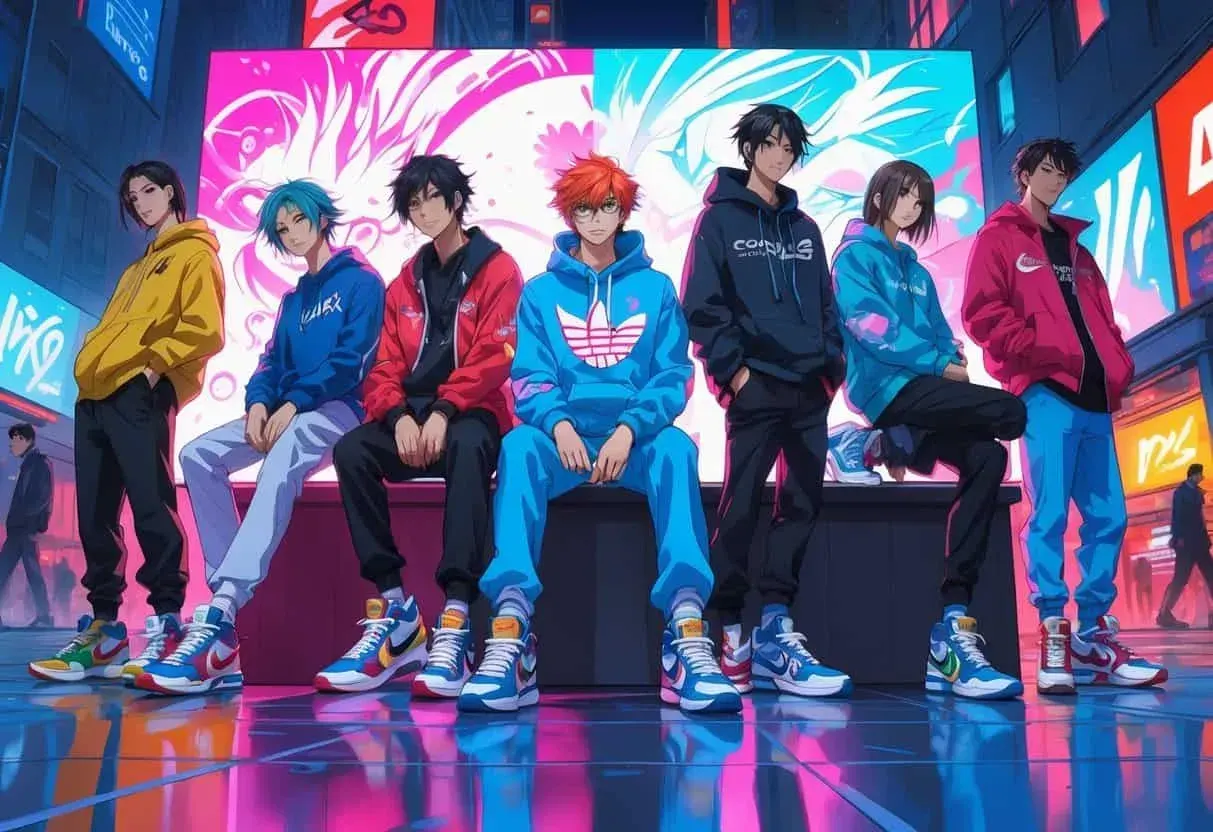
The magic lies in authenticity. Anime-inspired kicks don’t just slap a logo on a generic model; they weave the very DNA of a series into the design. From the fiery orange of Son Goku’s gi to the Survey Corps emblem etched on a heel, each pair tells a story that diehard fans recognize instantly. That emotional hook converts casual viewers into collectors, and collectors into lifelong brand loyalists.
The Unstoppable Rise of Anime in Sneaker Culture
Historical Roots: From Harajuku to Global Runways
Anime’s influence on fashion predates the internet hype cycle. As early as the 1980s, Japanese animation seeped into the visual lexicon of international style through underground tape trading and late-night broadcasts. In Tokyo’s Harajuku district, kids mixed Akira and Sailor Moon references with American sportswear, creating a hybrid aesthetic that would eventually bounce back to the West. Japanese brands like A Bathing Ape and NEIGHBORHOOD wove anime graphics into their tees and hoodies, planting seeds that major sneaker labels would harvest decades later.
By the 1990s, the cult of anime had reached critical mass outside Japan. Sneaker boutiques in New York and London began importing Japanese-exclusive collaborations that featured mecha and manga art. These early drops were rare, pricey, and deeply coveted—setting the template for the hunger-driven model we see today.
The Numbers Don’t Lie: Anime’s Market Boom
The anime market has transformed from a niche interest into a global economic force. According to global anime industry statistics, the sector’s revenue exceeded $28 billion in 2023, fueled by streaming platforms, merchandise sales, and international licensing. With a fanbase that spans generations and geographies, the demand for products that reflect anime identity has skyrocketed. Sneakers became the perfect canvas—wearable, collectible, and endlessly customizable.
Brands like adidas, Nike, and Puma have capitalized on this surge. They track not just box-office numbers but also social media engagement around series like Demon Slayer and Jujutsu Kaisen, using that data to greenlight collabs that hit the market at peak cultural relevance. The result is a feedback loop: each successful drop feeds more anime hype, which in turn drives more sneaker releases.
Key Influences: Shonen, Manga, and Japanese Visual Language
Shonen anime—action-packed series aimed at young male demographics—dominates the sneaker crossover space. The bold primary colors, dynamic panel-like graphics, and larger-than-life characters of shows like Dragon Ball, Naruto, and One Piece translate effortlessly into striking shoe designs. Manga’s black-and-white line art also offers a versatile aesthetic, allowing designers to play with stark contrasts and halftone patterns that trap attention.
But the influence extends beyond shonen. Studio Ghibli’s painterly softness has inspired delicate pastel colorways on premium collabs, while the cyberpunk worlds of Ghost in the Shell and Akira have spawned metallic, futuristic sneaker shapes. This range proves that anime isn’t a monolith—it’s a rich universe of visual codes that sneaker designers can remix endlessly.
Landmark Collaborations That Defined the Trend
From high-profile multi-shoe collections to single-model special editions, certain collabs have become benchmarks. They demonstrate how deeply an anime IP can alter a sneaker’s cultural weight—and how quickly those sneakers can rewrite the rules of hype.
PUMA, adidas, and Under Armour Step Into the Arena
adidas made waves in 2018 with its Dragon Ball Z collection, a seven-shoe lineup that paired each model with a character. The Yung-1 mirrored Frieza’s purple-and-white scheme, while the Deerupt channeled Son Goku’s orange and blue. The packaging featured manga panels, and the drop was staggered to mimic the show’s epic battles. The collection sold out almost immediately, cementing adidas as a pioneer in the anime sneaker space.
Not to be outdone, PUMA dove into One Piece with multiple capsule drops. The Luffy-inspired Suede and the Thousand Sunny-themed RS-X incorporated pirate motifs, wanted posters, and vibrant reds and blues. Puma also leveraged Naruto Shippuden with stealthier, more tactical designs on silhouettes like the Sky Modern. Under Armour took a different route, aligning with My Hero Academia to fuse performance tech with Plus Ultra energy. The Curry Flow 9 “United” colorway drew from Deku’s costume, while the Anatomix Spawn models featured bold splashes of color that mirrored the show’s hero-and-villain contrasts.
These releases appealed to both hoops fans and anime enthusiasts, proving that performance sneakers could have fandom soul.
Series That Keep Giving: Astro Boy, One Piece, and Attack on Titan
Astro Boy holds a special place as the godfather of anime sneaker collabs. Tezuka’s creation first appeared on sneakers in the early 2000s through collaborative releases with brands like Onitsuka Tiger and later with MSCHF’s viral Big Red Boots, which directly referenced the character’s iconic footwear. Those boots, launched in 2023, became a cultural meme and a commentary on cartoonish proportions—selling out despite a $350 price tag and an avalanche of online ridicule. The MSCHF Astro Boy boots demonstrated that absurdity itself can be a selling point when tied to a beloved icon.
One Piece collaborations keep surfacing because of the series’ never-ending adventure narrative. Vans dropped a vibrant collection in 2022 that included slip-ons embroidered with Chopper’s face and Sk8-His printed with the Straw Hat crew. Each box featured manga art, and the launch at Vans’ anime-themed pop-up drew crowds for blocks. Attack on Titan, meanwhile, favors darker, grittier palettes. The collaboration with Japanese sneaker brand ASICS reimagined the GEL-Kayano with Survey Corps insignias and leather textures that evoked the show’s worn military gear, proving that anime sneakers can be subtle and sophisticated.
The Anime Studio Effect and Convention Exclusives
Studios themselves are now active partners in the design process. Toei Animation and Shueisha have dedicated licensing teams that work with sneaker brands to ensure every stitch aligns with the source material. This close collaboration prevents the kind of lazy logo-slapping that fans reject. Instead, it yields sneakers that feel like official merchandise—faithful, detailed, and worthy of display alongside figurines and art books.
Fan conventions have become critical launch pads. At Anime Expo in Los Angeles and Comic-Con International, sneaker brands drop exclusive colorways, host panels with designers, and even set up AR experiences where attendees can “try on” virtual pairs. These events fuse the energy of a sneaker convention with the enthusiasm of a cosplay gathering, creating an atmosphere where hype compounds exponentially.
From Footwear to Full Apparel Lines
The most successful collabs treat sneakers as the anchor of a broader lifestyle collection. adidas’ Dragon Ball Z drop included tracksuits, tees, and hats. Under Armour’s My Hero Academia collections came with compression shirts and hoodies. Even the lesser-known collabs, like New Balance’s JoJo’s Bizarre Adventure capsule, delivered matching apparel that allowed fans to build head-to-toe anime fits. This holistic approach turns a single purchase into a gateway to an entire wardrobe, deepening the consumer’s relationship with both the anime and the brand.
How Anime Sneaker Drops Are Rewriting Consumer Behavior
Anime collaborations don’t just exist in a vacuum—they actively reshape how people discover, desire, and buy sneakers. The mechanics of hype, scarcity, and cross-media integration have evolved into a hyper-engineered science.
Viral Marketing and the TikTok Engine
TikTok and Instagram Reels have become the primary battleground for anime sneaker hype. A 15-second clip of a glowing unboxing or a well-styled on-foot shot can rack up millions of views in hours. Hashtags like #AnimeSneakers and #SneakerHeadAnime aggregate communities that share drop info, legit checks, and fit pics. Brands fuel this by partnering with micro-influencers who already occupy the intersection of anime fandom and streetwear. The organic nature of these posts often bypasses traditional ad filters, making the hype feel ground-up rather than corporate.
YouTube, Netflix, and the Screen-to-Street Pipeline
YouTube unboxers and sneaker reviewers provide the deep dives that enthusiasts crave. Detailed breakdowns of materials, sizing, and packaging quirks help fence-sitters make decisions. Meanwhile, Netflix’s massive anime library—featuring Demon Slayer, Jujutsu Kaisen, and Vinland Saga—introduces new fans to series that later fuel sneaker demand. When a viewer binges a season and falls for a character, that emotional connection spills into a willingness to drop $200 on shoes that carry that character’s essence.
Limited Editions, Pricing Psychology, and Resale Frenzy
Scarcity is the oxygen of anime sneaker drops. Brands deliberately cap production to a few thousand pairs, transforming the purchase into a competitive sport. The retail price often sits between $130 and $250, but the aftermarket can balloon values to $800 or more. This secondary market dynamic turns sneakers into speculative assets. Fans who manage to cop at retail feel like winners, while those who miss out become even more determined for the next drop.
| Factor | Impact on Consumer Behavior |
|---|---|
| Limited Production Runs | Generates urgency and a fear of missing out, pushing impulse buys |
| Anchoring to a Beloved IP | Pre-existing emotional attachment reduces price sensitivity |
| Social Media Amplification | Unboxing clips and styling videos normalize high demand |
| Resale Profit Potential | Attracts investors and flippers alongside genuine fans |
Data Analytics and the Boldest Design Choices
Brands now leverage advanced analytics to predict which anime IP will ignite. They scrape Reddit threads, track search volume spikes after new season announcements, and monitor sell-out times of related merchandise. This data-driven approach sometimes yields surprisingly offbeat choices. The most absurd-looking sneakers—like Puma’s fuzzy Monster Hunter collab or the bulbous Reebok Gundam Instapump Fury—often generate the loudest buzz. In the attention economy, a polarizing design can drive more clicks and conversations than a conventionally attractive one.
The key is that the design must still feel true to the anime’s spirit, even if it’s challenging to wear.
Expanding the Universe: Accessories, Luxury, and Lifestyle
Anime sneaker culture has grown beyond shoes. The same narrative power that sells limited-edition footwear now spills into everyday carry, luxury fashion, and experiential marketing.
When Backpacks and Instant Noodles Join the Party
Japanese brands don’t shy away from the unexpected. Nissin Cup Noodles has dropped limited-edition packaging featuring One Piece and Demon Slayer characters, sometimes bundled with mini sneaker keychains or discount codes for exclusive collabs. Eastpak and JanSport have released anime-print backpacks that match sneaker colorways, allowing fans to coordinate their carry with their kicks. It’s a lifestyle play: the goal is to surround the consumer with touchpoints that reinforce the anime-sneaker bond throughout the day.
Luxury Labels Embrace Anime Aesthetics
High fashion has taken note. Loewe’s Howl’s Moving Castle capsule in 2023 proved that anime could exist in the rarefied world of luxury leather goods. Calcifer-embossed sneakers, magical fire prints on bombers, and embroidered Castle motifs merged Ghibli whimsy with premium craftsmanship. Balenciaga, known for genre-bending designs, delved into cartoonish proportions reminiscent of anime filters, blending exaggerated shapes with vibrant palettes. Alexander McQueen has played with manga-inspired skull prints and armor-like soles that would not look out of place in a mecha anime.
These luxury entries elevate anime beyond geek culture and into high-art recognition. They also create new price tiers, with collab sneakers retailing from $700 to over $1,500, attracting a different kind of collector—one who values brand prestige alongside fandom.
Conventions, The Beam, and Immersive Digital Experiences
Anime conventions now rival trade shows as launch venues. Pop-up skate parks at Anime Expo featuring Gundam-wrapped halfpipes and exclusive diorama sneaker displays blur the line between retail and entertainment. Brands like to showcase entire “worlds” around their products.
The Beam, an emerging experiential platform, is pushing these boundaries further. By combining high-resolution LED displays with synchronized lighting, it creates immersive environments where fans can witness anime sneaker reveals in a theatrical setting. Imagine walking through a digital recreation of a Dragon Ball Z charging sequence while holographic versions of the sneakers float around you. Such experiments hint at a future where physical retail and digital spectacle fuse completely.
The Future of Anime-Infused Sneaker Culture
The marriage of anime and sneakers shows no signs of cooling. Upcoming collabs are rumored to include augmented reality features that let users summon character animations by scanning their shoes with a phone. Customization platforms may eventually allow fans to co-create designs using licensed manga art, turning each pair into a one-off collector’s item.
“You can’t talk about sneaker culture in 2025 without acknowledging the gravitational pull of anime. It’s the new nostalgia, the new art, and the new hype machine wrapped into one.” — Sneaker industry analyst
Sustainability is entering the conversation, too. As the hype cycle threatens to produce excess waste, some brands are exploring made-to-order anime editions or using recycled materials that still respect the IP. The challenge will be to preserve excitement while avoiding the pitfalls of overproduction.
Ultimately, anime collaborations have transformed sneakers from functional footwear into narrative objects. They connect people across languages and borders through shared stories, proving that the right pair of shoes can carry as much meaning as a favorite episode. As long as there are new anime to obsess over and blank silhouettes to decorate, this cultural fusion will keep evolving—one limited-edition box at a time.