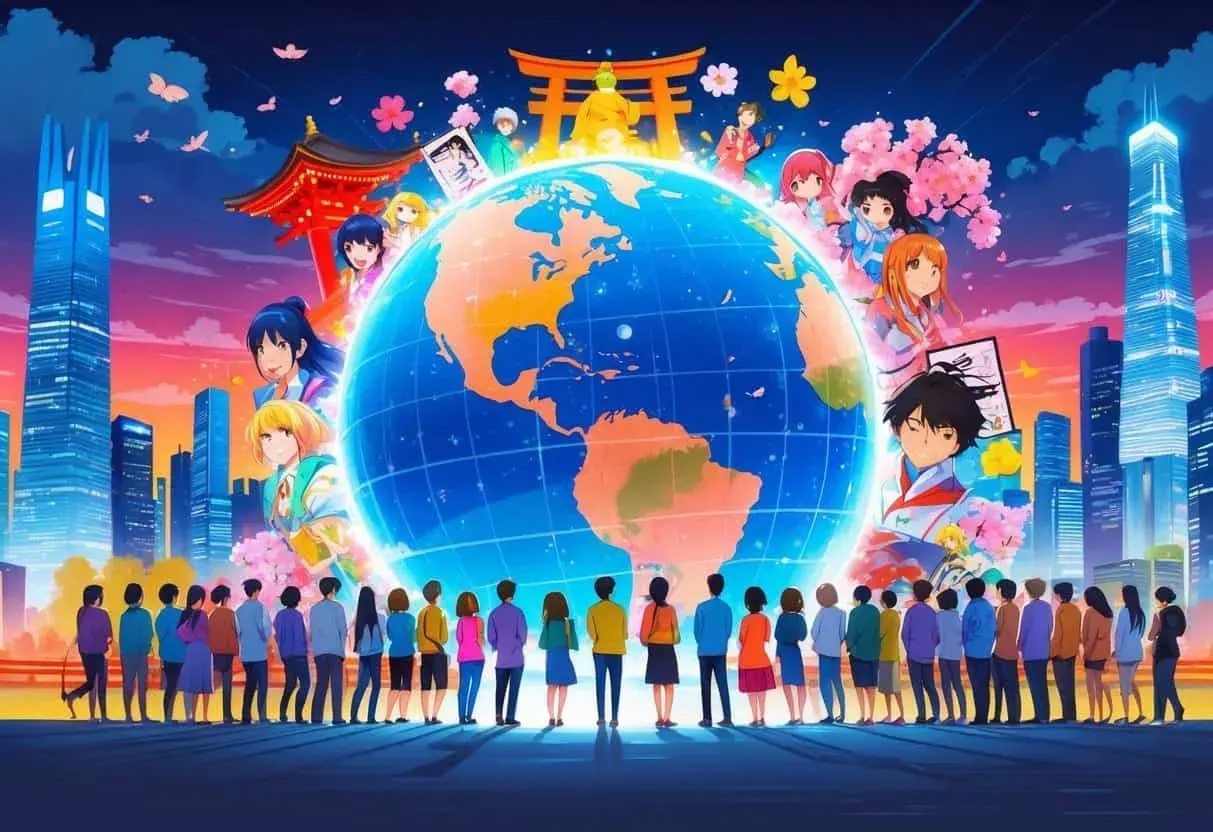
Table of Contents
The Foundations of Anime: From Niche Experiment to National Obsession
Anime’s journey begins not in the neon-lit studios of Tokyo, but in the silent, flickering frames of early 20th-century Japan. It was a time of artistic experimentation, where local creators absorbed Western animation techniques and fused them with distinctly Japanese sensibilities. The result was a medium that would, over decades, evolve into a cultural juggernaut—shaping national identity and eventually spilling across borders. Understanding this genesis isn’t just about tracing a timeline; it’s about seeing how economic forces, artistic rebellion, and sheer storytelling ambition created a new visual language.
Early Experiments and the Silent Era of Japanese Animation
The first known Japanese animations date back to 1917, with works like Namakura Gatana (The Dull Sword) and Dekobō Shingachō: Meian no Shippai. These were short, often silent films that relied on sharp visual gags and slapstick humor. Unlike their methodical Western counterparts, these pioneers—including Ōten Shimokawa, Jun'ichi Kōuchi, and Seitarō Kitayama—operated with shoestring budgets and primitive tools. They drew directly on film strips, used cutout animation, and even experimented with shadow puppets. The audience was small, and the industry was fragile, but a seed was planted: animation could be more than a novelty; it could carry cultural weight.
These early films often drew from traditional folklore, like the tale of Urashima Tarō, embedding Japanese storytelling into a new format.
The 1923 Great Kantō earthquake destroyed many early works, making historical reconstruction difficult. However, the animation that survived showed a clear trait: an emphasis on atmosphere and emotion over hyper-realism. This was a stark contrast to the slapstick-driven Disney shorts emerging in the U.S. By the 1930s, as talkies arrived, Japanese animators began creating propaganda films, such as Momotarō: Umi no Shinpei (Momotarō's Divine Sea Warriors) in 1945, which featured anthropomorphic animals in military roles. While politically charged, these projects forced technical leaps—longer runtimes, synchronized sound, and more complex character movements. They laid the groundwork for the resource-saving techniques later branded as "limited animation," where dynamic sound design and striking compositions compensated for fewer frames per second.
The Post-War Manga Boom and Its Symbiosis with Anime
After World War II, Japan was rebuilding, and entertainment became a source of escapism and hope. Manga—cheap, accessible, and wildly imaginative—exploded in popularity. This was the fertile soil from which anime would sprout again. Osamu Tezuka, a medical student turned artist, revolutionized manga with cinematic layouts, psychological depth, and sprawling narratives in works like Shin Takarajima (New Treasure Island) and later Tetsuwan Atomu (Astro Boy). Tezuka wasn’t just drawing comics; he was storyboarding animations on paper.
His influence created a feedback loop: successful manga could be adapted into anime, which in turn boosted manga sales, leading to more anime.
This symbiosis birthed the "media mix" strategy decades before it became an industry standard. Publishers like Kodansha and Shogakukan partnered with nascent studios, notably Toei Animation, which was founded in 1948 with the explicit goal of becoming the “Disney of the East.” Toei’s early color features, such as Hakujaden (The Tale of the White Serpent) in 1958, were lush, full-animation spectacles that drew from pan-Asian myths. But it was the shift to television that cemented anime’s place in everyday life. Weekly television series adapted from popular manga meant viewers could grow up with characters over years, forging deep emotional bonds.
The economics were brutal—tight schedules demanded smarter, not just harder, work—spawning the limited-animation style that became anime’s signature: held frames, talking heads, and dramatic freeze shots that focused on voice acting and narrative tension.
Pioneering Series That Redefined Global Television
Tezuka’s Astro Boy, which aired from 1963, was the first major anime television series. It wasn’t just a hit in Japan; its sale to NBC in the U.S. marked the first significant export of a Japanese animated series. The story of a robot boy fighting for justice in a world that feared him carried universal themes of xenophobia and identity, packaged in a way that children and adults could appreciate. The show’s success proved that anime could travel, even with extensive editing to fit American content standards. This set a precedent: works were often recut, rescored, and rewritten for overseas markets, a practice that was messy but opened doors.
In the late 1960s, Speed Racer (originally Mahha GoGoGo) brought high-octane action and a kinetic visual style to U.S. audiences. Its rapid editing, split-screen effects, and melodramatic twists were unlike anything Western animation offered. Then came the giant robot boom, spearheaded by Mobile Suit Gundam in 1979. Yoshiyuki Tomino’s saga rejected the simple "good vs. evil" robot trope. It introduced a war drama where characters died meaninglessly, politics were murky, and the mobile suits were mass-produced military hardware, not magical heroes.
Gundam bombed in its first run but was revived by a passionate fan base, eventually becoming a franchise worth billions. It demonstrated that anime’s commercial success could be driven by deep, often tragic storytelling that invited discussion long after the credits rolled.
Stylistic Evolution and the Language of Limited Animation
Anime’s visual vocabulary—large eyes, spiky hair, and exaggerated expressions—didn’t emerge from a single decision. Osamu Tezuka was heavily influenced by Disney’s Bambi and the expressive eyes of Betty Boop, adapting them to convey a wider emotional range in static drawings. Over time, this became codified: eyes functioned as windows to the soul in a medium where full-body motion was often limited. Color theory also played a role; bright, contrasting palettes could signal mood shifts, while soft watercolor backgrounds created a sense of nostalgia or dreaminess. Studios like Kyoto Animation and Ufotable later pushed digital compositing to blend 2D character animation with 3D camera movements, creating breathtaking sequences that felt fluid without betraying the hand-drawn aesthetic.
Narratively, anime broke from Western episodic formalism. Serialized arcs let plots stretch over dozens of episodes, allowing for novelistic complexity. A show like Legend of the Galactic Heroes could feature hundreds of named characters debating philosophy and governance for hours, while a slice-of-life series like Azumanga Daioh could derive humor simply from the minutiae of school life. This spectrum—from the cosmic to the mundane—meant there was no single anime genre, but rather a medium for all genres. The visual shorthand used to express inner turmoil (floating hearts, sweat drops, abstract backgrounds) became a common semantic code that transcended language, a tool that would prove critical when anime began its march across continents.
The Global Spread: Dubbing, VHS, and the Broadcast Revolution
The journey of anime from Japan to the rest of the world was not a smooth, linear path. It was a wave, punctuated by spikes of breakthrough hits, long periods of niche obscurity, and a crucial technological shift that turned a regional art form into a global lingua franca. The story involves pirate tapes, passionate fan entrepreneurs, and the eventual recognition that anime wasn't just for kids—it was a serious medium capable of telling any story imaginable.
First Waves and the Battleship Yamato Effect
In the 1970s, anime exports were often heavily sanitized and targeted at children—think Kimba the White Lion or Battle of the Planets (a heavily reworked Gatchaman). But in 1974, Space Battleship Yamato started a cultural shift within Japan that reverberated outward. When the English-dubbed version, Star Blazers, hit U.S. airwaves in 1979, it offered a serialized space opera where characters had inner lives, relationships, and faced real death. Fans, for the first time, formed proto-fan clubs, tracking episodes and demanding uncut versions. The Yamato phenomenon proved that anime's core appeal—its willingness to take its young audience seriously—could ignite fierce loyalty.
It also sparked a market for model kits and merchandise, a pattern that would underpin the economics of anime's global expansion.
The real turning point, however, was Akira in 1988. Katsuhiro Otomo’s cyberpunk epic was a technical marvel—with over 160,000 animation cels, a meticulously detailed world, and a plot dense with sociopolitical allegory. When Akira appeared in Western art-house cinemas and VHS rental stores, it shattered perceptions. The film presented animation as a medium for adults, filled with visceral horror, philosophical darkness, and awe-inspiring destruction. Akira, alongside the cyberpunk classic Ghost in the Shell in 1995, directly influenced Western filmmakers like the Wachowskis (for The Matrix) and became a staple of university film courses.
It was a gateway drug for a generation of Western creators who would grow up internalizing anime’s visual syntax.
The Underground Economy of Fan Subs and VHS Trading
Before broadband, anime fandom in the West ran on physical media and community effort. In the 1980s and 1990s, fans in the U.S., Europe, and Latin America circulated raw Japanese tapes through mailing lists. Tech-savvy enthusiasts would apply subtitles using Amiga computers and genlock devices, producing "fan subs." This gray-market network was technically copyright infringement, but it was driven by a desire to experience anime in its original, uncensored form. Series like Ranma ½ and Captain Tsubasa (known as Oliver y Benji in Latin America) gained massive followings through these channels, long before official licensing.
The practice spread a deep, archival knowledge of anime genres, voice actors, and directors. It wasn't just about watching the latest show; it was about building a shared canon and a global community fluent in the medium’s tropes.
Conventions became the physical hub of this movement. Early events like Anime Expo (starting in 1992) or European cons were spaces where fan subs were traded, cosplay was born, and the first tentative relationships between Japanese studios and international distributors formed. The demand was clearly there, but the official industry was slow to adapt. When streaming eventually took over, it didn't invent the global audience—it legalized and monetized an ecosystem that had been building for two decades offline. On platforms like Crunchyroll, which started as an aggregator for fan content, millions now access the same shows that once required mailed VHS tapes and a close-knit circle of friends.
Cultural Resonance: Why Anime Speaks a Universal Language
Anime’s ability to connect with audiences in Brazil, France, India, or the United States goes beyond flashy fights. It lies in how it processes human experience. Anime often takes broad, archetypal conflicts—good versus evil, duty versus desire—and filters them through specific cultural lenses, yet the emotional core remains instantly recognizable. It’s a medium that finds comfort in ambiguity, where heroes fail and villains weep. This psychological maturity, blended with aesthetic beauty, creates a deeply immersive experience that static prose or live-action often struggles to replicate.
Identity, Isolation, and the Monsters Within
A recurring thread in anime is the exploration of fractured identity. From the psychic trauma of Neon Genesis Evangelion, where teenagers are forced to pilot grotesque mecha that are actually their mothers’ souls, to the body-horror transformations of Devilman Crybaby, anime externalizes internal battles. Shinji Ikari’s crippling depression and desire for absolution in Evangelion aren’t plot devices—they are the plot. This willingness to linger on psychological pain, rather than quickly resolving it, resonates with audiences worldwide who grow up in societies that often stigmatize mental health discussions. The 2019 film Demon Slayer: Mugen Train shattered box-office records globally, partly because its antagonist, Enmu, isn’t just a demon; he’s a manipulator of dreams who forces characters to confront the people they’ve lost—a universal meditation on grief.
The motif of the outsider—the ninja shunned by his village, the cursed sorcerer, the salaryman reincarnated into a slime—echoes the adolescent and millennial search for belonging. Series like My Hero Academia repackage it into a superhero context, asking what it means to be "quirkless" in a world where everyone is special. This thematic focus on otherness and resilience allows viewers to project their own anxieties onto fantastical frameworks, engaging with complex emotions in a safe, vivid space. The global popularity of the isekai genre, where protagonists are transported to alternate worlds, maps directly onto feelings of dissatisfaction with the mundane modern world and a longing for agency—a sentiment that crosses national borders with ease.
A Visual Esperanto and the Power of Ma
Anime’s visual language functions almost like a shared grammar. The sweat drop for embarrassment, the vein-pop for anger, the floating flower petals for a romantic interlude—these signs are intuitive, requiring no translation. But beyond the symbols, anime employs the Japanese aesthetic principle of ma, or negative space. Films like Hayao Miyazaki’s Spirited Away, which you can explore further on the Studio Ghibli official site, are filled with quiet scenes—a train gliding across a still ocean, wind rustling through grass—where nothing "plot-driven" happens. These moments invite contemplation, a sharp contrast to the hyperkinetic pacing of many Western animations.
They treat silence and stillness as narrative tools, trusting the audience to absorb atmosphere rather than being fed constant stimulation. This meditative quality gives anime a literary depth, making rewatches rewarding.
Furthermore, anime frequently blends the sacred and the secular. Shinto and Buddhist concepts—spirits inhabiting objects, cyclical reincarnation, the impermanence of beauty—saturate stories without being preachy. In Mushishi, nature is a mysterious, amoral force, teeming with invisible lifeforms that can help or harm humans. This animistic worldview appeals particularly to environmentalists and those disenchanted with solely rationalist paradigms. By weaving spirituality into science fiction (as seen in Serial Experiments Lain, which grappled with the wired and the divine) or horror, anime offers a way to discuss ecology, metaphysics, and loneliness that feels holistic, not didactic—a powerful tonic in an era of global disconnection.
The Business of Dreams: Streaming, Late-Night Economics, and Global Capital
Anime is an artistic medium, but it is also a notoriously brutal industry built on passion and razor-thin margins. Its globalization was accelerated not just by technology, but by a fundamental restructuring of how anime is funded. Understanding the money flow is key to understanding why certain shows get made and why the industry is simultaneously booming and in crisis.
The Production Committee Model and Risk Distribution
Since the 1990s, virtually all television anime has been produced under a "production committee" system. A consortium of companies—a manga publisher, a music label, a toy manufacturer, a broadcaster, and a streaming service—pools money to fund a show, sharing risk and revenue. This model allows for ambitious, niche projects; a show like Odd Taxi, a dialogue-heavy mystery with a walrus protagonist, could get funded because it promotes a radio drama and a music album alongside the Blu-ray sales. However, it also means that animation studios themselves often work as contractors, receiving a fixed fee with little participation in the blockbuster profits. The global success of a film like Jujutsu Kaisen 0 enriches the committee members more than the low-wage animators responsible for its breathtaking fights.
The push for global accessibility has altered committee calculus. International platforms now contribute huge upfront licensing fees. According to industry reports, revenue from overseas has surpassed domestic revenue for the Japanese anime industry in recent years. This statistical shift, detailed in analyses by the Association of Japanese Animations, means that the tastes of a viewer in Jakarta or São Paulo can directly influence what projects get greenlit. The pressure for "four-quadrant" hits—shows appealing to young, old, male, female—is growing, sometimes clashing with the creative freedom that produced the weird, untamed classics of the past.
Yet, it also funds the diversification: we now see more anime explicitly set in non-Japanese locales, featuring non-Japanese casts, because the audience base demands it.
From Niche Streams to Mainstream Billboards
Netflix’s decision to invest heavily in "Netflix Original Anime" marked a seismic shift. By releasing entire seasons simultaneously and dubbing them into dozens of languages, the platform removed the wait and the language barrier. Services like Crunchyroll, now a subsidiary of Sony, have aggressively expanded into India and the Middle East, introducing free, ad-supported tiers to capture the mobile-first generation. This ubiquity has turned anime into mainstream pop culture. You’ll find an anime film in a multiplex in Mexico City just as easily as in Shibuya.
Social media platforms amplify this further: a viral clip of a fight scene from One Piece or a dance ending from an anime can achieve more marketing penetration than a traditional trailer.
The merchandise ecosystem metabolizes this attention into physical identity. Uniqlo’s UT graphic T-shirt line regularly features collaborations with series like Chainsaw Man and Attack on Titan, selling millions of units across Europe and Asia. High-end fashion houses, including Loewe and Gucci, have launched anime-adjacent campaigns. The message is clear: anime is no longer a subculture. It is a visual brand that signals a particular kind of aesthetic sensibility—one that values intricate design, emotional depth, and a touch of rebellious cool.
This normalization feeds back into the industry, attracting advertisers and talent who would previously have dismissed animation as a juvenile enterprise.
Future Horizons: Technology, Authenticity, and the Coming Wave
As anime enters its second century of existence, the question is no longer about recognition—it’s about sustainability and evolution. The medium faces a strange paradox: its hand-crafted, idiosyncratic soul is what makes it valuable, but the economic and technological forces demanding efficiency and scale often threaten that soul. The next decade will be defined by collisions between tradition and innovation, and by who gets to tell which stories.
Generative AI and the Crisis of the Animator
Anime production involves repetitive, labor-intensive tasks—in-betweening, coloring, background generation—that are theoretically ripe for automation. Japanese studios like Production I.G are experimenting with generative AI to draw background assets, while corridor tools for interpolating frames are improving. The promise is lighter workloads and more time for senior animators to focus on key frames and creative direction. The peril is twofold: a potential degradation of the expressive, "wonky" charm that human imperfection brings, and a direct threat to the already poverty-level wages of junior animators who rely on in-between work to learn their craft. The global fan community, fiercely protective of artistic integrity, closely watches developments.
A future where anime looks algorithmically "perfect" but feels sterile is a genuine anxiety, and unions seeking fairer conditions have pointed to industry practices documented by outlets like Animated Views.
Interactive Experiences and the Metaverse
Anime is no longer a passive, screen-contained experience. The rise of VTubers—virtual YouTubers who perform as anime-styled avatars using motion capture—has created a new kind of real-time, interactive anime celebrity. Companies like Hololive Production have huge global followings, blurring the line between character and performer. Meanwhile, virtual reality concerts featuring anime vocaloids like Hatsune Miku or immersive Attack on Titan VR experiences are testing the waters. The "metaverse" push, though currently fraught with corporate hype, finds a natural blueprint in anime’s established worlds.
Fans don't just want to watch the Hidden Leaf Village; they want to walk through it. If the technology matures, expect deep, persistent online worlds licensed from Shonen Jump properties, creating an ongoing cycle where the narrative never ends—it just shifts platforms.
Diversifying the Production Landscape
For decades, "anime" was something exclusively made in Japan for a Japanese audience that the world happened to peek at. That definition is crumbling. Productions like Cyberpunk: Edgerunners, a Polish-Japanese collaboration based on an American tabletop game, and Arcane, a French-made series heavily influenced by anime aesthetics, are challenging the geographic and cultural boundaries of the term. We are entering an era of "anime-style" as a global production standard, independent of its country of origin. At the same time, non-Japanese creators are being invited into the core Japanese industry: animators from Europe and Southeast Asia are working remotely on top-tier productions, bringing different art-school sensibilities to classic designs.
This exchange promises a future rich with diverse visual voices, but it also raises the central tension: will the globalization that anime worked so hard to achieve dilute the very cultural specificity that made it compelling in the first place?
The answer likely lies in a constant push-pull. Anime’s core appeal has always been its ability to absorb external influences and remake them into something aesthetically and emotionally distinct. The next chapter of this phenomenon will be written by millions of fans and creators across the globe, all participating in a conversation that started with a few hand-drawn frames in a small Tokyo studio over a century ago. The medium's ability to adapt while retaining a fiercely loyal community ensures that, for all the changes in technology and distribution, the heart of anime—the blend of stunning imagery and raw human feeling—will continue to pulse worldwide. For a deeper dive into the medium's economic trajectory, reports from Parrot Analytics often detail the surging demand for anime content in emerging markets.