Table of Contents
The Galactic Tyrant Versus the Bio-Android: A Tale of Two Legacies
Frieza and Cell stand as two of the most iconic antagonists in Dragon Ball history, but their contributions to the franchise’s enduring legacy are far from equal. Frieza’s galaxy-spanning reign of terror, his deep-rooted connection to the Saiyan narrative, and his continuous resurgence in modern Dragon Ball media cement him as the villain who left the deeper dent. Cell, while a terrifying creation in his own right, operates within a more contained story and lacks the same historical and cultural reverberation. The following breakdown dissects their origins, battles, abilities, and the lasting echoes each has left behind.
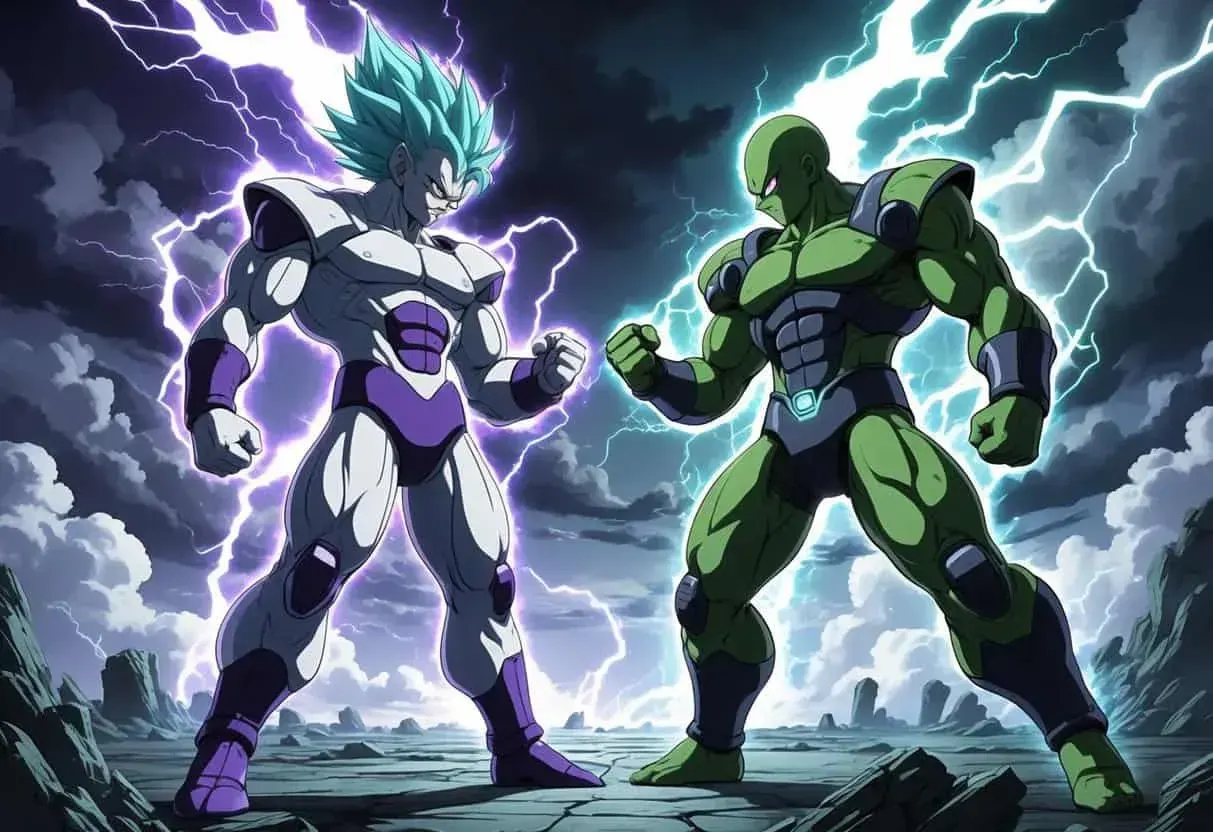
Frieza’s ruthless colonization of planets and his hand in the near-extinction of an entire warrior race make him a foundational pillar of the franchise’s lore. Cell, born from Earth’s own revenge narrative and the genetics of the Z-Fighters, presents a more intimate but less far-reaching threat. The difference isn’t just in power levels—it’s in how each villain shapes the very universe that Goku and his friends inhabit.
Origins and Motivations
The forces that drive Frieza and Cell couldn’t be more different. One is a hereditary emperor with a cosmic appetite for control; the other is a genetically engineered weapon pursuing an artificial ideal of completeness. Understanding their origins clears up why one feels mythic and the other feels surgical.
Frieza’s Empire and Psychological Grip
Frieza didn’t stumble into villainy—he inherited an interplanetary organization built on genocide and real estate. The Cold Force, later rebranded the Frieza Force, had already subjugated hundreds of worlds before the tyrant even set his sights on Planet Vegeta. What sets Frieza apart is the calculating way he marries charm with savagery. He’ll speak with the politeness of a boardroom executive while vaporizing a subordinate for a minor failure. This unpredictable temperament makes him more unsettling than a straightforward brute.
His fear of the Super Saiyan legend is not just paranoia; it’s the desperate reaction of a narcissist who cannot tolerate any peer. The destruction of Planet Vegeta wasn’t tactical necessity—it was erasure of a potential embarrassment. Every Saiyan who survived, from Goku to Vegeta to Broly, carries a grudge that keeps Frieza relevant across decades of storytelling. Even in Dragon Ball Super, the tyrant’s resurrection and his obsessive training reveal a character unwilling to be relegated to the past. You can read more about his backstory on the Dragon Ball Wiki.
Cell’s Programmed Perfection
Dr. Gero’s supercomputer didn’t build Cell with ambition; it gave him a singular directive: absorb Androids 17 and 18, achieve a perfect form, and eliminate Goku. That mission statement sounds compelling until you realize it lacks any personal dimension. Cell doesn’t hate Goku the way Frieza does. He doesn’t mourn his creator or wrestle with existential doubt—at least not in any relatable way. His desire for a tournament stems from the Saiyan cells inside him, a need to test his perfection rather than impose tyranny.
His Earth-centric origin limits his mythic scope. While Frieza’s name is whispered across the galaxy, Cell is a ghost that haunts a single timeline. The creature’s absorption mechanic gives him a built-in ticking clock, and once the androids are integrated, his narrative purpose evaporates. This is why his return in later series has never felt essential—he lacks the unfinished business that makes Frieza’s reappearances so compelling. More on Cell’s construction can be found here.
Saiyans as Narrative Glue
Both villains orbit around the Saiyan race, but in opposite ways. Frieza’s genocide of the Saiyans turns him into the ultimate boogeyman—a figure whose shadow looms over every Saiyan pride moment and every flashback to Bardock’s rebellion. Goku’s transformation into a Super Saiyan on Namek isn’t just a power-up; it’s a direct repudiation of Frieza’s attempt to erase that legacy.
Cell, by contrast, absorbs Saiyan traits. He gets Goku’s battle lust, Vegeta’s arrogance, and the Zenkai boost that makes every near-death experience a step toward greater strength. This makes his fights feel incredibly personal, especially for Gohan and Vegeta. However, it also means he’s derivative. He’s a mirror of existing characters rather than a force that shaped their histories.
The trauma that defines Vegeta’s character arc is Frieza’s doing; Cell simply capitalizes on the strength Vegeta already developed to overcome that trauma.
Major Arcs and Battles
The Frieza Saga and the Cell Saga sit atop many “best anime arcs” lists for good reason. They offer radically different flavors of tension—one is a desperate survival mission on a dying planet, the other is a global spectacle with apocalyptic stakes. Comparing their structure reveals why one set a template and the other refined a formula.
The Namekian Nightmare
From the moment the Z-Fighters touch down on Namek, the arc operates like a thriller. Multiple factions—Vegeta, Frieza’s forces, the Namekians, and eventually Goku—race for the Dragon Balls while Frieza systematically eliminates anyone who irritates him. The genius of this arc is how it escalates Frieza’s menace. Each transformation peels away a layer of restraint, showing the audience that every previous estimate of his strength was laughably wrong. The final form, small and sleek, subverts the expectation of monstrous size, and that minimalist design becomes one of the most recognizable silhouettes in anime.
Goku’s first Super Saiyan awakening remains the emotional apex of the entire franchise for many fans. Krillin’s death at the hands of Frieza’s telekinetic explosion isn’t just a shock—it’s the breaking point Goku needed. The trembling fury, the golden aura, the silent transformation: these moments are etched into pop culture. When Goku finally snarls “I am the Super Saiyan, Son Goku,” it’s a declaration that rippled through the shonen genre forever.
The Cell Games and Generational Shift
If the Frieza Saga is a space opera, the Cell Games are a martial arts tragedy wrapped in sci-fi. Cell’s tournament is a perverse inversion of the World Martial Arts Tournament that once defined Dragon Ball. Instead of friendly competition, it’s a death sentence. Cell actively sabotages any chance the heroes have by destroying the ring and inviting the entire world to watch their champions fall.
The arc’s true weapon is Gohan. For the first time, Goku steps aside—not out of arrogance, but because he recognizes his son’s latent potential eclipses his own. The moment Android 16’s head is crushed by Cell, and the gentle giant’s final words urge Gohan to protect the world, the transformation into Super Saiyan 2 feels earned. It’s not just a power spike; it’s a boy accepting the mantle his father tried to spare him. The one-handed Father-Son Kamehameha that finishes Cell, with Goku’s spirit guiding the blast, is a masterclass in building catharsis.
Yet, as impactful as that finale is, the arc is self-contained. Cell dies, the androids are either deactivated or integrated, and the threat evaporates. Namek, on the other hand, explodes but Frieza lives—first in pieces, then resurrected, then trained to new heights. The Frieza Saga’s ending is an ellipsis; the Cell Saga’s ending is a period.
Transformations and Pivots
Both villains use transformation to toy with their opponents, but their methods reflect their natures. Frieza’s transformations are voluntary restrictions he chose to place on himself to control his own overwhelming power. Each one he sheds is a taunt: “You still haven’t seen my real strength.” The final form is the truth, a sleek and deadly efficiency.
Cell’s transformations are acts of consumption. He doesn’t unlock dormant potential; he devours it. Watching Semi-Perfect Cell beg Vegeta to let him absorb Android 18 is an exquisite piece of psychological manipulation—he plays on Vegeta’s pride to engineer his own evolution. The Perfect Form that emerges combines the traits of every fighter he’s absorbed, and his voice actor’s shift to a calmer, more regal tone sells the transformation perfectly.
Iconic techniques mark these arcs as well. Frieza’s Death Beam and Death Ball are elegant destruction. Cell’s Solar Kamehameha—a golden wave so massive it threatens to engulf the solar system—represents the apex of his arrogance: the stolen technique of his sworn rival, amplified to humiliating scale.
The Ensemble’s Role
Supporting characters breathe life into both sagas, but in different ways. On Namek, Piccolo’s fusion with Kami transforms him from a sidelined observer into a fighter who can go toe-to-toe with Frieza’s second form. Vegeta’s breakdown—crying as he realizes he’ll never avenge his people—is raw and humanizing. Krillin’s death is the catalyst. The ensemble works because everyone has a stake that predates the current crisis.
In the Cell Saga, the spotlight bends toward the new generation. Future Trunks’s introduction alone rearranged the story’s DNA. His warning, his Super Saiyan transformation, and his tragic backstory added layers of urgency. Android 16’s love for nature and his sacrifice are surprisingly moving for a machine. Android 18’s gradual humanization, starting with a kiss on Krillin’s cheek, plants seeds that blossom in the Buu Saga.
Still, these characters serve Cell’s story, not the other way around. They’re pieces on a board he designed, which makes his arc more about the villain’s game than the heroes’ growth.
Abilities, Techniques, and Combat Philosophy
Frieza and Cell represent two fundamentally different combat philosophies. One is a natural-born prodigy who never had to train until it was almost too late; the other is an engineered organism designed to adapt and absorb. Their toolkits are reflections of those origins.
Frieza’s Kill-Efficiency Doctrine
Frieza’s fighting style is minimalistic brutality. He doesn’t waste movements. The Death Beam is a surgical tool—finger lasers that pierce through flesh and Namekian armor without explosive fanfare. The Death Ball is the opposite: a compressed sphere of ki capable of triggering planetary core collapse. His ability to survive in the vacuum of space isn’t just a neat trick; it’s a statement that conventional environmental vulnerabilities don’t apply to him.
In Dragon Ball Super, Frieza’s rapid evolution through training—reaching Golden Frieza in four months—retcons his laziness into calculated arrogance. He never needed to train; he was born with power that took Goku decades to surpass. This makes his combat narrative about squandered potential and the terrifying prospect of what he becomes when he actually tries.
Cell’s Adaptive Absorption
Cell’s core advantage is his ability to copy and combine techniques. He wields Piccolo’s regeneration, Frieza’s survival in space, and the Saiyans’ Zenkai boosts. His tail isn’t just for absorption—it’s a living weapon that can drain life force. The Solar Kamehameha is the ultimate expression of his theft-based power, a technique that screams “I can do everything you can, but better.”
Regeneration makes Cell a puzzle rather than a punching bag. You can’t simply overpower him; you have to obliterate every cell simultaneously, a lesson Gohan learns the hard way when the villain returns from self-destruction as Super Perfect Cell. This endurance-focused fighting style forces opponents to find creative solutions—Goku’s Instant Transmission Kamehameha, for instance, catches Cell off guard because it bypasses the battlefield’s geometry.
Immortality by Different Means
Frieza doesn’t regenerate, but his durability is absurd. Chopped in half, blasted into Namek’s core, left floating in the void—he survives. When he returns as Mecha Frieza, the cybernetics are just patches; the will to live is all his own. His “immortality” is political and narrative: he’s too iconic to stay dead, so the story keeps finding ways to bring him back.
Cell’s regeneration is literal. As long as the nucleus in his head remains intact, he can rebuild his entire body from scratch. This mechanical immortality makes him feel like a video game boss with a second health bar—shocking the first time, but once you know the gimmick, the mystery evaporates. Frieza’s resurrections, on the other hand, always come with new character development, whether it’s a temporary alliance in the Tournament of Power or the revelation of a new transformation like Black Frieza.
Legacy and Cultural Footprint
The question of legacy isn’t just about who’s stronger today. It’s about who shaped the franchise’s direction, who lives in the minds of fans, and who forces writers to keep referencing them decades later. On all three counts, Frieza stands alone.
Frieza in the Modern Era
Frieza’s return in Dragon Ball Super wasn’t a nostalgic cameo—it was a reinvention. The Tournament of Power arc turned him into a chaotic ally, forcing Universe 7’s fighters to trust a monster. His willingness to sacrifice himself for the team (even if self-serving) added layers to a character previously defined by pure selfishness. The recent manga revelation of Black Frieza—a transformation that one-shots Ultra Instinct Goku and Ultra Ego Vegeta—solidifies him as the franchise’s eternal apex predator. He’s no longer just the villain from Namek; he’s the yardstick by which all future threats will be measured.
Games like Dragon Ball FighterZ, Xenoverse 2, and even Fortnite crossovers keep his image in rotation. His golden form is a staple of competitive play. Voice actors in multiple languages cite Frieza’s polite menace as one of the most enjoyable roles they’ve ever performed. For a deep comparison of villains, sites like CBR have weighed in extensively.
Cell’s Enduring Cool Factor
Cell hasn’t vanished. His Perfect Form remains a fan-favorite design, and his voice performance—particularly Dameon Clarke’s Southern drawl in the English dub—gives him a unique swagger. Memes about Cell’s chin or his “I’m perfect!” catchphrase circulate endlessly. In video games, his move set is consistently fun, blending command grabs and beam attacks in a way that captures his lore accurately.
Yet his narrative utility is exhausted. The Super Hero movie teased a new Cell-like android, Cell Max, but the giant, mindless kaiju version felt like a disservice to the original’s cunning. The failure to bring back the real Cell as a meaningful character suggests that the franchise views his story as complete. He doesn’t have unfinished business with the Saiyans in the way Frieza does; his perfection was proven false, and he accepted defeat in his final moments. That’s a satisfying end, but a final one.
Shonen Template Shifts
Frieza rewrote the rules for shonen villains. Before him, threats like King Piccolo or Vegeta were regional—dangerous to Earth, dangerous to a few planets. Frieza brought the “planet-buster” concept into mainstream consciousness, establishing the tiered transformation villain that later series like One Piece, Bleach, and Naruto would echo. He made the stakes feel genuinely cosmic.
Cell perfected the “tournament arc villain” template. His structured challenge, his absorption of other characters’ techniques, and his gradual power creep all became staples of the genre. Characters like Meruem from Hunter x Hunter or even Shigaraki from My Hero Academia carry Cell’s DNA—beings who evolve by consuming others and develop a twisted philosophy about strength. If Frieza is the blueprint for the galactic tyrant, Cell is the blueprint for the existential bio-threat. You can see a breakdown of how these tropes evolved on Anime News Network.
The Unwinnable Debate
Frieza wins the legacy battle because he refuses to leave. He’s woven into the Saiyan backstory, the Namekian genocide, the Super Saiyan prophecy, and the modern tournament ecosystem. Every time Goku finds a new ceiling, Frieza crashes through it with a new coat of paint. Cell was a magnificent monster for his time—a perfect storm of genetics, revenge, and tournament spectacle—but his time ended. The franchise moved on, and he stayed in that crater where Gohan’s Kamehameha finally erased him.
For fans, the debate will rage on in forums and comment sections forever, and that’s exactly what makes both characters legends. But when you zoom out and look at the shape of the Dragon Ball universe from the first chapter to the most recent manga panel, the cold shadow of the Frost Demon stretches further than any bio-android’s reach.