Table of Contents
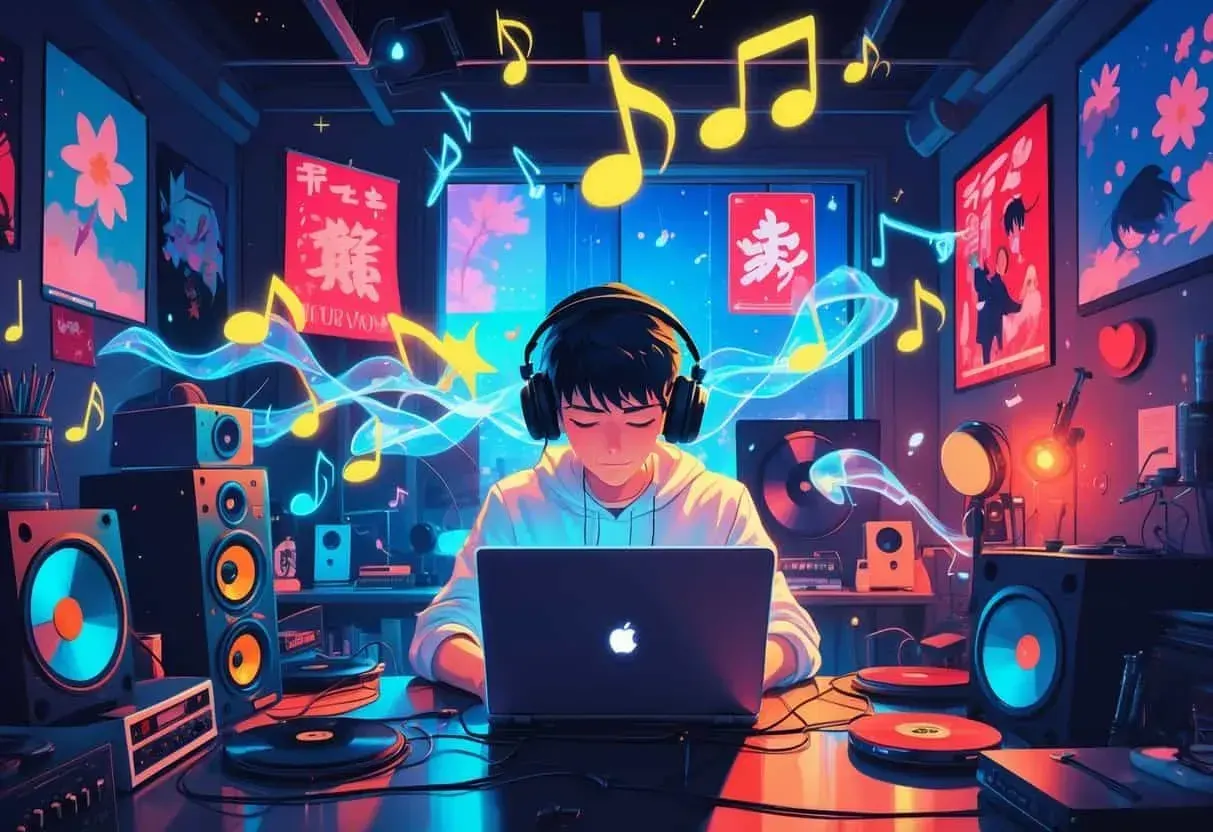
Anime soundtracks have always been a cornerstone of the viewing experience, but the fans behind the music are doing something extraordinary: they’re building sprawling, deeply personal playlists that often surpass even the most polished official releases in creative scope. These collections don’t just serve as background noise—they’re immersive audio journeys that weave obscure B-sides, unreleased edits, and forgotten gems into the fabric of modern anime fandom. When you stumble across a playlist that seamlessly transitions from a 90s mecha ballad to a viral Vocaloid remix, you realize you’re tapping into a community-driven archive of musical obsession.
The best fan-made anime music playlists are so meticulously assembled and emotionally resonant that it’s genuinely baffling they remain unrecognized by the same industry that profits from the original tracks.
Streaming platforms are flooded with algorithmically generated “Anime Hits” compilations, but fan curators operate on a completely different wavelength. They don’t just aggregate songs; they craft narratives, evoke specific moods, and spotlight artists who rarely crack the mainstream charts. This isn’t a hobby born from casual listening—it’s a form of cultural preservation and artistic expression that deserves a seat at the table alongside official soundtrack releases and licensing deals.
The Organic Rise of Fan-Driven Curation
Long before Spotify’s editorial playlists and YouTube Music’s mood genres, message boards and early peer-to-peer networks allowed fans to trade rare anime audio files. That grassroots exchange gave birth to a culture of curation that has only intensified in the streaming era. Today, a single fan-made playlist can accumulate hundreds of thousands of followers, often outperforming label-controlled compilations in both engagement and listenership. The process is painstaking: curators spend hours tracking down instrumental versions from out-of-print albums, remastering low-quality rips, and arranging tracks to mirror the emotional arc of a beloved series.
What sets these playlists apart is the intentionality behind every addition. While official playlists might lump together any track with a high play count, fan curators consider the flow, key changes, and even the thematic connections between songs. You might find a playlist that opens with the haunting strings of Mushishi, builds into the explosive brass of Kill la Kill, and then cools down with an unplugged version of an old Rurouni Kenshin ending theme. The effect is less like a random shuffle and more like a crafted mixtape from a friend who really gets it.
Notable Playlists That Redefine the Anime Music Experience
Some fan-made collections have become almost legendary among dedicated listeners, passed around through forums, Discord servers, and social media threads as essential listening. They range from broad retrospectives to hyper-specific deep dives that explore a single genre or a single studio’s discography. Here are a few standout examples that demonstrate the sheer breadth of community creativity.
Nostalgia-Driven Anthologies of Classic OPs and EDs
These playlists act as time capsules, gathering the opening and ending themes that defined entire generations of anime fans. Tracks from Saint Seiya, Sailor Moon, and Magic Knight Rayearth sit comfortably next to later classics from Fullmetal Alchemist: Brotherhood and Steins;Gate. Curators often include rare TV-size versions, karaoke instrumentals, and even live concert recordings that never made it onto official releases.
For anyone new to the medium, these compilations serve as an aural history lesson, illustrating how Japanese pop and rock trends evolved alongside animation styles. And for longtime fans, they’re a powerful trigger for the kind of nostalgia that only a specific melody can summon.
AMV Remix and Re-Edit Collections
Anime Music Video (AMV) creators have long been the unsung alchemists of the community, mashing up scenes with music in ways that can completely change the meaning of a song. Playlists built around AMV remixes take that one step further by compiling fan-edited tracks that splice and recontextualize audio. A battle theme from Attack on Titan might be stretched and layered over a lo-fi beat; a tender confession scene’s background score could be transformed into a dance-floor anthem. These remixes exist in a legal gray area, but their inventiveness is undeniable.
Several of these AMV-focused playlists have cultivated large followings on YouTube and SoundCloud, with links to the original video edits and credits to the fan producers. They demonstrate a level of technical skill and musical understanding that often rivals professional production houses.
Genre-Specific Deep Dives: From City Pop to Black Metal
Anime music isn’t a monolith, and fan curators love to prove it by building playlists around single genres that have left a mark on the medium. City pop revivals get their own lush, synth-heavy sets featuring forgotten gems from 80s anime films. Visual kei enthusiasts compile hours of dramatic, costume-clad rock from bands that regularly contributed to shoujo and shounen series alike. Even darker corners like doom metal and experimental noise find their place, often represented by cult OVA soundtracks that never received wide distribution.
These genre-specific playlists not only entertain; they educate listeners on the surprising connections between anime production and Japan’s wider music scene. You might discover that a band known for a mellow slice-of-life ending once played blistering punk in the underground scene, or that a popular J-pop idol cut her teeth singing themes for forgotten OVAs.
Artists and Tracks That Form the Backbone of Fan Collections
Walk through any well-regarded fan playlist and you’ll encounter a recurring pantheon of vocalists, bands, and composers whose work resonates far beyond the shows they scored. These are the artists that curators return to time and again, not because of algorithmic recommendations, but because their music consistently delivers the emotional impact that anime demands.
The Vocal Powerhouses: Aimer, Eve, and LiSA
Aimer’s husky, emotionally charged voice has become synonymous with the modern anime ballad. Tracks like Ref:rain from Koi wa Ameagari no You ni and Brave Shine from Fate/stay night: Unlimited Blade Works appear in countless playlists, often anchoring the most introspective sections. Her ability to convey vulnerability and strength simultaneously makes her a favorite among curators aiming for a cathartic listening experience.
Eve brings a different kind of energy—one that’s playful, but with a dark undercurrent. Songs such as Kaikai Kitan (Jujutsu Kaisen) and Dramaturgy capture the unpredictable tone of modern shounen adaptations. His music thrives in playlists that balance high-octane energy with moments of reflective unease.
Then there’s LiSA, whose anthemic rock vocals have powered major hits like Gurenge (Demon Slayer) and crossing field (Sword Art Online). Fan playlists often use LiSA’s tracks as peak moments, the kind of songs that lift a listening session to its highest intensity before allowing a gradual wind-down.
Rock and Visual Kei Staples
Bands like SID, the GazettE, and Ling Tosite Sigure dominate fan compilations that lean toward heavier sounds. SID’s Uso (Fullmetal Alchemist: Brotherhood) and Monochrome no Kiss (Black Butler) are practically required entries in any playlist that attempts to capture the dramatic sweep of late 2000s anime. Visual kei acts contribute flamboyant guitar solos and theatrical vocal performances that mirror the larger-than-life emotions of the shows they accompany.
Meanwhile, genre-bending groups like TK from Ling Tosite Sigure bring post-hardcore complexity to playlists that seek to challenge the listener. The jagged rhythms and falsetto vocals of unravel (Tokyo Ghoul) remain a high-water mark for fan curators who want to inject genuine musical anxiety into their sets.
Composers and Instrumental Tracks That Set the Mood
Beyond vocal tracks, instrumental pieces by composers such as Yuki Kajiura, Hiroyuki Sawano, and Joe Hisaishi provide the atmospheric backbone of many fan playlists. Kajiura’s eclectic blend of operatic vocals and world music textures (think Madoka Magica and .hack//SIGN) offers rich material for ambient-focused collections. Sawano’s bombastic orchestral drops—often tagged as “Sawano Drops”—are a guilty pleasure that playlists exploit for maximum dramatic effect. And Hisaishi’s Studio Ghibli scores need no introduction, serving as the peaceful interlude between louder, more frantic selections.
Why Official Recognition Could Transform the Industry
Fan-made playlists are not just a novelty; they represent a vast, untapped well of audience insight that music labels and anime studios consistently overlook. Giving these collections some form of official acknowledgment—or even direct collaboration with curators—could have tangible benefits for everyone involved, from the artists to the listeners.
Surfacing Hidden Gems and B-Sides
Most official anime soundtrack releases focus on the main themes and a handful of notable background tracks. Fan playlists, however, routinely resurrect songs that have been buried for decades. A playlist might revive an obscure ending theme from a 2002 sci-fi OVA, or highlight an acoustic cover that only appeared on a limited-run CD. If labels paid attention to these selections, they could identify demand for catalog reissues, vinyl pressings, or digital debuts of tracks that currently exist only in fan archives.
Smaller independent artists featured in these playlists often see a sudden spike in streaming numbers, yet they rarely receive any official support from the anime production committees that originally licensed their work. Formal recognition could open doors for promotional tie-ins, concerts, and fresh licensing opportunities that benefit the original creators.
Strengthening Community Engagement and Platform Discovery
Streaming platforms already rely heavily on user-generated playlists to drive engagement, but anime music’s ecosystem is particularly dependent on fan curation. When a well-known community curator updates a playlist, it often triggers a wave of discussion on Reddit, Twitter, and Discord servers. An official “curator spotlight” program or even a dedicated chart for fan-made anime playlists would validate these efforts and encourage deeper interaction. Platforms like Spotify have experimented with featured fan playlists in other genres; there’s no reason anime music should be excluded.
You can see this dynamic playing out right now on r/anime and other forums, where fans eagerly share their latest creations and debate track selections. The passion is undeniable, and it’s a resource the industry could harness rather than ignore.
Preserving a Fragile Cultural Archive
Japanese music licensing is notoriously complex, and many older anime soundtracks are in danger of disappearing from streaming services entirely due to expired contracts or bankrupt labels. Fan playlists act as a de facto preservation effort, keeping these songs in circulation and introducing them to new audiences. Official recognition could facilitate the digitization of rare albums and ensure that the historical breadth of anime music is not lost to time. This is more than a nostalgic exercise; it’s about maintaining a living connection to an artistic heritage that has influenced global pop culture.
Platforms and Tools That Empower Fan Curators
The modern fan curator has an arsenal of tools and platforms at their disposal, far beyond the simple MP3 trading of the early 2000s. Services like Spotify, Apple Music, and YouTube Music provide robust playlist-creation features, but it’s the community layers on top that truly amplify their impact. Sites such as Polygon and dedicated anime blogs regularly highlight outstanding fan-made collections, giving them a wider audience and editorial context.
Discord servers dedicated to specific anime titles or music genres have become incubators for collaborative playlisting, with members voting on tracks, contributing rare uploads, and debating sequencing. Likewise, collaborative documents and spreadsheets circulate among superfans, cataloging every known version of a track so that playlisters can choose the definitive mix. These grassroots efforts often operate with a rigor that rivals professional archiving.
Video platforms also play a crucial role. A YouTube search for “anime music playlist” returns millions of results, many featuring painstakingly edited visual loops or stylized artwork that enhance the listening experience. Some curators upload entire mixtapes with timestamped chapters, turning a simple playlist into a full-blown audio-visual project.
How to Find and Support These Underappreciated Collections
If you want to go beyond the algorithm and dive into the world of fan-made anime playlists, start by looking beyond the official profiles. Search for terms like “hidden gems,” “underrated anime OSTs,” or “fan-mixed” on your streaming platform of choice. Pay attention to the usernames attached to playlists with unusually thoughtful descriptions or track sequences that tell a story. Follow these curators, and you’ll often find they maintain multiple playlists covering everything from specific mood themes (“rainy day anime piano”) to entire years of anime music history.
Social media is another goldmine. Twitter threads under the #AnimeMusic hashtag frequently feature curator recommendations, while YouTube channels like fan playlist compilations provide visual and auditory feasts. When you encounter a playlist you love, share it with your own network; the more visibility these projects get, the harder it becomes for the industry to ignore them.
You can also support curators directly by donating to their Patreon or Ko-fi accounts, if they have them, or simply by engaging with their content and leaving heartfelt comments. Many fan curators invest significant time and sometimes money into sourcing rare tracks and maintaining high-quality uploads. A little encouragement goes a long way in sustaining the ecosystem.
The Future of Fan-Led Anime Music Curation
As streaming algorithms become more dominant, the human touch of fan curation will only grow in value. The official soundtrack market, while massive, often prioritizes the most commercially viable releases, flattening the spectrum of what listeners are exposed to. Fan playlists, by contrast, thrive on diversity and personal taste. They fill the gaps that corporate playlists leave behind, acting as a necessary counterbalance.
There are signs of progress. Some anime conventions now host fan playlist showcases, and a few J-pop artists have acknowledged fan-made YouTube compilations in interviews. However, until there is formal recognition—whether through licensing partnerships, official playlisting programs, or collaborative albums—the full creative potential of this grassroots movement remains unrealized.
The next time you queue up an official anime soundtrack, consider looking sideways at a fan-made anthology instead. You might discover not just new music, but a whole new way of listening that reflects the true heart of anime fandom: passionate, creative, and deeply cooperative. The curators behind these playlists aren’t waiting for permission; they’re already shaping the canon, one track at a time.