Table of Contents
In the vast universe of competitive trading card games, few cards command as much reverence and mystery as Exodia the Forbidden One and the trio of Egyptian God Cards from Yu-Gi-Oh!. These aren’t just powerful game pieces—they are narrative cornerstones, steeped in ancient lore and strategic depth. Exodia represents an instant-win condition forged from five scattered fragments, while the Egyptian Gods stand as near-invincible divine avatars, each demanding ritual-like summoning conditions and offering game-warping effects. Their designs pull heavily from real Egyptian mythology, and their in-universe connections to the Pharaoh and the Millennium Items have kept them iconic for decades.
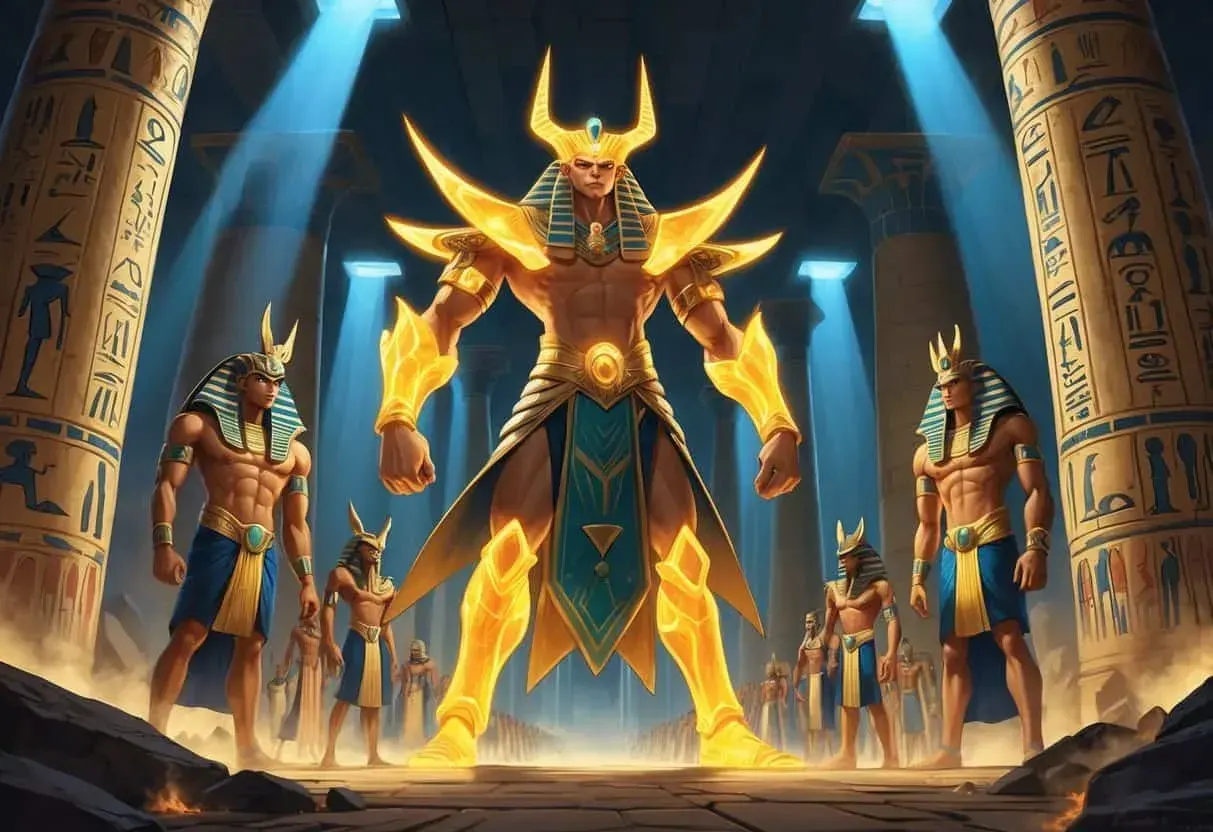
What sets Exodia and the Egyptian Gods apart isn’t just their raw strength—it’s the stories they tell and the strategies they unleash. From the anime’s Battle City arc to modern deck-building, these cards have shaped how players approach the game and how collectors understand rarity. This article explores their origins, tactical applications, cultural symbolism, and lasting legacy, offering a comprehensive look at why these cards remain some of the most celebrated in Yu-Gi-Oh! history.
Exodia: The Sealed Power and Instant Victory
Exodia the Forbidden One is arguably the most unique victory condition ever printed in a trading card game. Unlike conventional monsters that win through attack points or effects, Exodia triggers a win the moment its five components—Left Arm, Right Arm, Left Leg, Right Leg, and the head—are all held in your hand. This mechanic alone turns the card into a mythic puzzle that players obsess over solving as quickly and consistently as possible.
Origins Woven into Ancient Egypt
In the Yu-Gi-Oh! anime and manga, Exodia is described as an ancient entity of unimaginable power, sealed away precisely because it was too dangerous to exist freely. The monster predates many of the game’s other legends, and its lore is deeply entangled with the Millennium Items and the Pharaoh’s lost kingdom. According to official Konami lore, Exodia’s strength was so overwhelming that its spirit had to be splintered into five separate cards, ensuring that no single duelist could ever wield it without monumental effort.
The card’s first iconic appearance came during Yugi’s duel against Maximillion Pegasus in the Duelist Kingdom arc. Pegasus had read Yugi’s mind and planned countermeasures for every move—except Exodia. When Yugi assembled all five pieces, the sealed giant broke free and delivered an unstoppable blow, marking Exodia as the only force capable of overcoming the Millennium Eye’s foresight. That moment cemented Exodia’s reputation as a trump card above all others, an “auto-win” that no amount of preparation could deflect.
The ancient Egyptian aesthetic is unmistakable: Exodia’s artwork depicts a colossal humanoid figure adorned with pharaonic headdress, golden bands, and hieroglyphic markings. The design intentionally echoes the colossal statues of pharaohs and gods that guarded temples, reinforcing the idea of a restrained divine force. This visual link to Egyptian deities and mythological guardians adds a layer of cultural authenticity that distinguishes it from generic fantasy creatures.
Building a Deck Around the Unassailable Win Condition
Competitive Exodia decks operate on a singular principle: gather all five pieces as early as possible. Winning isn’t about attacking; it’s about accelerating your draw and protecting yourself until the puzzle is complete. The typical Exodia strategy leans heavily on “draw engine” cards—spells and effects that let you cycle through your deck without giving the opponent a chance to disrupt your hand.
Staples include Pot of Greed (when legal), Upstart Goblin, Chicken Game, and Card of Demise. These cards provide raw card advantage while sometimes sidelining combat entirely. The concept is to thin your deck to the absolute minimum, often sacrificing life points or field presence for speed. Many builds also incorporate Swords of Revealing Light, Threatening Roar, or Waboku to stall the opponent, buying precious turns.
Some advanced variants use Royal Magical Library combined with a flurry of spell cards to draw through nearly the entire deck in a single turn. Others rely on Exodia Necross, a specialized monster that gains power from the Exodia pieces in the graveyard, though the true strength still lies in the classic instant-win condition. The deck demands a careful balance: too many protective cards slow the draw, while too few leave you vulnerable to aggressive beatdown strategies.
Because Exodia lives entirely in the hand, it’s uniquely vulnerable to hand disruption like Trap Dustshoot (in traditional formats) or Mind Crush. A single well-timed discard can ruin the win condition, which is why skilled Exodia pilots run Mystical Space Typhoon and Dark Bribe to negate threats. The deck remains a high-risk, high-reward archetype that rewards patience and deep knowledge of the opponent’s disruption window.
Impact on Legendary Duels and Fictional History
Exodia’s in-universe power is so immense that it directly rivals—and according to many fans, surpasses—the Egyptian Gods. In the anime, Exodia was depicted as an equalizer that could obliterate even the mighty Slifer the Sky Dragon or Obelisk the Tormentor. During the ceremonial duel between Yugi and Atem, the Pharaoh’s use of Exodia highlighted its role as a symbol of absolute, sealed might—something even god cards couldn’t casually overcome.
This power dynamic sparked enduring debates: can Exodia defeat the Gods? According to game mechanics, Exodia’s automatic victory bypasses any monster—no battle, no targeting, just an immediate win. The Gods’ various immunities (like Obelisk’s targeting protection) are irrelevant because Exodia doesn’t target or affect monsters; it simply declares the game over. This has led many to argue that Exodia is the ultimate card, a force that even divine beings must yield to.
Outside of the anime, Exodia’s appearance in video games and alternate formats continues to keep it relevant. The card’s design inspired whole subsets of alternate win conditions, like Vennominaga or Destiny Board, but none match the iconic simplicity of assembling the five pieces. Its legacy is one of raw, uncomplicated might—a reminder that sometimes the best strategy is to ignore the battlefield entirely and win on your own terms.
The Egyptian God Cards: Divine Beasts of Battle City
While Exodia represents a sealed singular power, the Egyptian Gods—Obelisk the Tormentor, Slifer the Sky Dragon, and The Winged Dragon of Ra—stand as a trinity of active, overwhelming force. They draw directly from Egyptian mythology, and in the Yu-Gi-Oh! story, they were created by Maximillion Pegasus based on ancient stone tablets discovered in Egypt. The cards are so powerful that early in the series only the chosen Pharaoh can wield them without being struck down by divine wrath.
Mythological Foundations and In-Game Lore
The real-world inspiration for the Egyptian Gods is unmistakable. Obelisk’s name and massive, towering form reference the ancient Egyptian monuments built to honor gods like Ra. Slifer’s serpentine, multi-mouthed appearance echoes the chaotic sky deities and serpents from creation myths, while Ra’s golden avian shape directly invokes the falcon-headed sun god. By blending these mythological elements with the game’s own narrative, the cards become more than just powerful—they tap into a deep cultural imagination about godly authority and judgment.
In Duel Monsters lore, Pegasus painted the God Cards after studying the Pharaoh’s memories, but he never intended them to be used casually. The cards were so dangerous that Pegasus sealed them away and limited their distribution to a select few. The Battle City tournament revolved around collecting all three, with the understanding that owning all three would grant the bearer a kind of divine kingship. The cards require tributes to summon (three monsters each), and each carries unique effects that can turn the tide of any duel instantly.
Obelisk, Slifer, and Ra: A Tactical Breakdown
Obelisk the Tormentor epitomizes raw destructive power. With 4000 ATK/DEF, it can tribute two other monsters to destroy all monsters the opponent controls and inflict 4000 damage. This effect, while costly in resources, can end a game against a full board. Obelisk also has spell speed 4 immunity to most effects, though some cards can still bypass this. It represents the unyielding force of a divine hammer, smashing through defenses with sheer might.
Slifer the Sky Dragon takes a different approach, scaling its power with the controller’s hand. Its ATK and DEF equal the number of cards in your hand times 1000, making it a behemoth that grows as you accumulate resources. Slifer’s second effect automatically reduces any opponent’s summoned monster’s ATK/DEF by 2000, potentially destroying weak monsters outright. This makes Slifer a board-control god that punishes swarming strategies and rewards card advantage. In decks built around massive draw, Slifer can easily reach 6000+ ATK and become nearly impossible to overcome in battle.
The Winged Dragon of Ra is widely regarded as the most versatile and dangerous of the three. Upon summoning, its ATK/DEF become the combined ATK/DEF of the tributed monsters. Additionally, the controller can pay life points to increase Ra’s ATK by the same amount (and vice versa), allowing for explosive one-turn kills. Ra can also transform into Phoenix Mode, gaining immunity and the ability to destroy any monster by paying 1000 LP. However, Ra’s complexity makes it the hardest to use effectively—its effects require precise life point management and a deep understanding of timing, echoing the ancient Egyptian belief that Ra was both a giver and taker of life.
Character Connections and the Battle for Divinity
Yugi Muto, housing the spirit of the Pharaoh Atem, becomes the central figure linked to all three Gods. By the end of Battle City, he wields Obelisk, Slifer, and Ra, proving his right to bear the divine legacy. His journey mirrors the Pharaoh’s ancient duty to maintain ma’at—cosmic balance—using the Gods as instruments of justice. The emotional weight of these cards is profound; they aren’t just tools, but fragments of Atem’s lost identity.
Seto Kaiba, obsessed with the Gods particularly Obelisk, sees them as the ultimate prize to prove his superiority over Yugi. His relentless pursuit drives much of the Battle City arc, and his eventual inability to master Ra highlights the spiritual barrier that separates him from the Pharaoh. Kaiba’s technological genius cannot compensate for the missing spiritual connection, a theme that recurs even in later series like Yu-Gi-Oh! The Dark Side of Dimensions.
Marik Ishtar and his dark alter ego wield Ra with terrifying proficiency, using its life-point manipulation to torture opponents. Marik’s possession of Ra during the Battle City finals is one of the most intense storylines, showing how the Gods can be corrupted by evil intentions. Isis Ishtar, meanwhile, acts as a guardian of the ancient knowledge, ensuring the Gods aren’t misused. The interplay of these characters gives the Egyptian Gods a narrative weight that few other trading cards possess.
Legendary Cards: Strategies, Synergy, and Deck Philosophy
Exodia and the Egyptian Gods may be the headline acts, but the Yu-Gi-Oh! card pool is filled with legendary monsters that complement them or offer alternative power spikes. Understanding how these cards interact with deck design is essential for appreciating why Exodia and the Gods remain so impactful.
Iconic Monsters That Shaped the Meta
Alongside the divine beasts, Blue-Eyes White Dragon and Dark Magician stand as the faces of raw beatdown and magical control, respectively. Blue-Eyes, with its 3000 ATK, set the standard for high-stat monsters and still sees support through dedicated archetypes. Dark Magician, tied to Yugi’s identity, excels in spellcaster-focused decks that can search, summon multiple copies, and banish threats with Dark Magic Attack.
Other heavy hitters like Summoned Skull (a single-tribute 2500 ATK efficient beatstick) and Jinzo (a trap-negating advantage engine) reinforce the idea that a duel is won not just by the final blow but by the incremental value your monsters provide. Even the Magnet Warrior trio, which can combine into Valkyrion the Magna Warrior, mirror Exodia’s assembly concept on a smaller scale. These cards teach players that assembling components can lead to game-breaking outcomes, a principle that Exodia perfects.
Deck Construction Around Game-Winning Conditions
Building a deck around an auto-win or a god card requires a shift in mindset. Exodia decks, as detailed earlier, are turbo-draw engines that sacrifice traditional combat for speed. God-focused decks, on the other hand, need to balance tribute summoning support with protection for the Gods once they hit the field. Cards like Mound of the Bound Creator (a field spell that protects Level 10+ monsters) become invaluable, shielding Obelisk or Ra from targeting effects.
Both strategies rely heavily on generic staples: Monster Reborn to revive tribute fodder, Pot of Prosperity (when budget/format allows) to dig for key pieces, and trap cards like Solemn Judgment to stop opponent combos. The art is in knowing when to commit resources. A God summoned too early might fall to a Kaiju or non-targeting removal; an Exodia player who overextends loses the hand advantage that defines their win condition. Diligent testing and format knowledge separate a functional theme deck from a tournament-ready build.
Fusion, Ritual, and the Evolution of Summoning Mechanics
Modern Yu-Gi-Oh! introduced numerous summoning methods, but the classic methods—Fusion and Ritual—remain relevant to many legendary decks. Fusion monsters like Blue-Eyes Ultimate Dragon (requiring three Blue-Eyes White Dragons plus Polymerization) showcase how combining iconic creatures can create something even more terrifying, though it consumes massive resources. Ritual monsters, such as Black Luster Soldier or Magician of Black Chaos, offer targeted removal and high ATK, often serving as trump cards in spellcaster-themed builds.
These methods remind us that Exodia and the Egyptian Gods are, in a way, the ultimate expression of card combination. Exodia fuses five distinct pieces in your hand; the Gods require three tributes from the field. Each is an advanced form of resource aggregation that tests a duelist’s ability to manage multiple components. Mastering Fusion and Ritual summoning enhances your understanding of combo-driven play, making you a better pilot for the more esoteric win conditions.
The Deeper Lore: Pharaohs, Shadows, and the War for Memory
What truly elevates Exodia and the Egyptian Gods is their connection to the overarching narrative of the Pharaoh’s lost kingdom. These aren’t random powerful cards—they are artifacts of a forgotten age, tied to the very soul of the protagonist.
The Millennium Puzzle and the Pharaoh’s Awakening
The Millennium Puzzle serves as the vessel for Atem’s spirit. When Yugi solves it, the Pharaoh awakens without his memories, and the entire series becomes a journey to recover his name and past. The Puzzle also contains traces of the ancient magic that sealed Exodia and created the God Cards. In many ways, the Puzzle is the central artifact that links all these powers together, granting its bearer the right to command divine forces.
Through the Puzzle’s flashbacks, we learn that the Pharaoh faced a great evil that threatened to consume Egypt. The God Cards were created as a failsafe, and Exodia was sealed because even the Pharaoh feared its uncontrollable potential. This narrative framing transforms every duel into a ritual of remembrance, where the player metaphorically taps into the Pharaoh’s lost wisdom.
Zorc Necrophades and the Shadow Realm
The ultimate antagonist lurking behind these cards is Zorc Necrophades, a demonic entity born from chaos and darkness. Yami Bakura, the dark spirit of the Millennium Ring, seeks to resurrect Zorc by gathering the Millennium Items and exploiting the Pharaoh’s memories. The climactic ancient battle sees Exodia briefly summoned against Zorc, only to be defeated because it lacked the Pharaoh’s full power—a poignant moment that shows even the strongest card can fall without the proper spiritual alignment.
Zorc’s influence corrupts everything it touches, and it is the reason why the God Cards are so dangerous in the wrong hands. Marik’s descent into madness and his abuse of Ra’s power directly reflect Zorc’s corrupting reach. The shadow games that emerge throughout the series are essentially proxy wars between the Pharaoh’s light and Zorc’s darkness, with Exodia and the Gods as the ultimate weapons.
Story Arcs and Card Significance Beyond Duel Monsters
The Battle City arc, the ceremonial duel, and even the Dark Side of Dimensions movie continue to reference these powers. When Kaiba obsessively tries to reconstruct the Millennium Puzzle and duel the Pharaoh, he’s driven by a need to prove himself against the God Cards he could never fully command. The movie’s final duel showcases a world where Exodia can be ritually summoned with new support, underscoring its timeless relevance.
In the real-world tournament scene, both Exodia and the Gods have seen periodical resurgences thanks to new support cards. For instance, Obliterate!!! can return Exodia pieces from the graveyard, while The True Name allows you to add a God card from your deck. These callbacks to the anime ensure that even players who never watched the original series can taste the ancient power. The lore lives on through every top-deck and every clutch win.
Exodia and the Egyptian God Cards remain unmatched in the card game’s mythology. They are more than just nostalgia—they are embodiments of ancient strategy, cultural storytelling, and the eternal dance between order and chaos. Whether you’re a collector cherishing a ghost rare Slifer or a competitive player testing an Exodia FTK (first-turn kill), these cards continue to define what it means to be a true duelist.