Table of Contents
The Silent Samurai: Why Shonen Heroes Choose to Suffer in Silence
Across the vast landscape of shonen anime, a peculiar pattern repeats itself with remarkable consistency. The bright-eyed protagonist who can level mountains with a single punch, the tactical genius who outsmarts gods, the underdog who defies every odd — all of them, at some critical juncture, press their lips together, tighten their fists, and swallow the storm raging inside them. They do this not because they lack feeling, but because they have been conditioned, both by their worlds and by the narrative traditions that created them, to equate emotional transparency with weakness. If you have ever watched Gohan tremble before Cell while his father’s legacy pressed down on his small shoulders, or seen Piccolo train in solitary silence after a devastating loss, you have witnessed emotional suppression as a deliberate storytelling device.
This is not a bug in the genre’s code. It is a feature. And understanding it unlocks a deeper appreciation for why these characters resonate across generations and continents. Emotional suppression in shonen anime is a layered phenomenon rooted in Japanese cultural values, narrative utility, and the psychological architecture of heroism itself. When a young warrior hides his tears after a friend’s sacrifice, the story is not simply skipping an emotional beat.
It is building pressure for a release that will hit the audience with the force of a Kamehameha wave.
The Cultural and Historical Roots of Emotional Restraint
To grasp why Goku’s son apologizes for crying or why Amuro Ray isolates himself in the cockpit of the RX-78-2 Gundam, you must first step outside the anime frame and into the cultural soil from which these characters grew. Japan’s social values have long emphasized collective harmony over individual expression. Emotional outbursts, however justified, can be perceived as disruptions to the group’s wa (harmony). In this environment, self-control becomes a moral virtue, not just a personal discipline.
Gaman, Hansei, and the Virtue of Enduring Quietly
The concept of gaman, often translated as “endurance with dignity,” teaches that bearing the seemingly unbearable with stoic patience is a mark of maturity and strength. Coupled with hansei (self-reflection), which demands that an individual look inward and acknowledge their own shortcomings, these philosophies create a model of silent suffering that anime protagonists embody. A hero who loudly laments his fate might be seen as childish; the one who absorbs the pain, processes it internally, and then stands up again without complaint aligns with the ideal of the gaman-zuyoi (resilient) spirit.
The Post-War Echo in Animation
Japan’s post-World War II reconstruction required a collective effort where personal grief was often set aside for the sake of national rebuilding. This historical backdrop seeped into popular media, including manga and early anime. Protagonists were forged in the fires of hardship, and their response to loss was not therapy or dialogue but redoubled effort. Even decades later, in worlds filled with aliens, androids, and supernatural powers, the emotional DNA of that era persists. When a shonen hero compresses his grief into a tighter fist, you are seeing a cultural echo of a time when survival depended on swallowing pain and moving forward.
Emotional Suppression as a Narrative Engine
Storytellers are not merely replicating cultural norms; they are weaponizing them. In a genre defined by escalating battles and high-stakes conflict, emotional suppression serves a precise narrative function. It delays gratification, deepens mystery, and transforms the hero’s interior world into a landscape that viewers must actively navigate.
The Architecture of Sacrifice and Silent Heroism
When characters like Future Trunks witness horrors and yet refrain from breaking down, the audience receives a dual message. On the surface, his composure signals tactical readiness. More profoundly, it signals that his sacrifice includes not only his body but his emotional well-being. He denies himself the catharsis of tears so that others may draw strength from his determined silence. This form of heroism paints emotional vulnerability not as a flaw, but as a luxury that a protector cannot afford.
The hero becomes a vessel of others’ hopes, and any crack in that vessel could cause collective despair.
Growth Through Invisible Scars
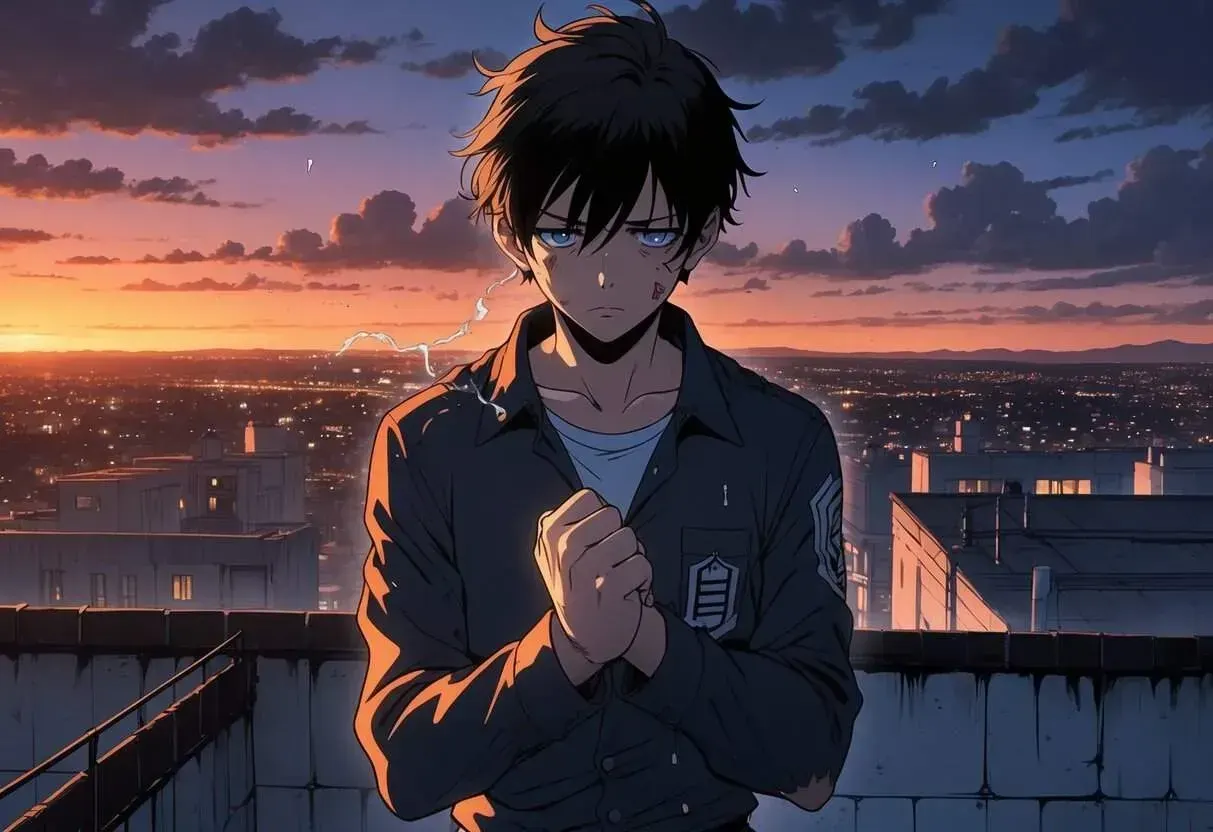
Shonen narratives often present character development as a physical transformation: new forms, new techniques, higher power levels. But the most significant growth frequently happens in the gaps between battles, in the moments when a character stares at a sunset and says nothing. Piccolo’s evolution from a demon king’s reincarnation to a surrogate father for Gohan is not announced through monologue. It is shown through his quiet vigilance, the meals he prepares without fanfare, the way he positions his body to shield the boy. The suppression of his former malice and the suppression of his affection happen simultaneously, creating a rich internal conflict that no amount of beam struggling could convey.
Identity Forged Behind the Mask
Many shonen heroes are defined by a dual identity: the public image and the private self. Usagi Tsukino, from Naoko Takeuchi’s Sailor Moon, presents a comically weepy, irresponsible front to her friends, but as Sailor Moon, she often swallows her terror to inspire her teammates. The suppression of her true fear in critical moments allows her to function as a leader, and the gap between “clumsy Usagi” and “brave Sailor Moon” is where her identity crystallizes. Similarly, Amuro Ray in Mobile Suit Gundam buries his deep-seated isolation and fear of inadequacy beneath a brusque exterior, piloting the Gundam as if the machine could shield him from human connection. These masks become symbolic of the conflict between who they are and who they must become.
Iconic Examples of Emotional Suppression in Shonen
To see these principles in action, you need only revisit a handful of seminal series. Each uses emotional restraint in a distinct way that reinforces its themes.
Gohan and the Weight of Expectation (Dragon Ball Z)
Gohan’s arc is perhaps the purest shonen illustration of emotional suppression as a response to external pressure. He does not want to fight. He wants to study. Yet from the age of four, he is thrust into battles where he must watch loved ones suffer. During the Cell Games, Gohan suppresses his pacifism, his fear, and his self-doubt not because he has overcome them, but because his father’s belief in him and Android 16’s final plea demand it.
When he finally unleashes his anger in the iconic Super Saiyan 2 transformation, the moment lands with such cathartic power precisely because the story forced him to hold that emotion under pressure for so long.
Piccolo’s Stoicism and Unspoken Redemption
Initially a villain driven by vengeance, King Piccolo’s reincarnation undergoes one of anime’s most profound silent redemptions. He rarely speaks of his feelings. When he sacrifices himself to save Gohan from Nappa’s attack, his farewell words are blunt, almost clinical. Yet the act itself, combined with a single tear, communicates more than any speech could. His post-resurrection role as a trainer and protector on the sidelines is defined by emotional containment.
He trains, he observes, he intervenes, but he does not seek gratitude. That restraint makes the rare moments of overt warmth — such as his cameo cradling a newborn Pan in Dragon Ball Super — devastatingly effective.
Amuro Ray and the Cocoon of the Cockpit (Mobile Suit Gundam)
As the original mecha protagonist carrying the weight of war, Amuro Ray retreats not only into his room but into the Gundam itself. His emotional suppression manifests as irritability, social withdrawal, and a deep unwillingness to connect with allies like Bright Noa. The White Base becomes a pressure cooker of unshed tears. When Amuro finally breaks — fleeing the ship, refusing to pilot — it is the narrative’s way of showing that suppression has a shelf life. Gundam pioneered the deconstruction of the stoic hero, suggesting that emotional repression in warfare is not sustainable heroism but a slow-burning trauma.
The Contrast with Western Storytelling Traditions
If you grew up on Western superhero narratives, the emotional landscape of shonen anime might initially feel jarring. Where Spider-Man famously cries beneath his mask and Superman seeks reassurance from Lois Lane, early shonen protagonists tended to process grief through action rather than articulation. Western heroes are often encouraged, by the end of the story, to express vulnerability openly as a sign of having completed a character arc. The climactic speech where the hero admits fear and finds strength in transparency is a staple of Western blockbusters.
Shonen anime, by contrast, frequently lands its emotional payoff in the absence of words — a single tear, a trembling hand, a sudden silence in the middle of a battle soundtrack. This difference is not about emotional deficiency but about cultural grammar. If Western narratives prize confession and communal healing, shonen narratives often prize endurance and the private, sacred nature of deep feeling. Understanding this distinction helps explain why moments like Jiraiya’s death in Naruto trigger such visceral reactions: the audience has been trained to read the silences, and the grief hits harder because it has been held back.
Audience Resonance and the Role of Fandom
The choice to suppress a hero’s emotions does not alienate the audience; paradoxically, it often forges a more intimate connection. When a character refuses to explain their pain, fans become detectives of micro-expressions, unspoken dialogue, and symbolic gestures.
How Suppression Connects with Japanese Viewers
For domestic audiences, these portrayals resonate with lived social expectations. The salaryman who does not complain about overwork, the student who silently endures academic pressure — they see their own emotional labor reflected in a Gundam pilot’s stoic face. The hero becomes a vessel for collective experience, normalizing the strategy of internalizing hardship while also, perhaps, critiquing it. When the pressure eventually overwhelms the hero, it can serve as a subtle cultural commentary on the costs of emotional self-regulation taken to extremes.
Global Fandom and the Cathartic Release
International fans may not share the same cultural framework, yet the dynamic of bottled feelings creates an intense yearning for release. Online forums, fan art, and fan fiction are filled with explorations of what characters feel but cannot say. A pic of Gohan quietly gripping his arm after a battle, a deeply emotional doujinshi about Piccolo’s thoughts during the three-year training gap — these works thrive on the negative space left by the official narrative. The suppression becomes a collaborative invitation, deepening fandom engagement and keeping beloved characters alive beyond their source material.
The Evolution of Emotional Expression in Modern Shonen
The genre is not static. Just as Japanese society has gradually evolved its discourse around mental health and emotional transparency, shonen anime has expanded its emotional palette. Today’s heroes are just as likely to cry openly as they are to punch first and explain later.
From Stoic Warriors to Vulnerable Protagonists
Compare the early Goku, who rarely contemplated the emotional weight of his battles, to a modern protagonist like Tanjiro Kamado from Demon Slayer. Tanjiro weeps for his enemies. He acknowledges their sorrow and shows compassion even as he delivers a killing blow. This does not make him weak; it makes him a new kind of shonen hero whose strength includes emotional articulation. Similarly, Izuku Midoriya in My Hero Academia is defined by his tears as much as his fists.
The narrative frames his emotional expressiveness not as a lack of control but as an overflow of empathy that fuels his heroic drive.
The Influence of Cross-Media Narratives
Video games, light novels, and international streaming have also nudged the genre toward richer interiority. In interactive media, players often spend hours in a character’s shoes, hearing their internal monologues. This expectation of psychological depth has migrated back into anime. Fighters like Jujutsu Kaisen’s Yuji Itadori grapple openly with guilt and existential dread, often in real time during combat. The barrier between the stoic exterior and the turbulent interior is becoming thinner, yielding protagonists who feel radically human.
Future Trends and the Fully Integrated Hero
Looking ahead, shonen anime seems poised to embrace a model of heroism that does not bifurcate strength and vulnerability. The hero of the 2020s and beyond is likely to process emotion fluidly, expressing it when necessary for connection or tactical clarity, and channeling it when action demands focus. This evolution mirrors a broader global conversation about emotional intelligence, and it suggests that the days of the purely bottled-up hero are giving way to something more dynamic. Yet the foundational appeal of silent endurance will not vanish; instead, it will become one tool among many in the character’s emotional skill set.
Psychological Perspectives on Bottling Emotions
Looking at these narrative patterns through the lens of real-world psychology enriches understanding without diminishing the fantasy.
The Mental Cost of Constant Suppression
Research into expressive suppression shows that habitually hiding one’s feelings can increase stress, impair memory, and strain social relationships. When shonen heroes like early Vegeta or Sasuke Uchiha sever their emotional ties, the story often mirrors these real-world consequences. Their isolation deepens, their judgment clouds, and they become susceptible to manipulation by villains who exploit their bottled rage. The arc toward connection — toward finally accepting help — thus functions as a psychological recovery narrative, even if couched in Super Saiyan transformations.
Why We Find Silent Strength So Compelling
There is a universal cognitive pull toward the archetype of the suffering hero who doesn’t complain. It suggests a depth of character that no exposition can match. The brain perceives the suppression as evidence of a rich inner world, inviting projection and empathy. When Guts from Berserk (a seinen work that heavily influenced shonen) fights on through a cascade of horrors without speaking his pain, readers fill that silence with their own emotions, making the bond uncommonly personal. Shonen anime borrows this technique, keeping dialogue minimal in the most devastating moments so that the audience feels like the sole witness to the hero’s truth.
The Lasting Legacy of Emotional Restraint in Shonen
Emotional suppression in shonen anime is far more than a recurring trope; it is a cultural fingerprint, a narrative superconductor, and a mirror held up to the audience’s own struggles with vulnerability. Whether it manifests as Gohan’s trembling silence before an unbeatable foe, Piccolo’s unspoken acts of love, or the slow psychological erosion of a mecha pilot, it forces viewers to engage actively, to read between the hero’s clenched jaws and steady eyes.
As the genre continues to evolve, the image of the hero who bottles it all up will not fade. It will instead become a more conscious choice — a sign that this particular character has chosen silence not because they are emotionally stunted, but because they understand the strategic and symbolic power of holding the storm inside until the moment it can be unleashed to protect everything they love. And when that release finally comes, in a roar of power or a single, heartbreaking tear, it will remind you why you fell in love with these stories in the first place.