Table of Contents
The Dawn of the Digital Monster: Understanding the Digivice's Core Function
Few fictional gadgets encapsulate a partnership as perfectly as the Digivice. Within the sprawling Digimon multiverse, it is the physical conduit between human and digital monster, a device that transforms emotional bonds into raw, evolutionary power. While often compared to a Poké Ball or a virtual pet, the Digivice fulfills a far more intimate role. It does not simply capture or contain; it analyzes environments, deciphers ancient data, and most importantly, serves as a key that unlocks the deepest potential sleeping within a Digimon. The flashing light, the resonant beep, and the scanning circuitry are not just special effects—they signify an agreement between partners to face the chaos of the Digital World together.
When it first appeared in the late 1990s, the Digivice arrived at a unique cultural intersection. The virtual pet craze, ignited by Bandai's own Tamagotchi, proved that a generation of kids was hungry for handheld responsibility. However, the Digivice distinguished itself by adding a layer of high-stakes action. It wasn't just about feeding and cleaning up after a pet; it was about triggering a physical transformation in the heat of battle. The moment an Agumon bursts into the towering Greymon hinges entirely on this tech.
This mechanic made the device not just a toy, but the literal plot engine for one of anime's most enduring "monster" series. As technology advanced from bulky cathode-ray screens to slick, touch-sensitive panels in the real world, the in-universe devices mirrored that trajectory, keeping the franchise eternally relevant.
Origins of the Digivice
Before it became a multi-million dollar merchandise line, the Digivice was a narrative necessity. In the Digimon mythos, these items were forged by a mysterious group known as "the Agents" to help human children navigate and survive the Digital World. Their function was twofold: to stabilize the unstable data that formed Digimon and to provide a diagnostic window into the "Digi-Core" of a partner. Without a Digivice, a human child, or "Digidestined," is fundamentally stranded, unable to perceive the digital threats lurking in the material plane. This lore gave Bandai the perfect blueprint for a real-world gadget.
Bandai's exploration of virtual pet technology in the mid-1990s shifted quickly from mere nurturing to combat. The real-world Digivice toy did not just beep for food; it demanded you prepare for fights, setting a precedent that would define the brand’s aggressive edge.
Creation and Concept
The concept of the Digivice was born from a need to visualize data storage and corruption as a biological process. The Agents—ancient digital beings within the series—designed the original batch of devices to respond to unique human biometrics, specifically the qualities of courage, friendship, love, and knowledge. This tied the gadgetry directly to a child's emotional maturity. If your spirit wavered, your Digivice dimmed. Bandai translated this ethereal concept into a line of interactive LCD toys that featured pendulums and pedometers.
The idea here was genius: a child's physical movement directly translated into their monster's strength. It wasn't just about pressing a button; it was about carrying the world in your pocket and proving your commitment through physical activity. This fusion of narrative lore and hardware innovation launched the Digivice as a genuine social phenomenon, bridging the gap between the Saturday morning cartoon and the schoolyard.
Role in Digimon Adventure
In Digimon Adventure, the Digivice served as a compass, a distress beacon, and a limiter. For Tai Kamiya, the gripping of the device as Gabumon or Agumon struggled wasn't just dramatic flair; it was canonically the channeling of his "Digisoul" into his partner. The show established early on that the Digivice could deteriorate if the bond broke, as seen when SkullGreymon was mistakenly summoned. This sent a clear message: this was not a remote control for a slave, but a handshake between equals. Kari Kamiya’s device, often glowing with a serene, healing light, operated differently from Tai’s combat-oriented approach, acting almost as a passive radar for darkness.
The device’s ability to open Data Gates also made it the sole means of transport, placing it permanently at the center of the narrative’s logistics. It was the ultimate symbol of being "chosen," a heavy responsibility worn on the wrist or clipped to a belt.
The Evolutionary Leap: A Generation-by-Generation Breakdown
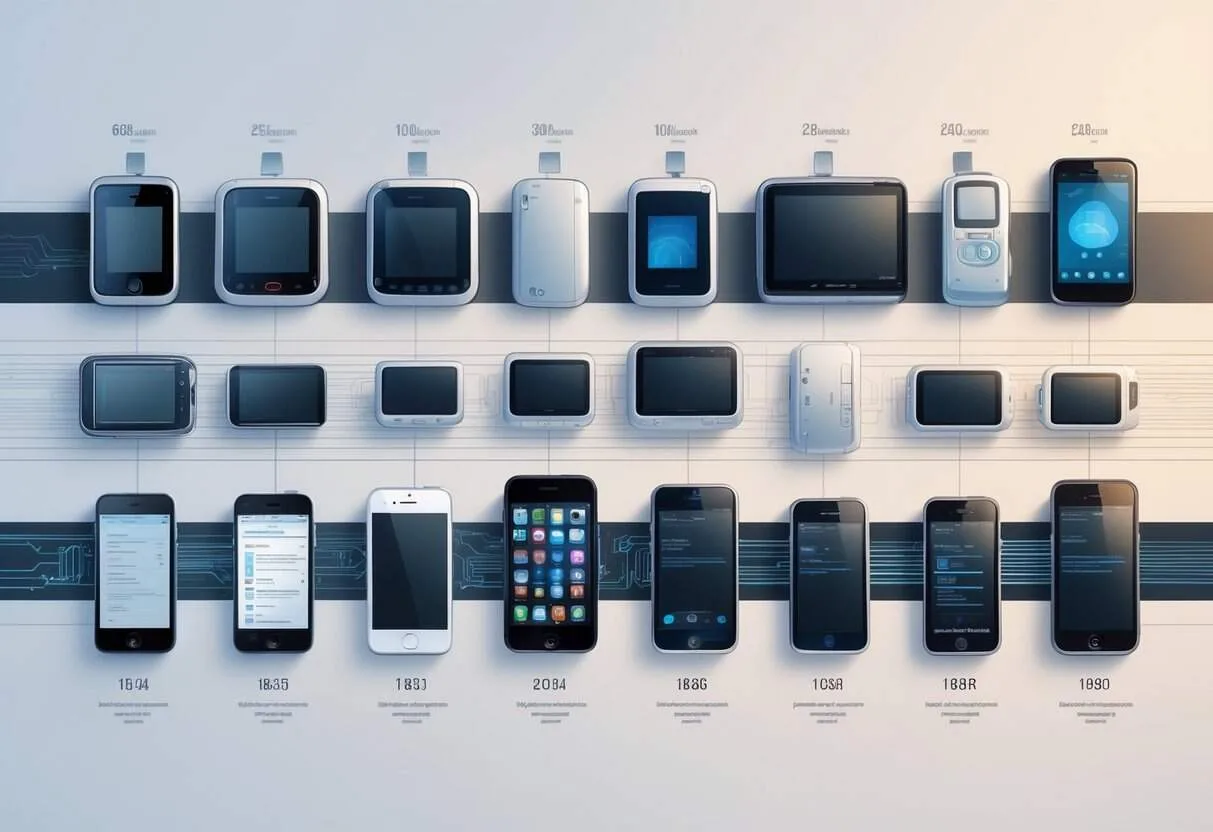
To understand Digimon is to understand its hardware. As the anime cycled into new seasons with new casts, the Digivices underwent radical reinventions. These weren't just aesthetic reskins; they redefined the rules of digital evolution and battle mechanics. The shift from simple v-pet to complex card reader mirrors the real-world tech boom from the 1990s into the 2000s. Each device presented a different philosophy of teamwork, making a comprehensive guide to their evolution a journey through media history itself.
Digimon Adventure (1999) – The Original Digivice
The classic design is a small, rectangular unit with a matte finish, two primary buttons, and a monochrome LCD screen surrounded by a protective casing. It represented a purely vertical evolution line—Rookie to Champion to Ultimate to Mega. The restriction was clear: one partner, one device. The bulk of the interaction happened in moments of crisis; a Digivice couldn't manufacture power out of thin air without an emotional trigger. The antenna on the top left became an iconic status symbol among fans, broadcasting that the user was tuned into the frequency of the Digital World.
In the real-world toy release, this was replicated as a virtual pet that could only succeed if the owner genuinely invested time in training, not just watching.
Adventure 02 (2000) – The D-3 Digivice
With the sequel series came the D-3 (Digital Detect Discover), a device that broke the original’s mold completely. It incorporated new "Armor Digi-Eggs," allowing evolutions that were previously impossible—like Flamedramon and Raidramon. The design was sleeker, often colored brightly with a central circular grip, evoking a control interface rather than a mere scanner. It also introduced the D-Terminal, a supplementary piece of tech that stored Digi-Eggs as data tags. This was the first gadget to suggest that the Digivice was part of an ecosystem of devices.
The D-3 could also open locked "Digi-Ports," turning the world itself into a level that needed a USB-like key.
Digimon Tamers (2001) – The D-Ark Digivice
Tamers complicated canon in the best way possible by making the Digimon franchise a fiction-within-fiction. The D-Ark was a radical departure: it had no antenna and instead used a circular ring scanner. This device introduced the concept of "Slash," where a player physically swipes a trading card through the groove on the side to give their partner a weapon, a speed boost, or an evolution item. This was a masterful blending of the anime with the physical card game. The D-Ark also acted as a bio-emotional sensor, enlarging a Digimon based on the light or darkness in the Tamer’s heart.
It was also able to defend its user from data absorption, making it a piece of armor as well as a tool.
Digimon Frontier (2002) – The D-Scanner
Frontier abandoned the partner-based evolution map entirely: humans became Digimon. The D-Scanner (or D-Tector as known in the West) used barcode scanning technology. In the anime, scanning environmental barcodes or fragmental data allowed the heroes to access the fractured data of Ancient Legends. The device was larger, more like a sidearm grip, and its core function was "Spirit Evolution." The screen displayed a spiraling ring of code that enveloped the user, merging man and monster.
For the toy line, these devices could genuinely scan barcodes from household products to generate virtual items, a novelty that made grocery shopping a side-quest.
Data Squad (2006) – The Digivice Burst
A return to a more aggressive, collared device, the Digivice Burst is a cell-phone-like flip device anchored by a badge. Its primary mechanic was the "Digisoul," a physical aura that the user could manifest by punching a fist into the air and channeling it into the device. Marcus Damon, the protagonist, often engaged in a literal fistfight with the opponent before his partner evolved. This device highlighted a more physical, martial philosophy. It finally made explicit that the human energy was the battery.
The DNA charge indicated the Burst Mode, the ultimate evolution of this era, where the device would glow with a fearsome, high-energy flame.
Digimon Fusion (2010) – The Xros Loader
With Fusion (Xros Wars), the concept of standard evolution was largely discarded in favor of combination. The Xros Loader was a vibrant, red, heavily stylized device with a microphone attachment. Instead of leveling up, the user could store dozens of Digimon internally and then "Xros" (fuse) them into bizarre, chimera-like warriors. This mechanic created the DigiXros, a function that was closer to a strategy game formation screen. It still had a screen, but the focus shifted uniquely to resource management and troop deployment, perfectly mirroring the show's shift to massive army battles where a general commanded an arsenal of monsters from a single dashboard.
Digimon Adventure: (2020) and Beyond
The modern reboot of Adventure brought retro aesthetics forward. The Digivice: used by the current generation looks similar to the classic 1999 model but features full-color displays and haptic feedback, reflecting the modern smartphone era. Furthermore, these devices began to interact seamlessly with mobile apps. The animations inside the screen show pulsating cores and cleaner Menus. In the movies like "Last Evolution Kizuna," the Digivice acts as a tragic life-timer; as the Digidestined grow up and lose their "infinite potential," the device begins to fail and eventually petrifies into stone.
It is a poignant commentary on aging out of childhood wonder, showing that even the most advanced tech cannot replace a lost emotional connection.
Key Characters and Digivice Interactions
The hardware is only half the story; the wearer defines its purpose. Across the eight major series, the way a brush of a thumb across a screen or a defiant shout into a microphone triggers change defines personal growth. The Digivice acts as a seismograph for a child's emotional state. When a Tamer is jealous, scared, or trapped in a lie, the device glitches, dims, or even dark-digs into a corrosive skull-like evolution. This interaction elevates the gadget from a piece of gear to a third character in the narrative.
Notable Digidestined and Their Digital Paradigms
Tai Kamiya’s relationship with his Digivice is pragmatic and combative, favoring sheer offensive power to protect his friends, reflected in the numerous Greymon variants he achieves. In stark contrast, Kari’s Digivice rarely shines violently; instead, it dissipates shadows and acts as a sanctuary, demonstrating the protective, maternal code of the Crest of Light. In Tamers, Takato Matsuki's unique situation—he designed Guilmon himself—means his D-Ark often glitches into uncharted territory, leading to catastrophic but powerful forms like Megidramon before resolving into Gallantmon. Rika Nonaka’s initial view of Renamon as a tool meant her D-Ark was cold, a digital contract rather than a bond; the screen flickered back to warmth only when she admitted they were friends. The device, therefore, becomes a pact validator.
It enforced the rule that you cannot cheat a digital heart.
Impact on Character Development
Character arcs are physically glued to the Digivice's state. When Joe Kido panics, his Digivice seems slow to respond, forcing him to learn courage not through a lack of fear, but through action despite it. This is a visual anchor for internal struggle. In Data Squad, Marcus Damon’s Digivice Burst rarely left his grip; his father’s legacy meant the device was a burden of proof that he was strong enough to protect the dimensional barrier. The famous visual of him physically punching a giant Digimon to charge his Digisoul into the device broke the usual "wizard and spell" dynamic; his body was the relay station.
The burnout of a Digivice is also a narrative tool—when a character suppresses their true self, the connection corrodes. The journey is not just about the Digimon growing bigger, but about the human heart growing resilient enough to sustain a partner across the Digital Field.
Beyond the Screen: The Digivice as a Collectible and Toy
Parallel to the anime canon, the physical Digivice virtual pet revolutionized how fans played. The story might show a dramatic battle, but the toy in your pocket was tracking your steps, beeping for attention during class, and threatening to turn your partner into a Numemon if you didn't clean up digital poop. This dual identity is the secret behind the device's unstoppable commercial success. It wasn't just a prop replica; it was a functional, living portal. Bandai's premium collectibles line continues to iterate on these classic electronics.
The Virtual Pet Revolution
The 1997 "Digital Monster" unit, the precursor to the anime fork, featured a cage-like LCD sprite design and used a weakened "A" button (Attack) and "B" button (Confirm). To evolve an Agumon to a Greymon via the original toy required a specific number of battles and a winning ratio, plus zero care mistakes. This quantified the "bond" into a meritocracy of training. The counter device stopped being simple fun and became a training ground. The Pendulum style added a shaking gimmick; jogging motion recharged the cold meter, literally fusing the player’s lifeblood into the digital creature.
These mechanics gave the Digivice a reputation as a much harder, more dangerous pet than its Tamagotchi cousin, attracting a demographic who wanted the thrill of a sudden mistake wiping out their data file, forcing a reset from a fresh egg.
Modern Collecting and Nostalgia
Today, the Digivice is a nostalgic collector's grail. The "Complete Selection Animation" (CSA) line from Premium Bandai recreates the 1:1 scale show props with high-fidelity soundtracks, voice clips, and glowing LED crystals. These devices trade the demanding virtual pet chip for high-end audio drama chips; they exist purely for immersion and to facilitate the adult collector market, which desperately seeks a physical touchstone to the world of File Island. The return of the original Digivice mold in neon colors, alongside transparent variants showing the motherboard underneath, bridges the gap between obsolete tech and restorative fashion. These items are now proudly displayed in IKEA glass cabinets, their triangular screens still conveying a promise of a parallel dimension just out of sync with our own.
The Cultural Legacy and Technological Inspiration
The Digivice is a snapshot of the "Y2K futurism" aesthetic. It is an artifact of a time when we believed hardware peripherals could unlock hidden layers of reality. This visual language—jagged text, parentheses braces, and neon green data grids—set a standard for how children's media visualized the internet. Unlike the sterile, flat design of modern UI, Digivices were tactile and aggressive. They were industrial machinery for children, and that weight gave the fiction an edge of seriousness.
The device’s arc, from a simple LCD toy to a connected smart object in the 2020 reboot, charts the generational shift in how we view technology: from a mysterious, terrifying cave of monsters to a personalized, cloud-connected extension of ourselves.
Influence on the Digimon Franchise
The toggle-switch and card-slash mechanics of the D-Ark were not just singular events; they seeded design philosophies for a dozen follow-up titles. Video games like Digimon Story: Cyber Sleuth use a "Digivice" hacking interface directly mimicking the Digivice: style, reinforcing that the human protagonist is a "network navigator," not just a tamer. The Digivice-V-, a recent tie-in for the Vital Bracelet watch, fuses the v-pet with a fitness tracker powered by heart rate data. The franchise proved that the Digivice can constantly morph to absorb whatever gadget trend is dominant because its core concept is so solid—an emotion-powered operating system. Explanations of these devices often highlight their staying power in a shifting tech landscape.
Digivices in Popular Culture
In the West, the faintly beeping Digivice is a shorthand for the 2000s Saturday morning block. It signified an intricate, slightly more sophisticated alternative to other monster-collection franchises. Artists often incorporate the cage-frame aesthetic of the D-3 into vaporwave and glitch art, seeing it as a totem of corrupted data. The soccer games that occasionally interrupt the middle of a Digital World crisis—a strange thematic motif in several series—also leverage the Digivice; the players often use the device to analyze the field or even power up athletic kicks. It is that versatility that defines the item’s cultural cachet.
It isn't just a gun, a phone, or a pet; it's a universal remote for a chaotic life, which is something a generation suddenly immersed in the digital age deeply resonated with.
The Future Bond: What's Next for Digivice Technology?
As augmented reality blurs the lines between the Real and Digital worlds, the Digivice stands perfectly positioned for a true breakout into hybrid tech. The Vital Bracelet was just a test run. Imagining a future iteration, one might look at a heads-up display where a D-Ark ring orbits the user's wrist, identifying QR-code-like gates in a city park. The narrative of the latest anime and films suggests a departure from the child-only ownership rule, opening the door to AI-assisted Digivices that learn and predict a user's emotional state. However, the fundamental contract will likely stay the same.
Whether it is cast in steel, plastic, or hard light, a Digivice will always demand a human heart willing to stand up and fight. The code will never write itself; it waits for a command, a beep, and a blinding flash of light that signals one message above all: "Execute Evolution."