Table of Contents
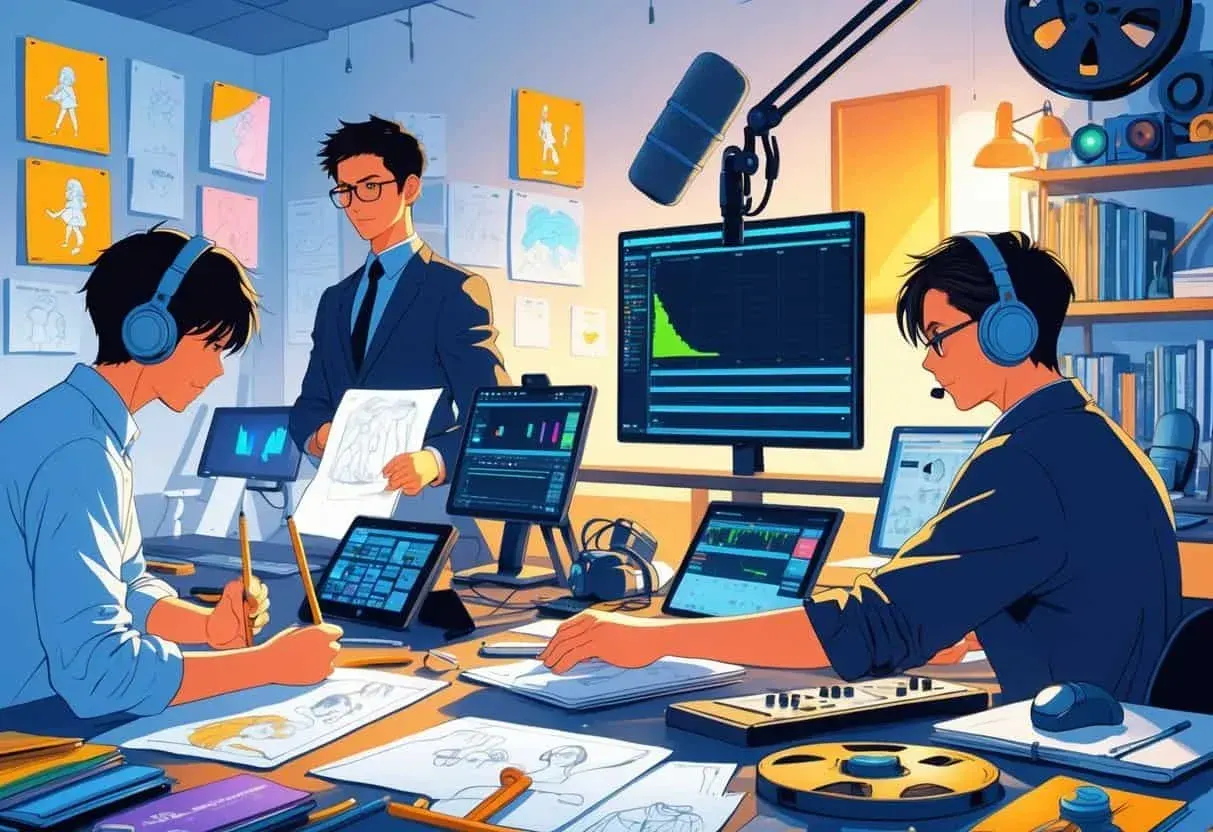
The world of anime production is a bustling ecosystem where raw creative energy meets meticulous technical execution. While the final product often bears the stamp of a celebrated director or a beloved voice actor, the reality is that hundreds of specialized professionals work in concert to bring a single episode to life. From the key animator who defines a character's most critical motion to the sound director who layers audio atmosphere over silent cels, every career path contributes a vital thread to the final tapestry. Understanding these distinct roles not only deepens your appreciation for the medium but also reveals a surprisingly expansive landscape of opportunities for those bold enough to pursue them.
Navigating the modern anime industry means looking beyond the drawing desk and into fields like audio post-production, digital compositing, and production management. The following guide maps these careers, explores how professionals advance, and highlights the studios that shape the kind of work you'll do.
Core Creative Roles in Anime Production
The visual identity of any series is built by a hierarchy of artists, each responsible for a different layer of the image. Whether you're sketching the first rough idea or adding the final lighting effects, your position in this chain defines your creative influence and your day-to-day tasks. Let's break down the most pivotal roles.
Key Animator
Key animators are the architects of motion. Unlike the fluid, frame-by-frame drawings that dominate early learning resources, key animation is about capturing the extremes — the most important poses, peaks of emotion, and turning points in an action sequence. The key animator establishes timing charts and dictates the spacing between drawings, effectively directing the rhythm of a scene. At top-tier studios like Production I.G, a key animator is typically a seasoned artist who has spent years mastering human anatomy, perspective, and the subtleties of character acting. Their layouts and rough keys become the legal blueprint that in-betweeners will later polish.
Beyond drawing prowess, key animators often specialize in specific types of movement — mecha action, realistic everyday gestures, or explosive effects. Many key animators operate as freelancers, moving between studios for sakuga-heavy episodes. The best ones become recognizable to fans through their unique stylistic signatures, a topic frequently analyzed on platforms like Sakugabooru. To reach this level, you need not only technical skill but also the ability to interpret a storyboard creatively while staying faithful to the character designer's model sheets. Mistakes in volume or perspective here cascade through the entire production pipeline, so the role demands immense concentration and a willingness to re-draw shots repeatedly until they pass the animation supervisor's scrutiny.
In-Between Animator
Often the entry point for aspiring artists, the in-between animator transforms two disconnected key frames into a fluid sequence. The work is painstaking and governed by strict timing charts. You must keep character proportions consistent across dozens of drawings, all while adhering to the key animator's intended speed and spacing. In-betweening builds a rock-solid foundation in observation and line control. Many professionals credit their time as an in-betweener with teaching them to spot and fix anatomical errors in a split second.
After two to three years of diligent work, standout in-betweeners are typically offered the chance to draw second key animation, gradually handling simpler cuts on their own before being promoted to full key animator.
Storyboard Artist
Before a single frame is drawn on screen, the storyboard artist translates the episode's script into a visual plan. This sequence of rough panels — complete with camera movement arrows, dialogue notes, and timing approximations — serves as the foundation for all downstream departments. A storyboard artist thinks like a cinematographer, determining shot composition, panning directions, and the emotional temperature of each cut. Studios that value cinematic flair, such as those producing feature films, place enormous trust in their storyboarders to invent transition gags or visual motifs that no one else had considered. The skill set here leans heavily on storytelling intuition and the ability to communicate complex action through quick, readable thumbnail sketches.
Character Designer
The character designer defines the entire visual identity of a cast before production begins. You'll create front, side, and back reference sheets, multiple expressions, and detailed breakdowns of complex clothing or armor. Crucially, the designer must balance aesthetic appeal with animatability. Overly intricate hair or costume details that look beautiful in a static illustration can become a nightmare for key animators who need to draw that character thousands of times. This job requires close collaboration with the director and lead animation supervisors.
A successful character designer internalizes the project's tone — a comedic slice-of-life show demands softer, more malleable designs than a gritty psychological thriller. Many character designers build careers by adapting light novel or manga illustrations into anime-appropriate forms, often becoming the public face of a franchise alongside the original creator.
Sound Direction and Post-Production Careers
Visuals alone never tell the whole story. The audio landscape — from the pluck of a single guitar string to the ambient hum of a neon-lit street — shapes the viewer's emotional response at a subconscious level. Careers in sound direction and editing offer a non-drawing path into the industry that is just as creatively demanding.
Sound Director
The sound director is the conductor of the audio experience. During recording sessions, you sit in the booth guiding voice actors through their lines, adjusting delivery, pacing, and emotional nuance until the dialogue matches the animation's lip flaps and the scene's subtext. Your work extends far beyond the studio glass; you also collaborate with composers to decide exactly where the music swells, stops, or stays eerily silent. The sound director works alongside the series director to design the sonic identity of the entire show. For example, a horror anime might rely on deliberate, unsettling gaps in sound, while a mecha series needs a cacophony of layered mechanical effects.
A deep technical knowledge of mixing boards and digital audio workstations is expected, but the real hallmark of a great sound director is an instinct for how sound can suggest space, memory, and tension without a single visual cue. When done well, you make viewers feel the weight of a room simply by how footsteps echo.
Sound Editing Specialist
Once the raw audio is captured, the sound editing specialist takes over. This role involves meticulously cleaning dialogue tracks, removing pops and background noise, and then syncing every line to the precise frame of animation. You'll also layer Foley effects — footsteps, cloth rustles, door creaks — and integrate them with pre-recorded sound effect libraries. A single action scene can contain hundreds of individual audio clips that must be trimmed, faded, and balanced. Specialists work inside software environments to sculpt the final auditory texture, often juggling dozens of tracks simultaneously.
The role demands acute hearing stamina and a systematic mind; an overlooked audio spike in episode three can ruin the immersion for a million viewers. Many sound editors start as assistants before earning the trust to handle complete episode mixes on their own.
Composer and Music Production
While sometimes an external contractor, the composer's relationship with the production team is intimate. You work from early storyboards to write leitmotifs — recurring musical themes associated with characters or locations. The timing of music cues is a conversation between you, the sound director, and the episode director. A well-placed silence can be as powerful as a full orchestral swell. Careers in anime music often run parallel to Japan's broader music industry, with composers building portfolios across games, TV dramas, and independent film.
Production Management and Support Roles
Behind every brilliant cut of animation is a framework of schedules, budgets, and logistics that keeps the studio from collapsing. Production assistants and line producers are the unsung heroes who make sure key animators get their assignments on time and that no episode airs as a black screen.
Production Assistant (PA)
The production assistant is the entry-level bedrock of the production desk. You deliver materials between departments, pick up corrected layouts from animation directors, and maintain the sacred scheduling binders that track each cut's progress. This job teaches the entire pipeline faster than any other role because you physically see how a stray storyboard note becomes a problem in the photography section. The best PAs develop a sixth sense for bottlenecks, learning to anticipate which cuts will arrive late and negotiating buffer days accordingly. It is a high-stress, low-pay position that often leads directly to roles as production manager, line producer, or even creative positions for those who absorb enough visual knowledge along the way.
Digital Photography and Compositing
Modern anime production is finalized inside compositing software. The digital photography department takes the scanned line art and painted backgrounds and integrates them, adding camera effects like depth blur, lighting passes, and digital screen glows. A compositor can subtly transform a flat panning shot into a three-dimensional experience through parallax effects and atmospheric particle layers. This role suits artists who love technology, color grading, and the final polish that gives a show its polished "look." Studios specializing in gorgeous backgrounds or realistic lighting, such as those influenced by Makoto Shinkai's works, rely heavily on skilled compositors to achieve their signature visual style.
Pathways and Advancement in the Anime Industry
Anime careers rarely follow a linear corporate ladder. Instead, progression depends on demonstrating repeated reliability, building a recognizable portfolio, and forming connections with directors and animation supervisors who will vouch for you.
Career Development Opportunities
The classic path begins with two or three years as an in-betweener, where you absorb studio standards and prove your precision. From there, animators move into second key animation (cleaning up rough key frames) and then to full key animation. The jump to animation supervisor — where you correct the work of other key animators to maintain a unified style — requires not only top-tier drawing ability but also the pedagogical patience to explain corrections without discouraging junior staff. Those with leadership ambitions may eventually become episode directors or series directors, overseeing entire chunks of narrative. Parallel tracks exist in the sound department: a Foley assistant can rise to head sound editor, while a recording room runner can train to be a mixing engineer.
Continuous learning is non-negotiable. Software like Clip Studio Paint and Retas Studio are standard tools, and studios may use proprietary pipeline management software that new hires must master quickly. Attending industry workshops and conventions like the Association of Japanese Animations seminars, or studying sakuga analysis online, helps emerging artists absorb the techniques of masters. A strong portfolio carried on a personal website or shared through industry-specific social circles often carries more weight than formal academic credentials.
Studio Specialization and Notable Companies
Where you work shapes what you become. A large, established studio like Production I.G is renowned for high-budget action and detailed character acting. Animators there are likely to develop a command of realistic motion and intricate timing. The studio's in-house training programs are structured, and advancement tends to be incremental but stable. By contrast, Studio Trigger has cultivated a house style rooted in expressive, exaggerated animation and a willingness to let individual animators leave bold creative fingerprints on scenes.
Working there might accelerate your visibility as a creative artist but demands adaptability and a thick skin for constant iteration.
Smaller or mid-sized studios, sometimes lumped under the concept of "Development" or grassroots outfits, offer a different calculus. You may be asked to wear multiple hats — character design today, color scripting tomorrow. This can build a versatile skill set faster than a rigid department in a large company. However, resources for formal training may be scarce, and you'll likely need to be self-driven to improve your draftsmanship. The Japanese animation industry also includes a vast network of specialized sub-contracting studios that handle specific tasks like background art (e.g., Kusanagi) or effects animation, which can be perfect niches to enter if you want to become an indispensable expert in one domain.
Education, Skill Requirements, and Breaking In
While there is no single mandatory credential to enter anime production, many professionals graduate from specialized vocational schools in Japan or build portfolios through art colleges abroad. Drawing fundamentals — anatomy, perspective, gesture — are the universal currency. For sound roles, a degree or certification in audio engineering provides a technical baseline, though apprenticeships are the most direct route. Production assistant jobs rarely require an art portfolio; instead, they test your organizational ability, communication skills, and resilience under crunch-time pressure. Demonstrating that you can manage a chaotic spreadsheet and speak politely to an exhausted director is often the deciding factor.
International artists frequently enter the industry through online networking and remote freelance contracts. Platforms linked to industry associations, such as announcements from the Japan Video Association, and job postings on studio career pages are the most reliable sources for legitimate openings. Many non-Japanese animators have built their reputations entirely through posting sakuga clips on social media, attracting attention from directors who value a fresh stylistic voice. The key is to produce work that fits within a professional pipeline — clean, on-model, and consistently delivered.
Challenges and Rewards of an Anime Career
No honest career guide can ignore the widely discussed pressures of anime production: tight deadlines, low entry-level pay for in-betweeners, and the physical toll of repetitive drawing tasks. The industry's reliance on seasonal broadcast schedules means crunch periods are cyclical and intense. Burnout is a real occupational hazard. Yet for many, the reward lies in the collaborative rush of seeing your drawings move on screen with full voice acting and music for the first time. The anime community's global reach means that your work can resonate with audiences on every continent, creating a sense of creative impact that few other jobs can offer.
Advancement often goes hand-in-hand with specialization. If you become one of the few artists who can animate horses convincingly, or a sound editor who knows how to build a perfect spaceship engine hum, your niche becomes both a shield against commoditization and a ticket to steady freelance work. Learning to negotiate your rates, manage your own taxes as a freelancer, and protect your wrist health with ergonomic tools are practical skills taught by experience, not art school.
The Evolving Industry and Future Opportunities
Digital pipelines have lowered the barrier for remote contributors, leading to an increase in international co-productions. Streaming platforms are investing billions in original anime, creating an unprecedented demand for content — and for talent. Roles like digital compositor and CGI animator are growing steadily, as even traditionally 2D shows integrate 3D models for complex rigging. The sound department, too, is evolving with object-based spatial audio formats that demand new technical acumen. Aspiring professionals who stay current with both artistic fundamentals and emerging tools will find that the anime industry's appetite for fresh talent is wider than ever, even as competition remains fierce.
The career path from key animator to sound director is not a straight line but a web of intersecting disciplines. By understanding each role's specific demands and the studio cultures that foster them, you can begin charting a course that aligns with your strengths — whether that means mastering the pencil, the mixing console, or the production schedule. What matters is that every job in this ecosystem, no matter how invisible, is an active participant in creating the stories that captivate the world.