Table of Contents
Halloween practically demands a marathon of spine-tingling anime—whether you crave twisted psychological thrillers, ghost-infested tales, or something that simply makes your skin crawl. The medium stretches far beyond cheap jump scares, offering layered storytelling, atmospheric dread, and characters you genuinely fear losing. When you curate the right lineup, you transform an ordinary October evening into a full-body fright experience that lingers long after the credits roll.
The best spooky anime for Halloween fuse suspense, mystery, and a creeping sense of wrongness that makes you pause and glance over your shoulder. You’ll find household names that defined the genre, along with hidden oddities that burrow under your skin without a single drop of blood. These shows dig into trauma, isolation, and the uncanny—perfect for viewers who want something more substantial than a fleeting startle. Whether you’re huddled under a blanket solo or streaming with a group of horror fiends, the right picks turn your night into an unforgettable fright fest.
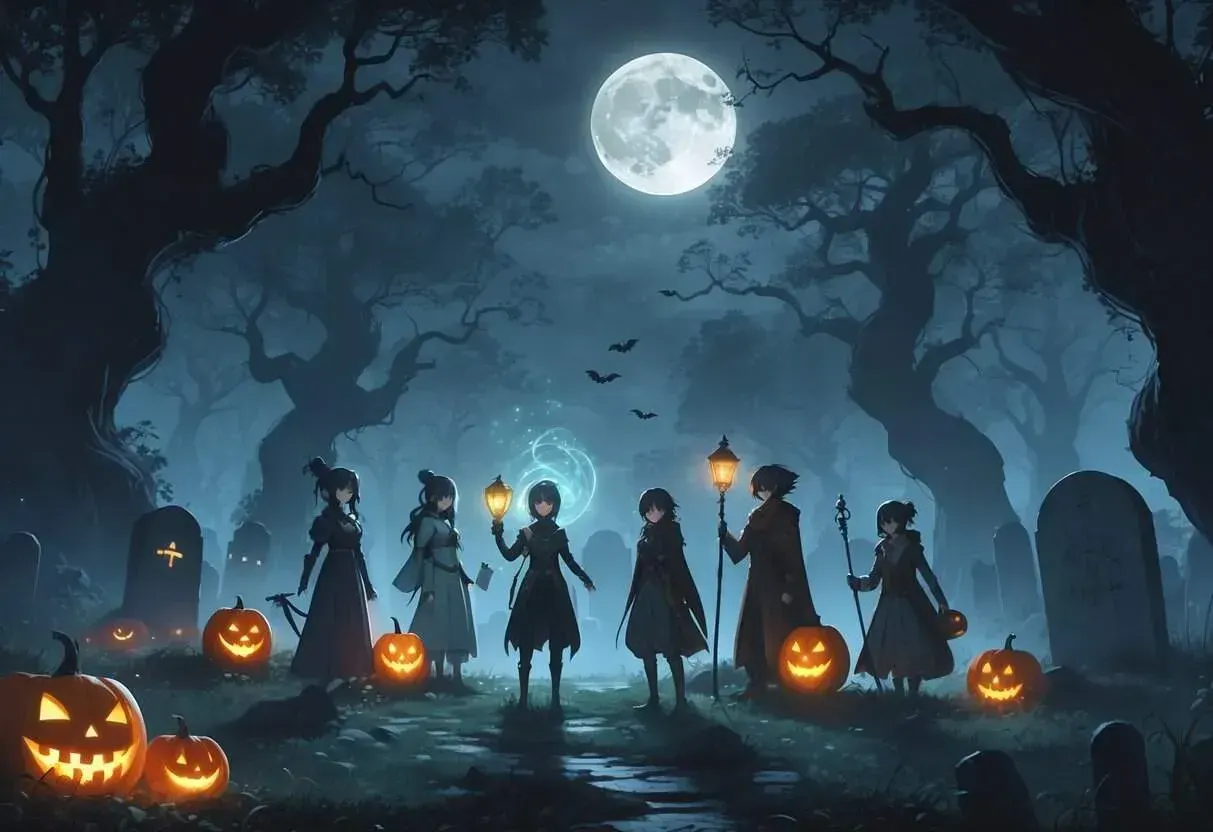
What separates a throwaway horror fix from an anime that truly sticks with you? Often it’s the patience to let unease build. Many titles on this list reject the modern impulse for constant shocks, instead layering dread through mundane schoolyards, sleepy rural villages, and the flickering glow of a CRT monitor. The supernatural elements serve more than spectacle—they become metaphors for grief, alienation, and the fragility of the mind. From genre-defining classics like Perfect Blue to modern sensations like Jujutsu Kaisen’s goriest arcs, there’s a distinct flavor for every kind of fan.
Lining up your playlist means picking a balance: a few palate-cleansers, a few cerebral dread bombs, and at least one wildcard that nobody in your watch party saw coming. Below, we’ve assembled a guide that not only names the essentials but also dives into subgenres, cult oddities, and practical strategies to keep your Halloween marathon humming without descending into sensory overload.
Key Takeaways
- Spooky anime blend supernatural horror with psychological tension for maximum Halloween atmosphere.
- Every type of horror fan will find something—from gothic vampire sagas to abstract experimental short films.
- Mixing iconic hits and obscure gems prevents monotony and makes the viewing experience richer.
- Pacing, ambience, and a few well-timed palette cleansers can turn a random binge into a cohesive fright narrative.
Top Spooky Anime to Watch This Halloween
Some anime ooze dread from the very first frame—whether through unsettling sound design, washed-out color palettes, or narratives that weaponize your own expectations. While jump scares have their place, the most enduring titles build a pervasive sense of wrongness that sneaks up on you. The following selections represent two dominant strains: classic horror with a capital H, and psychological thrillers that dismantle reality from the inside out.
Essential Horror Anime Classics
If you’re after traditional horror structures—curses, secluded villages, mounting body counts—start with Another and Shiki. Another revolves around a cursed middle-school classroom where students and their relatives die in increasingly grotesque accidents. The mystery surrounding “Misaki” unravels with a precision that makes every new death feel like a grim inevitability; you’ll flinch at umbrellas, staircases, and elevators for weeks afterward.
Shiki takes a slower, more philosophical route. A rural village is invaded by “shiki”—corpse demons that blur the line between vampire folklore and medical horror. The series explores what happens when the human survivors start to resemble the monsters they hunt, asking uncomfortable questions about life, death, and the morality of extinction. Its deliberate pacing can feel suffocating, but that’s exactly why the climax lands with such devastating force.
For those who want horror anchored in fractured identity, Perfect Blue remains untouchable. Satoshi Kon’s feature debut follows Mima, a former pop idol whose transition to acting plunges her into a hallucinatory nightmare of stalkers, doppelgängers, and a dissolving sense of self. The film never relies on supernatural monsters—the true terror comes from not being able to trust your own memories. Even today, its commentary on fandom, exploitation, and performance anxiety feels razor-sharp.
Must-Watch Psychological Thrillers
Sometimes the scariest thing isn’t what goes bump in the night but what takes up residence inside your own head. Paranoia Agent (also by Satoshi Kon) starts with a seemingly simple premise: a mysterious boy on rollerblades attacks strangers on the street. But the investigation quickly spirals into a collective psychosis, exposing how gossip, guilt, and social pressure can create a monster far more dangerous than any physical assailant. Individual episodes function as self-contained horror vignettes while feeding into a larger, deeply unsettling whole.
Serial Experiments Lain leans hard into techno-horror. The story follows Lain Iwakura, a quiet schoolgirl who becomes entangled in the Wired, a global communications network that begins to supplant reality. Visually disorienting and narratively dense, the series anticipates modern anxieties about digital identity, surveillance, and solipsism. It never resolves neatly, and that open-ended dread is exactly the point. If you’re the type who lies awake contemplating whether you exist at all, this one will burrow deep.
These shows reject easy catharsis. They’re exercises in sustained tension, rewarding patient viewers with an unease that outlasts the final episode. For a Halloween night that prioritizes shivers over shrieks, this is where you start.
Impactful Subgenres for Frightful Viewing
Horror anime isn’t a monolith. Its most memorable works often emerge from the blurred boundaries between supernatural mystery, gothic romance, and quiet folk terror. Two subgenres consistently deliver chills precisely because they trade gore for atmosphere—and because they make you fall in love with characters just in time to break your heart.
Supernatural and Mystery Horror
Here, the threats are rarely visible, and understanding them demands the same skills as a detective. Mononoke stands as the gold standard. Its traveling medicine seller doesn’t simply exorcise spirits; he must first uncover their Form, Truth, and Regret—a process that turns every encounter into a psychological excavation. The show’s avant-garde art style, with textured washi-paper backgrounds and shifting color palettes, amplifies the otherworldliness. You’ll witness tragedies born of human cruelty as often as demonic malice, making each resolution bittersweet.
The Junji Ito Collection adapts many of the master mangaka’s short stories, from “Fashion Model” to “Shiver.” While the animation quality draws mixed responses, the core horror imagery—spirals consuming entire towns, unsettling human silhouettes, contagious obsessions—remains deeply effective. The anthology format means you can drop in anywhere and find something uniquely disturbing. What ties it together is Ito’s obsession with the mundane turned monstrous: a simple shape, a family curse, an inexplicable hole in a mountain. These are stories that linger in your periphery long after you’ve looked away.
Mystery acts as the engine. You’re not just waiting for the next fright; you’re actively piecing together clues, which makes the eventual reveal feel earned. For a Halloween night that feeds your inner investigator while keeping your pulse elevated, this subgenre delivers.
Vampires and the Macabre
Vampire stories in anime rarely play it safe. They lean into gothic grandeur, existential dread, and the raw horror of predation. Vampire Hunter D (especially the 2000 film Bloodlust) blends post-apocalyptic sci-fi with Dracula-esque imagery, pitting a quiet dhampir against immortal aristocrats. The world is bleak, the action balletic, and the moral questions—can a vampire love? is humanity worth saving?—add weight beneath the baroque surface.
Shiki reappears here because, at its core, it’s one of the most honest vampire narratives ever animated. The shiki don’t sparkle or seduce; they rot and spread like a plague. The villagers’ descent into paranoia and brutality mirrors the collapse of civilization under any existential threat. By the finale, the line between human and monster has been smeared into a bloody, indistinguishable mess. It’s not an easy watch, but it’s essential for anyone who wants their vampire fiction to actually hurt.
Beyond these pillars, titles like Hellsing Ultimate offer a more bombastic, action-horror take, while Kuroshitsuji (Black Butler) dabbles in macabre aesthetics without the constant terror. For Halloween, however, stick with the entries that treat bloodshed as tragedy rather than spectacle. The tone is dense and operatic, the fear primal.
| Key Elements | Example Titles | What You Experience |
|---|---|---|
| Spirits & Curses | Mononoke, Junji Ito Collection, Ghost Hunt | Mystery, suspense, dark folklore, the pain of unfinished business |
| Vampire Conflict | Vampire Hunter D, Shiki, Hellsing Ultimate | Gothic horror, survival against overwhelming odds, deep moral ambiguity |
| Folkloric Dread | Mushishi (select episodes), Natsume's Book of Friends (dark episodes) | Quiet terror, nature spirits both benign and malevolent, creeping melancholy |
Unconventional and Cult Favorites
Not every fright needs to follow a linear narrative. Some of the most rewarding Halloween watches are the ones that bend form, mix media, or feel like relics from a fever dream. These titles reward adventurous viewers and often become the ones you won’t stop talking about.
Anthologies and Short Stories
Anthology series thrive on variety—if one tale doesn’t land, the next one arrives in fifteen minutes. The Junji Ito Collection is the obvious entry point, but don’t sleep on the Yamishibai franchise. Each episode runs only a few minutes, presented in a deliberately crude, kamishibai (paper theater) style that turns urban legends, schoolyard ghost stories, and obscure folklore into bite-sized nightmares. The limited animation focuses your attention on the narrator’s voice and the chilling simplicity of the visuals, often hitting harder than more elaborate productions.
The Gakkou no Kaidan (Ghost Stories) English dub is a legend unto itself—an official localization that went so far off-script it became a raunchy comedy. While not genuinely scary, its bizarre Halloween energy makes it a perfect late-night wind-down after you’ve exhausted the heavier fare. For serious anthology chills, however, seek out the OVA Petshop of Horrors, which frames four standalone tales of desire and consequence around a mysterious shop in Chinatown. Each story ends with a twist that feels both inevitable and cruel.
Retro and Experimental Horror
Yoshiaki Kawajiri’s filmography represents a grimy, neon-drenched corner of anime horror. Demon City Shinjuku and Wicked City combine body horror, noir sensibilities, and demonic incursions with a gritty, hand-drawn texture that modern digital clean-ups rarely replicate. The animation itself feels aggressive; tentacles, bulging veins, and impossible geometries leap off the screen. These films are artifacts of the late ’80s/early ’90s OVA boom, when creators took outrageous risks and moral boundaries were practically nonexistent.
For a more avant-garde flavor, try the anthology Neo Tokyo. Kawajiri’s segment “The Running Man” is a masterclass in tension, depicting a fatal futuristic race inside a telepathic arena. The entire short unfolds with minimal dialogue, relying on sound design and fluid motion to convey mounting horror. It’s experimental in the truest sense—less concerned with plot than with the sensation of being trapped.
Retro horror can feel jarring at first if you’re accustomed to contemporary polish, but that jankiness works in your favor. It unsettles your senses and reminds you that horror doesn’t have to be comfortable or predictable to be effective.
Tips for an Unforgettable Anime Halloween Night
Curating a playlist is only half the battle. How you sequence your picks, control your environment, and manage the emotional rollercoaster makes the difference between a forgettable binge and a night you’ll reference for years. The goal isn’t to numb yourself into indifference—it’s to stay present, engaged, and just the right amount of scared.
Balancing Spooky and Slice-of-Life
Stacking five consecutive episodes of pure terror can paradoxically diminish the fear. Your psyche adapts, and soon you’re checking your phone instead of cowering behind a pillow. Interleave lighter episodes to reset your baseline. Shows like Mieruko-chan serve this purpose beautifully—a comedy-horror hybrid where the protagonist sees grotesque spirits but tries desperately to ignore them. The contrast between slice-of-life awkwardness and genuinely unnerving monster designs creates a rhythm that keeps you off-balance without exhausting you.
Rosario + Vampire works as another palate cleanser, blending harem rom-com tropes with monster-of-the-week shenanigans. It never takes itself seriously, which makes the sudden dark turns in its later arcs all the more startling. Similarly, the quieter, melancholic episodes of Mushishi or Natsume’s Book of Friends offer ghostly encounters that are more bittersweet than terrifying, giving you a moment to breathe and reflect before plunging back into hysterics.
The key is intentional pacing. If your marathon runs four hours, structure it like a film: an unsettling hook, a slow-burn middle, a palate cleanser, a peak of intensity, and a cool-down. This approach keeps the scares potent rather than numbing, and it mirrors the emotional arc of a well-constructed horror story itself.
Maximizing Jumps and Chills
Jump scares animate a primal part of the brain, but they depreciate quickly if overused. Crowbarring three Tokyo Ghoul torture scenes back-to-back won’t triple the impact—it’ll just teach you to expect the next one. Spread your high-intensity picks (Jujutsu Kaisen’s Shibuya Incident arc, Corpse Party, Another) across the lineup, with at least 20 minutes of lower-key material in between. That way, every scream lands fresh.
Your environment matters as much as the screen. Turn off overhead lights and rely on a single warm lamp or some flickering LED candles—the kind that cast dancing shadows. Wear headphones, even if you’re in the room alone, because so much of anime horror lives in the audio mix: the scrape of a chair on tatami, a whispered voice just off-center, the sudden silence before a reveal. A decent pair of over-ear cans or a well-placed soundbar will trap you inside the soundscape, making distant knocks and floorboard creaks indistinguishable from real-life noises.
Finally, consider the element of surprise. Queue up a few titles your viewing partners have never heard of. Don’t reveal the synopsis. Let them walk into Perfect Blue cold, or start Mononoke without context. The disorientation of not knowing what to expect amplifies every minor sting—a jump cut, a distorted expression, a single frame of subliminal imagery.
By the end of the night, you might find yourself glancing over your shoulder more than you’d like, and that’s exactly the point.
When Halloween anime is chosen and sequenced with care, the night becomes more than a passive scroll—it becomes an event. The shadows in your room will feel thicker, the pauses between episodes heavier. And if you catch yourself checking the dark hallway between episodes, you’ll know you did it right.