Table of Contents
Shonen anime lives and breathes on the tension between its characters. While epic battles and world-ending stakes are part of the formula, it is often the one-on-one dynamic between a hero and a rival that defines a series. A well-crafted rivalry transforms simple fight scenes into emotional milestones, forcing characters to grow not just in strength but in conviction, humility, and self-awareness. Whether it is the explosive clash of super-powered warriors or the quiet, intellectual sparring of genius minds, these relationships create the narrative backbone that keeps viewers coming back week after week.
The best rivalries in shonen anime combine raw emotional conflict, personal history, and the unrelenting desire to surpass one another. They turn adversaries into mirrors, reflecting what a character could become—or what they fear they already are.
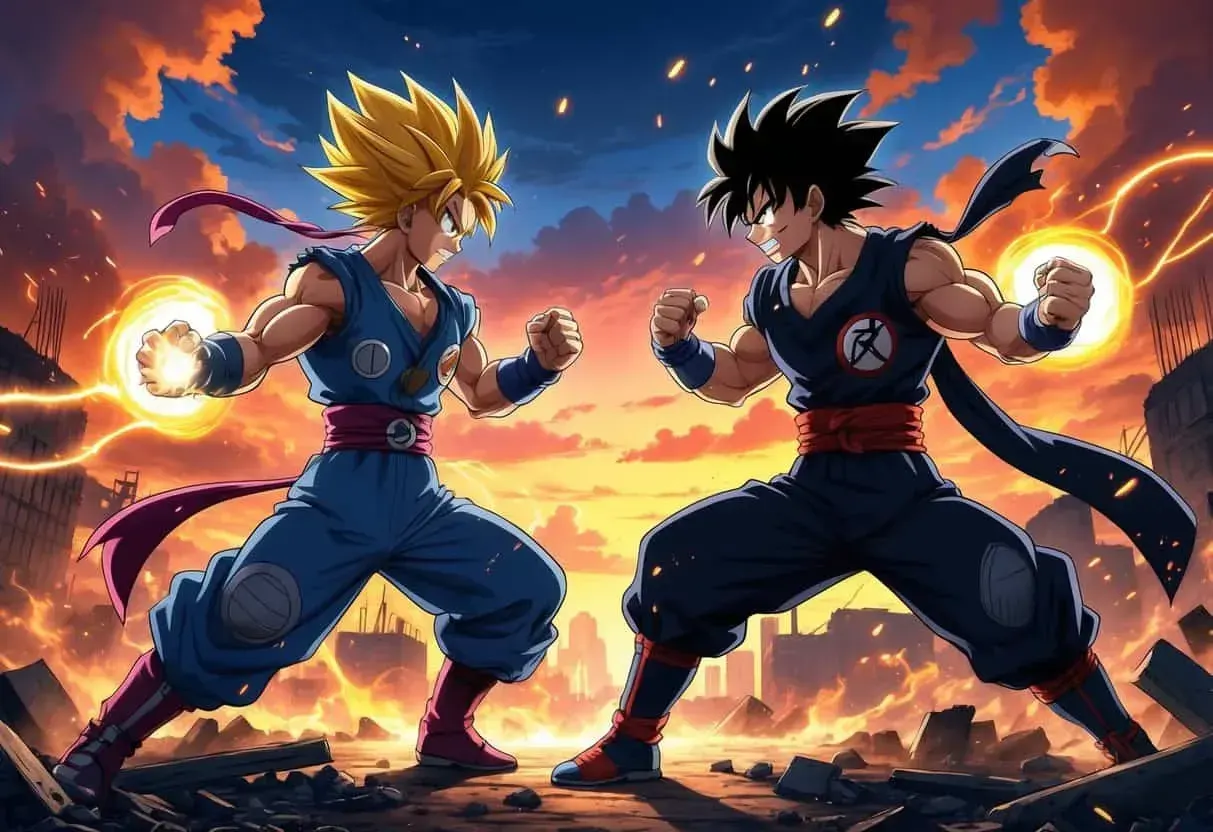
From the pages of Weekly Shonen Jump to modern streaming hits, rivalries have only grown more nuanced. They drive character arcs, anchor major plot twists, and often outlast the main villain as the series' most compelling source of conflict. Understanding what makes these bonds work—and which pairings stand above the rest—gives you a deeper appreciation for the storytelling craft behind shonen anime. This ranking examines the most iconic, influential rivalries across decades of the medium, from classic martial arts showdowns to genre-bending psychological duels.
The Anatomy of an Iconic Shonen Rivalry
An iconic rivalry is far more than two characters who dislike each other. It is a relationship built on contrasting philosophies, shared history, and a balance of power that keeps the outcome uncertain. When you look at the pairs that have defined the genre, a few core ingredients emerge.
First, there is a fundamental difference in worldview. Goku’s carefree love of combat clashes with Vegeta’s pride-driven obsession, just as Naruto’s belief in bonds contrasts with Sasuke’s isolation. This clash of ideals fuels every encounter, making each fight a debate as much as a brawl. Second, mutual influence is essential. A true rival forces the other to evolve; simply beating an opponent once doesn't sustain long-term engagement.
Goku and Vegeta repeatedly break each other’s limits, while Deku’s analytical approach slowly reshapes Bakugo’s understanding of heroism.
Third, the rivalry must have high emotional stakes. The audience needs to understand what winning means to both sides. When Spike Spiegel faces Vicious, it’s not just a gunfight—it’s the culmination of a shared, painful history. Finally, an iconic rivalry spans multiple story arcs. It simmers in the background, explodes in pivotal moments, and often finds resolution only near the series’ end.
This longevity gives the relationship weight, turning a simple competition into the emotional core of the story.
The Top 10 Shonen Anime Rivalries (Ranked)
The following rivalries have left an indelible mark on anime history. They are ranked not only by popularity but by their narrative impact, complexity, and how they pushed the boundaries of what a shonen rivalry can be.
1. Goku vs. Vegeta (Dragon Ball Z)
No rivalry in anime is more foundational than that between Goku and Vegeta. From Vegeta’s invasion of Earth to their universe-threatening battles in Dragon Ball Super, this Saiyan conflict has defined generations of shonen storytelling. Goku vs. Vegeta is a masterclass in pride versus purity. Vegeta’s royal upbringing and simmering inferiority create a one-sided obsession that Goku mostly views as friendly competition. Yet it is this imbalance that makes the dynamic so compelling: Vegeta’s entire identity becomes wrapped up in surpassing Kakarot, pushing him from villain to anti-hero to father and protector.
Their battles, from the Saiyan Saga’s beam struggle to the emotional clash in the Buu Saga, are less about who wins and more about what each fight reveals about their character. By the time Vegeta admits Goku is number one during the Kid Buu fight, the rivalry has evolved into the deepest mutual respect in the medium.
2. Naruto Uzumaki vs. Sasuke Uchiha (Naruto & Naruto Shippuden)
If Goku and Vegeta defined rivalry for a previous era, Naruto and Sasuke perfected it for the 2000s. Their bond is complicated by loneliness, trauma, and the thirst for acknowledgment. Naruto and Sasuke's rivalry starts as childish competition but transforms into a desperate struggle to save a friend. Sasuke’s descent into darkness mirrors Naruto’s unyielding hope, and every confrontation—from the Valley of the End to their final battle after the war—carries the weight of years of shared pain. The rivalry forces Naruto to grow from a loudmouthed prankster into a leader who understands that true strength means shouldering another’s hatred.
For Sasuke, Naruto represents the bond he can never truly sever, making their final reconciliation one of the most cathartic moments in shonen history.
3. Monkey D. Luffy vs. Marshall D. Teach (One Piece)
One Piece is built on the pursuit of freedom, and no rivalry embodies the dark side of that dream like Luffy versus Blackbeard. Unlike many shonen rivals who eventually become allies, Blackbeard is Luffy’s ideological opposite and destined archenemy. Both believe in dreams, but while Luffy’s dream is selfless and rooted in friendship, Blackbeard’s is fueled by deception, murder, and a terrifying will. Their parallel journeys—gathering crews, breaking into Impel Down, clashing with Whitebeard—create a slow-burn conflict that will inevitably decide the fate of the seas. This rivalry is unique because it plays out across the entire world rather than in direct, repeated duels, making each rare encounter crackle with significance.
4. Izuku Midoriya vs. Katsuki Bakugo (My Hero Academia)
Deku and Bakugo reimagine the childhood-friends-turned-enemies template with a nuanced exploration of bullying, admiration, and what it means to be a hero. Bakugo’s aggressive inferiority complex, born from Deku’s sudden quirk and relentless spirit, turns every interaction into a power struggle. Their first sanctioned fight after Bakugo’s kidnapping is a brutal, emotional release that redefines their entire relationship. As the series progresses, Bakugo’s secret guilt over All Might’s fall and his gradual recognition of Deku’s strength add layers of vulnerability to the rivalry. It’s a dynamic that proves rivalry can be a path to healing as much as a path to power.
5. Amuro Ray vs. Char Aznable (Mobile Suit Gundam)
Pulling shonen rivalry into the realm of mecha and political warfare, Amuro and Char are both soldiers and symbols. Their Newtype connection links them psychically, but their conflict is deeply human. Char’s quest for revenge against the Zabi family and his later radicalization contrast with Amuro’s gradual maturation from reluctant pilot to defender of Earth. Their battles—from the original Mobile Suit Gundam to Char’s Counterattack—carry philosophical weight about the cycle of war and the possibility of understanding. This rivalry, shaped by director Yoshiyuki Tomino and later Osamu Dezaki, set the standard for morally complex antagonists and remains a touchstone for the entire mecha genre.
6. Light Yagami vs. L (Death Note)
A rivalry of wits rather than fists, Light and L prove that shonen tension can thrive in a cramped investigation room. Their cat-and-mouse game is a psychological thriller that hinges on ego, justice, and the mask of normalcy. L’s unorthodox methods and quiet certainty directly challenge Light’s god complex, and every conversation becomes a battle of manipulation. The moment L reveals himself to Light is one of anime’s great turning points—two geniuses acknowledging each other as worthy adversaries. Their rivalry redefined what a shonen conflict could look like, proving that deductive warfare can be just as gripping as any energy blast.
7. Spike Spiegel vs. Vicious (Cowboy Bebop)
Set in a noir-infused future, the Spike-Vicious rivalry channels betrayal, lost love, and the weight of the past. Spike’s laid-back bounty hunter persona is a shield for the wounds inflicted by his former syndicate partner. Their clashes, framed by Yoko Kanno’s haunting score, are short, violent, and steeped in fatalism. This is not a rivalry about growth but about the inability to escape one’s own history. Vicious represents the monster Spike could have become, and their final confrontation atop the cathedral is a poetic, bloody end that cements their place in anime legend.
8. Seiya vs. Phoenix Ikki (Saint Seiya)
Masami Kurumada’s Saint Seiya introduced a rivalry that mixes mysticism with brotherly conflict. Ikki, the Phoenix Saint, begins as an antagonist driven by rage against the very institution his brother Seiya serves. Their battles—often ending in sacrifice and rebirth—mirror the lore of the Phoenix constellation itself. Unlike many rivals who vie for the same goal, Seiya and Ikki fight over the meaning of loyalty and the cost of power. Ikki’s eventual return to the Bronze Saints’ side is never a simple heel-turn; it’s hard-won through repeated clashes that force both to acknowledge the other’s courage.
This rivalry laid the groundwork for the “brooding anti-hero sibling” archetype seen across countless later anime.
9. Yusuke Urameshi vs. Hiei (Yu Yu Hakusho)
Before Vegeta became the model for a villain-turned-ally, Hiei walked that path with unmatched coolness. Yusuke and Hiei’s first fight in the Dark Tournament is a masterclass in choreography and character revelation. Hiei’s contempt for humanity gradually erodes as Yusuke’s stubborn refusal to give up proves stronger than any Jagan eye. The rivalry shifts from antagonism to a respectful, almost sibling-like bond, but the competitive edge never fades. Hiei’s speed and technique challenge Yusuke’s brute spirit, forcing the Spirit Detective to become a more tactical fighter.
Their dynamic proves that even the coldest heart can be warmed by relentless, good-hearted determination.
10. Gon Freecss vs. Hisoka Morow (Hunter x Hunter)
Few rivalries are as unsettling—and fascinating—as the one between Gon and Hisoka. Hisoka’s predatory interest in Gon’s potential turns their encounters into a hunting game where the boy is both prey and future prize. The Heaven’s Arena fight, where Gon finally lands a punch on Hisoka’s face, is a triumphant moment that’s immediately undercut by Hisoka’s… arousal. This rivalry isn’t about hatred or ideological conflict; it’s about raw, amoral fascination. It pushes Gon into a world where morality is relative and danger is exhilarating, laying the psychological groundwork for his later, darker transformation.
Hisoka remains the wild card that defines Hunter x Hunter’s unpredictable spirit.
Rivalries That Redefine Genres: Mecha, Cyberpunk, and Sports
While the rivalries above largely emerge from martial arts or supernatural action, shonen has also produced unforgettable duels that break the mold of clashing fists. These genre-shifting rivalries prove that the core elements of tension and growth can thrive in cockpits, on courts, and even in the courtroom of the heart.
Mecha and the Pilot’s Duel
Amuro and Char may be the pinnacle, but the mecha genre itself was shaped by the idea that giant robots are mere extensions of human conflict. Rivalries in series like Code Geass (Lelouch vs. Suzaku) or Gurren Lagann (Simon vs. Viral) demonstrate that the cockpit becomes an arena for clashing ideologies. The bond between pilot and machine amplifies personal stakes, turning every skirmish into a statement about freedom, duty, or sacrifice.
Cyberpunk and the Ghost in the Rivalry
Cyberpunk shonen takes rivalry inward. Spike and Vicious exemplify how a futuristic setting can distill conflict down to memory and regret. In Ghost in the Shell: Stand Alone Complex, the ideological friction between Section 9 and the Laughing Man or the Individual Eleven becomes a philosophical duel about identity in a digital age. These rivalries ask: can you defeat a ghost? The answer is often a haunting silence.
Sports Rivalries That Push You to Be Better
Sports anime have perfected the art of the uplifting rivalry. Here, the opponent is a catalyst for self-improvement, and victory often means mutual growth rather than destruction.
| Rivalry | Series | Core Dynamic | Impact |
|---|---|---|---|
| Hinata vs. Kageyama | Haikyuu!! | Speed vs. Precision; teamwork born from conflict | Transforms both into a formidable duo; teaches trust |
| Sakuragi vs. Rukawa | Slam Dunk | Raw talent vs. polished skill; rivalry for Haruko’s affection | Pushes Sakuragi to master basketball fundamentals |
| Eijun vs. Miyuki | Ace of Diamond | Pitcher-Catcher tension; defiance vs. strategy | Forces Eijun to develop beyond sheer guts |
In sports shonen, the rival is often a teammate or a kindred spirit who forces the protagonist to face their flaws head-on. The competition is fierce but ultimately frames the rival as a second protagonist, someone whose own dream intertwines with the hero’s.
Romance and Friendship as a Rivalry
Not all rivalries explode in combat. Emotional rivalries—over love, friendship, or ideals—pressurize characters in deeply personal ways. In Fruits Basket, Yuki and Kyo’s mutual resentment is a proxy for their own self-hatred, with Tohru’s affection becoming the prize that forces them to grow. Inuyasha pits the half-demon against Koga, both vying for Kagome’s heart while bickering like old friends. These softer rivalries prove that the highest stakes are sometimes the ones held inside the human heart, and the victory is not domination but genuine connection.
The Cultural Legacy of Shonen Rivalries
Shonen rivalries have long outgrown their original pages. They influence video game design, shape how new manga are written, and provide a shared language for fans around the world. When you play Dragon Ball FighterZ or Jump Force, the roster itself is a celebration of these iconic duos, with special dialogue and mechanics built around historic matchups. Game guides, rankings on sites like Game Rant, and forum discussions on communities like ResetEra continually debate which pair deserves the top spot, keeping these rivalries alive between seasons.
Moreover, Weekly Shonen Jump’s editorial approach has evolved around the rivalry archetype. Editors have noted that a strong rival character can elevate a struggling series, providing immediate tension and a clear goal for the protagonist. This formula gave us Bakugo before Deku had fully developed, and made Sasuke a narrative pillar from the moment he appeared. As anime has globalized, these rivalries have become entry points for new fans—you don’t need to understand Japanese culture to grasp the universal drama of wanting to surpass the one person who understands you best.
Today’s hits like Jujutsu Kaisen (Yuji vs. Mahito or Yuji vs. Sukuna) and Demon Slayer (Tanjiro vs. his own demonized self) continue to iterate on the theme, proving that the rivalry is an endlessly renewable resource. It adapts to sports, mecha, and introspective horror, always finding new ways to ask the same question: who are you when someone pushes you to your absolute limit?