Table of Contents
The Magnetic Pull of Female Rivalries in Anime
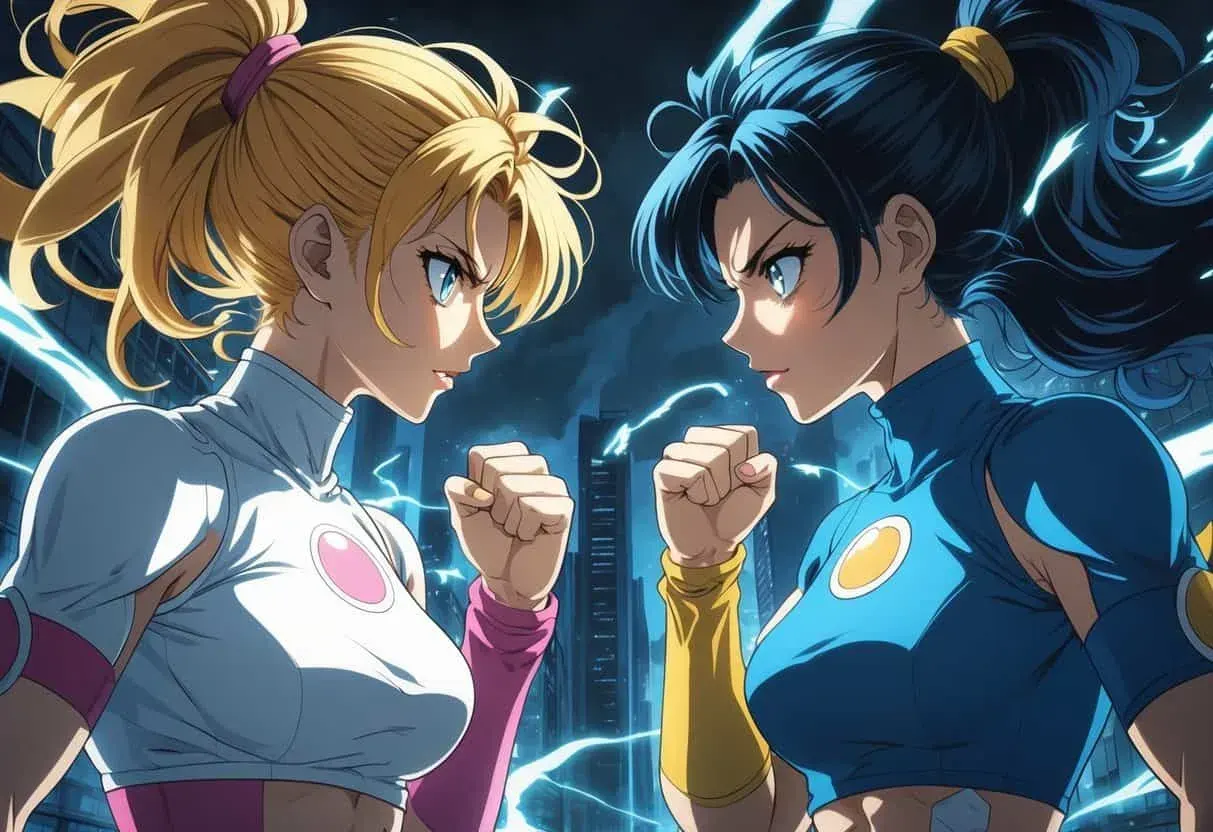
Female rivalries in anime crackle with an energy that transcends mere plot devices. They are the friction that ignites character evolution, the crucible where ideals clash and unexpected alliances bloom. When two strong-willed women square off, the story rarely remains static—it splinters into a richer narrative, forcing characters and viewers alike to confront their own assumptions about strength, loyalty, and identity.
The best rivalries between female characters don't settle for simple antagonism. They blend competition with grudging respect, jealousy with budding friendship, and raw power with emotional vulnerability. Whether set against the backdrop of a sprawling battle shōnen or a tightly wound psychological drama, these conflicts leave a permanent mark on the anime landscape. Shows like Kill la Kill and Naruto demonstrate that when rivalries are written with nuance, they become the engine driving the entire series.
Below, we unpack the most iconic female rivalries in anime, examining how each one shaped its characters, its genre, and the fans who still debate them years later.
Iconic Female Rivalries That Set the Standard
A handful of rivalries have become touchstones for anime storytelling, balancing action, emotion, and thematic depth in ways that keep them endlessly rewatchable. Each pairing on this list brings a distinct flavor to the idea of conflict: some are rooted in childhood friendship fractured by jealousy, others in clashing philosophies, and a few in the sheer thrill of pushing one another past all limits.
Sakura Haruno vs. Ino Yamanaka (Naruto)
The dynamic between Sakura and Ino in Naruto is a masterclass in how a rivalry can evolve without losing its edge. They began as inseparable friends, bonding over flowers and girlish dreams, until a shared crush on Sasuke Uchiha tore a rift between them. What made their friction so compelling was its grounding in real adolescent insecurity: the fear of being outshined by someone who knows you better than anyone else.
As both girls grew into kunoichi, their rivalry transformed from petty squabbles into a fierce mutual drive. Sakura’s journey from insecure tag-along to a medical ninjutsu powerhouse and Ino’s development as a sensory specialist and clan head happened in parallel, each watching the other’s progress and refusing to be left behind. Their Chunin Exam fight remains a series highlight—not for its flashy jutsu, but for the raw emotional release as two former best friends finally acknowledged how much they’d hurt each other. By the Fourth Great Ninja War, their teamwork was seamless, built on years of unspoken competition that had hardened into absolute trust.
Ryuko Matoi vs. Satsuki Kiryuin (Kill la Kill)
Few rivalries embody the term “explosive” like Ryuko and Satsuki in Kill la Kill. Their clashes were literal collisions of ideology, class, and raw power, staged with the excess Studio Trigger is famous for. Ryuko, the hot-blooded transfer student wielding a sentient sailor uniform, and Satsuki, the ice-cold student council president commanding Honnouji Academy like her own military state, seemed destined to annihilate each other.
Beneath the ludicrous spectacle, their rivalry was a contest between two models of strength. Satsuki represented order imposed through sheer will, a pyramid of control culminating in her iron rule. Ryuko was chaos and personal vengeance, burning through obstacles with nothing but fury and a Scissor Blade. Every battle—from their first encounter in Episode 3 to the naked duel in the bath house—redefined the line between enemy and ally. The revelation of their secret connection didn’t erase the intensity; it gave their final alliance a cathartic weight that felt earned, not cheap.
Asuka Langley Soryu vs. Rei Ayanami (Neon Genesis Evangelion)
The rivalry between Asuka and Rei in Neon Genesis Evangelion is one of anime’s most psychologically savage conflicts, precisely because it never resolves into friendship or respect. Asuka’s fiery arrogance and desperate need for validation crashed against Rei’s emotionless passivity, and their Evangelion piloting duties became a proxy for deeper existential struggles.
Asuka saw Rei as a doll—empty, obedient, and infuriatingly favored by authority. Rei, in turn, viewed Asuka’s volatility as a weakness she couldn’t afford. Their forced proximity in the same apartment and the synchrony training forced them to confront each other, but unlike typical shōnen rivals, they didn’t grow from the friction. They shattered. The Mind Rape episode, where an Angel forces Asuka to relive her worst memories, includes a chilling sequence with a smiling, taunting Rei that epitomizes how the rivalry poisoned them both.
This pairing remains a brutal reminder that not all rivalry yields positive growth; sometimes it simply amplifies preexisting fractures until nothing holds together.
Erza Scarlet vs. Mirajane Strauss (Fairy Tail)
On the surface, Erza and Mirajane’s rivalry in Fairy Tail is about which S-Class mage holds the crown. In truth, it’s a story of shared history and reconciliation. Mirajane, once a rebellious powerhouse nicknamed “The Demon,” and Erza, the discipline-forged “Titania,” clashed repeatedly in their youth. Their past fights were so legendary that the guild still whispers about them, but the story jumps forward to a time when Mirajane has repressed her aggressive side and Erza has become the guild’s linchpin.
The rivalry simmered under a veneer of playful taunting, erupting only when the guild’s survival demanded Mirajane tap into her Satan Soul forms again. Watching Mirajane shed her gentle demeanor to match Erza’s relentless assault magic rekindled the old fire, but with a mature understanding that they were no longer enemies. Their competitive edge ultimately fortified Fairy Tail, turning a potentially divisive power struggle into a reassuring pillar for the guild. This rivalry demonstrated that some bonds are strongest when tested.
Misa Amane vs. Kiyomi Takada (Death Note)
Not all rivalries need physical combat to be ferocious. In Death Note, Misa and Kiyomi waged a quiet, calculated war over Light Yagami’s attention and the influence it granted. Misa, a pop idol with the Shinigami Eyes, wielded desperate devotion as her weapon. Kiyomi, a poised newscaster turned Kira spokesperson, operated with icy pragmatism and political savvy.
Their animosity simmered through polite exchanges and strategic one-upmanship, each woman convinced she was the indispensable partner in Kira’s new world. Light exploited this tension ruthlessly, pitting them against each other to maintain control. The rivalry ended in tragedy, but it served as a stark illustration of how emotional manipulation can be just as lethal as any death note. Both characters were ultimately pawns, but their mutual distrust added a fascinating layer of psychological suspense to the series’ final arc.
How Rivalries Forge Unbreakable Character Arcs
Beyond the thrill of conflict, female rivalries in anime function as powerful catalysts for internal change. The presence of an equal—or a perceived superior—forces characters to question their methods, confront hidden weaknesses, and sometimes rebuild their entire identity.
From Contempt to Camaraderie
Many of anime’s richest friendships began with a punch to the face. The initial stage of a rivalry is often defined by raw emotion: jealousy, frustration, or outright hatred. What separates a shallow catfight from meaningful storytelling is the shift toward understanding. Sakura and Ino’s arc is the archetype—two girls who buried their affection under rivalry until a climactic fight brought it all to the surface. In the same vein, the Cold War between Erza and Mirajane thawed as they recognized the pain behind each other’s bravado.
This transition from contempt to camaraderie isn’t just satisfying; it models a form of growth where admitting a rival’s worth becomes synonymous with acknowledging one’s own value.
Mirror Images: Rivals as Reflections
The most resonant rivalries position the opponent as a mirror. Asuka Langley Soryu saw in Rei Ayanami everything she feared: a passive, replaceable existence that obeyed without question. Yet as her mental state deteriorated, Asuka realized she shared more with Rei than she could stomach. Rei, too, glimpsed in Asuka a desperate hunger for connection she’d suppressed. This mutual recognition didn’t lead to a warm resolution—Evangelion rarely offers comfort—but it deepened the tragedy.
A rival who reflects your own weaknesses is a far more terrifying enemy than one who simply outranks you in power.
Similarly, Ryuko and Satsuki in Kill la Kill were two sides of the same genetic coin, each embodying a different response to a horrifying family legacy. Their final, united stand against their mother was only possible because they’d spent so many hours trying to cut each other down, learning every contour of the other’s soul in the process.
Elevating Teams Through Competition
Rivalries don’t exist in a vacuum. In ensemble casts, the friction between two female characters can raise the bar for the entire group. When Sakura and Ino pushed each other to become better medical-nin and support specialists, Konoha 11 benefited. When Erza and Mirajane’s competitive pride led both to unlock new abilities, the Fairy Tail guild’s overall strength increased. Smart leaders recognize that a healthy rivalry, properly channeled, can transform a collection of individuals into a cohesive force.
The key is maintaining respect at the core—when that respect erodes, rivalries devolve into destructive feuds that fracture teams rather than forge them.
Rivalries Through the Genre Lens
The flavor of a rivalry is heavily influenced by the genre it inhabits. Shōnen battle series emphasize physical limits and training montages; shōjo dramas lean into emotional entanglement; mecha epics add ideological weight; and sports anime celebrate mutual improvement. Understanding these frameworks reveals why certain rivalries resonate more deeply than others.
Shōnen Action: Testing Limits
In shōnen anime, a female rivalry often revolves around surpassing a clear benchmark of strength. The battles are literal, the stakes are high, and the narrative rewards effort with visible power-ups. My Hero Academia’s female cast doesn’t always headline the main rivalries, but when Ochaco Uraraka faces off against classmates or villains, her determination is sharpened by watching peers like Tsuyu Asui or Nejire Hado who excel in different domains. The direct confrontations push characters beyond their perceived ceilings—Sakura’s grueling training under Tsunade was partly fueled by her refusal to remain the weak link Ino once saw. Shōnen rivalries sell the idea that a worthy opponent is the ultimate trainer.
Shōjo Romance and Drama: Hearts on the Line
Shōjo rivalries trade physical combat for emotional stakes. Jealousy, unrequited love, and social standing become the battlefield. A classic example is Kagome and Kikyo in Inuyasha, two women bound to the same half-demon across time. Their rivalry was never about who could throw a stronger punch, but about who held the deeper connection to Inuyasha’s heart and past. Every loaded glance or restrained conversation carried the weight of centuries.
These scenarios force characters to grapple with self-worth in a way that no sword fight can replicate. The growth comes from accepting that someone else’s bond doesn’t diminish your own—or from having the courage to walk away entirely.
Mecha and Sci-Fi: Clashing Ideals
When giant robots enter the picture, rivalries often ascend to ideological warfare. Asuka and Rei’s conflict in Evangelion was as much about competing views of what it means to be human as it was about piloting skills. In series like Code Geass, the tension between C.C. and Kallen wasn’t a direct personal feud, but their differing loyalties to Lelouch and their contrasting roles—immortal accomplice versus resistance fighter—created a friction that defined key tactical and emotional moments. Mecha rivalries question authority, justice, and the price of victory, demanding that characters pick sides not just in battle, but in their souls.
Sports and Competition Series: Mutual Drive
Sports anime thrive on rivalries, and female-led series are no exception. In Chihayafuru, Chihaya Ayase’s obsession with karuta is constantly challenged by rivals like Shinobu Wakamiya, a quiet genius whose very existence forces Chihaya to refine her chaotic talent into disciplined skill. The relationship is respectful but cutthroat, demonstrating that in sports, a rival is often the person who knows your game better than you do. Even in mixed-gender casts like Haikyuu!!, where female managers like Kiyoko Shimizu don’t play, the spirit of intense but supportive rivalry permeates the show’s ethos and translates directly into the women’s teams seen in spin-offs and similar works. The core message endures: a worthy opponent is a gift, not a threat.
The Anatomy of an Antagonist: When Rivals Turn Dark
Not all rivalries end in friendship—some are defined by enduring malice or moral opposition. Female antagonists in anime elevate conflicts by challenging protagonists not just in strength, but in conviction. Their rivalries leave legacies that reshape the world around them.
Villains with Depth: Balalaika and More
Truly memorable female villains fight for reasons that are complex and sometimes tragically relatable. Balalaika from Black Lagoon exemplifies this. A former Soviet officer turned mafia queen, she commands Roanapur’s underworld with a terrifying blend of military precision and maternal ruthlessness. Her rivalry with characters like Revy isn’t about personal hatred but about maintaining an unshakable order in chaos. Balalaika forces those around her to confront the moral compromises they’ve made, and her presence transforms any scene into a high-stakes negotiation.
Similarly, Albedo from Overlord anchors her animosity in a devotion to Ainz Ooal Gown so absolute that any perceived threat to his status becomes a rivalry she pursues with fanatical zeal. These villains remind us that a rivalry driven by warped love can be far more dangerous than one born of simple hate.
The Princess and the Monster Trope
A time-honored anime trope pits a figure of grace and duty against a monstrous force, literal or figurative. This setup transcends genres. In Sailor Moon, the rivalry between Usagi Tsukino (the naïve princess of the Moon) and Queen Beryl (a corrupted sorceress) represents light against darkness, but also the potential for compassion to outlast vengeance. The fights aren’t just about energy blasts—they’re about whether mercy can overcome millennia of resentment. The princess-versus-monster dynamic appears in darker forms too: the tragic conflict between Madoka Kaname and Homura Akemi in Puella Magi Madoka Magica recasts the roles entirely, with devotion itself becoming the monstrous cage.
These rivalries resonate because they externalize internal battles between purity and corruption, hope and despair.
Unconventional Antagonists: Faye Valentine and Lina Inverse
Some of the most captivating rivalries refuse to fit neatly into hero-versus-villain boxes. Faye Valentine from Cowboy Bebop operates in a moral gray zone where self-preservation trumps all. Her adversarial dynamic with Spike and the rest of the Bebop crew stems not from evil intent but from a survivor’s instinct that clashes with their occasional flashes of altruism. Faye’s presence constantly forces the team to question their own motives, and her role as a reluctant ally keeps the rivalry simmering without ever boiling into true antagonism.
Then there’s Lina Inverse from Slayers, a sorceress whose notoriety attracts rivals like Naga the Serpent—a boisterous, self-proclaimed rival who is as likely to accidentally help Lina as hinder her. Their chaotic competitions over treasure and prestige are undercut by a strange, bickering camaraderie. These outliers prove that rivalry doesn’t require moral clarity; sometimes the most entertaining conflicts come from allies who just can’t stand to lose to each other.
Why Female Rivalries Matter
The strongest rivalries between female characters in anime endure because they speak to universal experiences: the drive to prove oneself, the pain of being outdone by a peer, the unexpected discovery that an adversary can become an anchor. When writers invest in these relationships beyond surface-level cattiness, they produce stories that resonate across gender and genre.
From Ryuko and Satsuki’s climactic scream in the skies over Honnouji to Sakura and Ino’s tearful reconciliation on the battlefield, these rivalries remind us that conflict, when channeled with honesty and respect, is one of the most powerful engines of growth. Whether they end in friendship, uneasy truce, or mutual destruction, the best female rivalries in anime leave characters—and audiences—permanently transformed.