Table of Contents
Anime’s landscape overflows with characters who refuse to fit neatly into the boxes of hero or villain. These anti-heroes blur the lines between right and wrong, injecting unpredictability into every story they inhabit. Their moral ambiguity doesn’t just complicate the plot—it forces you to confront uncomfortable questions about justice, sacrifice, and what it really means to be “good.”
The best anti-heroes in anime will make you question your own sense of right and wrong, all while unraveling some of the most tangled emotions you’ve ever seen on screen.
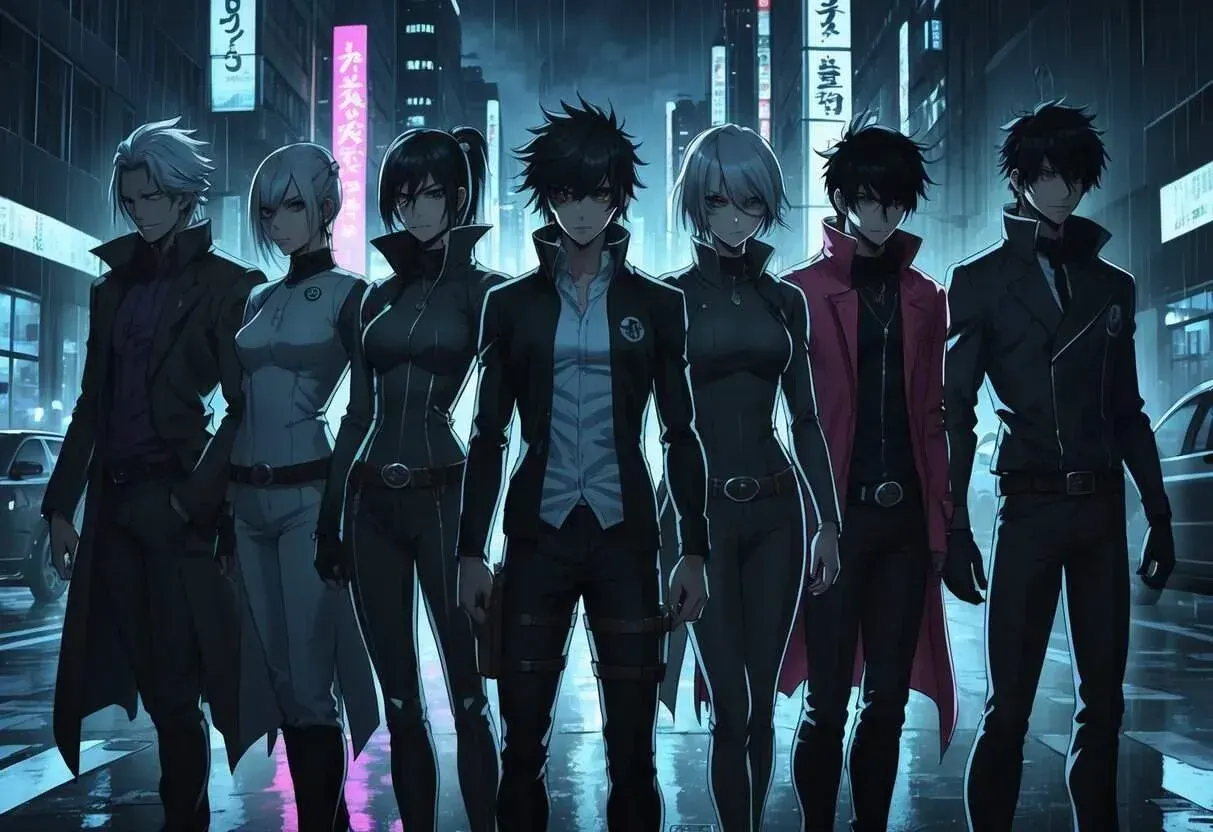
Many of these characters carry backstories layered with trauma, betrayal, and impossible choices. They don’t walk a simple path toward redemption; instead, every decision seems to carry a price that ripples outward, reshaping everyone around them. That complexity is precisely what makes them so magnetic. You can never predict their next move, and that uncertainty keeps you glued to the screen.
Consider figures like Eren Yeager in Attack on Titan or Lelouch vi Britannia in Code Geass. Neither operates according to a standard heroic script. Their flaws are raw, their motives often shimmer with contradiction. Watching them, you realize that anime doesn’t just use anti-heroes to create tension—it wields them to explore the darkest corners of justice, revenge, and the human psyche.
Anti-heroes exist in a liminal space where noble goals can justify monstrous acts. They might fight for a cause you support, but their methods can leave you recoiling. They force you to hold two opposing thoughts at once: admiration for their strength, and horror at what they’re willing to do. That tension is the heart of their appeal, and it’s why anime’s most unforgettable characters are so often its most flawed.
As you move through series after series, you’ll notice that the anti-hero archetype isn’t static. It has evolved from the rival who eventually joins the hero’s side to the protagonist who is the storm itself. This evolution has reshaped entire genres, pushing storytelling toward nuance over simplicity, and drawing fans into debates that last decades.
Key Takeaways
- Anime anti-heroes walk a precarious line between heroism and villainy, never fully committing to either side.
- Their fractured histories and conflicting motivations challenge you to rethink what morality actually looks like.
- They drive narratives into unpredictable territory, where motives shift and no victory feels clean.
Defining the Anti-Hero in Anime
An anti-hero in anime defies easy categorization. Where a traditional hero embodies moral clarity and selflessness, the anti-hero operates in shades of gray. They can be ruthless yet oddly compassionate, self-serving yet occasionally sacrificial. Their unpredictability isn’t a bug—it’s the feature that sets them apart from the rest of the cast.
Understanding why anti-heroes resonate so powerfully requires looking at their defining traits, how they differ from villains and classic heroes, and the narrative roles they fulfill.
Characteristics of Complex Anti-Heroes
An anti-hero’s personality is rarely consistent in the way we expect. They break rules not out of malice alone, but because their internal compass points toward goals that clash with societal norms. Flaws aren’t minor quirks; they’re jagged edges that cut into everyone around them. You might see a character like Guts from Berserk show immense tenderness toward a comrade one moment and shocking brutality the next, driven by a past that refuses to let go.
Deep-seated trauma or personal loss often lurks beneath the surface. That pain fuels their actions, making them hard to judge. Even when they commit terrible acts, you’re forced to ask: given the same wounds, would you do anything different? This psychological depth is what elevates the anti-hero beyond a simple anti-heroic trope—they become a mirror for our own fractured morality.
Another hallmark is their transactional approach to relationships. They might ally with heroes or villains based on convenience, not principle. Hisoka from Hunter x Hunter exemplifies this, treating alliances like a chessboard where the only real goal is his own entertainment. Yet even this self-interest can flip into something resembling loyalty when a particular bond is tested.
Ultimately, the anti-hero’s complexity lies in their ability to make you root for them despite every red flag. You understand their pain, even if you can’t condone their choices. That empathy is what keeps them from sliding fully into villain territory.
How Anti-Heroes Differ from Villains and Heroes
A classic villain embraces malice as an end in itself, while an anti-hero’s darkness usually serves a purpose—however twisted. They aren’t evil for evil’s sake; they’re people who’ve chosen extreme paths to achieve something they believe is worth the cost. This distinction is crucial because it makes their stories feel more grounded in reality.
Traditional heroes often embody ideals like justice, honor, and self-sacrifice from the start. Their moral journey is typically about preserving those values against external threats. Anti-heroes, by contrast, start from a place of internal conflict. They may act selfishly, use violence as a first resort, or manipulate those they claim to protect. Lelouch vi Britannia, for instance, wages a rebellion full of lies and bloodshed, but he does it to create a gentler world for his sister—a contradiction that separates him from both pure heroes and pure villains.
Villains generally have obvious, destructive intentions. Anti-heroes muddy the water. Even when they cause immense harm, they often harbor a kernel of empathy or grief that the villain lacks. This ambiguity makes them far more dangerous to a narrative’s status quo, because you can never predict which side they’ll ultimately serve.
Role of Anti-Heroes in Storytelling
Anti-heroes introduce a volatility that keeps stories from becoming predictable. In a genre where the hero’s victory can feel inevitable, an anti-hero dismantles that comfort. They might succeed in their mission, but the cost can be so monstrous that it feels like a loss. This dissonance forces both the characters within the story and the viewers outside it to grapple with ethical gray zones.
They also function as vehicles for social commentary. Through anti-heroes, anime explores themes like systemic injustice, the corruption of power, and the isolation that comes with defying societal norms. A character like Scar from Fullmetal Alchemist channels the pain of a colonized people, making his violent retribution feel less like madness and more like a searing indictment of empire.
Their presence complicates the very idea of a happy ending. When the line between hero and monster blurs, closure feels elusive. And that open-endedness is often more honest than tidy resolutions, reflecting the truth that in life, moral clarity is rare.
Notable Anti-Heroes: Iconic Characters and Their Stories
Some anti-heroes become so iconic that they define entire eras of anime. Their internal battles and morally fraught choices have sparked countless debates and left permanent scars on pop culture. Here are four characters who reshaped what it means to be a protagonist.
Light Yagami: Morality and Ambition in Death Note
Light Yagami begins as a brilliant but bored student who stumbles upon the Death Note, a notebook with a terrifying power: writing a person’s name inside it causes their death. What starts as a twisted experiment quickly morphs into a god complex. Light envisions himself as the arbiter of justice, cleansing the world of criminals to create a perfect society.
His journey is a masterclass in moral decay. At first, his vision seems almost utopian—who wouldn’t want a world without crime? But as Light eliminates not just criminals but anyone who threatens his secret, the line between justice and tyranny evaporates. He manipulates, lies, and sacrifices without remorse, all while maintaining the charismatic facade of an upright young man.
Death Note forces you to confront a chilling question: if you had the power to judge without consequence, would you be any different? Light’s descent is simultaneously horrifying and fascinating, cementing him as one of anime’s greatest anti-heroes.
Itachi Uchiha: Sacrifice and Secrecy in Naruto
Itachi Uchiha’s name is synonymous with tragedy in Naruto. Presenting early as a cold-blooded killer who massacred his entire clan, he is the monster that Sasuke vows to destroy. But as layers of backstory peel away, Itachi is revealed to be a shinobi who shouldered an impossible burden to prevent a civil war and protect his village from within the shadows.
His actions were not born of hatred but of a desperate, sacrificial love. Living as a traitor and exile, Itachi orchestrated his own reputation as a villain, ensuring his little brother would grow strong by channeling rage. Beneath that emotionless exterior, he remained fiercely loyal to both his family and the Hidden Leaf.
Itachi’s duality—the public monster and the private martyr—makes him a profoundly complex figure. He embodies the cost of peace, and his story challenges the simplistic notion that heroism requires recognition. In the end, his legacy lingers as a lesson in the price of silence.
Vegeta: Redemption and Rivalry in Dragon Ball Z
Vegeta storms into Dragon Ball Z as a merciless Saiyan prince hellbent on immortality and conquest. His pride is as colossal as his power, and his initial role is unapologetically villainous. But something unexpected happens over time: Vegeta stays. He lives among the people he once sought to destroy, and slowly, those grudging alliances start to reshape him.
The turning point isn’t a single moment but a gradual erosion of his worst impulses. Marriage, fatherhood, and a relentless rivalry with Goku crack his armor. Vegeta fights for his family, protects Earth, and even admits Goku’s superiority—an act that would have been unthinkable for his earlier self. Yet he never loses that abrasive edge or his Saiyan pride.
His redemption arc is messy and incomplete, which makes it feel authentic. Vegeta doesn’t become a saint; he becomes a warrior who finally understands what’s worth fighting for. That journey from brutal antagonist to flawed protector has made him one of anime’s most beloved anti-heroes.
Guts: Struggle and Survival in Berserk
Few characters embody raw, unyielding survival the way Guts does. Branded with a mark that draws demonic forces to him every night, Guts exists in a world of perpetual violence and despair. His sword, the Dragonslayer, is less a weapon and more a declaration of war against fate itself.
Guts is driven by pain: the betrayal by Griffith, the violation of Casca, and the loss of his old life with the Band of the Hawk. Revenge initially propels him, but as he gathers new companions, his motivation shifts. He fights not just to destroy apostles but to protect the fragile bonds he didn’t think he deserved.
Berserk doesn’t sugarcoat the toll this takes. Guts’s body breaks, his mind fractures, and yet he keeps swinging. He is the definition of an anti-hero who refuses to surrender to despair, even when the world offers no comfort. In his struggle, we see the resilience of the human spirit stripped of all pretense.
| Character | Series | Core Traits | Key Conflict | Defining Actions |
|---|---|---|---|---|
| Light Yagami | Death Note | Intelligent, Ruthless | Justice vs. Power | Using Death Note to control life and death |
| Itachi Uchiha | Naruto | Reserved, Loyal | Clan vs. Village | Massacring his clan to avert a war |
| Vegeta | Dragon Ball Z | Proud, Complex | Rivalry and Redemption | Transitioning from enemy to planetary defender |
| Guts | Berserk | Strong, Determined | Survival in a dark world | Fighting fate and demons relentlessly |
Modern Anti-Heroes and the Shonen Shift
The evolution of anime’s anti-heroes hasn’t stopped with the classics. More recent series have pushed the archetype into even more disturbing and empathetic territory, making the protagonist’s own transformation the central conflict. Nowhere is this more evident than in the modern shonen landscape, where the line between hero and monster isn’t just blurred—it’s erased.
Eren Yeager: The Hero Who Became the Apocalypse
Eren Yeager’s arc across Attack on Titan is one of the most radical and unsettling transformations in anime. Introduced as a furious boy vowing extermination of the Titans, Eren eventually learns truths that shatter his worldview entirely. By the final arcs, he is no longer a freedom fighter—he’s a force of cataclysmic destruction willing to flatten the world to save his people.
What makes Eren’s anti-heroism so potent is that his initial goal remains recognizable: he wants his friends to live long, happy lives. But the path he chooses involves global genocide. His actions are monstrous, yet his anguish is real. You see him weep for the future he’s creating even as he commits to it. Eren doesn’t ask for forgiveness, and the narrative doesn’t offer easy absolution.
Instead, you’re left with the terrifying idea that monstrous acts can be rooted in love—and that understanding doesn’t mean condoning.
Eren’s journey flips the hero’s journey inside out. He is simultaneously the protagonist and the final antagonist, forcing viewers to confront the darkest implications of pursuing freedom at any cost. No other modern anti-hero has sparked such intense debate about whether the ends can ever justify the means.
Ken Kaneki: The Fragile Boundary Between Human and Monster
Ken Kaneki from Tokyo Ghoul begins as a gentle bookworm whose world collapses when he’s turned into a half-ghoul. Torn between his remaining humanity and an insatiable hunger for human flesh, Kaneki embodies the anti-hero as a creature of painful duality. Every arc of his journey shatters a piece of his former self, leaving behind someone colder and more lethal.
Kaneki’s transformation is marked by a recurring motif: the slow acceptance that to protect anyone, he must become a monster. He forms a new identity that can endure torture, betrayal, and loss. Yet even when he wields terrifying power, his core never fully hardens. Glimpses of his old kindness surface in moments of quiet despair.
His struggle asks what it means to retain humanity when your body and circumstances deny it. Kaneki doesn’t find a clean resolution, and that lack of closure powerfully mirrors the often-painful reality of living with trauma.
Unpredictable Forces: Scar, Hisoka, and the Anti-Hero Wildcard
Some anti-heroes don’t follow a slow descent or a redemption arc—they emerge fully formed as forces of chaotic purpose. Their motivations are either searingly personal or disturbingly opaque, making every scene with them a psychological gamble.
Scar: Vengeance as a Cry for Justice
In Fullmetal Alchemist, Scar is a survivor of the Ishvalan genocide, and his name is a literal reminder of the scars that cover his body. He becomes a serial killer targeting state alchemists, whom he sees as tools of a regime that obliterated his people. To the heroes, Scar is a terrorist; to the oppressed, he is a grim avenger.
Scar’s violence is brutal, but it’s never random. Every act is steeped in grief and cultural devastation. As the story progresses, his black-and-white worldview frays. Encounters with characters like Winry Rockbell, who are innocent products of the same system, force him to question whether his vengeance is truly just.
His arc isn’t about abandoning his rage—it’s about redirecting it toward building something new rather than just destroying the old. Scar stands as a reminder that anti-heroes can emerge from historical trauma and that their fight can evolve from vengeance into a plea for rebirth.
Hisoka: The Addictive Thrill of the Unknowable
Hisoka Morow from Hunter x Hunter defies every attempt at categorization. He isn’t driven by revenge, a desire to save anyone, or even by conventional ambition. His sole obsession is fighting—specifically, hunting down and battling opponents he considers “ripe” enough to break. This singular focus makes him one of the most unpredictable characters in anime.
Hisoka shifts allegiances fluidly, helping the protagonists in one arc and sabotaging them in the next, not out of malice but because it serves his amusement. There’s a chilling sensuality to his bloodlust, a fascination with potential that edges into the grotesque. You can never predict whether he’ll become an ally or a mortal threat.
His appeal lies precisely in that opacity. He forces you to abandon the comfort of moral alignment and simply watch the chaos unfold. In a medium full of anti-heroes with tragic backstories, Hisoka stands apart as someone who simply follows his nature without apology.
The Lasting Impact of Anti-Heroes in Anime Culture
Anti-heroes have permanently altered how anime tells stories and how fans engage with them. They’ve introduced a depth that simplistic good-versus-evil narratives can’t match, and their influence spreads across genres, fan communities, and even the industry’s approach to character writing.
How Anti-Heroes Shape Genre and Fandom
By centering characters who don’t fit traditional moral molds, anime has moved toward more nuanced storytelling. Series like Fullmetal Alchemist: Brotherhood and Monster thrive on the psychological weight of figures like Father and Johan Liebert, who aren’t just obstacles but embodiments of twisted philosophy. Their presence elevates the stakes beyond physical combat into existential territory.
Fandoms respond to this complexity with passion. Debates about whether Eren was justified, whether Itachi was a hero, or whether Vegeta has fully redeemed himself can rage for years, generating endless analysis and fan works. Anti-heroes create space for interpretation, and that openness transforms passive viewing into active engagement. The unpredictability they bring keeps communities theorizing, arguing, and re-watching.
This cultural shift has also influenced newer series like Jujutsu Kaisen and Chainsaw Man, where protagonists like Yuji Itadori and Denji operate in morally ambiguous frameworks. The anti-hero blueprint, once a rarity, now shapes the expectations of an entire generation of anime consumers.
Themes Explored Through Anti-Hero Narratives
Anti-heroes give anime the license to explore themes that are too messy for traditional heroes. Immortality, as seen with Alucard in Hellsing, becomes a curse that erodes humanity over centuries. Power, whether wielded by Frieza in Dragon Ball or the Anti-Spiral in Tengen Toppa Gurren Lagann, is exposed as an isolating force that distorts empathy and replaces connection with control.
Redemption is another central theme, yet anti-heroes often resist neat resolutions. Characters may change profoundly but still carry the scars of their past. The narrative doesn’t pretend that saving a few people erases the bodies they left behind. That honesty is rare and creates a deeper emotional resonance.
Anti-heroes also challenge the idea of a righteous authority. Characters like Lelouch vi Britannia in Code Geass expose the hypocrisy of empires, while others like Revy from Black Lagoon reveal the brutal pragmatism of life at society’s fringes. These stories highlight that morality is often contextual, and that survival sometimes demands a rejection of the very principles we claim to uphold.
| Theme | Example Character | Show | Key Focus |
|---|---|---|---|
| Ambition/Revenge | Griffith | Berserk | Morality and sacrifice |
| Power and Corruption | Frieza | Dragon Ball | Abuse of immortality |
| Human Nature | Johan Liebert | Monster | Psychological depth |
| Immortality/Demons | Alucard | Hellsing | Humanity and evil |
The cultural footprint of anti-heroes continues to expand as anime reaches global audiences. They’ve taught viewers to embrace complexity and find meaning in brokenness. Where a classic hero might offer inspiration, an anti-hero offers recognition—a reflection of the internal battles we all fight. By refusing to sanitize their darkness, these characters have made anime richer, sharper, and infinitely more human.