Table of Contents
There is a widespread but mistaken assumption that the most powerful character dynamics in anime are romantic. Some fans actively avoid series that flirt with will-they-won’t-they tropes, fearing the story will lose its edge or become predictable. What many viewers discover is a rich landscape of stories where emotional bonds flourish without a single kiss, confession, or love triangle. These anime prove that loyalty, mentorship, rivalry, and found family can be just as gripping as any romance—and often far more nuanced.
Non-romantic anime can feel more honest about how people actually connect. They strip away the pressure of attraction and let relationships develop through shared struggle, quiet trust, and the everyday acts of showing up for someone. Friendship is not a placeholder for romance; it’s the main event. Whether it’s a shōnen battle epic or a quiet slice-of-life drama, these stories build characters you root for because of the way they care for one another, not because of who ends up with whom.
In this guide, you’ll find a breakdown of the core relationship dynamics that define romance-free anime, a curated list of standout series that nail human connection without love subplots, and an exploration of why these stories resonate so deeply across all ages and backgrounds.
Types of Non-Romantic Relationships in Anime
When romance is removed from the equation, storytellers must lean on other emotional anchors. Three primary dynamics appear again and again across genres, each capable of driving an entire narrative without the crutch of romantic tension.
Friendship and Camaraderie
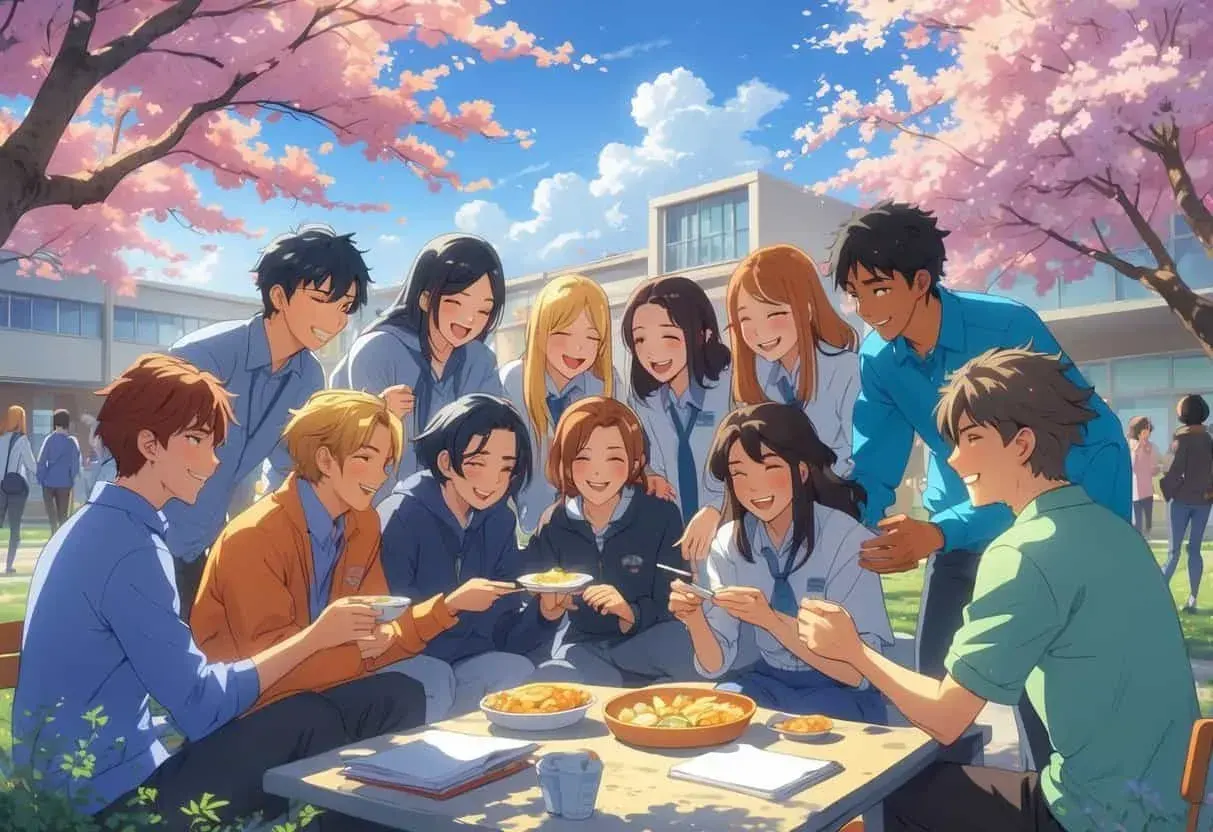
Friendship in anime often becomes the engine for character motivation and plot. You watch individuals who start as strangers or rivals chip away at each other’s walls until they become an inseparable team. The trust built in these arcs rarely feels rushed because it’s earned through shared hardship—training arcs, life-or-death battles, or simply surviving the awkward hell of high school together.
What makes these friendships compelling is that they accept imperfection. Characters argue, disappoint one another, and sometimes walk away, only to return with a deeper understanding. There’s an unspoken agreement that the bond is bigger than any single mistake. Authentic camaraderie often shows up in moments of quiet understanding: one character cooking for another without being asked, a hand on the shoulder during grief, or a sarcastic jab that somehow communicates more care than a heartfelt speech.
In many non-romance anime, friendship becomes the safe space where characters can finally be vulnerable. They don’t need to impress or seduce; they just need to be present. That freedom creates relationships that feel lived-in and real, rather than engineered for dramatic confessions.
Mentorship and Rivalry
The mentor-student dynamic demonstrates how respect and tough love can transform a person. In anime without romance, a seasoned teacher often pushes a younger character past their limits, not for glory but because they see potential that the student cannot yet see in themselves. These relationships can be stern and disciplined or warm and improvised, but they are always built on a foundation of genuine investment in another person’s growth.
Rivalry functions as a parallel force. It introduces friction that refines skills and reveals character flaws. The best rivalries aren’t about hatred; they’re about recognizing a reflection of yourself in someone else and using that mirror to get better. You see competitors who would risk everything to defeat each other one moment, then wordlessly save each other the next. There’s a mutual respect that pulses underneath the surface, creating a bond that no romance could easily replicate.
Both mentorship and rivalry highlight that relationships can be aspirational. They pull characters toward a better version of themselves without any hint of infatuation. For audiences, these arcs can be more inspiring than a romance because the focus stays on self-improvement and mutual elevation.
Family Bonds and Sibling Relationships
Family ties in anime often carry a weight that romantic ones cannot match because they are permanent and unconditional—or painfully conditional when family fails. Stories about siblings, parents, and children explore duty, sacrifice, forgiveness, and the complicated heritage of love without romance ever entering the frame.
These arcs take many shapes. Two siblings might be each other’s fiercest protectors, yet carry deep resentment over a childhood incident. A parent might be absent, forcing an older sibling to step into a caregiver role long before they’re ready. Or a character might discover that blood relation matters far less than the family they chose along the way. These bonds illustrate identity formation more vividly than romance often does, because family is the bedrock on which personality is built—or the prison from which a character must escape.
What resonates is the raw, unfiltered emotion. When a brother risks his life for his sister with zero expectation of repayment, there is no subtext of desire. It’s simply the force of a bond that predates the story itself. That purity can hit harder than any love confession.
Anime Series Built on Unromantic Connections
Standout Platonic Duos
Certain anime revolve almost entirely around a single platonic pairing that carries the emotional weight of the entire show. In Fullmetal Alchemist: Brotherhood, the Elric brothers’ relationship is the story’s soul. Edward and Alphonse are not just siblings; they are two halves of a mission born from trauma and regret. The series never needs a romance subplot for Edward because his brother is his entire world. Every sacrifice, every brutal setback, is endured with Alphonse’s safety and dignity at the center.
A quieter example is Death Note, where the cat-and-mouse dynamic between Light and L is a study in intellectual obsession. The two share a bizarre intimacy rooted in mutual suspicion and twisted admiration. There is nothing romantic about it, yet the tension between them is more electric than most love stories. Similarly, Mushishi presents Ginko’s gentle, fleeting connections with villagers as vignettes of human empathy. His relationships are brief, but each one leaves an indelible mark, built on careful listening and quiet wisdom.
No romance intrudes, and the series feels richer for it.
Team-Driven Narratives
When a larger group shares a common goal, the chemistry between members often becomes the main attraction. Haikyuu!! is a masterclass in this. The volleyball team at Karasuno High is a chaotic mix of personalities, from the fiery Hinata to the stoic Kageyama. Romance is almost entirely absent, but the bond that forms through grueling practice and nail-biting matches feels overwhelming. You watch them become a unit, anticipating each other’s moves, covering weaknesses, and celebrating victories as one organism.
The show demonstrates that peak teamwork is a form of love that doesn’t need a label.
A Place Further Than the Universe takes four girls on an improbable journey to Antarctica. The series is refreshingly devoid of romance, focusing instead on how shared ambition and vulnerability forge indestructible friendships. Each character carries a hidden grief or insecurity, and the expedition becomes the vessel through which they lean on one another. The emotional payoff comes not from a couple’s finale but from a simple, devastating scene of a laptop and an inbox full of unread messages—proof that platonic support can heal wounds that romantic gestures never could.
In Bungo Stray Dogs, the Armed Detective Agency operates like a dysfunctional family that happens to solve supernatural crimes. Every member has a tragic backstory, but they function as a safety net for each other. The trust they build isn’t for the sake of kissing; it’s for the sake of staying alive and sane in a world that wants to break them.
Growth Through Conflict and Cooperation
Some anime use conflict not to fuel romantic tension but to forge bonds of mutual respect. Hunter x Hunter thrives on this. Gon and Killua’s friendship deepens through increasingly lethal trials. They don’t bicker over jealousy or misunderstandings typical of romance plots; they face moral dilemmas, physical agony, and the terrifying possibility of losing each other. The Chimera Ant arc in particular develops relationships through suffering and ideological clashes, none of which involve romance.
Mereum and Komugi’s connection, for example, is one of the most profound in anime—centered entirely on intellect, respect, and care, with zero physical attraction.
Attack on Titan weaves a dense web of non-romantic attachments. Eren, Mikasa, and Armin share a childhood forged in trauma and survival. While there are hints of deeper feelings, the narrative prioritizes their bond as a triad of mutual protection. Similarly, the complex dynamics between Levi, Erwin, and the Survey Corps are built on ideology and sacrifice, not love. The weight of their relationships is measured in orders followed unto death, not in confessions.
March Comes in Like a Lion takes a gentler path. Rei Kiriyama’s connection with the Kawamoto sisters is a healing force that has nothing to do with romance. The sisters treat him as family, offering food and warmth without any expectation. This quiet chosen family slowly pulls him out of depression, showcasing how non-romantic kindness can rebuild a broken person. Even Rei’s rivalries in shogi, such as his complicated dynamic with Shimada, are rooted in professional respect and shared struggle.
7 Anime Without Romance That Perfectly Capture Human Connection
If you’re looking for a quick starting point, these seven series exemplify everything this article celebrates. Each link leads to more information on the series so you can dive right in.
- Fullmetal Alchemist: Brotherhood – Sibling devotion and military camaraderie anchor an epic quest. Edward and Alphonse’s unshakeable loyalty sets the emotional bar for the entire shōnen genre.
- Haikyuu!! – A sports anime where teamwork, rivalry, and sheer passion for volleyball replace any need for romance. Every high-five and synchronized attack builds bonds you’ll cheer for.
- Mushishi – Ginko travels a mystical Japan, forming profound yet ephemeral connections with those he helps. Each story explores human nature without a trace of romantic entanglements.
- A Place Further Than the Universe – Four girls chase an impossible dream to Antarctica. Their friendship handles grief, self-doubt, and personal growth in a raw, candid way that hits harder than any love story.
- Hunter x Hunter (2011) – A sprawling adventure where friendship, mentorship, and rivalry intertwine. The moral complexity and deep platonic bonds push characters beyond their limits.
- March Comes in Like a Lion – A poignant slice-of-life about depression, family, and shogi. The non-romantic warmth of the Kawamoto household is the story’s beating heart.
- Barakamon – A calligrapher finds inspiration in a rural village, forming a surrogate family with its eccentric residents. The intergenerational friendships are pure, funny, and deeply uplifting.
Why Non-Romantic Relationships Hit Different
Emotional Depth Without Romantic Subtext
When a story removes romance, it forces every gesture and word to carry meaning purely through its context. A character choosing to stay up all night to watch over a sick friend isn’t doing it because they’re secretly in love—they’re doing it because it’s the right thing to do. That clarity can make the emotional stakes feel more universal. You’re not analyzing subtext for hidden attraction; you’re feeling the weight of unconditional support.
This absence also raises the stakes for vulnerability. In a romance, a confession of weakness might be immediately followed by a kiss or a reciprocity that muddies the intention. In non-romantic anime, a moment of raw honesty stands alone. It’s a gift given without expectation of return, which often makes it more powerful. The characters connect on a human level that transcends gender, age, or the possibility of a relationship, reaching something more elemental: I see you, and I am here with you.
Relatable Bonds for Every Viewer
Not every viewer connects with romantic storylines. Some people are aromantic, some are simply tired of the same predictable patterns, and others crave stories that mirror the friendships and family ties that dominate their own lives. Non-romantic anime offers a wider emotional palette. You can see your best friend in the silly, loyal buddy who always shows up with snacks. You can see your older sibling in the overprotective, annoying, yet deeply caring figure.
You can even see yourself in the quiet rivalry that keeps you striving for more.
These stories also break the narrow idea that love is the ultimate emotional payoff. They remind us that holding someone’s hand during a panic attack, making a bento for a teammate, or challenging a friend to be better is its own form of profound connection. When the credits roll without a single couple forming, the audience can still feel completely fulfilled because the bonds on screen already gave them everything they needed.