Table of Contents
The Unsung Architects of Anime Stories
Some of the most gripping anime series are built on a quiet secret: the main character rarely carries the story alone. Instead, it’s the side characters—the allies, rivals, mentors, and even the occasional comic relief—who pour fuel into the engine of the plot. Their choices, failures, and triumphs often determine the fate of the narrative just as much as any chosen hero. When you start paying attention to the supporting cast, you notice something remarkable. The emotional weight, the unexpected twists, and the philosophical depth of a series frequently spring from these apparently secondary figures.
They are not just background decoration. In anime, side characters regularly become the true architects of the most unforgettable moments.
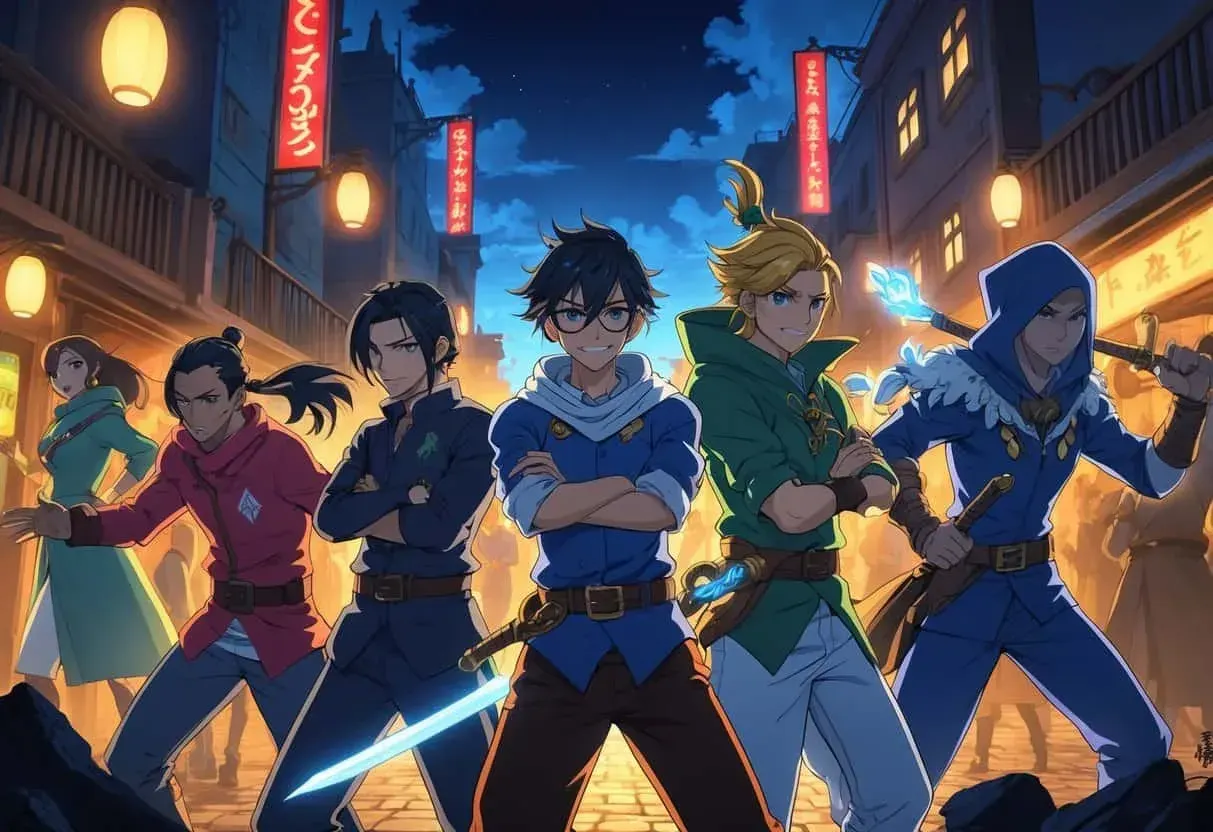
The beauty of this narrative technique lies in its unpredictability. A main protagonist often follows a predetermined path of growth, but a side character can swerve into chaos, offer shocking wisdom, or reveal a hidden agenda that reshapes everything you thought you knew. When you watch a well-crafted anime, you’ll find that your heart may be stolen by a figure who gets half the screen time of the lead. Their arcs, though compact, carry an intensity that can redefine the entire story’s meaning.
This guide explores the best anime where side characters don’t just assist the protagonist—they seize the wheel. You’ll discover how these roles are built, why they matter so deeply, and which series use them to create masterful, layered storytelling.
Defining the Role of Side Characters in Anime Storytelling
To understand why certain side characters resonate so powerfully, you need to look at the structural role they play. Far from being filler, these characters serve as emotional anchors, narrative catalysts, and thematic mirrors. When written with care, they can elevate an average plot into something profound.
Side Characters Versus Main Characters
A main character typically embodies the central conflict; a side character illuminates its edges. While the protagonist may represent a single ideal or a moral absolute, the supporting cast often explores the gray areas. This freedom from the weight of being the "hero" allows side characters to exhibit a wider range of personalities, moral ambiguities, and contradictory motivations. They can be more impulsive, more selfish, or more vulnerable without losing the audience’s sympathy.
Think about how a side character can challenge the protagonist’s worldview. The right rival or skeptic forces the hero to question their decisions, pushing the story into deeper thematic territory. In turn, the protagonist’s flaws become visible through the side character’s contrasting qualities. Sometimes, a side character outgrows their original role entirely, claiming a full-fledged arc of redemption, revenge, or self-discovery. These narrative detours add texture that a straight hero’s journey cannot provide alone.
Contribution to Narrative Depth
Strong side characters act as emotional and thematic layers that enrich the core message of an anime. They can echo themes like sacrifice, destiny, or loneliness without ever standing at center stage. A well-placed side story can mirror the protagonist’s struggle, reinforcing the series’ central ideas through a different lens. For example, a secondary character’s quiet act of loyalty might underline the theme of trust far more poignantly than a grand speech from the lead.
Beyond theme, these characters flesh out the world itself. A protagonist moves through a story; a side character reveals what living in that world actually costs. Their backstories often expose the political, historical, or magical systems that shape the setting. When you learn about a side character’s past, you gain insight not just into a person, but into the entire universe the anime inhabits. That sense of a lived-in world, full of complex lives that exist even when the camera isn’t on them, is a hallmark of masterful storytelling.
Influence on Plot Progression
In the hands of a skilled writer, side characters become the pivot points on which the entire plot turns. They deliver the crucial information, trigger the catastrophic mistake, or make the split-second sacrifice that redirects the narrative. Unlike the main character, whose actions are often constrained by their core motivation, a side character can act on more immediate, personal, or even irrational impulses. This makes their interventions feel organic and surprising.
When a side character makes a choice that sets off a chain reaction, you experience the story’s causality vividly. Perhaps a letter is delivered late, a door is left unlocked, or a secret is revealed in anger. These small, human actions carry enormous consequences. The best anime understand that a side character’s decision can carry more dramatic weight than a protagonist’s monologue. Their influence is often quiet but seismic, a ripple that turns into a tidal wave.
Top Anime Where Side Characters Drive the Main Story
These series stand as proof that a narrative’s strength often lies in its ensemble. In each of these titles, the spotlight shifts frequently enough that you begin to appreciate how every character, no matter how minor, contributes to the whole. The side characters here don’t just steal scenes—they define arcs.
Attack on Titan: The Weight of Command and Consequence
In Attack on Titan, characters like Erwin Smith, Historia Reiss, and Levi Ackerman consistently make decisions that alter the course of history far more abruptly than Eren Yeager’s early journey might suggest. Erwin’s tactical genius and his chilling willingness to sacrifice everything for a glimpse of the truth turn entire battles into crucibles of moral philosophy. Levi’s combat prowess is matched only by the emotional weight he carries; his choices in moments of crisis—who lives, who dies, what to protect—define the series’ emotional landscape. Historia’s transformation from a passive figure into a decisive queen reshapes the political structure of the world, proving that side characters can hold the keys to an entire civilization’s survival. Even the so-called antagonists, from Reiner Braun to Zeke Yeager, possess inner lives so rich that they become tragic mirrors of the main cast.
For a deeper look into this sprawling narrative, visit the Attack on Titan entry on MyAnimeList.
Hunter x Hunter: A Universe of Rivals and Rogues
Hunter x Hunter is renowned for its refusal to keep the focus solely on Gon Freecss. The Yorknew City arc, for instance, is anchored almost entirely by Kurapika’s vengeful quest, while Hisoka’s capricious bloodlust constantly pulls the narrative into dangerous, unpredictable territory. The Phantom Troupe—a band of thieves with their own tragic history—functions as a collective of side characters whose existence challenges the very notion of good and evil. Even in the Chimera Ant arc, Meruem’s royal guards are not simple obstacles but deeply developed individuals whose loyalty and personal evolution drive the story’s most philosophical moments. This is a world where the protagonist’s perspective is just one among many, and the plot is richer for it.
You can explore the character dynamics further on Crunchyroll’s Hunter x Hunter page.
Durarara!!: The City as a Character, the Ensemble as Its Pulse
Few anime capture the chaos of interconnected lives as brilliantly as Durarara!!. Set in Ikebukuro, the story doesn’t have a single protagonist—or rather, the city itself is the protagonist, animated by a vast cast of side characters. Celty Sturluson, the headless rider searching for her lost identity, offers a supernatural mystery that weaves through street gangs and high school drama. Shizuo Heiwajima and Izaya Orihara, locked in a violent philosophical feud, represent opposite extremes of human nature. These characters, along with a sprawling network of informants, gang leaders, and ordinary citizens, create a narrative tapestry where every thread is essential.
The story moves forward not through a hero’s journey but through the collision of countless personal agendas, proving that side characters can collectively own a narrative.
Gintama: Comedy and Catharsis in the Margins
Gintama thrives on the principle that every side character deserves their own epic—even if that epic is sometimes a parody. The core trio of Gintoki, Shinpachi, and Kagura is legendary, but the series repeatedly hands entire arcs to characters like Katsura, the well-meaning revolutionary, or Hijikata, the mayonnaise-obsessed vice-commander. These detours are never frivolous. When a side character gets the spotlight, their comedic surface cracks to reveal genuine pain, loyalty, or resolve. The Shinsengumi’s internal struggles, for instance, deliver some of the series’ most poignant drama.
In this way, Gintama shows that humor and heartache often live side by side in the supporting cast, making their moments of heroism feel earned and unforgettable. The series’ ability to balance tone is well-documented on MyAnimeList.
My Hero Academia: The Power of Rivals and Mentors
While Izuku Midoriya is the emotional core of My Hero Academia, the narrative engine frequently runs on the grit and growth of characters like Katsuki Bakugo and Shoto Todoroki. Bakugo’s aggressive evolution from bully to reluctant ally provides a constant source of tension and unexpected teamwork. Shoto’s struggle with his family legacy and his gradual thawing are some of the series’ most compelling character work. Pro heroes like All Might, Endeavor, and Hawks also function as side characters whose past failures and present sacrifices steer the larger plot toward its most climactic moments. They don’t just train the students; they embody the flawed ideals of heroism itself.
This layered approach ensures that when the main character rises, he does so lifted by a chorus of complex, memorable voices.
Fate/Zero: Tragedy Born from Many Masters
Fate/Zero is a masterclass in ensemble tragedy, where no single character can be called the sole protagonist. The Holy Grail War pits seven mages against one another, and each servant and master carries a distinct philosophy. Characters like Rider (Iskandar) and Waver Velvet steal the show with their bond, which offers a counterpoint to the nihilism of Kiritsugu Emiya. Kirei Kotomine’s slow, terrifying awakening to his own nature is driven by his interactions with Gilgamesh, a side character who manipulates the entire war from the shadows. The story’s devastating climax is not the result of a hero’s triumph but of accumulated choices made by every participant, proving that side characters can become the chief architects of a great tragedy.
Genres, Themes, and the Impact of Strong Side Characters
Across genres, side characters adapt their function to the specific needs of the story. Whether the world is built on sword fights or supernatural bargains, the supporting cast adds richness that broadens the appeal and deepens the emotional investment.
Action and Adventure: Fueling the Fire
In action-oriented anime, side characters bring variety to the combat. They introduce unique fighting styles, tactical minds, or raw emotional stakes that a lone protagonist could not maintain across a long-running series. A rival’s sudden power-up or a mentor’s last stand can turn the tide of a war. These moments often feel more electric because they aren’t guaranteed; side characters can lose, and their losses carry profound meaning. Their personal grudges, buried secrets, or tragic pasts become a reservoir of tension that keeps you glued to every battle.
When a side character steps up in a fight, the story often shifts gears, revealing hidden layers of strategy and sacrifice that the main character may not even be aware of.
Fantasy and Supernatural Depth
Fantasy and supernatural settings demand intricate worldbuilding, and side characters are the ideal vehicles for delivering that knowledge without resorting to dry exposition. A mysterious guide, a cursed knight, or a forgotten deity can explain the rules of magic simply by living within them. Their personal struggles illuminate the cost of the supernatural—be it a cursed bloodline, a forbidden power, or an immortality that becomes a prison. Through their eyes, the world feels older, stranger, and more dangerous. The main character may be learning the rules, but the side character has been broken by them.
This contrast adds gravity to every spell cast and every monster faced, making the fantastical elements feel consequential rather than whimsical.
Friendship, Loyalty, and Hope
Side characters often anchor the emotional core of an anime through relationships that feel grounded and deeply human. The trust between a protagonist and their closest ally can carry an entire series through its darkest moments. These bonds are tested in ways that solitary heroes can never experience—through betrayal, separation, or the fear of losing someone irreplaceable. A side character’s loyalty becomes a beacon, not because they are blindly devoted, but because their faith has been hard-won. When they choose to stand by the hero, you believe it.
Hope in anime is rarely delivered by a single hero’s conviction; it’s often voiced by a trembling side character who has seen the worst and still refuses to give up. Such moments are the emotional bedrock of the genre.
Key emotional traits that side characters often embody:
- Loyalty: Forged through shared hardship rather than mere duty.
- Friendship: A dynamic, often conflicted bond that reveals hidden sides of both the hero and the supporter.
- Hope: A quiet, stubborn belief in a better outcome that becomes contagious.
- Vulnerability: The open admission of fear or doubt that makes their eventual courage resonate.
Key Elements That Make Side Characters Stand Out
Not every supporting role leaves a mark. The ones that do are crafted with specific, deliberate choices in design, animation, and narrative structure. When these elements align, a side character can eclipse even the main cast in popularity and emotional impact.
Visual Identity and Animation Flourishes
A distinctive character design—whether through an unusual silhouette, a striking color palette, or a signature piece of clothing—immediately signals that a side character matters. Studios like Madhouse or Ufotable often dedicate painstaking animation to these figures during fight sequences, giving them a fluidity and weight that makes every movement memorable. A character’s expression in a critical moment, animated with subtle shifts in the eyes or mouth, can convey a lifetime of feeling without a single word. Even in dialogue-heavy scenes, the way a side character moves—a nervous habit, a confident stride—builds a physical presence that rivals the protagonist. This visual investment tells the viewer that the story belongs to these characters too, and that their every action deserves close attention.
The Element of Surprise: Twists, Cliffhangers, and Hidden Depths
Side characters are often the perfect vehicles for narrative surprises. Because they don’t carry the burden of being the central hero, they can hold secret loyalties, concealed powers, or tragic connections that upend the story in an instant. A trusted friend revealed as a spy, a coward who finds stunning courage at the darkest hour, a comic relief who harbors a devastating secret—these twists land harder because the audience has been lulled into underestimating them. Cliffhangers that hinge on a side character’s decision force you to re-evaluate everything you assumed about their role. When done skillfully, these revelations don’t feel like cheap tricks but like organic discoveries that enrich the plot’s complexity and deepen the emotional stakes for everyone involved.
Mirrors and Catalysts for the Main Character’s Growth
A side character often serves as a living mirror, reflecting the protagonist’s flaws or suppressed desires. Through rivalry, mentorship, or even antagonism, they push the hero toward critical moments of self-awareness. In many series, the main character’s redemption or maturity is impossible without the side character’s intervention—a blunt truth spoken, a painful example set, or a sacrifice that cannot be ignored. This dynamic also works in reverse. When a side character undergoes their own redemption arc, it can provide a roadmap for the hero, showing that change is possible even after terrible mistakes.
These interwoven growth arcs create a sense of mutual dependence that makes the story feel genuine, as if the characters are shaping each other in real time rather than following a scripted path.
Why Side Characters Often Become Fan Favorites
The phenomenon of a side character eclipsing the main protagonist in popularity polls is not accidental. It speaks to the unique freedom and relatability that supporting roles enjoy. Without the pressure to be universally likable or morally upright, a side character can be messier, funnier, or more tragically broken. You see yourself in their struggles precisely because they aren’t the idealized hero. They are the ones who sometimes fail, who harbor petty grudges, who laugh inappropriately in the face of danger.
This human imperfection is magnetic.
Moreover, their stories often feel more urgent. A main character’s arc may stretch over hundreds of episodes, but a side character’s breakthrough moment can arrive in a single, concentrated burst of storytelling. That intensity forges a powerful bond with the audience. Fans flock to characters like Levi Ackerman or Hisoka not in spite of their supporting status but because of the concentrated brilliance their limited screen time offers. Crunchyroll’s news section frequently covers fan polls that illustrate this trend, proving that a well-crafted side character can become a cultural icon larger than the series itself.
Embracing the Ensemble: How to Appreciate the Full Spectrum
If you want to get the most out of these anime, shift your viewing habits to pay active attention to the supporting cast. Listen to the dialogue of the character who only appears for five minutes; often, their words contain the thematic key to the entire episode. Watch how the animation lingers on a secondary character’s face during a climactic scene. These choices are never accidental. They are the creators’ way of telling you that the story is bigger than one person.
When you start noticing the care poured into these supporting roles, the anime medium opens up in new ways. The lines between "main" and "side" blur, and you realize that the most enduring stories are built not on a single pillar, but on a foundation of many. The next time you start a new series, look past the obvious hero and ask yourself who is really moving the pieces on the board. The answer might surprise you, and it will certainly deepen your appreciation for the art of anime storytelling.