Table of Contents
Why Anime Excels at Exploring Dissociation and Fragmented Identities
Anime has long served as a powerful medium for unpacking the labyrinth of the human psyche. Few themes resonate as deeply as dissociation and the experience of having a fragmented self. When characters grapple with splintered identities, lost memories, or a tenuous grip on reality, these stories offer a visceral and visual portrayal of inner turmoil that textbooks alone cannot convey. From psychological thrillers to cyberpunk sagas, the best anime in this niche force you to question what it means to be whole in a world that constantly pulls you apart.
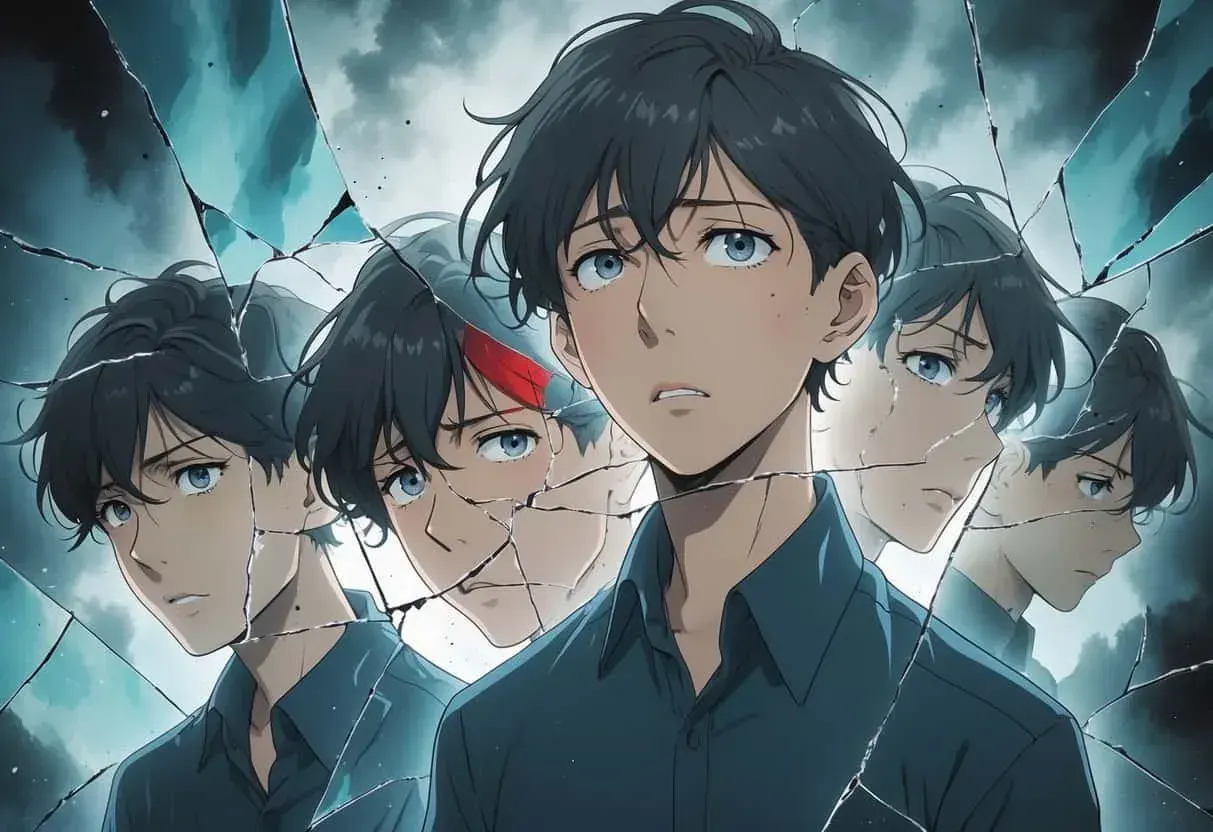
Watching these shows provides more than entertainment; it offers a unique lens into feeling detached from your own body, thoughts, or reality. Anime often reflects complex social pressures and intimate personal battles, helping you understand these experiences through striking visual metaphors and emotionally charged narratives. By blurring the line between what is real and what is imagined, these series challenge you to rethink identity, memory, and the very nature of selfhood. They also dissect how modern technology and media saturation warp our perceptions, making the sense of disconnection feel both alarmingly contemporary and deeply universal.
Key Takeaways
- Anime uses surreal imagery and nonlinear storytelling to externalize internal psychological fractures.
- Characters in these series often embody the tension between public persona and private anguish.
- Recurring motifs of mirrors, doubles, and digital realms serve as metaphors for dissociative states.
- These narratives intersect with real-world issues like social anxiety, trauma, and the erosion of privacy.
- Exploring these works can deepen your empathy and awareness of mental health complexities.
Understanding Dissociation and Fragmented Selves in Anime
Anime consistently explores intricate psychological states through characters who wrestle with memory lapses, shifting identities, and profound transformations. These narratives tap into your core experience of empathy and the human longing for community, all while pushing the boundaries of visual storytelling.
Defining Dissociation and Fragmented Selves
In psychological terms, dissociation involves a disconnection between thoughts, memories, feelings, actions, or sense of identity. In anime, this manifests as characters who cannot maintain a continuous narrative of who they are. Fragmented selves appear when a person's identity splinters—often shown through multiple personality aspects, inner voices, or literal doubles. You will notice frequent depictions of amnesia, intrusive daydreams, and a pervasive fog that separates a character from their own body. This rupture disrupts their relationships and catalyzes a radical transformation, forcing a reevaluation of what is authentic and what is a constructed facade.
The psychology of dissociation underscores how trauma can fracture consciousness, a concept anime visualizes with haunting clarity.
Psychological Themes Explored in Anime
Series that center on dissociation delve into angst, crises of identity, and the desperate urge to reconnect shattered memories. They reveal how a stable sense of self can crumble under extreme stress or prolonged abuse. Characters often embark on inward journeys to piece together their fragmented minds, seeking a coherent story from a jumble of conflicting impulses. Empathy becomes a critical narrative engine here; through the interplay of mirror neurons, you are neurologically wired to internalize the character’s emotional pain and confusion. This deepens the visceral bond, making their disorientation feel immediate and unsettling.
The best shows weaponize this empathy, leaving you questioning your own perceptions alongside the protagonist.
Cultural and Narrative Significance
Within Japanese storytelling, dissociation often highlights the friction between individuality and communal harmony. A society that values consensus creates unique pressures; anime interrogates how you can conform when your inner self feels irretrievably divided. Narratively, dissociation serves as a vehicle to explore identity and transformation through symbolic landscapes—like labyrinthine cities or corrupted digital voids. It pushes you to reflect on how memory constructs personal history and what happens when that archive is corrupted. This creates a unique cultural space where philosophical inquiry merges with emotional horror, reflecting anxieties about social control, academic pressure, and the isolating effects of urban life.
The Essential Anime Titles That Master Fragmented Identities
Several landmark series and films harness disjointed editing, warped soundscapes, and iconographic violence to represent split selves. These titles use every tool at their disposal to communicate the visceral reality of maintaining a fractured consciousness.
Classic Masterpieces of Psychological Horror
Perfect Blue remains the gold standard. In this psychological thriller, pop idol Mima Kirigoe abandons her music career for acting, only to find her identity violently unraveling. The film dismantles the boundary between objective reality and subjective hallucination, using relentless POV shifts to trap you inside her derealization. Her reflection in mirrors becomes an autonomous, mocking other that threatens to usurp her entirely.
Serial Experiments Lain takes a different approach, situating dissociation within the emergent internet era. Lain Iwakura’s fragmented sense of self plays out across the physical world and the virtual realm of the Wired. Her identity diffuses into multiple versions—a shy schoolgirl, a bold digital avatar, and a messianic entity—questioning whether the “real” self can survive in a network that knows everything about you. The series uses buzzing static, electronic drones, and long, vacant silences to evoke a continuous low-level detachment from the body.
In Neon Genesis Evangelion, especially its introspective final arcs, the fractured psyche becomes a literal battlefield. The Human Instrumentality Project threatens to dissolve individual boundaries into a primal soup of consciousness. Characters like Shinji Ikari dissociate under pressure, retreating into train-car delusions and torturous internal monologues. The series visualizes mental fragmentation through rapid-fire text flashes, abstract animation, and a penetrating focus on the terror of intimate connection.
Modern and Surreal Interpretations
More recent series have expanded this vocabulary. Sonny Boy strands students in a void where reality is governed by subjective whims. The drifting school becomes a pressure cooker for identity dissolution, as characters discover they can manipulate matter or jump between dimensions. The abstract, watercolor-like animation mirrors the instability of their mental states, with time loops and alternate selves fracturing any coherent chronology.
The Tatami Galaxy visualizes a young man’s obsessive regret through hyper-speed montages and parallel realities. Each episode resets his college life, showing how slight variations in choice lead to divergent selves. The relentless repetition and metaphorical “rooms” of the mind echo the circular rumination found in dissociative disorders. Meanwhile, Paprika uses the technology of dream infiltration to explore how subconscious fragments can hijack waking life. When the boundary between dream and reality collapses, characters lose their coherent selves, merging with their repressed desires in a chaotic, ecstatic parade that threatens to consume the world.
Character Case Studies: Embracing the Split Self
In these narratives, a fractured identity often presents as an internal council of conflicting voices. The loyal, survival-oriented self battles a rebellious impulse that seeks freedom at any cost. Mima in Perfect Blue experiences this as an external stalker-figure that may be a projection of her own discarded innocence. Shinji’s dissociation manifests as a retreat into a passive state where he cannot recognize his own reflection. In Bokurano, child pilots are sequentially crushed by cosmic responsibility; each develops a form of emotional numbing that distances them from the imminent horror of their own erasure.
This fragmentation is rarely shown as a simple disorder to be cured. Instead, it acts as a defense mechanism—a necessary, if devastating, negotiation with overwhelming trauma.
Storytelling Techniques and Visual Artistry
Anime directors deploy a precise toolkit to simulate dissociation. Jump cuts and discontinuous editing fracture the narrative flow, mimicking memory gaps. Repeated animation loops trap characters in recursive moments. Sound design weaponizes silence; sudden drops in ambient noise create a vacuum that echoes the character’s emotional flatline. Conversely, distorted audio glitches, overlapping whispers, or a cacophony of intrusive thoughts shatter the sonic continuity.
Visually, shattering glass, cracking mirrors, and water reflections serve as recurring motifs for the self in pieces. The use of color grading shifts—from hyper-saturated fantasy to drained, sickly pallor—tracks emotional disintegration in real time, pulling you into a state where nothing, least of all your own perception, can be trusted.
Social and Philosophical Dimensions of the Broken Self
Beyond individual psychology, these anime critique the frameworks of modern life that manufacture fragmentation. They expose how social structures, economic systems, and digital networks conspire to keep you dislocated from your own experience.
The Toxic Weight of Society and Neoliberal Logic
Many series frame dissociation as a response to systemic suffocation. The constant demand to optimize oneself, curate a marketable image, and compete in a hierarchical system—hallmarks of neoliberalism—generates profound inner conflict. You see characters torn between their authentic impulses and the personas they must adopt to survive. In Evangelion, the organization NERV functions as a cold corporate-military machine that treats delicate teenage minds as interchangeable components. The fragmentation occurs when a character’s instrumental value overrides their humanity.
Similarly, the idol industry depicted in Perfect Blue is a literal factory that manufactures synthetic selves for mass consumption, inevitably destroying the person beneath the image. These narratives argue that conformity, enforced by institutional power, forces you to split off parts of yourself to remain functional.
Community, Isolation, and the Failure of Connection
Despite the promise of hyper-connectivity, fragmentation in anime often intensifies in the presence of others. Characters inhabit crowded cities or digital networks yet remain utterly isolated. Social media, as explored in bits by Lain and later series, fosters a decentralized self where you maintain multiple avatars across platforms, eroding a singular identity. The failure to form authentic bonds reinforces a dissociative stance: if you cannot risk true intimacy, you retreat from the body and into a observer-like detachment. This mirrors contemporary anxieties where communal structures have weakened, leaving individuals to construct their own meaning—often a hollow and exhausting project.
Empathy, Mirror Neurons, and the Fear of Feeling Too Much
These anime often explore how empathy functions as both a bridge and a threat. Drawing on the concept of mirror neurons, characters instinctively absorb the emotional states of those around them. For a fragmented self with porous boundaries, this flooding of external emotion can trigger a dissociative shutdown—a protective numbing against the terrifying intensity of shared pain. Loyalty becomes toxic; Shinji’s desire to be loved is precisely what paralyzes him. By watching these connections fray, you understand how the collapse of interpersonal trust can dissolve the self.
The series sometimes subtly parallel natural ecosystems, where a balanced cycle—like nitrogen fixation in the biosphere—maintains life, and disruption leads to toxic accumulation. Similarly, emotional ecosystems require careful maintenance; unchecked trauma poisons the relational field, making disconnection seem like the only viable survival strategy.
The Role of Technology and Media in Shaping Dissociation Narratives
Advancements in animation technology have exponentially expanded the capacity to render invisible mental states. The tools of the medium—digital compositing, CGI, glitch art—become metaphors for the very dissociation they depict.
How Animation Technology Evolved to Map the Mind
Early anime relied on static backgrounds and limited motion to suggest internal states. Today, digital techniques allow for unparalleled expression of a fractured consciousness. Serial Experiments Lain uses blocky, early-CGI shadows and red static flickers to visualize the intrusion of the Wired into the real. Modern series employ data-moshing, pixel sorting, and holographic overlays to represent the sensation of occupying multiple spaces at once. This technological evolution means you are no longer just watching a character dissociate; the screen itself begins to glitch and destabilize, synching your sensory experience with the character’s deteriorating grip.
Paprika’s fluid, impossible transitions between dreams could only exist through a mastery of digital blending, turning the film into a direct transmission of fragmented logic.
Audio-Visual Alchemy: Soundtracks of Disconnection
Sound design is the unsung engine of dissociation. Directors use binaural beats, infrasound hums, and sharply edited voice tracks to induce a trance-like unease. A sentence might start in one acoustic space and finish in another, dislocating you from temporal continuity. The haunting, choral loops of Evangelion or the industrial drone of Lain envelop you in an auditory environment where the self feels porous. Even silence is weaponized: by stripping away all ambient noise, the brain’s natural tendency to fill the void creates auditory hallucinations, mirroring the character’s internal chatter.
These techniques ensure that dissociation is not just an intellectual concept but a full-body perceptual event.
The Symbiotic Impact on Artists and Audiences
The feedback loop between technology and psychological storytelling has reshaped audience expectations. Modern viewers are fluent in the visual symbolism of mental fragmentation; a sudden video stutter or a mirror image that speaks back is immediately decoded as a dissociative episode. This literacy allows creators to build layered narratives that reward attentive decoding. Artists, in turn, draw on media evolution to explore identity loss in fresh ways—using hologram concerts (virtual idols) or algorithmic feeds as new metaphors for the self as a manufactured, distributed construct. This encourages you to think critically about how your own digital footprint fragments your sense of a unified life story.
The convergence of tech and psychology in anime thus becomes a creative engine, generating stories that feel both prescient and profoundly intimate, validating the experiences of those who navigate a world that often feels like a waking dream.