Table of Contents
The Unforgettable Role of Music in Anime Storytelling
Anime music composers are the architects of emotional landscapes, shaping the way you connect with every scene. The best anime music composers don’t just fill silence—they define the identity of a series, turning moments of joy, sorrow, and adrenaline into memories that last a lifetime. Their iconic scores work hand in hand with visual storytelling, often becoming as beloved as the characters themselves.
When you think of a classic anime, the odds are high that its soundtrack immediately springs to mind. That’s no accident. It’s the result of meticulous composition, deep collaboration with directors, and an uncanny ability to translate narrative beats into melody. From the sweeping orchestral themes that open a grand adventure to the pulsing electronic tracks that drive futuristic tension, these musicians craft a sonic experience that elevates anime beyond mere animation.
What Makes an Anime Composer Truly Great?
Before diving into the names and scores, it’s worth understanding what sets the top anime composers apart. It isn’t just technical skill—although that’s a given. The greats possess a rare fusion of genre fluency, emotional intelligence, and an instinct for leitmotif. They know when to be subtle and when to unleash a full choir. Their music feels inseparable from the world it inhabits, whether that’s a quiet countryside or a sprawling cyberpunk city.
Many of these composers have backgrounds in classical training, jazz performance, or avant-garde electronic music. They draw from a global palette, blending traditional Japanese instruments with Western orchestration and modern production techniques. The result is a sound that is both culturally specific and universally resonant. Their influence often seeps into video games, J-pop singles, and live orchestral concerts, proving that great composition knows no medium boundaries.
Pioneers of Anime Music Composition
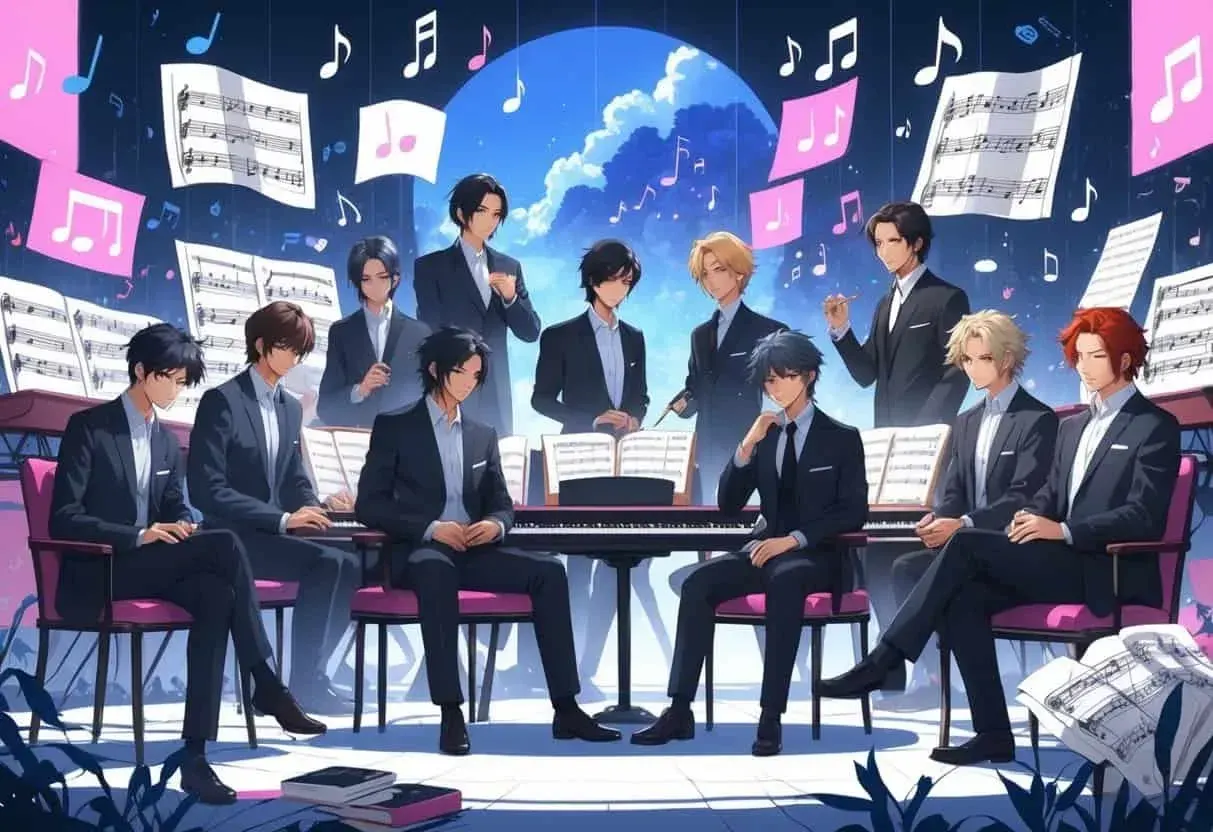
The industry’s sound was forged by a handful of visionaries whose work still echoes today. They didn’t just write music for shows—they wrote the rulebook for how anime soundtracks could operate, often breaking genre constraints to serve the story.
Yoko Kanno: The Chameleon of Modern Anime Scores
If there’s one composer who epitomizes versatility, it’s Yoko Kanno. Her ability to shift between genres is staggering: one moment she’s channeling bebop jazz for Cowboy Bebop, the next she’s constructing orchestral swells for Macross Plus or ethereal folk ballads for Wolf’s Rain. Her soundtrack for Cowboy Bebop, recorded with her band The Seatbelts, is a masterclass in mood—blues, funk, and hard bop collide to mirror the show’s space-noir loneliness. Tracks like “Tank!” have become anthems not just for the series but for anime fandom itself.
Kanno’s secret lies in her refusal to treat “anime music” as a genre. She composes as if each project is a film, a concert, or a personal diary. This approach gives her work a timeless quality. Even today, her scores for Terror in Resonance and Kids on the Slope feel fresh, layered with emotional depth that rewards repeated listening.
Joe Hisaishi: The Heartbeat of Studio Ghibli
You can’t talk about anime music without Joe Hisaishi. For nearly four decades, his collaboration with Hayao Miyazaki has produced some of the most recognizable melodies in cinema history. His music for My Neighbor Totoro is pure childhood nostalgia, while Spirited Away’s “One Summer’s Day” captures the ache of transformation with a single piano line. Hisaishi’s style marries sweeping orchestral arrangements with minimalist repetition, creating themes that feel both intimate and epic.
His concert tours—featuring full symphony orchestras and choirs performing Ghibli suites—routinely sell out venues worldwide. That speaks to the profound cultural footprint of his work. Beyond Ghibli, Hisaishi’s scoring for films like Sonatine and Departures demonstrates his range, but it’s the Ghibli canon that cemented his legacy as the poet of animation music.
Kenji Kawai: Master of Atmospheric Tension
Where Hisaishi builds warmth, Kenji Kawai constructs unease. His score for Mamoru Oshii’s Ghost in the Shell (1995) is a milestone in animation music. The main theme, “Making of a Cyborg,” layers ancient choral chanting over industrial percussion and synthesized drones, evoking a future both technological and ritualistic. Kawai often fuses traditional Japanese taiko and folk singing with electronic elements, creating soundscapes that feel alien yet ancestral.
His work on Patlabor, Ring, and Ip Man extends that signature tension to other genres. Kawai’s ability to make silence feel menacing is unparalleled; his scores teach you to listen not just for melody but for texture. This atmospheric approach has influenced a generation of horror and sci-fi composers far beyond anime.
Influential Composers Bridging Anime, Film, and Global Music
Some musical giants have moved effortlessly between anime soundtracks, live-action cinema, and avant-garde performance, expanding what anime scores can achieve.
Ryuichi Sakamoto: The Boundaryless Artist
Though best known internationally for his film scores like The Last Emperor and Merry Christmas, Mr. Lawrence, Ryuichi Sakamoto’s anime contributions are just as significant. His work on Neo Tokyo and collaborations with Oshii exhibit his knack for fusing icy electronics with organic warmth. Sakamoto treated every project as a sonic laboratory, incorporating field recordings, glitch, and silence. His anime music reflected his philosophy that a score doesn’t need to shout—it can whisper and still command attention.
After his passing in 2023, tributes poured in from every corner of the entertainment world, a testament to his influence on electronic, classical, and pop artists alike. His discography remains a must-explore for anyone serious about the intersection of sound and storytelling.
Haruomi Hosono: The Architect of Fusion
As a founding member of Yellow Magic Orchestra, Haruomi Hosono helped pioneer electronic pop globally. His anime involvement might be less headline-grabbing, but his aesthetic fingerprints are everywhere. Hosono’s solo work and YMO tracks have been used in anime like Patlabor and Kiki’s Delivery Service (through the influence on Ghibli’s musical taste). His ethos of blending exotica, traditional Japanese music, and early synth pop laid groundwork for futuristic scores that didn’t sound sterile. When modern composers mix retro synths with organic beats, they’re channeling a spirit Hosono helped create.
Video Game and Cross-Media Titans with Anime Ties
The line between anime and video game music is famously blurry. Many top composers have built careers that straddle both, bringing orchestral heft and earworm melodies to interactive worlds, with their themes later appearing in anime adaptations or concert halls.
Nobuo Uematsu: The Final Fantasy Phenomenon
Nobuo Uematsu is often called the Beethoven of video game music, and for good reason. As the primary composer for Square Enix’s Final Fantasy series, his themes have become cultural touchstones. Though primarily a game composer, his influence on anime is undeniable— Final Fantasy: The Spirits Within and Advent Children brought his cinematic style directly into anime-adjacent films. Tracks like “Aerith’s Theme” and “One-Winged Angel” have been performed by full orchestras worldwide, inspiring countless anime composers to think beyond episodic format and into leitmotif-driven narrative scoring.
Uematsu’s knack for melody makes his work instantly accessible, yet harmonically sophisticated. He often writes knowing his music will be looped for hundreds of hours, so themes must remain engaging without wearing out. That discipline translates beautifully into anime, where emotional peaks demand music that sears itself into memory.
Keiichi Okabe: The NieR Evangelist
While Keiichi Okabe rose to fame through the NieR game series, his anime soundtrack work for Yuki Yuna is a Hero and Kaguya-sama: Love Is War demonstrates startling range. Okabe’s music blurs the line between song and score, often using invented languages and haunting vocal lines to create a mythic atmosphere. His anime compositions carry the same emotional weight as his game work, reminding listeners that a great composer can shift medium seamlessly.
The Roster of Contemporary Icons and Their Signature Scores
The modern anime landscape is bursting with talent. A few exceptional composers have defined the past two decades, each with a signature sonic fingerprint you can’t miss.
Hiroyuki Sawano: The King of Epic Drop
Few composers are as instantly identifiable as Hiroyuki Sawano. His throbbing orchestral-electronic hybrid, complete with stuttering synth builds and powerful vocal inserts, has scored juggernauts like Attack on Titan, Kill la Kill, and 86. Sawano’s “drop” technique—where tension builds to an explosive chorus—can make even a character standing up feel like a world-changing event. Tracks like “Vogel im Käfig” and “YouSeeBIGGIRL/T:T” are emotional grenades, mixing German lyrics, rock guitar, and symphonic strings.
Some critics call his style formulaic, but millions of fans disagree. His scores are unapologetically massive, matching the life-or-death stakes of the shows they accompany.
Yuki Kajiura: The Weaver of Voices
If Sawano is about bombast, Yuki Kajiura is about mystery. With her project FictionJunction and Kalafina, she built a style rich in layered female vocals, violin, and acoustic guitar. Her work on .hack//SIGN, Madoka Magica, and the Fate/Zero seriess immerses you in a world of ritual and longing. Kajiura’s music often feels like an ancient spell—melodies spiral, voices chant in invented languages, and the result is hypnotic. The Madoka Magica soundtrack, with tracks like “Sis Puella Magica!”, redefined how magical girl stories could sound, adding tragic beauty that elevates every emotional pivot.
Shiro Sagisu: The Orchestral Powerhouse
Shiro Sagisu’s resume reads like a hit list: Neon Genesis Evangelion, Bleach, Berserk, Attack on Titan (collaboration). His ability to swing from jazzy lounge pieces to full-throttle orchestral action is legendary. The Evangelion soundtrack alone is a genre-hopping masterpiece—one moment you’re listening to a string quartet, the next a pop song, then a menacing military march. Sagisu’s scores hold a mirror to the psychological chaos of the series, proving that eclecticism can be the deepest form of character scoring.
Iconic Scores That Defined Generations
Some soundtracks transcend the medium. Here are a few iconic scores and why they’ve stood the test of time.
- Cowboy Bebop (Yoko Kanno) – A jazz-fusion odyssey that becomes the show’s soul. Every track is a lesson in cool.
- Spirited Away (Joe Hisaishi) – The epitome of magical realism in music. Its melodies are etched into global memory.
- Attack on Titan (Hiroyuki Sawano) – An adrenaline-soaked soundscape that mirrors humanity’s desperate struggle. The vocal tracks are now legend.
- Madoka Magica (Yuki Kajiura) – A labyrinthine score where innocence and dread coexist, transforming a deceptively cute genre into a philosophical horror.
- Ghost in the Shell (Kenji Kawai) – A masterpiece of atmosphere that questions the boundary between human and machine through sound.
- Evangelion (Shiro Sagisu) – A chaotic brilliance that veers from classical to pop to industrial, mirroring its fractured narrative.
How These Scores Connect Across Media
The reach of anime music is staggering. Orchestral concerts like the Final Fantasy Distant Worlds series bring thousands of fans together to hear symphonic renditions of game and anime themes. Netflix’s expansion into anime has introduced iconic scores to new global audiences, with many soundtracks receiving official digital releases that top streaming charts.
Composers frequently lend their style to live-action films and advertisements, creating a cross-pollination where anime music influences mainstream pop. When you hear the aggressive strings and choir in a film trailer, there’s a good chance the composer grew up listening to Sawano or Hisaishi. The legacy of these artists is not just in the shows they scored but in the generations of musicians they inspired to see anime as a legitimate, challenging canvas for musical storytelling.
Final Reflections on Ranking the Greats
Ranking anime composers is inherently subjective because the best work is so tied to personal experience. For some, Joe Hisaishi’s gentle piano is the pinnacle; for others, it’s Yoko Kanno’s genre-defying creativity. The “best” composer might be the one whose music saved you during a difficult time, or the one whose concert left you weeping.
What unites these masters is an unshakeable commitment to serving the story. They don’t write for awards or charts; they write to make you feel something true. And as long as anime continues to push boundaries, its music will follow—bold, experimental, and unforgettable. Next time you press play on a new series, pay extra attention to the soundtrack. You’re hearing decades of innovation and passion, all composed to make those animated frames breathe.