Table of Contents
Jazz in anime rarely plays it safe. The genre’s fingerprints pop up in moody late‑night dramas, chaotic mecha battles, and even whispered character studies—often in shows that the broader world has overlooked. While Cowboy Bebop deserves its reputation as the standard‑bearer, dozens of other soundtracks push jazz into places you might never expect, fusing it with orchestral grandeur, electronic experimentation, and deeply local Japanese sensibilities. These scores don’t just decorate a scene; they steer the emotional weight of a story, sometimes becoming a character in their own right.
Anime jazz soundtracks are a masterclass in surprise. They can shift from wailing brass to a solitary piano note in a single cut, mirroring the unpredictable pace of the narratives they serve. Whether you’re a seasoned jazz listener or someone who just wants a new backdrop for a late‑night playlist, there’s a hidden trove of albums that deserve your attention. These records pull together top‑shelf Japanese musicians and composers who understand that jazz is a language, not a formula.
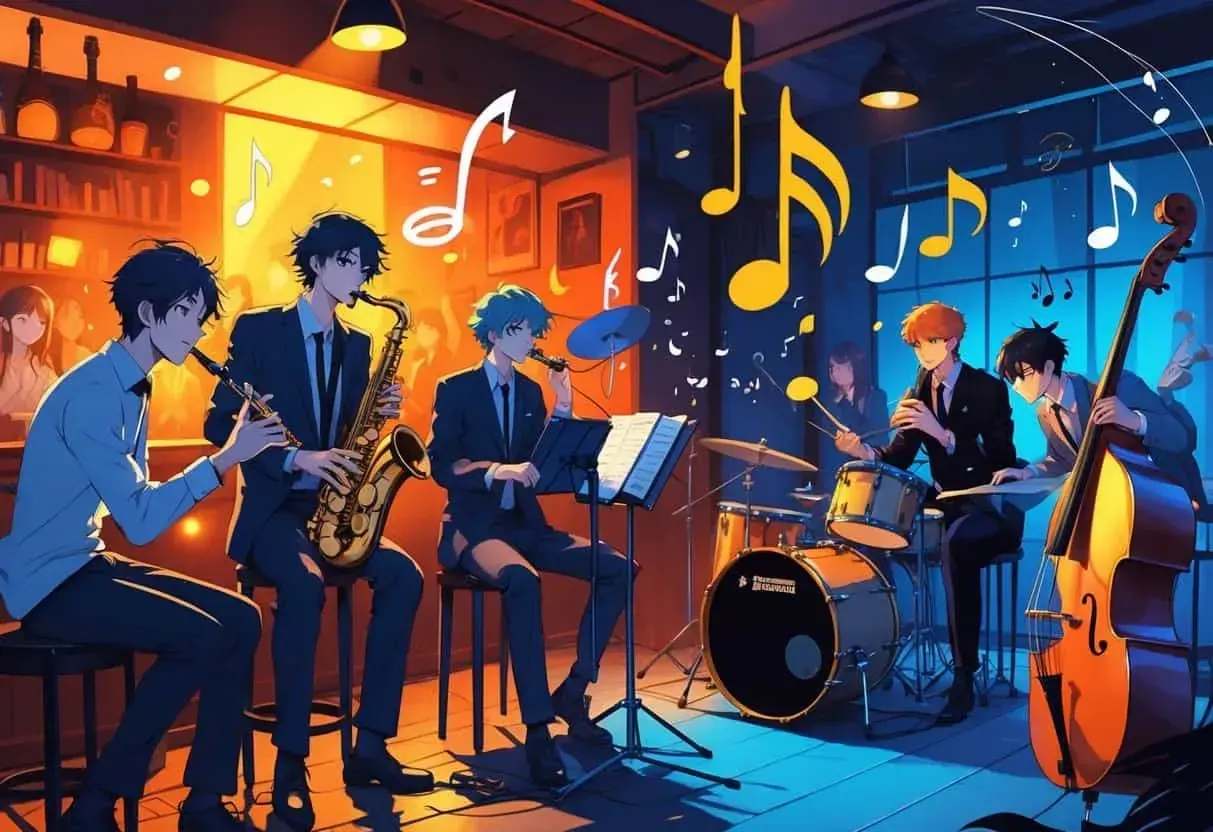
Listening to these lesser‑known scores isn’t just about filling the silence. It’s a way to crack open a new listening experience—one where animation, composition, and improvisation bounce off each other in real time. The result often feels more alive than a traditional studio album, and it’s the reason so many fans end up chasing vinyl pressings and limited‑edition CDs years after a series has aired.
What Makes Anime Jazz Soundtracks Stand Out
Anime composers treat jazz as raw material, not a vintage artifact. The palette is enormous: you’ll hear acoustic piano, muted trumpet, electric bass, brushes on a snare, and sometimes a full string section that suddenly pivots into a swing rhythm. This isn’t background music that fades into the wallpaper. It’s front‑and‑center storytelling that hijacks your pulse.
What separates anime jazz from a lot of Western soundtrack work is the willingness to let the instruments breathe. Silence and space are used as aggressively as a horn blast. In quiet character moments, a single ride cymbal or a few guitar chords can telegraph more than dialogue. In action sequences, a walking bass line might keep tension simmering under shrieking brass, pushing the chaos without ever overwhelming it.
Japanese sound engineers and directors collaborate deeply on these projects, often treating the recording sessions like a live gig. That energy bleeds through the speakers. You can hear the room, the breath between phrases, and a commitment to capturing a performance rather than assembling a digital patchwork.
Signature Features of Jazz in Anime
One hallmark is how freely jazz idioms are combined with other genres. A track might start with a straight‑ahead bebop head, then melt into an ambient synth pad before a distorted electric guitar takes over. Piano, trumpet, acoustic guitar, and double bass are common anchors, but they’re just as likely to share a track with drum machines, shamisen, or operatic vocals.
Improvisation is both a structural device and a metaphor. Many composers build cues around solo sections that feel genuinely spontaneous, mirroring a character’s emotional arc or a sudden plot twist. The music doesn’t telegraph what’s going to happen next; it reacts in the moment, pulling you closer to the screen.
Rhythmically, anime jazz often borrows from funk, bossa nova, and even traditional Japanese festival drumming. This cross‑pollination gives the music a distinct pulse that sets it apart from American or European jazz scoring. It’s a sound rooted in the Japanese jazz scene of the 1970s and ’80s—fearlessly eclectic and technically dazzling.
Influence of Japanese Culture on Jazz Soundtracks
Japan’s jazz history is deep, stretching back to the post‑war coffee‑house era where imported records fueled a fervent local scene. By the time anime became a global force in the 1980s and ’90s, the country already had generations of musicians fluent in both traditional jazz and boundary‑pushing fusion. That legacy lets composers draw on an insider’s knowledge while shaping music for a visual medium.
In many anime, jazz carries a subtle cultural association with urban cool and cosmopolitan sophistication—think smoky nightclubs, back alleys, and characters who operate outside the mainstream. Even in fantasy settings, a jazz inflection can signal that a world is more modern and fractured than it first appears. The music becomes a shortcut for complexity.
At the same time, there’s a strong current of wabi‑sabi in the arrangements: a roughness or imperfection that makes the sound feel human. You’ll hear a trumpet player crack a note slightly, or a piano that isn’t perfectly tuned. These details aren’t mistakes; they’re a reminder that real people are playing real instruments in service of a story.
Role of Music in Enhancing Character and Story
Jazz isn’t passive wallpaper in anime. It often attaches itself to specific characters, evolving as they evolve. A protagonist might have a theme that starts as a sparse bass motif and blossoms into a full big‑band statement by the finale. That kind of musical continuity rewards attentive viewers and adds a layer of emotional architecture that’s easy to miss on a first watch.
Pacing is another area where jazz shines. Quick drum fills and staccato horns can accelerate a chase sequence without the need for frantic editing. Conversely, a long, slow saxophone melody can stretch time during a pivotal conversation, letting the weight of the words sink in. The music becomes the director’s secret weapon for controlling how we feel the passage of time.
When done right, the score also acts as an emotional compass. Listeners learn to trust that a swing feel means mischief is coming, or that a bluesy guitar line signals heartbreak before any character speaks. It’s a sophisticated form of audio storytelling that leaves room for ambiguity—like a good jazz solo, it suggests rather than declares.
Underrated Anime Jazz Soundtracks
Plenty of anime scores splash jazz across their opening credits and then abandon it. The essential ones, however, keep the jazz dialogue running through the entire tracklist, building a cohesive musical world. Below are a handful of soundtracks that remain unfairly shadowed by bigger titles, each offering a distinct take on the genre.
Escaflowne: A Fusion of Fantasy and Jazz
Yoko Kanno’s work on Escaflowne is a marvel of contradiction. The series is a sprawling mecha‑fantasy epic with dragons, knights, and tarot‑card mysticism, yet Kanno reaches for smoky jazz harmonies and brassy big‑band arrangements as often as she does orchestral choirs. Tracks like “Dance of Curse” underscore violent confrontations with percussive stabs and a dark, swinging energy that’s miles away from typical fantasy scoring.
The soundtrack moves fluidly between jazz‑inflected action cues and tender piano pieces, often within the same episode. It’s a reminder that jazz doesn’t need a nightclub setting to thrive; it can anchor sword fights and looming prophecies just as powerfully. Kanno’s ability to blend acoustic folk instruments with a jazz rhythm section gives the world of Gaea a texture that feels ancient and dangerously modern all at once.
Macross Plus: Experimental Jazz in Sci‑Fi Animation
Macross Plus arrived at a moment when anime was hungry for a new sonic language, and the soundtrack delivered with a blend of experimental jazz, electronic textures, and soaring pop vocals. Once again, Yoko Kanno took the composer’s chair, but here she partnered with musicians who were steeped in both jazz improvisation and synth‑driven sound design. The result is an album that still startles decades later.
You’ll hear fragmented piano lines that dissolve into ambient drones, trumpet solos that twist through digital filters, and rhythm tracks that refuse to settle into a comfortable groove. The music mirrors the show’s themes of artificial intelligence, fractured memory, and the collision of human emotion with cold technology. For listeners who enjoy jazz that leans toward the avant‑garde, the Macross Plus soundtrack is an essential archive of what happens when genre boundaries dissolve.
Metropolis: Jazz Homage to Osamu Tezuka’s Vision
Rintaro’s Metropolis film is a dense, retro‑futuristic visual feast, and its soundtrack treats jazz as a living link between the 1920s and a dystopian tomorrow. The score weaves ragtime piano figures, swooning brass, and orchestral swells into a soundscape that feels like a party at the end of the world. This isn’tthe polished, cocktail‑lounge kind of jazz; it’s raw, theatrical, and faintly tragic.
By channelling the early jazz that inspired Osamu Tezuka’s original manga, the music grounds the film’s robotic characters in a recognizably human emotional register. The horn section wails during moments of chaos and whispers during quiet heartbreak, proving that vintage jazz idioms can carry staggering narrative weight when handled with care.
The Big O: Noir Atmosphere and Jazz Soundscape
If Cowboy Bebop is jazz on a spaceship, The Big O is jazz in a rain‑slicked, memory‑haunted city that exists outside of time. The series leans on a noir‑jazz vocabulary that’s instantly evocative: mournful trumpet lines, boom‑chick brushwork, and a double bass that prowls like a private eye. Even the action cues keep one foot in a smoky club, building tension through understatement rather than bombast.
The soundtrack’s composer, Toshihiko Sahashi, never lets the jazz tip into parody. The music feels lived‑in, almost weary, which perfectly matches protagonist Roger Smith’s world‑weary demeanor. For anyone who wants a soundtrack that treats jazz as a structural pillar rather than window dressing, The Big O is required listening.
| Anime Title | Composer | Jazz Style | Key Features |
|---|---|---|---|
| Escaflowne | Yoko Kanno | Jazz & Orchestral | Fantasy fusion, brass, emotional piano |
| Macross Plus | Yoko Kanno | Experimental Jazz | Electronic soundscapes, improvisation |
| Metropolis | Various | Classic Jazz & Orchestral | Ragtime echoes, cinematic brass |
| The Big O | Toshihiko Sahashi | Noir Jazz & Blues | Dark mood, walking bass, muted trumpet |
Sakamichi no Apollon: A Jazz Education Wrapped in Drama
Sakamichi no Apollon (Kids on the Slope) is one of the few anime that places jazz performance at the center of its plot. The story follows two high‑school misfits who bond over their love for Art Blakey, Bill Evans, and late‑night jam sessions, and the soundtrack delivers fully‑formed covers of standards alongside original pieces. Composer Yoko Kanno, working with top session players, doesn’t merely recreate classic tunes; she channels the emotional rawness of teenage discovery through every piano chord and drum fill.
The album stands on its own as a strong straight‑ahead jazz record. Tracks like “Moanin’” and “My Favorite Things” are rendered with such warmth and immediacy that you’d swear you were in the basement studio with the characters. Even if you never watch the anime, the soundtrack functions as a gateway into the jazz canon—one that makes the likes of John Coltrane and Art Blakey feel thrillingly accessible. Explore the musical heritage of Kids on the Slope to see how faithfully the series connects to jazz history.
Gundam Thunderbolt: Free Jazz in the Thunderbolt Sector
Mobile Suit Gundam Thunderbolt takes the idea of a wartime soundtrack and sets it on fire. The series pits two opposing pilots against each other, and both listen to jazz—but their tastes define them. The Federal pilot drifts through space with a cocktail of smooth, swinging big‑band numbers, while the Zeon ace tears into battle with abrasive, free‑jazz saxophone shrieks that feel like the audio equivalent of shrapnel.
Composer Naruyoshi Kikuchi, himself a respected figure in Japan’s jazz underground, builds a score that treats dissonance as a weapon. The free‑jazz segments are genuinely unsettling, clashing with the chaos of mobile‑suit combat in a way that traditional orchestral scoring never could. It’s a brutal, brilliant reminder that jazz can be as confrontational as any metal or industrial track. Read more about the soundtrack’s design and how it reimagines the Gundam sound.
Baccano!: Prohibition‑Era Jazz Mayhem
Baccano! throws gangsters, immortals, and alchemists onto a transcontinental train in 1930s America, and the soundtrack greets the chaos with a grin. The score is built around a roaring hot‑jazz ensemble—blaring trumpets, stride piano, and a rhythm section that never stops swinging. It’s the kind of music that makes you want to pour a drink and duck for cover at the same time.
Composer Makoto Yoshimori avoids the trap of making everything feel like a museum piece. The performances are loose and lively, soaked in the kind of reckless energy that defines the series’s sprawling narrative. The Baccano! soundtrack proves that period‑authentic jazz can still sound dangerous and fun when it’s written for characters who treat gunfights like dance numbers.
Iconic Influences and Overlooked Composers
Behind every great score is a mind that understands jazz not as a style but as a method of problem‑solving on screen. A few names dominate the conversation, but the wider network of arrangers, session players, and directors deserves just as much credit. Their collaborations create the distinct audio thumbprint that makes anime jazz so addictive.
The Enduring Legacy of Yoko Kanno
Yoko Kanno’s name is practically synonymous with anime jazz, and for good reason. Her body of work spans everything from the bebop‑fueled chaos of Cowboy Bebop to the delicate trio‑based introspection of Sakamichi no Apollon. What sets Kanno apart is her refusal to treat jazz as a monolith. She understands that a New Orleans parade rhythm carries a different emotional payload than a 1960s modal‑jazz vamp, and she deploys each with surgical precision.
Her partnership with the band Seatbelts became the stuff of legend. Together, they recorded tracks that feel like they were plucked from a late‑night jam session in a Tokyo basement—raw, urgent, and deeply human. Songs like “Tank!” and “The Real Folk Blues” are now cultural touchstones, but the deeper album cuts showcase Kanno’s ability to shift from fire‑breathing big‑band into something fragile and pastoral without missing a beat. That constant shape‑shifting is what keeps listeners returning, uncovering new details with every spin.
Jazz Elements in Works by Shinichiro Watanabe
Director Shinichiro Watanabe has built a career on treating music as the primary engine of his storytelling. In Cowboy Bebop, the jazz isn’t just the score—it’s the entire rhythm of the show. Episode titles reference legendary albums, and the editing flows like a skilled drummer keeping time. Watanabe’s later work, including Samurai Champloo and Kids on the Slope, continues to explore the intersection of music and identity, with jazz serving as a bridge between historical periods and personal transformation.
Watanabe’s genius lies in his collaborative approach. He gives composers room to experiment, often allowing them to write music before the animation is finalized. This reverses the typical production pipeline and results in sequences that feel organically linked to the audio—the characters move inside the music rather than simply being accompanied by it. His filmography is a masterclass in how jazz can define a show’s identity so thoroughly that you can’t imagine the visuals without the sound, and vice versa.
Collaborative Efforts in Anime Jazz Productions
Jazz soundtracks thrive on the interplay of distinct musical voices, and anime productions often read like a who’s‑who of Japan’s session scene. Composer Toshiyuki Honda, for example, has a long history of blending jazz with orchestral and electronic elements, and his projects regularly feature soloists who are bandleaders in their own right. This pooling of talent injects each cue with a sense of conversation—a saxophonist responding to a pianist, a drummer pushing back against a guitar line—that you can’t fake with samples.
Even behind the mixing desk, engineers play a pivotal role in capturing the warmth and space of a live ensemble. Many anime jazz recordings are tracked in analog or mixed with a deliberate emphasis on room tone, which gives the music a tactile quality. When you hear a ride cymbal decaying into silence or the faint buzz of a double bass string, you’re hearing a team that prioritized the feel of a performance over sterile perfection. That dedication is why these soundtracks hold up as standalone jazz records decades after their release.
Broader Impact and Cultural Reach
Jazz in anime has rippled far beyond Japan’s borders, influencing how global audiences engage with both the genre and the medium. It’s not unusual to walk into a record shop in Europe or North America and find a crate dedicated to anime soundtracks nestled between Blue Note reissues, or to hear a café playlist sliding from Art Blakey straight into a Cowboy Bebop cue. This cross‑pollination is one of the most exciting musical developments of the last three decades.
Jazz in Mainstream and Fantastical Anime
Jazz’s presence isn’t limited to niche, jazz‑focused titles. Fantasy touchstones like Spirited Away and Princess Mononoke fold jazz‑inflected harmonies and rhythms into their orchestral palettes, often during scenes of emotional transition. Even series as sprawling as Sailor Moon occasionally lean on a walking bass line or a muted trumpet to underline a moment of urban romance or internal conflict. These subtle insertions normalize jazz for viewers who might never actively seek it out.
The flexibility of jazz allows it to serve both mundane and mythic contexts. A walking bass under a school‑life comedy can make an ordinary conversation feel effortlessly cool, while a dark, modal vamp in a mecha launch sequence can suggest existential stakes. This dual capacity—to be simultaneously intimate and epic—makes jazz an indispensable tool in the anime composer’s kit.
Anime Jazz Soundtracks Beyond Television
The influence of anime jazz extends into video games, concerts, and soundtrack‑only album releases. Titles like Persona 5 took acid‑jazz cues straight from the anime scoring playbook, introducing millions of gamers to a style they might never have encountered otherwise. Live orchestral concerts of anime music—events that regularly sell out concert halls across Asia, Europe, and the Americas—routinely feature jazz‑heavy suites that treat the material with the same respect as a Gershwin or Ellington program.
Standalone soundtrack albums have also carved out a durable niche in the collector’s market. Limited‑edition vinyl pressings of Cowboy Bebop or Kids on the Slope disappear within hours, and dedicated labels continue to license and reissue deep‑catalog scores. This thriving ecosystem confirms that anime jazz isn’t just a creative oddity; it’s a commercially and culturally significant strand of contemporary music.
Influence on Anime Fandom and Global Music Trends
For many international fans, anime serves as a first introduction to jazz—and that door swings wide open. Online communities trade recommendations for classic albums based on their favorite soundtracks, and it’s increasingly common to see younger listeners gravitating toward hard bop, modal jazz, or bossa nova because a particular show lit the spark. The pipeline from Cowboy Bebop to Miles Davis is well‑trodden, and that’s a genuine cultural gift.
Musicians themselves are part of the feedback loop. You’ll find instrumentalists in jazz clubs across the world tipping their cap to an anime theme during a solo, or entire fusion bands building setlists around reimagined score cues. This two‑way exchange—where anime draws on jazz history and then sends it swirling back into the live scene—keeps the music evolving. It’s a quiet but powerful reminder that great art travels, mutates, and finds new homes in the most unexpected places.