Table of Contents
Anime fighting games bring together fast action and that unmistakable anime flair. You get to step into the shoes of your favorite characters and actually live out their wildest battles.
The best anime fighting games really shine with smooth controls, moves that feel true to the show, and visuals that just pop.
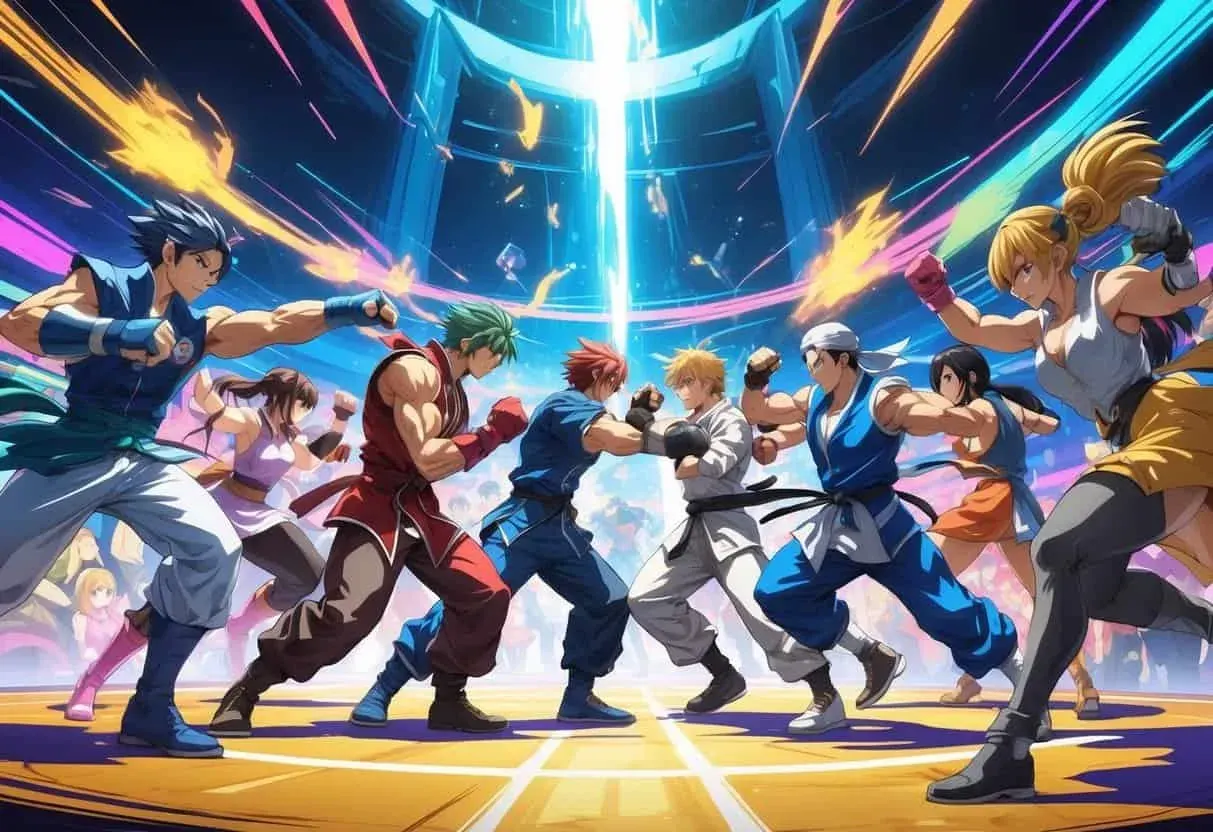
There’s a good mix out there—some games focus on deep, competitive mechanics, while others just dazzle with their look. Whether you’re here for the strategy or the spectacle, this list is meant to help you find a game that nails both. Over the years, developers have mastered the art of translating hyperkinetic anime battles into interactive experiences, and the results speak for themselves. The most memorable titles don’t just look like the anime; they make you feel like you’re directing the action.
Some of these games just stick with you. They’ve got something special that keeps you coming back, whether it’s a perfectly executed combo system, a roster packed with personality, or a soundtrack that gets your adrenaline pumping before the first punch lands.
Key Takeaways
- Look for a blend of tight gameplay and real anime style. A great anime fighter should be easy to pick up but reward those who invest time in learning its deeper systems.
- Top picks deliver both tough fights and eye-catching visuals. The best titles leverage cel-shading, hand-drawn effects, and fluid animation to stay faithful to the source material.
- A few classics and up-and-comers stand out for their own reasons. Whether it’s a cult favorite with an underground competitive scene or a shiny new release with modern rollback netcode, variety keeps the genre healthy.
Ranking Criteria: What Makes the Best Anime Fighting Games
When it comes to ranking anime fighting games, there are a few things that matter most. Gameplay, visuals, how well they stick to the original anime, and the audio all play a part. But beyond those pillars, a game’s longevity, online infrastructure, and respect for its community also weigh heavily. We evaluate each title across multiple dimensions, always keeping the player experience at the center.
Gameplay Depth and Balance
Gameplay should feel rewarding right from the start. Controls need to be snappy, with moves that chain together logically, and no single character should steamroll everyone else. A healthy metagame means that victory comes from reading your opponent and executing well, not from abusing a single overpowered tool. The best anime fighters offer enough variety in attacks, combos, and defensive options to keep every match fresh.
Rollback netcode has become a non-negotiable standard for any title with online play. Even a flawless combat engine gets frustrating when lag ruins your timing. Games that provide low latency across regions let you fully appreciate the nuance of frame traps, whiff punishes, and instant blocks. When every character feels fair but distinct—whether you’re zoning with projectiles in Guilty Gear Strive or rushing down with assist calls in Dragon Ball FighterZ—that’s when things get really fun.
Visual Style and Graphics
Anime fighting games aren’t trying to be ultra-realistic. What matters is nailing that anime look, and the best titles achieve it through clever technology or painstaking sprite work. Bright colors, slick keyframe-like animations, and character models that stay on-model from any angle help you recognize your favorite heroes instantly. When the animation is smooth at 60 frames per second, it’s easier to track the action and react appropriately.
Effects like energy blasts, impact sparks, and screen-filling supers add a cinematic layer to every clash. Outdated or stiff visuals are a quick way to break the mood, which is why the top games invest heavily in art direction. Arc System Works, for example, has elevated the genre by making 3D models that look indistinguishable from hand-drawn 2D animation—a feat that earns constant praise from casual viewers and tournament commentators alike.
Adaptation of Anime Source Material
A great game feels like a real extension of the anime. You want to see signature moves and powers brought to life exactly how you remember them, from Goku’s Kamehameha to Naruto’s Rasengan. Story modes and cutscenes that tie into the original plot—or sometimes expand it with “what if” scenarios—add tremendous value. The characters should act and sound like themselves, using the same voice actors and iconic battle cries.
If the game respects the world and tone of the anime, it’s way more immersive for fans. A title like Naruto Shippuden: Ultimate Ninja Storm 4 lets you relive pivotal moments from the Fourth Great Ninja War with flawless visual fidelity and original Japanese voice over. That kind of faithfulness doesn’t just serve nostalgia; it pulls in newcomers who want to experience the story in an interactive way.
Soundtrack and Audio Design
Sound can really make or break the vibe. The music should match the energy of the battles—catchy, energetic, maybe even a little over the top. Rock tracks, orchestral swells, and synth-driven anthems all find a home in this genre. Punches, slashes, and special moves need to sound right, with distinct audio cues that help you identify what’s happening on screen even in chaotic moments.
Voice acting, including those familiar character shouts, keeps you tethered to the anime universe. Good audio design also provides gameplay feedback; the sound of a successful throw break or the angelic chime of a Roman Cancel in Guilty Gear Strive tells you instantly that you’ve pulled off the right move. When everything sounds clear and fits together, fights just feel more exciting.
Online Experience and Community Support
A fighting game is only as strong as its player base, and online infrastructure directly determines how long a game stays relevant. Rollback netcode, crossplay between platforms, and robust lobby systems help communities thrive. Regular balance patches, new character additions, and developer communication signal that the game will be supported for years, not abandoned after launch. Titles that embrace the competitive scene through official tournaments or in-game ranked modes tend to maintain a healthy population long after the initial hype fades.
Top Anime Fighting Games Ranked by Gameplay and Style
The top anime fighting games manage to blend smooth gameplay, standout art, and real respect for the source material. It’s not just about flashy visuals—every piece matters. Based on our criteria, several titles have risen above the pack, delivering experiences that feel authentic, competitive, and visually unforgettable.
Standout Gameplay Mechanics
Tight controls and balanced movesets are a must. Dragon Ball FighterZ (official site) is fast and accessible, offering simple auto-combos that flashy newcomers can enjoy, but beneath that surface lies a deep tag-team system with assist extensions, snapbacks, and mix-up pressure that rewards mastery. Its 3v3 format forces constant decision-making, and the thrill of perfectly syncing a Super Dash into an aerial combo never gets old.
Guilty Gear Strive (official site) reshaped the classic anime fighter formula with a heavy-hitting, deliberate pace. The Roman Cancel mechanic—which lets players cancel almost any action into a special state—opens up creative combo routes and mind games. Every character, from the rushdown-focused Giovanna to the setplay-heavy Testament, demands a unique approach. Meanwhile, Melty Blood Type Lumina (Steam page) carries forward the series’ trademark rapid neutral and aggressive air dashes, with the Moon System adding a layer of resource management that can swing rounds in an instant.
For players who prefer a more tactical flavor, Granblue Fantasy Versus: Rising (official site) blends easy-to-execute specials with a cooldown system that forces thoughtful zoning and resource use. It proves that accessibility doesn’t have to mean shallow; high-level play revolves around spacing, footsies, and adapting to opponent cooldowns. These four titles collectively show the mechanical breadth of the genre, each offering a distinct feel while staying fair and responsive.
Unique Visual and Art Direction
Visuals are a huge draw. Dragon Ball FighterZ stands as a gold standard, using Arc System Works’ proprietary shading techniques to produce 3D models that look like hand-drawn animation, complete with paint-like highlights and frame-by-frame dramatic impact frames. Energy blast effects, screen-shattering Destructive Finishes, and dynamic camera angles replicate the exaggerated scale of the anime perfectly.
Guilty Gear Strive pushes this even further with a bold 2.5D style that emphasizes cel-shading, dynamic lighting, and a “movie-like” presentation during supers. The character animations are extraordinarily expressive—Sol Badguy’s heavy punches shake the camera, while Millia Rage’s hair flows with liquid grace. Melty Blood Type Lumina stays closer to classic 2D sprites but refines them with crisp line art and vibrant backgrounds, giving the game a timeless anime aesthetic that fans of the visual novel source material adore.
Granblue Fantasy Versus: Rising stands out with its painterly, high-fantasy art style. Soft-edged character portraits, ornate stage details, and a color palette that feels lifted straight from a storybook make every match look like a moving illustration. These visual identities aren’t just eye candy—they make it easier to read the action and stay engaged through long sets.
Faithful Anime Adaptations
The best games don’t just borrow characters—they feel like part of the anime world. Dragon Ball FighterZ isn’t based on a single arc but instead masterfully captures the tone of the entire franchise. Character interactions, dramatic finishes that recreate iconic moments (like Goku’s Instant Kamehameha against Kefla), and spot-on voice acting make it a celebration of Dragon Ball history.
Naruto Shippuden: Ultimate Ninja Storm 4 goes a step further, retelling the conclusion of the series with detailed cinematic boss battles and quick-time events that mirror the anime’s biggest fights. You control giants like the Ten-Tails or witness Naruto and Sasuke’s final clash, with the original voice cast delivering every emotional line. One Piece: Pirate Warriors 4 may lean into musou territory, but its story mode faithfully recreates major arcs from Water 7 to Wano, and the giant boss fights feel like facing off against a Yonko firsthand.
Even crossover titles like Jump Force let you live out impossible dream matches, though their original storylines rarely match the fidelity of a dedicated adaptation. Ultimately, the titles that earn top marks for faithfulness are those where you can feel the creator’s love for the source material radiating from every frame.
Notable New Character Additions
Fresh fighters keep a game’s community buzzing. Dragon Ball FighterZ has consistently added fan-favorite forms and characters—Ultra Instinct Goku, Kefla, Gogeta (SSGSS), and Lab Coat Android 21—each with unique mechanics that force players to adapt. Guilty Gear Strive’s season passes introduced Happy Chaos, a gun-wielding trickster, and Baiken, a parry-heavy samurai, both expanding the cast’s strategic depth significantly.
Melty Blood Type Lumina rolled out newcomers like Saber from Fate and even a powered-up Neco-Arc, blending serious lore additions with playful nods. Meanwhile, Granblue Fantasy Versus: Rising arrived with Nier, a puppet character whose intricate setup play demanded a new level of patience from opponents. These updates show that smart post-launch support can keep a game relevant, offering long-time players fresh matchups and giving curious beginners a reason to finally jump in.
Honorable Mentions: Iconic Titles and Rising Stars
Beyond the highest-rated crowd-pleasers, several games have shaped the genre with innovative ideas and dedicated communities. Others are newer faces that show enormous promise and are already carving out a niche.
Cult Classics With Innovative Features
Don’t sleep on Guilty Gear XX Accent Core Plus R or BlazBlue Central Fiction. These remain landmarks for their deep, uniquely character-specific mechanics. BlazBlue’s Drive system—where each character has a completely distinct special ability—makes learning the cast feel like mastering 36 different mini-games, while Under Night In-Birth Exe:Late[cl-r]’s GRD system adds a tug-of-war over a resource that enhances offense, rewarding players who maintain stage control and smart pressure.
Persona 4 Arena Ultimax brilliantly merged Persona summoning with traditional anime fighter combat, allowing for assist-like Persona attacks and status effects straight out of the RPG. These titles, though older, still inspire modded netplay scenes and occasional tournament side brackets, a testament to how their designs have aged gracefully.
Promising Newcomers and Updates
Newer games like DNF Duel bring an almost simplistic, footsies-heavy approach that strips back long combo strings in favor of huge, satisfying hits and a mana-management system. It’s a game that values yomi—reading your opponent’s next move—over execution complexity, and its gorgeous pixel-art-meets-3D style gives it a visual identity all its own.
Phantom Breaker: Omnia resurrects a classic 2D fighter with a revamped roster, including crossover guest characters, and a robust combo-breaking burst mechanic. The indie scene is also thriving, with titles like Them’s Fightin’ Herds proving that quirky character designs and solid rollback can build a loyal following. These rising stars might not yet have the brand recognition of a Dragon Ball or Guilty Gear, but they’re laying impeccable foundations for the future of anime fighters.
The anime fighting game landscape continues to expand, offering an incredible variety of experiences for every taste. Whether you crave the high-speed tag chaos of Dragon Ball FighterZ, the deliberate, hard-hitting drama of Guilty Gear Strive, the air-dash aggression of Melty Blood, or the strategic spacing of Granblue Versus, there’s a title that will make you feel like you’ve stepped right into your favorite show. These games prove that when deep combat design meets a genuine love of the source material, the result is nothing short of electrifying. Grab your controller, pick your main, and get ready to fight.